
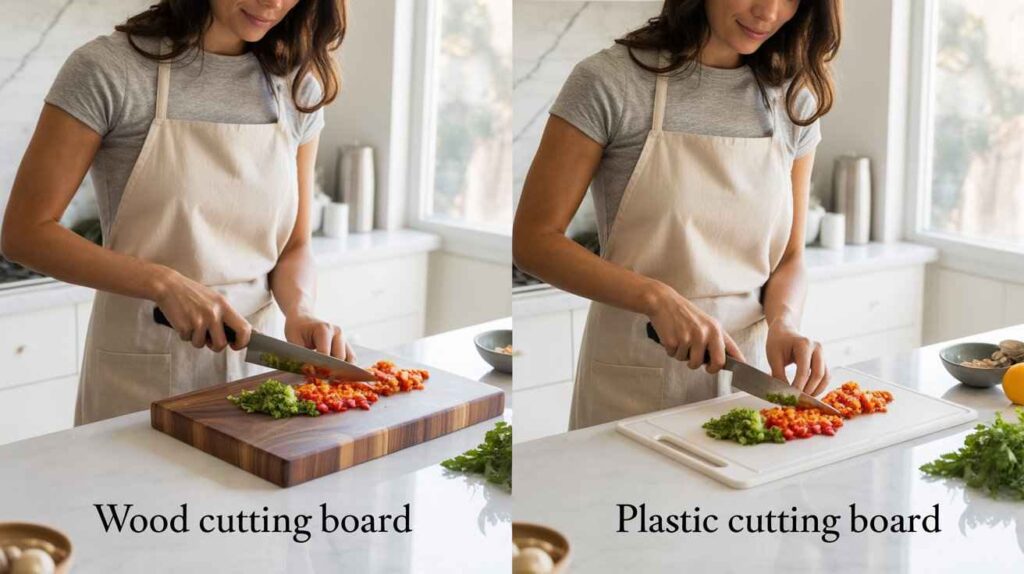
Introduction
Choosing the wrong cutting board can make kitchen cleanup harder, dull knives faster, and increase cross-contamination risk during everyday food preparation. That is why the debate around wood vs plastic cutting board continues in both home and professional kitchens.
Wood cutting boards are generally better for knife protection and long-term durability, while plastic cutting boards are easier to sanitize and maintain. The better choice depends on how you cook, how often you handle raw meat, and how much maintenance you are willing to do.
Both materials have advantages and drawbacks when it comes to hygiene, food safety, cleaning, durability, and daily kitchen performance. While wood is often preferred for comfortable food prep and knife care, plastic is commonly used for fast sanitizing and low-maintenance cleaning routines.
In this guide, you will learn the real differences between wood and plastic cutting boards, which option is safer for health, which works best for different cooking tasks, and how to choose the right cutting board for your kitchen without relying on common myths or confusion.
Table of Contents
What Actually Matters When Choosing a Cutting Board
The most important factors when choosing a cutting board are hygiene, food safety, durability, knife protection, and ease of cleaning. Both wood and plastic cutting boards have advantages, but the better option often depends on cooking habits, maintenance routines, and how the board is used in everyday kitchen tasks.
What Matters Most in a Cutting Board?
- Hygiene and bacteria resistance
- Ease of cleaning
- Knife friendliness
- Durability and lifespan
- Food safety during food preparation
- Maintenance requirements
Hygiene and Surface Porosity
One major difference between wood and plastic cutting boards is surface structure. Wood cutting boards have a naturally porous surface that can absorb small amounts of moisture, while plastic cutting boards are non-porous.
In real kitchen conditions, both materials can become unsafe if they are heavily damaged or poorly maintained. Deep knife grooves in plastic boards may trap bacteria and food particles over time. On the other hand, wood boards that stay wet for long periods can crack or absorb excess moisture.
In many cases, the condition of the cutting board matters more than the material itself.
Cleaning and Maintenance
Cleaning method plays a major role in long-term hygiene and usability. Most plastic cutting boards are dishwasher-safe, making them easier to sanitize with high heat after preparing raw meat or seafood.
Wood cutting boards usually require hand washing and proper drying because excess moisture can cause warping, splitting, or surface damage. They also need occasional oiling to maintain the wood surface and prevent cracking.
For people who prefer low-maintenance kitchen tools, plastic cutting boards are often the more convenient option.
Knife Protection and Cutting Performance
Knife impact is another important factor, especially for people who cook regularly. Wood cutting boards are generally gentler on knife edges, helping reduce blade dulling over time.
Plastic boards tend to create more resistance against the knife surface, especially after developing hard cutting grooves from repeated chopping. This can affect cutting performance and increase the need for frequent knife sharpening.
For long-term knife care, many home cooks and professional chefs prefer high-quality wood cutting boards.
Durability and Lifespan
Cutting boards wear differently depending on the material and quality. Well-maintained hardwood cutting boards can last for many years without losing performance. In contrast, cheaper plastic boards may need replacement sooner once deep scratches and cuts appear.
Damaged surfaces are harder to clean effectively and may increase the risk of cross-contamination during food preparation.
Replacing worn cutting boards regularly is important regardless of the material.
Food Safety in Everyday Use
Health safety depends heavily on how the cutting board is used and cleaned. Using separate boards for raw meat, vegetables, and cooked foods helps reduce cross-contamination risk more effectively than relying on material alone.
Regular cleaning, proper drying, and replacing heavily damaged boards are often more important than choosing wood or plastic by itself.
In many professional kitchens, both wood and plastic cutting boards are used together because each material offers different practical advantages depending on the task.
Wood vs Plastic Cutting Board – Key Differences
Wood and plastic cutting boards differ in hygiene, maintenance, knife impact, durability, and daily kitchen performance. Wood boards are generally gentler on knives and more durable over time, while plastic boards are easier to sanitize and require less maintenance. The better option depends on how the board is used, cleaned, and maintained in everyday cooking.
Surface Structure
Wood Cutting Board:
Wood has a slightly porous surface that can absorb small amounts of moisture. This helps reduce visible deep cutting marks over time and gives the board a more natural self-healing surface.
Plastic Cutting Board:
Plastic has a non-porous surface that does not absorb liquids. However, repeated chopping can create deep grooves where food particles and bacteria may collect.
Cleaning & Maintenance
Wood Cutting Board:
Wood boards should be hand-washed and dried properly to prevent cracking or warping. Regular oiling also helps maintain the surface and extend lifespan.
Plastic Cutting Board:
Plastic boards are usually dishwasher-safe, making them easier to sanitize with high heat. They are often preferred for quick cleaning and low-maintenance kitchen routines.
Knife Friendliness
Wood Cutting Board:
Wood is softer on knife edges, which helps reduce blade dulling during daily food preparation. This is one reason many chefs prefer wooden cutting boards.
Plastic Cutting Board:
Plastic surfaces create more friction against knife blades over time. Hard cutting marks can also make chopping feel rougher and increase sharpening frequency.
Hygiene & Food Safety
Wood Cutting Board:
Properly maintained wood cutting boards can remain hygienic for everyday cooking. Dry surfaces and good cleaning habits are important to prevent moisture buildup.
Plastic Cutting Board:
Plastic boards are easier to disinfect after handling raw meat because they tolerate dishwasher heat well. However, heavily scratched plastic boards may trap bacteria inside grooves.
Durability & Lifespan
Wood Cutting Board:
High-quality wood boards can last for years with proper care. Minor surface cuts are often less noticeable because wood fibers naturally compress over time.
Plastic Cutting Board:
Plastic boards are affordable and lightweight, but deep cuts and surface wear may require earlier replacement for hygiene reasons.
Everyday Kitchen Use
Wood Cutting Board:
Wood is often preferred for vegetables, bread, fruit preparation, and general knife work where cutting comfort matters most.
Plastic Cutting Board:
Plastic is commonly used for raw meat preparation and fast cleanup situations where dishwasher sanitization is important.
- Best for knife protection: Wood
- Best for dishwasher cleaning: Plastic
- Best for long-term durability: Wood
- Best for low maintenance: Plastic
- Best for professional knife care: Wood
- Best for raw meat sanitisation: Plastic
| Feature | Wood | Plastic |
|---|---|---|
| Knife Friendly | Excellent | Moderate |
| Dishwasher Safe | No | Yes |
| Durability | High | Moderate |
| Maintenance | Higher | Lower |
| Raw Meat Use | Good | Excellent |
| Hygiene | Good with care | Easy to sanitize |

Wood vs Plastic Cutting Board – Health & Hygiene Reality
Wood and plastic cutting boards can both be safe for food preparation when they are cleaned properly and replaced once heavily damaged. The biggest health risk usually comes from deep grooves, trapped moisture, poor cleaning habits, and cross-contamination — not simply the material itself.
Myth: Plastic Cutting Boards Are Often Considered More Hygienic
Reality:
Plastic boards are easier to sanitize in a dishwasher, but deep knife grooves can trap food particles and bacteria over time.
Why it matters:
Old plastic boards with heavy scratches may become harder to clean safely.
Myth: Wooden Cutting Boards Harbor Dangerous Bacteria
Reality:
Properly maintained wood cutting boards can remain hygienic for everyday kitchen use. Dry wood surfaces often reduce long-term moisture buildup compared to damaged plastic grooves.
Why it matters:
Cleaning and drying habits usually affect hygiene more than the board material itself.
Myth: Wood Cutting Boards Are Unsafe for Raw Meat
Reality:
Wood boards can be used safely for raw meat if they are washed correctly and fully dried after use. Many people still prefer separate boards to reduce cross-contamination risk.
Why it matters:
Using dedicated boards for meat and produce improves overall kitchen safety.
Myth: Plastic Boards Never Need Replacement
Reality:
Plastic cutting boards wear down over time. Deep cuts and rough surfaces can increase bacterial buildup and reduce cleaning effectiveness.
Why it matters:
Replacing heavily worn boards is important for long-term food safety.
Myth: Wooden Boards Absorb Too Much Moisture
Reality:
Quality wooden boards are designed to handle regular food preparation. Problems usually happen when boards stay wet for long periods or are not maintained properly.
Why it matters:
Proper drying helps prevent cracking, warping, and hygiene issues.
Myth: One Cutting Board Can Handle Every Kitchen Task
Reality:
Using the same board for raw meat, vegetables, seafood, and ready-to-eat foods increases cross-contamination risk regardless of material.
Why it matters:
Separate cutting boards improve kitchen hygiene and reduce food safety concerns.
- Best for dishwasher sanitizing: Plastic
- Best for knife-friendly food prep: Wood
- Higher risk when deeply scratched: Plastic
- Higher risk when poorly dried: Wood
- Best hygiene practice overall: Separate boards + regular cleaning + timely replacement
| Hygiene Factor | Wood | Plastic |
|---|---|---|
| Dishwasher Safe | No | Yes |
| Deep Groove Risk | Lower visibility | Higher over time |
| Moisture Risk | If poorly dried | Lower |
| Raw Meat Use | Safe with cleaning | Easy sanitising |
| Replacement Need | Lower frequency | Higher when scratched |
Which Cutting Board Is Safer for Health (Wood vs Plastic?)
Wood and plastic cutting boards can both remain hygienic for everyday food preparation if they are cleaned thoroughly and replaced when deep cuts, cracks, or heavy wear appear. The safer option usually depends on usage, maintenance, and condition rather than the material alone.
Raw Meat Preparation
Plastic Cutting Boards:
Plastic boards are commonly used for raw meat because many are dishwasher-safe and can handle high-temperature sanitizing cycles.
Wood Cutting Boards:
Wood boards can also be used safely for meat preparation if they are washed thoroughly and dried completely after use.
Health Impact:
Cross-contamination risk increases when meat residue remains inside deep cuts or wet surfaces.
Vegetable & Fruit Preparation
Wood Cutting Boards:
Wood boards are often preferred for vegetables, fruits, herbs, and bread because they are gentler on knife edges and remain stable during cutting.
Plastic Cutting Boards:
Plastic boards work well for produce preparation but may develop rough grooves faster with frequent chopping.
Health Impact:
Clean surfaces and separate boards for produce and raw meat help reduce bacterial transfer.
Damaged or Worn Boards
Plastic Cutting Boards:
Deep cuts and scratches on plastic cutting boards can hold onto food residue and bacteria, which reduces how effectively they can be cleaned over time.
Wood Cutting Boards:
Cracked or excessively worn wood boards may absorb moisture more easily and become harder to maintain properly.
Health Impact:
Both materials become less hygienic when heavily damaged or poorly maintained.
Cleaning & Maintenance Reality
- Plastic boards are easier to sanitize in dishwashers.
- Wood boards require hand washing and proper drying.
- Regular replacement and cleaning habits matter more than material alone.
- Better for dishwasher sanitizing: Plastic
- Better for knife-friendly prep: Wood
- Higher risk when deeply scratched: Plastic
- Higher risk when left wet: Wood
- Most important safety factor: Proper cleaning and board condition
Which Cutting Board Is Better for Different Use Cases?
The better cutting board depends on how it will be used in the kitchen. Wood and plastic cutting boards both perform well in different situations based on hygiene needs, knife impact, cleaning method, and food preparation type.
For Raw Meat Handling
Best choice: Plastic cutting board
Plastic boards are commonly used for raw meat because many are dishwasher-safe and easier to sanitize with high heat after use.
Why it works:
High-temperature cleaning helps reduce cross-contamination risk from poultry, seafood, and raw meat juices.
For Vegetables and Fruits
Best choice: Wood cutting board
Wood boards provide a stable cutting surface and are gentler on knives during repetitive slicing and chopping.
Why it works:
The softer surface helps protect knife edges while handling delicate produce and daily prep work.
For Knife Longevity
Best choice: Wood cutting board
Wood cutting boards create less resistance against knife blades compared to harder plastic surfaces.
Why it works:
Reduced friction helps slow down blade dulling and lowers sharpening frequency over time.
For Low-Maintenance Cleaning
Best choice: Plastic cutting board
Plastic boards are easier to clean quickly and usually require less maintenance than wood.
Why it works:
Most plastic boards can handle dishwasher cleaning without needing oiling or special care.
For Heavy Daily Cooking
Best choice: Depends on kitchen routine
Many home cooks and professional kitchens use both wood and plastic cutting boards for different tasks.
Why it works:
Wood works well for general prep and knife care, while plastic is useful for raw meat and fast sanitizing.
For Bread and Dry Ingredients
Best choice: Wood cutting board
Wood boards often provide better grip and stability when slicing bread or handling dry foods.
Why it works:
The textured surface helps reduce slipping during cutting.
For Small Kitchens or Budget Use
Best choice: Plastic cutting board
Plastic boards are lightweight, affordable, and easy to store in compact kitchens.
Why it works:
They offer practical convenience for everyday cooking with minimal upkeep.
Which One Should You Actually Use?
There is no single winner between wood and plastic cutting boards. The right choice depends on your cooking style, cleaning habits, and how you use the board in your kitchen.
For Home Cooks
Best choice: Use both wood + plastic
- Wood = daily prep (vegetables, fruits, bread)
- Plastic = raw meat and messy tasks
Why:
Home cooking involves mixed food types, so separating boards improves hygiene and reduces cross-contamination risk.
For Meat-Heavy Cooking
Best choice: Plastic cutting board
- Plastic handles raw meat better in high-heat cleaning
- Easier to sanitize after poultry, seafood, and meat prep
Why:
Frequent raw meat use requires faster and stronger cleaning methods, which plastic supports better.
For Knife
Best choice: Wood cutting board
- Wood = softer surface for blade protection
- Reduces knife dulling over time
Why:
If you care about sharp knives and long blade life, wood provides a more forgiving cutting surface.
For Low-Maintenance Users
Best choice: Plastic cutting board
- Dishwasher-safe cleaning
- No oiling or special care required
Why:
Plastic is ideal for busy kitchens where quick cleaning and convenience matter more than long-term knife care.
Simple Decision
- Best hygiene convenience → Plastic
- Best knife protection → Wood
- Best for mixed cooking → Use both
- Best for low effort → Plastic
- Best for long-term cooking comfort → Wood
Conclusion
Both wood and plastic cutting boards can be safe and effective when used correctly, cleaned properly, and replaced when worn out.
Ultimately, the best choice depends on your cooking habits, cleaning routine, and the type of food you prepare most often. Choosing the right combination—and maintaining it properly—is more important than relying on a single material.
Faqs
Is it better to use a plastic or wooden cutting board?
Neither is universally better. Wood cutting boards are better for knife care and general food preparation, while plastic cutting boards are easier to sanitise and often preferred for raw meat. The safest option depends on cleaning habits and how the board is used.
Do plastic cutting boards release chemicals?
Food-grade plastic cutting boards such as HDPE are generally considered safe for normal kitchen use and do not release harmful chemicals during everyday cooking. However, low-quality or heavily worn boards should be replaced to maintain food safety.
Do wooden cutting boards harbor bacteria?
Wood cutting boards do not permanently trap bacteria when properly cleaned and dried. In fact, wood surfaces can reduce bacterial survival. Problems usually occur when boards are left wet or not maintained properly.
Are plastic cutting boards safe to clean in a dishwasher?
Yes, most plastic cutting boards are dishwasher-safe and can handle high temperatures for sanitising. Over time, repeated dishwasher use may cause scratches or warping, so damaged boards should be replaced.
Do chefs use wood or plastic cutting boards?
Professional chefs use both types. Plastic cutting boards are commonly used for raw meat and sanitation-heavy tasks, while wood cutting boards are preferred for general prep because they are gentler on knives.

Hi, I’m Muhammad Din. I test and compare kitchen tools in my own kitchen before I ever recommend them — if it’s in a guide on HomePlora, I’ve used it or dug deep enough to know exactly where it holds up and where it doesn’t. My goal is simple: help you find tools that actually earn a spot in your kitchen, without wasting money on ones that don’t.