

Introduction
Crowd a pan with chicken thighs and they stop browning and start steaming in their own juices, which leaves you with pale skin and a thin sauce before the braise has even begun. A braiser fixes that with a wide, flat floor that fits a full batch in a single layer, and for most home cooks the best braiser pan is the Le Creuset Signature 3.5-Quart Braiser.
A braiser’s quart number only tells you how much liquid it holds, not how much food it can sear. This guide compares six pans by what actually decides how they cook: cooking surface, lid design, weight, and care. The best braiser pan for your kitchen depends on how you cook, so the picks below include a see-through glass lid, a stainless steel pan with no enamel to chip, a large pan for big batches, and a lighter pan built for high heat and induction.
Comparison
| Image | Product | Details | Price |
|---|---|---|---|
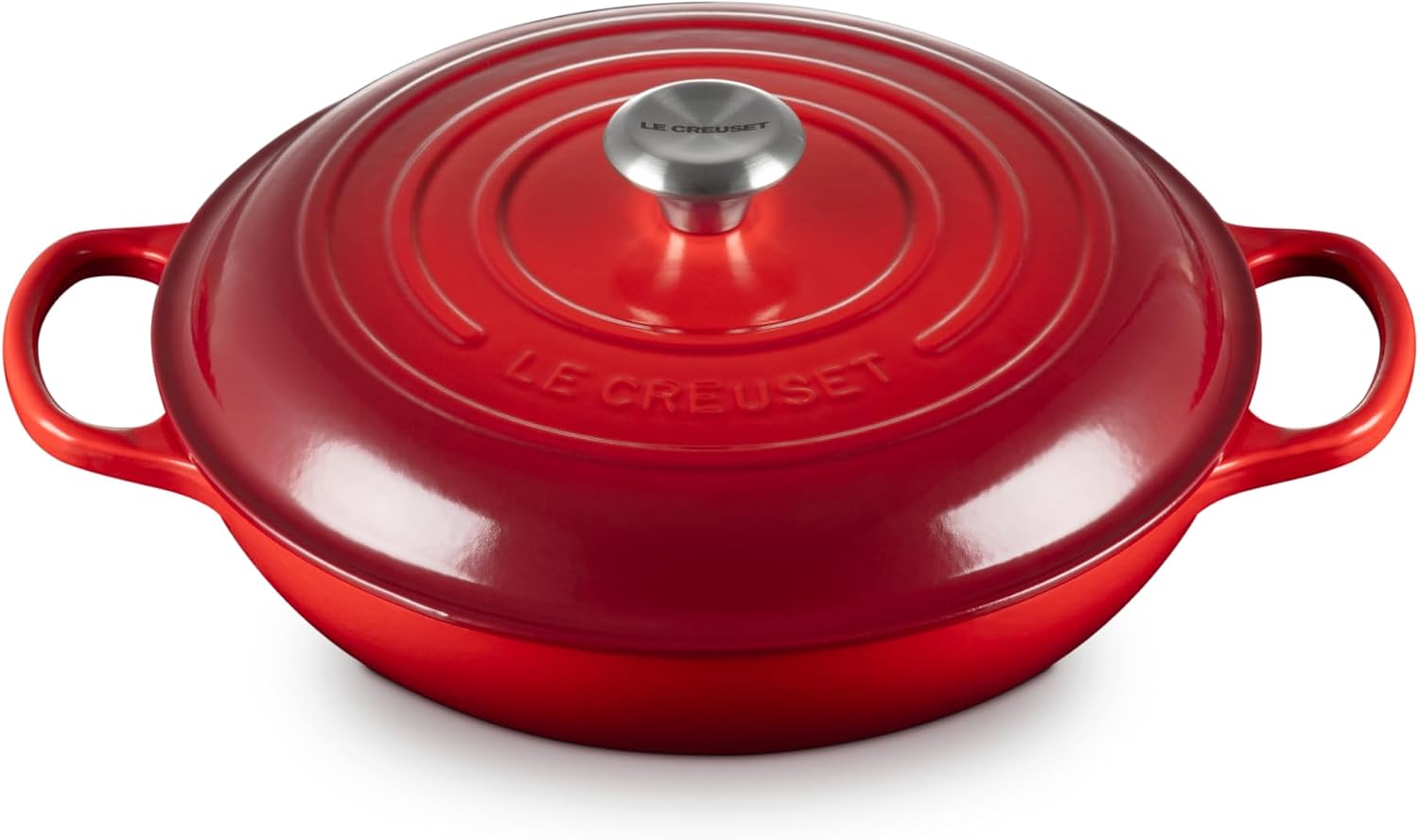 |
Le Creuset Signature Braiser | A light-colored interior that lets you read the fond as it browns. | Check on Amazon |
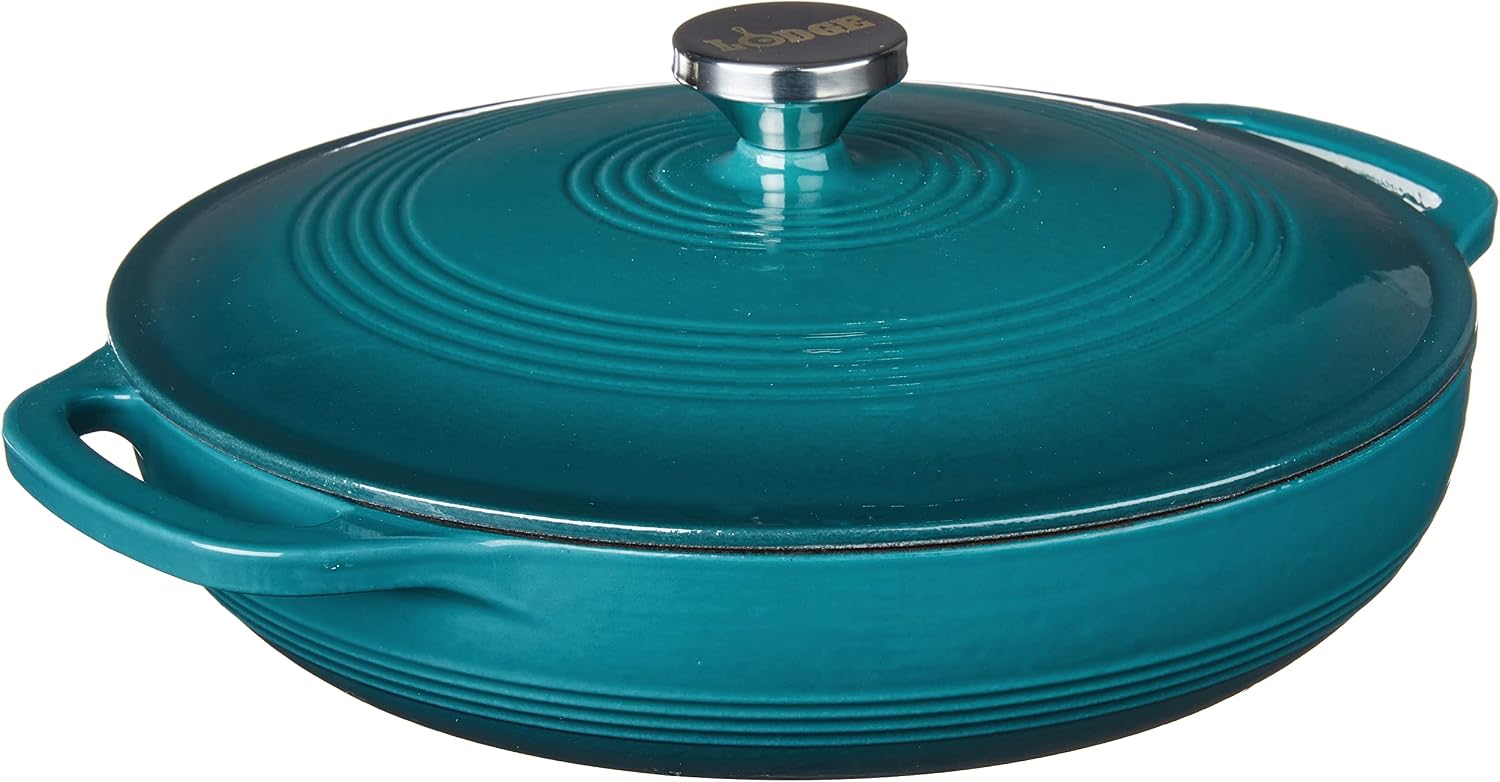 |
Lodge Essential Enamel Braiser | Fridge-safe enameled cast iron at a lower price. | Check on Amazon |
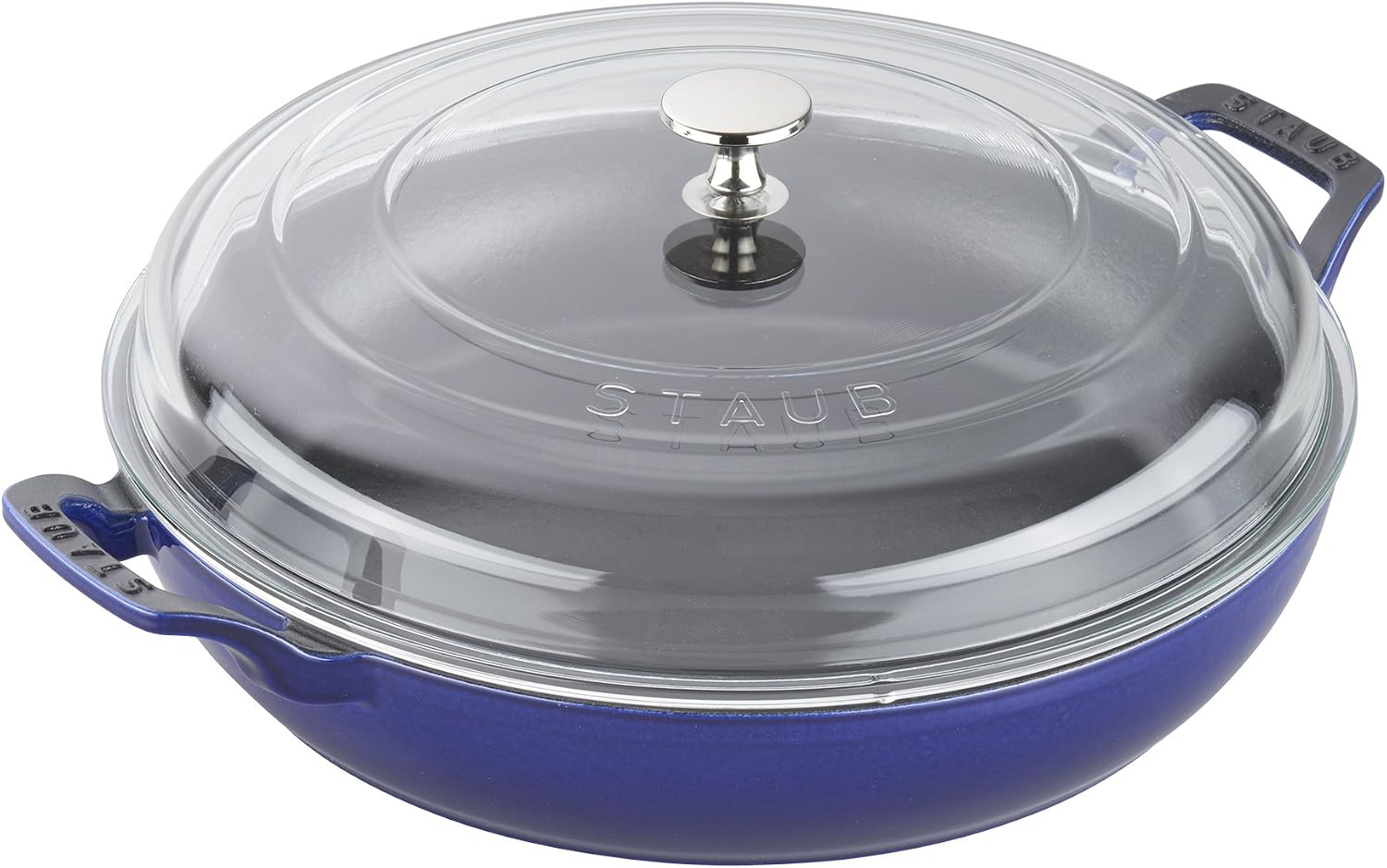 |
Best with Glass Lid: Staub 3.5 Qt Braiser | A see-through domed lid that keeps steam in while you watch. | Check on Amazon |
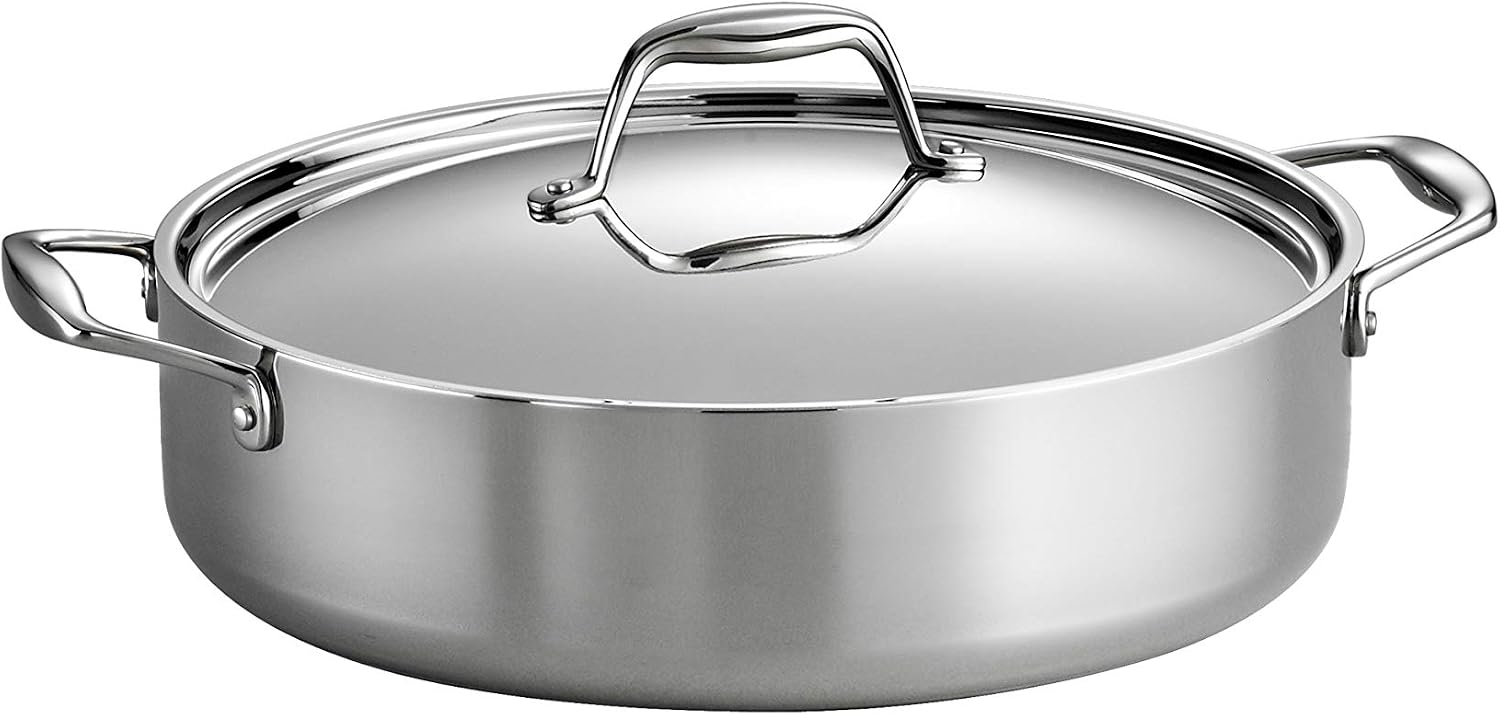 |
Best Stainless Steel: Tramontina 6-Qt Braiser | Chip-free tri-ply stainless that is dishwasher-safe. | Check on Amazon |
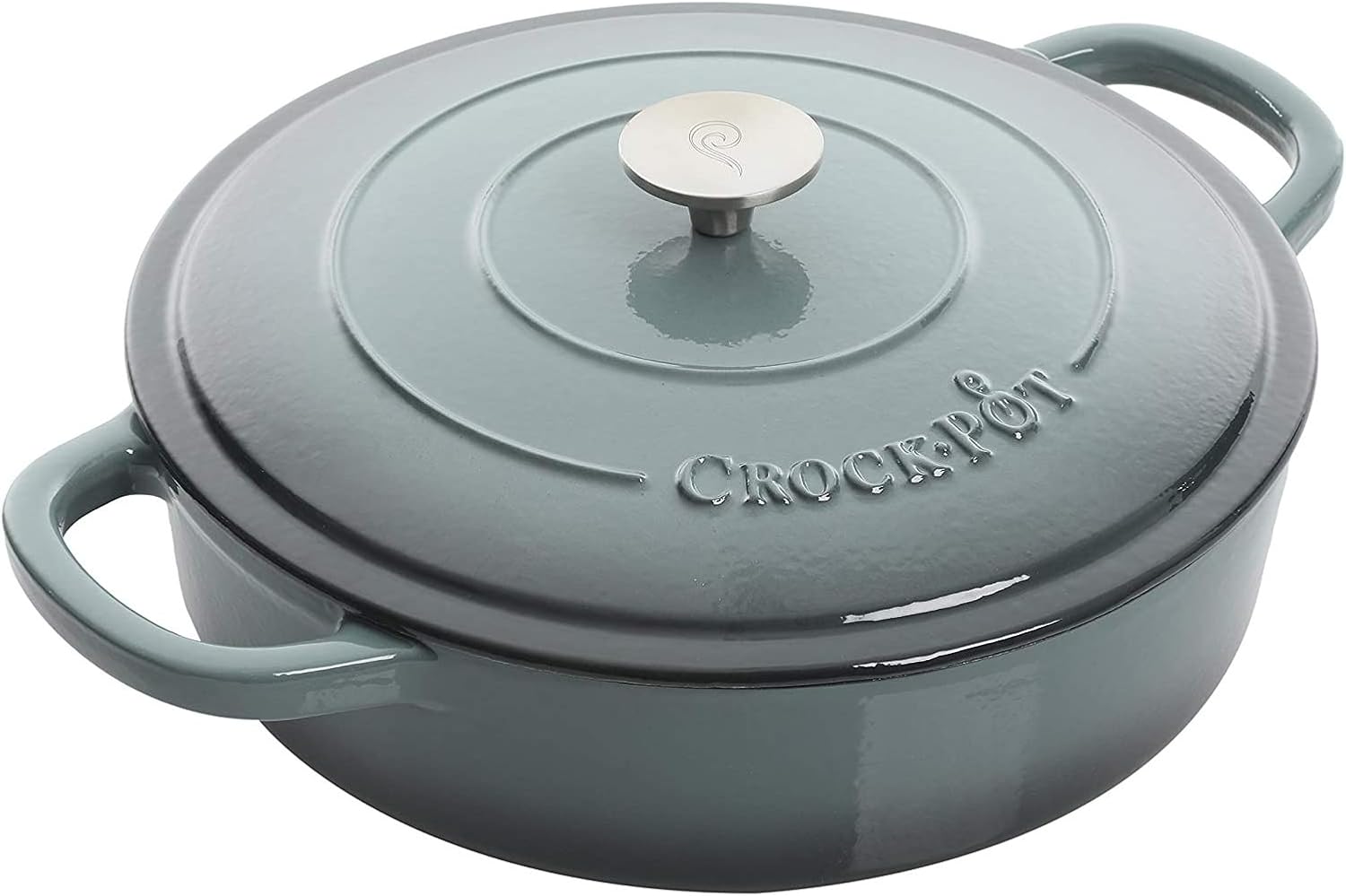 |
Best Large Braiser: Crock-Pot Artisan 5 Qt | Five quarts with a self-basting lid. | Check on Amazon |
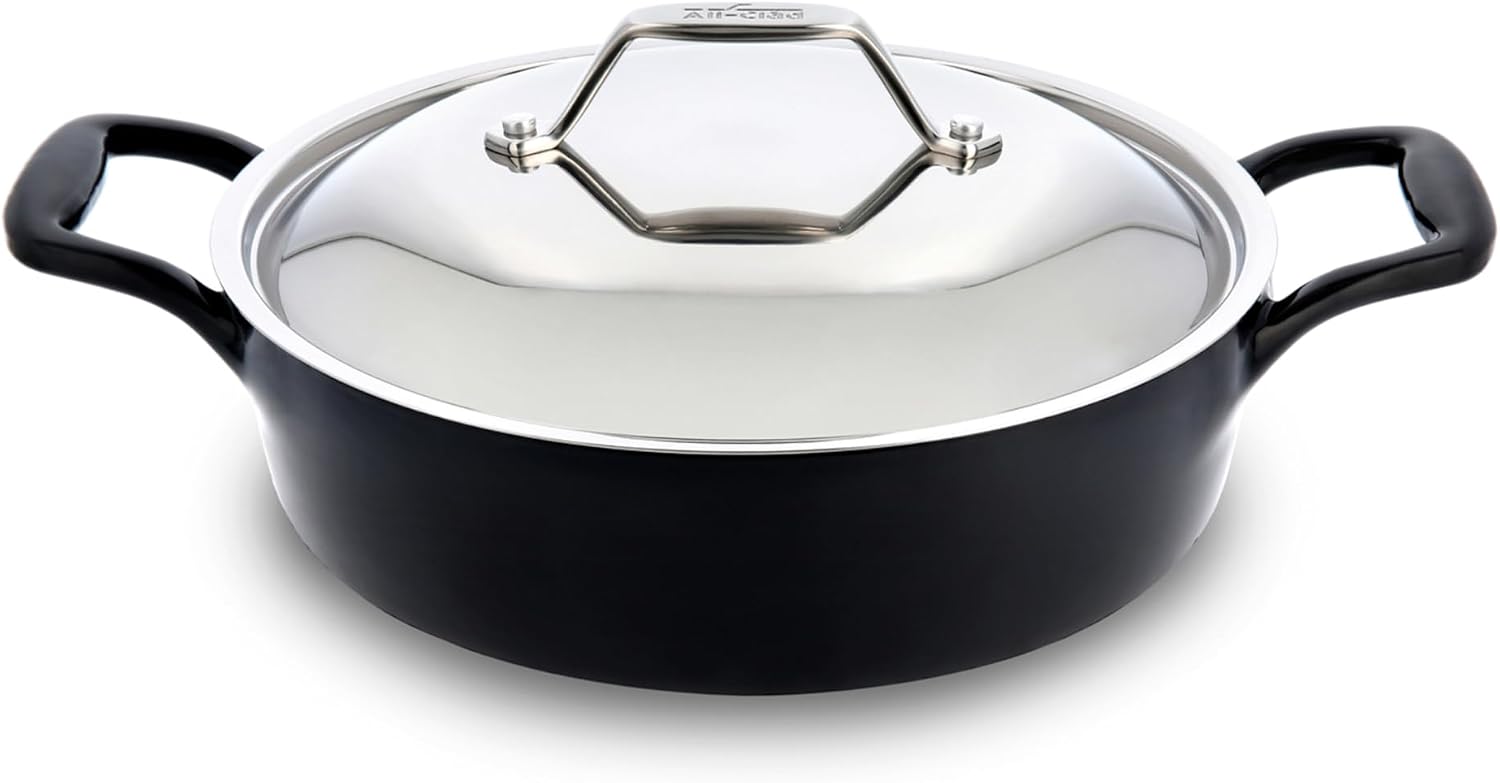 |
Best for High Heat and Induction: All-Clad 4 Qt Braiser | A 650°F oven rating in a lighter enameled cast iron pan. | Check on Amazon |
What a braiser is?
A braiser is a wide, shallow pan with a tight, domed lid. It’s built to brown food in a single layer and then finish it in a small amount of simmering liquid, all without changing pots. Most are enameled cast iron, which is why one piece can go from stovetop to oven to table.
Three design choices do the work:
A wide floor, because browning needs room. A real sear happens only when food touches hot, dry metal. Crowd the pan and the pieces release moisture that has nowhere to go, so they steam instead of forming a crust. The floor area decides how much you can brown in one round.
Low walls, because braising is partial. The liquid should come about halfway up the food, not cover it. The submerged half simmers while the exposed top roasts in trapped steam. Low sides also give that liquid a lot of surface, so once you take the lid off at the end, it reduces into sauce quickly. America’s Test Kitchen measured wall height at 2.75 inches on its top large braiser, which shows how shallow the shape is.
A tight, domed lid, because condensation is your basting. A domed lid leaves headroom for taller ingredients and lets condensation drip back onto the food. That steady return of moisture keeps a long braise from drying out.
You’ll also see this pan sold as a braising pan, and commercial kitchens call the larger versions braziers or rondeaus. Some retail listings stretch the label further. Amazon’s braiser bestseller list includes stainless pans that double as deep sauté pans, so judge a pan by its shape, not its title.
Tested product picks
1. Le Creuset Signature Braiser, 3.5 Quart
A cast iron braiser pan does its best work in the first ten minutes of a recipe. The wide base lets ingredients sear in a single layer without crowding, and once liquid goes in, the domed lid circulates steam back onto the food. Le Creuset’s Signature version adds a light-colored interior enamel that makes it easy to monitor cooking progress, so you can judge how dark the fond is getting before it scorches.
| Specification | Detail |
|---|---|
| Capacity | 3.5 quarts |
| Material | Enameled cast iron, light-colored interior |
| Top diameter / depth | 12 in / 2.5 in |
| Weight (with lid) | About 11 lb 14 oz |
| Oven-safe | Up to 500°F, broiler-safe |
| Cooktops | All, including induction |
| Warranty / origin | Lifetime warranty, made in France |
Key features
- Wide base for single-layer searing, with a domed steam-circulating lid
- Light interior enamel for reading browning at a glance
- Broiler- and induction-compatible
- Stainless steel knob and lifetime warranty
| Pros | Cons |
|---|---|
| Light interior makes fond easy to read | Premium price tier |
| 12-inch top gives room to sear a full batch | Around 12 lb with lid, so it needs two hands |
| Lifetime warranty | Dishwasher-safe, but hand washing is recommended |
Best for: cooks who braise every week and want a pan they can keep for decades.
2. Lodge Essential Enamel Braiser, 3.6 Quart
The Lodge enameled braiser pan gives you cast iron heat retention at a friendlier price. Because it’s safe to store in the fridge, you can marinate, sear, and braise in one vessel and skip a bowl and a second pan. The trade-off is mass: this Lodge braiser pan is a heavy piece, so plan where you’ll store it.
| Specification | Detail |
|---|---|
| Capacity | 3.6 quarts |
| Material | Enameled cast iron, PFAS-free |
| Dimensions | 14.37 × 11.81 × 5.12 in |
| Weight | About 14.6 lb |
| Oven-safe | Up to 500°F |
| Cooktops | Any stovetop, including induction |
| Lid / handles | Tight-fitting lid with stainless steel knob, dual loop handles |
| Care | Hand wash recommended, no metal utensils |
Key features
- Fridge-to-oven versatility for marinating in the pan
- PFAS-free enamel
- Induction-safe with a moisture-locking lid
- Dual loop handles
| Pros | Cons |
|---|---|
| Accessible entry into enameled cast iron | About 14.6 lb, among the heaviest here |
| Fridge-safe for marinade-to-table cooking | Not for grill or open-fire use |
| PFAS-free enamel, induction-safe | Non-metal utensils only |
Best for: home cooks who want enameled cast iron performance without the premium price, especially if they marinate ahead.
3. Staub 3.5-Quart Braiser with Glass Lid
A braiser pan with glass lid solves the question every braise raises: is it simmering yet? The domed glass lid lets you watch the food without lifting it, so steam stays inside. Staub adds a textured black matte enamel interior that browns food without sticking. Note the geometry: a 12-inch top narrows to a 10-inch base, so size your sear batches to the floor, not the rim. Staub 3.5 Quart Braiser Pan with Glass Lid.
| Specification | Detail |
|---|---|
| Capacity | 3.5 quarts |
| Material | Enameled cast iron, textured black matte interior |
| Top / base diameter | 12 in / 10 in |
| Weight | About 7 lb 5 oz pan, 10 lb 14 oz with lid |
| Oven-safe | Up to 500°F |
| Cooktops | All, including induction |
| Care | Dishwasher-safe, hand washing recommended |
| Warranty / origin | Lifetime warranty, made in France |
Key features
- Heavy domed glass lid
- Black matte interior for browning
- Sloped sides with a 10-inch base
- Handles sized to work with oven mitts
| Pros | Cons |
|---|---|
| Monitor the braise without lifting the lid | Dark interior makes fond color harder to judge |
| Lighter than most enameled cast iron here | 10-inch floor limits single-layer sear batches |
| Textured interior browns without seasoning | Premium price tier |
Best for: cooks who like to watch a braise and want a lighter pan with a serving-ready finish.
4. Tramontina Tri-Ply Clad 6-Quart Stainless Steel Braising Pan
A stainless steel braiser pan with lid works differently from enameled iron. Its aluminum core sits between two layers of 18/10 stainless steel, and the short sides help reduce sauces. Sear on bare steel, then deglaze so the fond dissolves into the sauce. There’s no coating to chip, but preheat properly and use a little fat, since stainless releases food less forgivingly.
| Specification | Detail |
|---|---|
| Capacity | 6 quarts |
| Construction | Tri-ply, 18/10 stainless steel with aluminum core |
| Lid | Stainless steel |
| Oven-safe | Up to 500°F |
| Cooktops | All, including induction |
| Certification | NSF-certified, dishwasher-safe |
| Coating | Made without PTFE or PFAS |
| Warranty | Lifetime |
Key features
- Tri-ply clad build with aluminum core
- Short sides for fast sauce reduction
- Riveted handles and stainless lid
- Dishwasher-safe, no enamel to chip
| Pros | Cons |
|---|---|
| No coating to chip or replace | Stainless lid hides the food |
| Dishwasher-safe and NSF-certified | Stores less heat than cast iron |
| Large 6-quart capacity | Too large for one or two people |
Best for: cooks who want low-maintenance stainless and make pan sauces or big batches.
5. Crock-Pot Artisan 5-Quart Braiser
The Crock-Pot Artisan is the large-format enameled cast iron braiser in this lineup. Its self-basting lid and lower profile make it easy to cook, serve, and store in. At five quarts it handles a big batch of braised beef or rice without the crowding a smaller pan forces on you. It’s a heavy pan, so lift it with both hands.
| Specification | Detail |
|---|---|
| Capacity | 5 quarts |
| Material | Enameled cast iron |
| Lid | Self-basting |
| Oven-safe | Up to 500°F |
| Cooktops | Gas, electric, ceramic, induction |
| Weight | About 14.4–14.6 lb |
| Handles | Large, easy to carry |
| Care | Hand wash recommended, non-metal utensils |
Key features
- Self-basting lid
- 5-quart capacity for big batches
- Oversized handles
- Induction-compatible
| Pros | Cons |
|---|---|
| Room for large batches | Around 14.5 lb |
| Oversized, easy-grip handles | Non-metal utensils only |
| Self-basting lid | Hand wash recommended |
Best for: larger households and anyone cooking for a crowd.
6. All-Clad Enameled Cast Iron 4-Quart Braiser
Shopping for braiser pan cookware that goes under the broiler or onto the grill narrows the field fast. This pan is oven-safe to 650°F, while the stainless lid tops out at 500°F. It suits a braiser pan for induction too, with one care rule: heat gradually on induction to prevent thermal shock. It’s also lighter than most enameled cast iron.
| Specification | Detail |
|---|---|
| Capacity | 4 quarts |
| Material | Enameled cast iron, black matte interior, no seasoning needed |
| Dimensions | 10.25 in diameter, 14.7 in long, 5.3 in tall |
| Weight | About 8.75 lb |
| Oven-safe | Pan 650°F, lid 500°F |
| Cooktops | All, including induction and outdoor grills |
| Handles / lid | Extra-wide handles, stainless steel lid |
| Care / warranty | Hand wash recommended; limited lifetime warranty |
Key features
- 650°F pan rating for broiling and high-heat work
- Induction- and grill-compatible
- Extra-wide handles for oven mitts
- Lighter than most enameled cast iron here
| Pros | Cons |
|---|---|
| High heat ceiling | Smaller 4-quart, 10.25-inch pan |
| Lightest enameled cast iron in this lineup | Dark interior hides fond color |
| Induction- and grill-safe | Enameled finish is not nonstick |
Best for: cooks who broil or grill, use induction, or want a lighter pan.
Difference between braiser and dutch oven
The difference is shape. A braiser is wide and shallow, which favors searing in one layer and reducing a small amount of liquid into sauce. A Dutch oven is tall and narrow, which favors holding a lot of liquid and trapping heat and steam around the food. Both are usually enameled cast iron, and each can cover the other’s work in a pinch. America’s Test Kitchen notes you can sear, simmer, roast, and braise well in a Dutch oven, and it calls a dedicated braiser a good alternative.
| Braiser | Dutch oven | |
|---|---|---|
| Shape | Wide floor, low walls, domed lid | Narrow floor, tall walls |
| Searing | Fits a full batch in one layer | Same quart size means a smaller floor, so sear in rounds |
| Liquid | Sits about halfway up the food; reduces to sauce fast | Deep enough to submerge food; stays loose |
| Best dishes | Chicken thighs, short ribs, meatballs, one-pan rice | Soups, stews, beans, stock |
| Bread and frying | Too low for a tall loaf or deep oil | Tall interior traps steam for loaves and holds oil depth |
| Storage | Low, but wide | Tall, but narrow |
Which should you buy? If you cook soups, beans, bread, or deep-fry, buy the deeper pot first. If most of your braising is chicken thighs, short ribs, meatballs, or one-pan meals where a full-batch sear matters, a braiser will get more use. If you already own a deeper pot, a braiser is worth adding only when you find yourself searing in three rounds or wishing your sauce would reduce faster. For the deeper pots, see our guide to the Dutch ovens.
What to cook in a braiser pan?
A braiser is best for food that needs a hard sear followed by a shallow, gentle simmer. The wide floor lets you brown everything in one round, and the low walls let the sauce concentrate as it cooks.
- Bone-in chicken thighs. Sear them skin-side down, flip, then add liquid only to about halfway up. The skin stays above the liquid and stays crisp while the meat simmers.
- Short ribs and other tough cuts. Browning them in a single layer builds the fond that flavors the whole braise.
- Meatballs in sauce. Brown them, then simmer them in the same pan. ATK’s top braiser fit everything from a whole chicken to meatballs to pork ragu without crowding.
- Eggs in tomato sauce. A wide, shallow simmer gives each egg its own space to set, as in shakshuka.
- Rice and pilaf. Toast the rice in fat, add measured stock, and cover. The shallow bed heats evenly, so the whole layer finishes together.
- Braised greens, cabbage, and root vegetables. The wide surface wilts a big pile of greens quickly, and the lid steams the stems.
The basic braiser method (works for most of the above):
- Pat the food dry and season it.
- Heat the pan over medium heat for a few minutes before adding anything.
- Sear in a single layer without moving the pieces, then set them aside.
- Deglaze the fond with wine or stock.
- Return the food, add liquid to about halfway, cover, and cook gently on the stovetop or in a low oven. Remove the lid during the final stage to let the sauce thicken and reduce.
What to leave to a deeper pot: stock, large batches of soup, deep-frying, and tall bread loaves. All of them need depth a braiser doesn’t have.
How to care for braiser pan?
A braiser needs the same basic care as any enameled cast iron: heat it gradually, let it cool before washing, and keep hard tools off the enamel. Its wide floor and frequently handled lid add a few habits of their own.
Heat gently, and keep the flame under the base. Le Creuset’s care guidance is to use low to medium heat and never preheat on high. Excessive temperature swings, called thermal shock, can craze, crack, or chip the enamel. A wide braiser can overhang a smaller burner, so on gas keep the flame confined to the base rather than wrapping up the sidewalls. Handles and knobs get hot, so lift with a thick, dry cloth or oven mitts.
Deglaze while the pan is warm, not scorching. The wide floor leaves a thin film of fond across a large surface. A splash of liquid lifts it into your sauce and saves scrubbing later. Use warm or room-temperature liquid instead of fridge-cold stock poured into a very hot pan, since fast temperature changes are what damage enamel.
Cool fully, then soak instead of scrubbing. Set the hot pan on a heat-resistant surface, not a wet counter, and never plunge it into cold water. For stuck-on food, fill it with warm water and soak 15 to 20 minutes, then use a nylon brush or soft pad. Skip scourers and metal pads. A wide pan is also awkward in a sink, so let it finish cooling on a trivet before you carry it over.
Protect the rim and the lid. A braiser’s lid comes on and off constantly, and the rim is where enamel is most exposed. America’s Test Kitchen tests chip resistance by hitting the rim with a metal spoon and slamming the lid down. Set the lid down gently on a trivet and don’t knock spoons against the rim. Metal tools should never scrape across the surface.
Wash by hand when you can. Enameled pieces labeled dishwasher-safe can still dull over time with constant dishwasher use. It doesn’t affect cooking performance, but hand washing keeps the finish looking new. It’s also easier with a pan this wide.
Dry it and store it dry. Dry it thoroughly and store it in a dry cupboard away from steam. A felt protector or a cloth between the lid and the rim keeps the rim safe and stops moisture from getting trapped.
If you chose the stainless braiser, there’s no enamel to chip, but don’t plunge a hot stainless pan into cold water. Le Creuset’s care guidance says thermal shock can warp a stainless base.
For stain removal and general enamel care, see our Dutch oven guide.
Faqs
What is a braiser pan used for?
A braiser is used for dishes that start with a hard sear and finish in a small amount of simmering liquid, such as chicken thighs, short ribs, meatballs, braised greens, and one-pot rice. The wide base lets ingredients sear in a single layer without crowding, and the low walls let the liquid reduce into sauce. ATK’s testers used a braiser for browning meatballs, braising green beans, and cooking short ribs. Because it goes from stovetop to oven to table, you can serve straight from it.
Can you use a braiser on induction?
Yes, it will work if the cookware has a magnetic bottom. Enameled cast iron braisers work on induction, and Le Creuset lists its 3.5-quart braiser as induction-capable. Stainless models need a magnetic outer layer, so confirm “induction” on the listing. Heat the pan gradually, since heating too quickly causes thermal shock that can craze, crack, or chip the enamel. Lift the pan on and off glass cooktops rather than dragging it.
What size braiser should you buy?
For most home cooks, 3.5 to 4 quarts is the right size. ATK says this size cooks for about three to four people and is the most useful for the food people make in a braiser. Choose 5 to 6 quarts if you regularly cook for five or six, but a bigger braiser costs more, weighs more, and needs more storage space. For one or two people, a 2.5-quart pan is enough for smaller portions and side dishes. Whichever size you pick, check the cooking surface diameter and not just the quart number.
Can a braiser go under the broiler?
Sometimes, but only if the manufacturer says the pan and knob can handle it. Ratings vary. Le Creuset lists its cast iron and knobs as oven-safe up to 500°F, while some braisers are rated only to 450°F. The lid knob can have a lower limit than the pan, so check both. Broil with the lid off. A braiser is shallow, so food sits closer to the element than in a deeper pot. Don’t move a cold pan straight under a hot broiler, because sudden temperature changes can crack enamel.
Is a braiser worth it if I own a skillet?
It depends on how you cook. A skillet is built for pan-searing and quick sautés. It usually has low, flared sides and no lid, so it can’t hold much liquid or trap steam for a braise. A braiser is worth it if you regularly make sauce-based one-pan meals, finish dishes in the oven, or want to brown a full batch in one layer. If you mostly pan-sear and stir-fry, or only braise occasionally, a lidded skillet already covers most of it.
Conclusion
A braiser earns its cabinet space on the nights you want a hard sear and a slow, saucy finish in the same pan. Cooking surface tells you how much you can brown at once, the lid decides how much moisture stays with the food, and weight and handle size decide how easily you can carry it to the oven.
Match those to how you cook. The Le Creuset Signature 3.5-Quart is the best braiser pan for most kitchens. The Lodge brings enameled cast iron at a friendlier price, and the Staub suits anyone who likes to watch a braise through a glass lid. The Tramontina is for cooks who prefer stainless with no enamel to chip, the Crock-Pot Artisan handles big batches, and the All-Clad is built for high heat and induction. Whichever you choose, heat it gradually, let it cool before washing, and keep hard tools off the enamel.
Affiliate disclosure
HomePlora is supported by its readers. If you buy a braiser through one of the Amazon links in this guide, I may earn a small commission, and the price you pay stays exactly the same. That income helps cover the research and writing behind guides like this one, and it doesn’t change how I choose or rank the pans. I compare each one on cooking surface, lid design, weight, and care.

Hi, I’m Muhammad Din. I test and compare kitchen tools in my own kitchen before I ever recommend them — if it’s in a guide on HomePlora, I’ve used it or dug deep enough to know exactly where it holds up and where it doesn’t. My goal is simple: help you find tools that actually earn a spot in your kitchen, without wasting money on ones that don’t.