

Introduction
The best casserole dish for baking isn’t the one that looks best on a shelf — it’s the one that browns evenly, holds its heat once it reaches the table, and doesn’t crack the third time it goes from a cold fridge into a hot oven. Most roundups skip that distinction entirely, ranking dishes by price and colour options instead of how each material actually behaves once real heat and real sauce are involved.
This guide starts from the oven out. Six dishes across glass, ceramic, stoneware, and cast iron, chosen for how they perform while baking, not for how they photograph on a table. Whether you want the fastest-heating option, the one that holds heat longest at the table, or the one that goes from stovetop to oven in a single pan, the right pick below depends on what you’re actually cooking, not just which one has the best reviews.
The best overall casserole dish for baking is the Staub Ceramic 13″ x 9″ Rectangular Baking Dish. Its dense stoneware body diffuses heat gently enough to bake a gratin evenly from edge to center without scorching the top before the middle sets, and the enamel glaze won’t absorb sauce, oil, or odor the way a lower-fired ceramic does after years of use — the two things that actually separate a dish built to last from one that isn’t.
Comparison
| Image | Product | Details | Price |
|---|---|---|---|
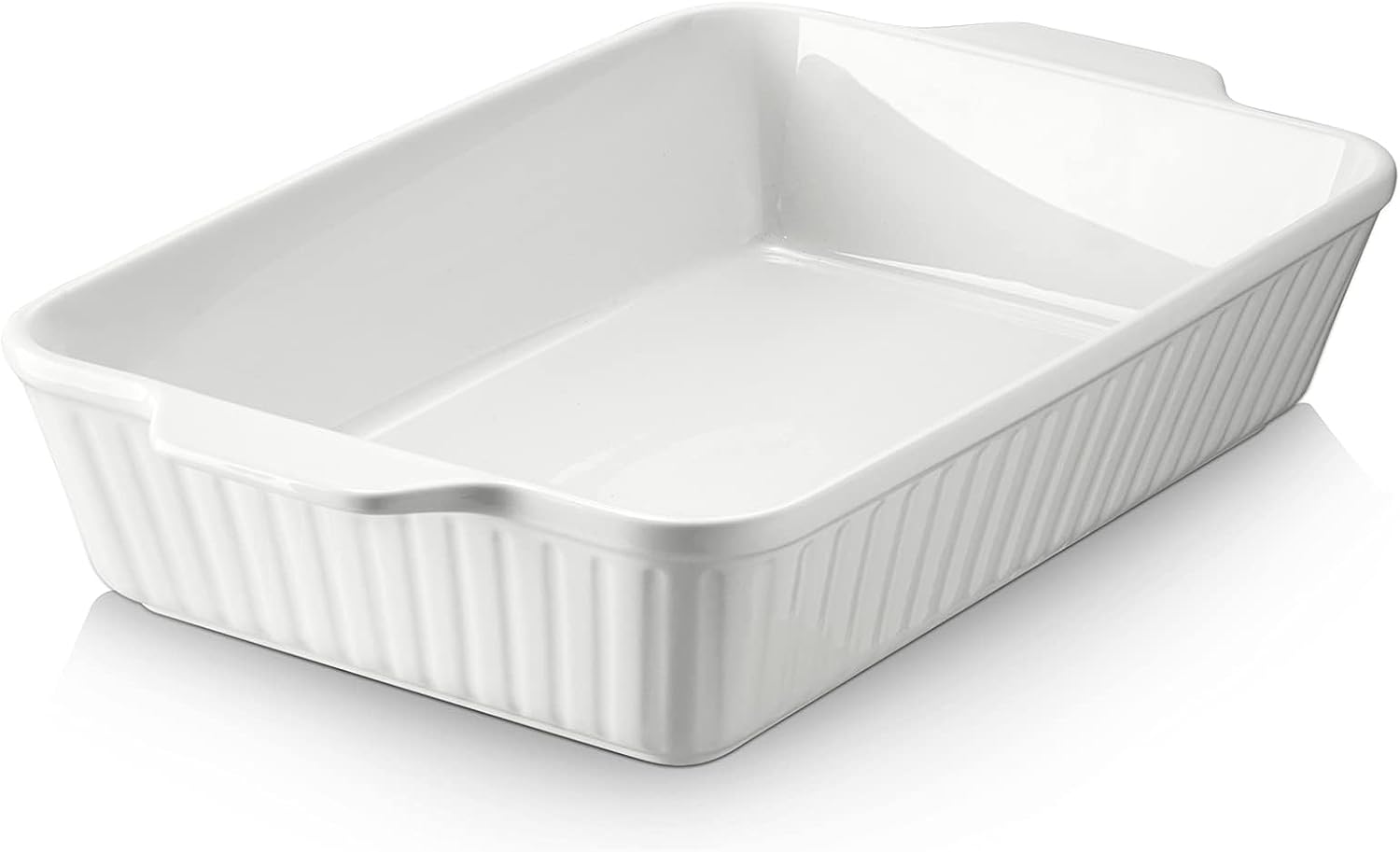 |
The Everyday Ceramic Workhorse | A deep 4.2-quart dish that handles nightly bakes without the ceramic-brand price tag. | Check Price on Amazon |
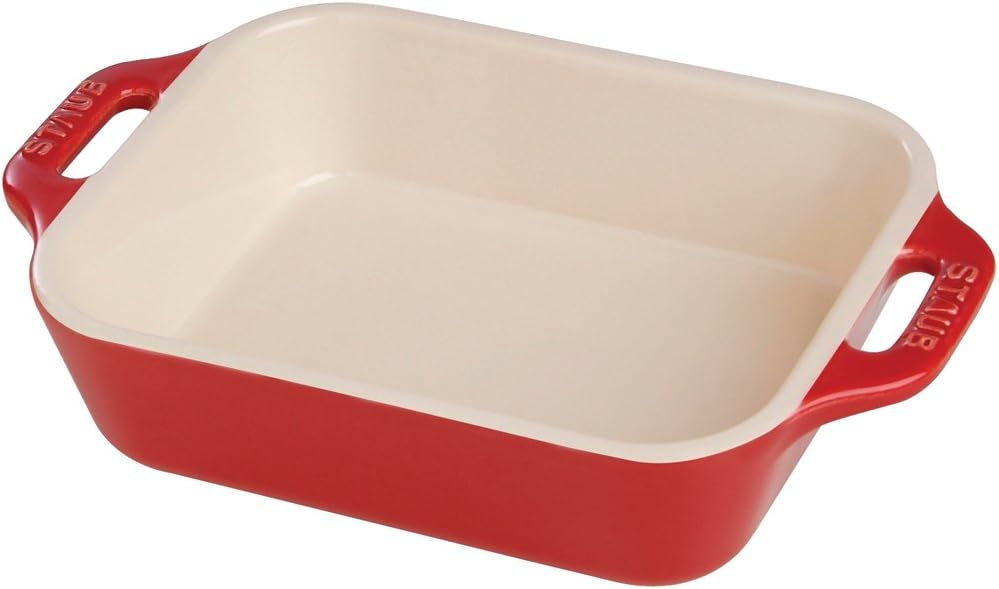 |
The Buy-It-Once Baker | French stoneware built to outlast several cheaper dishes, with heat retention to match. | Check Price on Amazon |
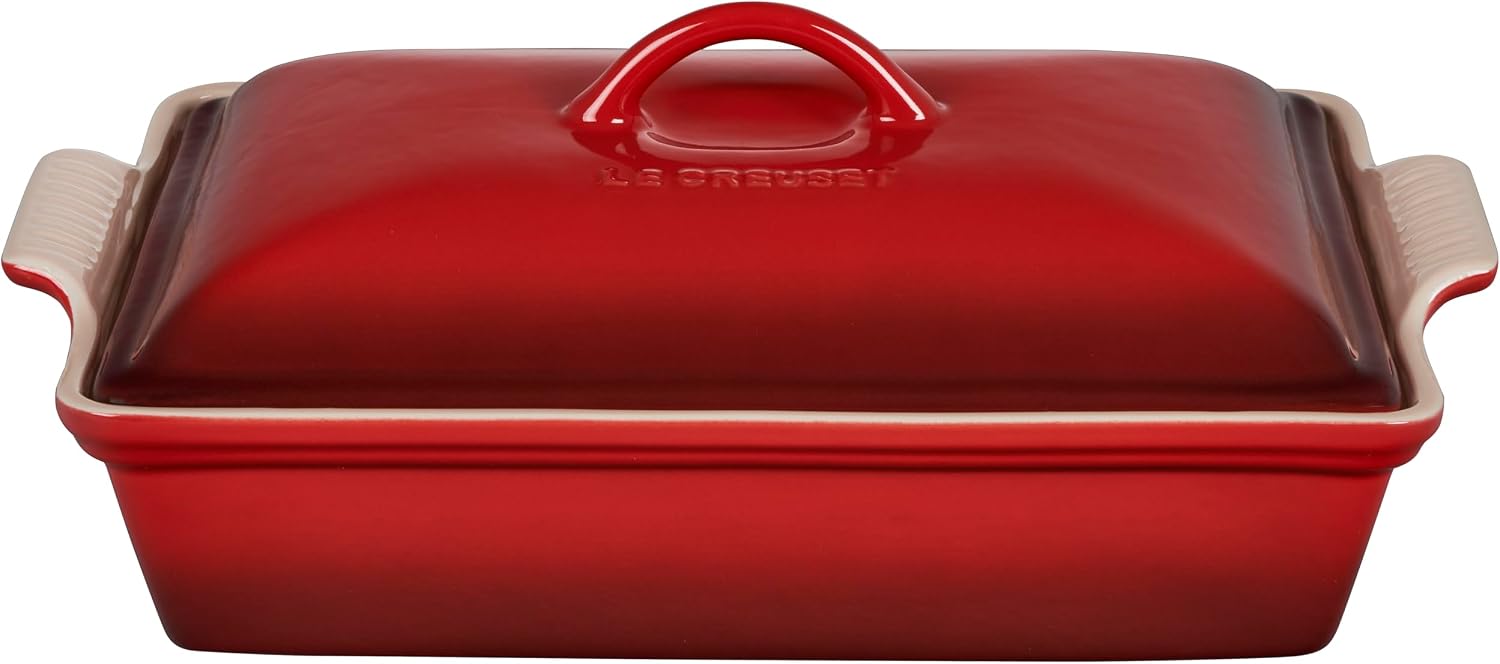 |
The Heirloom Freezer-to-Oven Baker | A 4-quart French stoneware dish built to go the distance, if you follow its one real rule. | Check Price on Amazon |
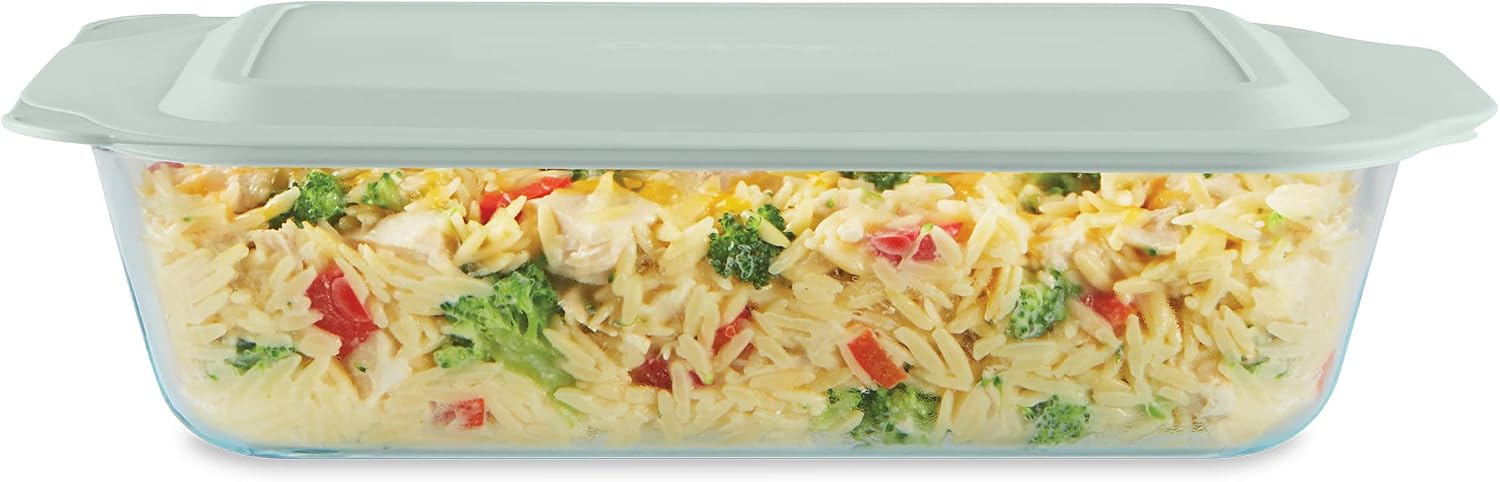 |
The See-Through Value Pick | A deep 5-quart glass dish that bakes, stores, and reheats in one piece. | Check Price on Amazon |
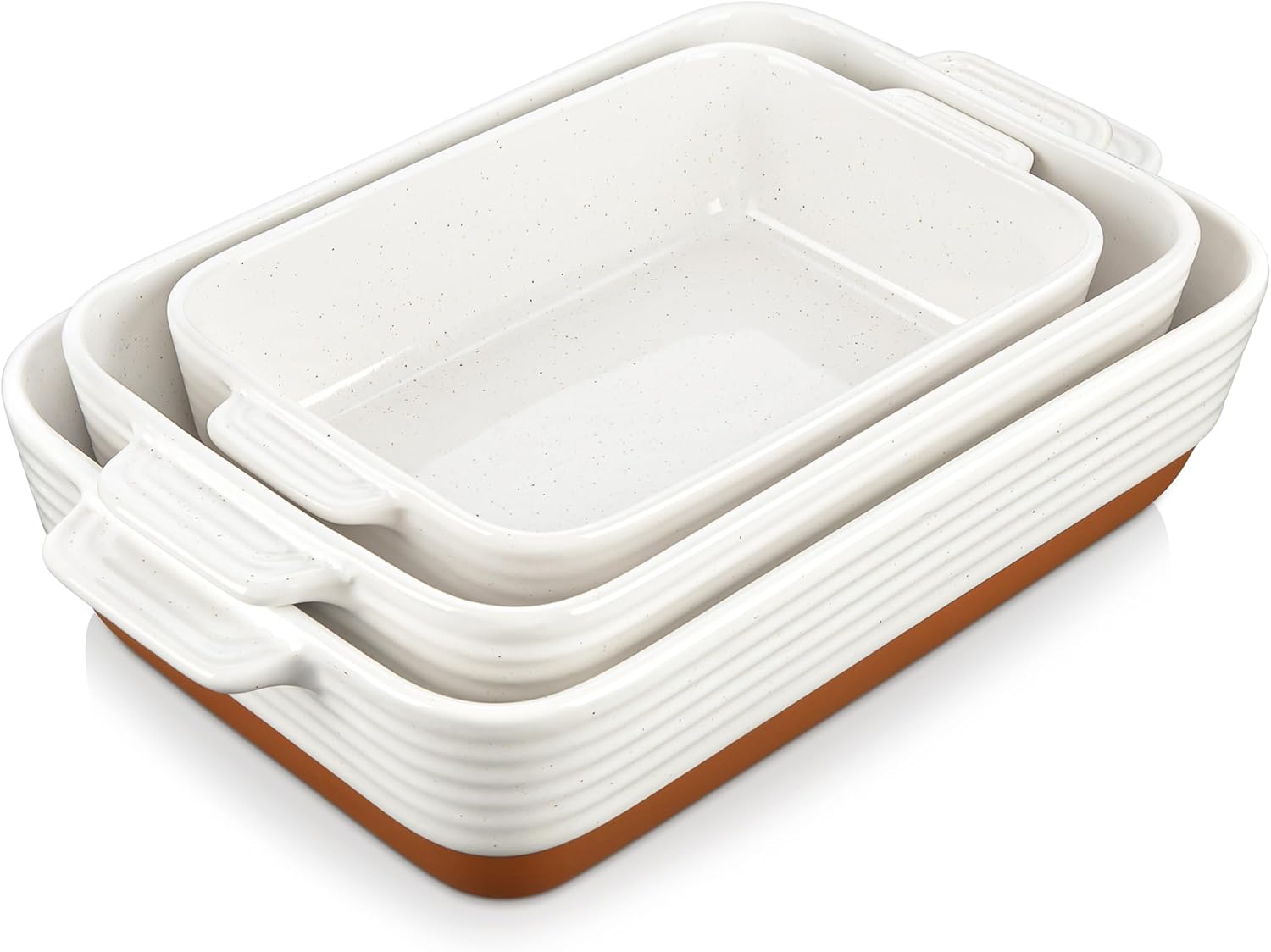 |
The Right-Size-Every-Time Set | Three nesting ceramic dishes that scale from a side dish to a holiday main. | Check Price on Amazon |
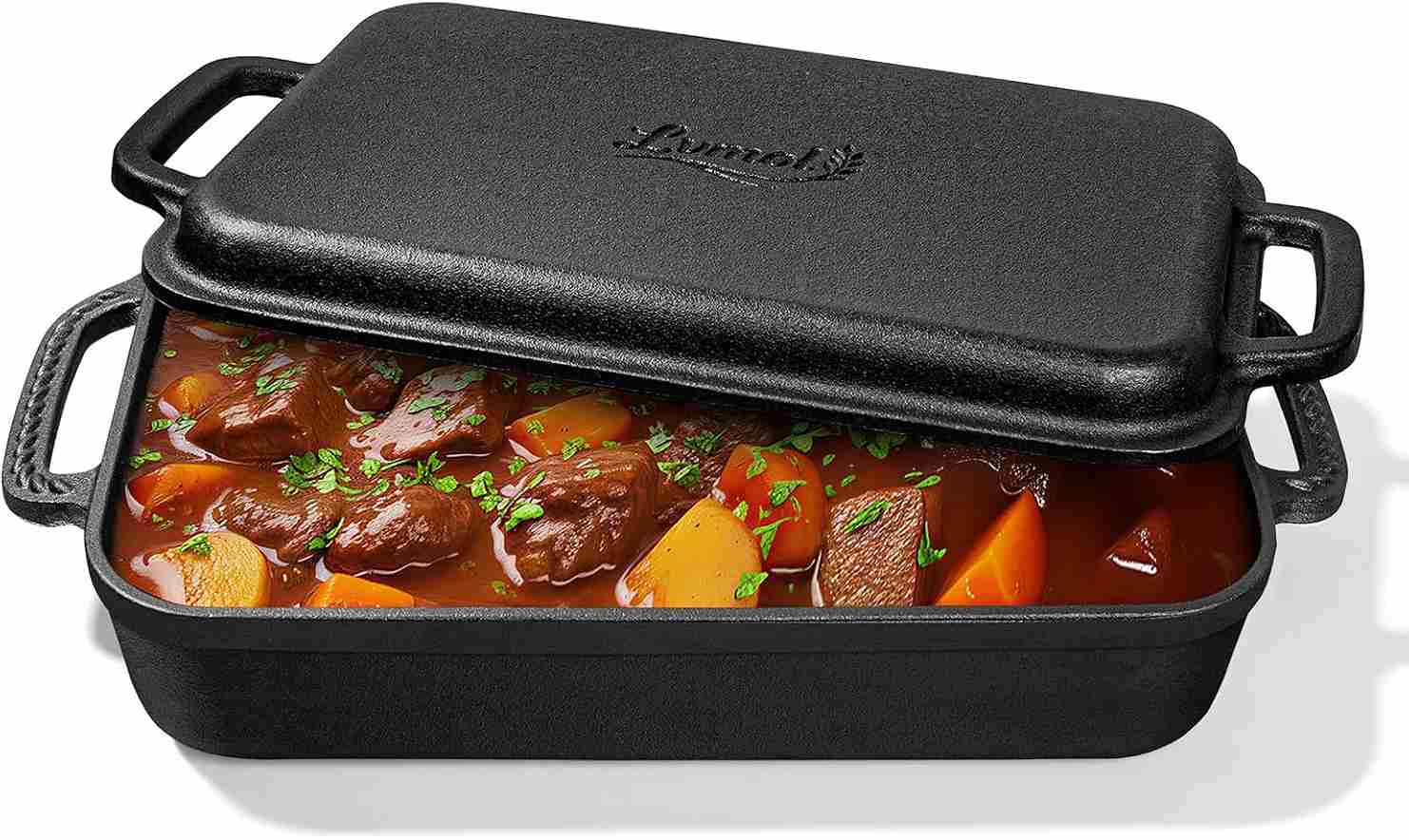 |
The Stovetop-to-Oven Do-It-All | A 6.5-quart combined cast iron dish and skillet built to sear, then bake. | Check Price on Amazon |
How to Pick a Casserole Dish
The right casserole dish comes down to three decisions: which material fits how you actually cook, which shape fits what you’re putting in it, and whether you want a lid. Get those three right and almost any casserole dish in a reasonable price range will serve you well for years.
Material
- Glass heats up fastest and lets you see browning on the bottom without lifting the dish — the most practical choice if you want an affordable, see-through option that doubles as a storage container.
- Ceramic and stoneware retain heat far longer once out of the oven, which matters at a table or a potluck, and develop a look that goes straight from oven to serving without apology. They heat up more slowly than glass to start.
- Enameled cast iron combines the best heat retention of the group with real durability, at a real price premium — worth it if you bake casseroles often enough to notice the difference over years of use.
- Bare cast iron is the only material that goes on the stovetop, so you can brown or sauté in the same dish before it goes in the oven. It also needs the most upkeep: hand-washing and re-oiling instead of a dishwasher cycle.
Shape and depth
A rectangular 9×13 is the most versatile shape and the right default for layered bakes like lasagna, where you need enough depth to stack ingredients without spilling over. A wider, shallower oval or square suits gratins, mac and cheese, or anything where a large, crisp top surface matters more than depth. As a rule: the more liquid or layers in what you’re cooking, the deeper the dish needs to be to avoid overflow in the oven.
Lid or no lid
A dish with a lid holds in moisture during baking, travels to a potluck without a mess, and goes straight into the fridge for leftovers without a separate container. A lidless dish is the better choice when a browned, slightly crisp top is the actual goal of the recipe, since a lid traps steam that works against that. Foil is a perfectly good stand-in for a lid on either type of dish when you need one and don’t own it.
Casserole Dish vs. Dutch Oven
The two get confused because both can be enameled cast iron, but the difference is shape, not material: a casserole dish is shallow and wide, built to bake a layered dish evenly and go straight to the table, while a Dutch oven is deep and tall-walled, built to trap steam for stovetop braising and simmering. If a recipe is oven-only, a casserole dish is the right tool; if it starts on the burner, reach for the Dutch oven instead.
Picks by use case
1. DOWAN 9×13 Ceramic Baking Dish, 4.2-Quart
If you want the clean, oven-to-table look of a designer ceramic baker without committing designer money to something that’s going to live in a crowded dishwasher, this is the dish that gets it right. The soft-white glaze looks just as at home next to a holiday spread as it does holding a Tuesday-night tray of baked ziti, and the deep 3.1-inch wall means sauce stays in the dish instead of bubbling over onto your oven floor. It’s not trying to be a splurge piece — it’s trying to be the dish you actually reach for, and it succeeds at that.
| Spec | Detail |
|---|---|
| Material | Lead-free ceramic |
| Dimensions | 15.6″ x 9.3″ x 3.1″ (with handles) |
| Capacity | 4.2 quarts |
| Oven-Safe Temp | 500°F |
| Lid | Not included |
| Dishwasher Safe | Yes (also microwave, fridge, and oven safe) |
Key Features
- Deep 3.1″ wall keeps saucy bakes like lasagna and baked pasta from overflowing
- Wide double handles stay cool enough near the rim to grip with a folded towel instead of bulky mitts
- Smooth glaze releases baked-on cheese and sauce without scrubbing
- Withstands 500°F, which covers everything from a low-and-slow gratin to a high-heat broil finish
Pros
- Genuinely low price for a ceramic dish this size
- Handles are wide enough for a confident two-hand carry, even full
- Glaze resists the yellowing some cheap ceramic picks up after a few tomato-sauce bakes
Cons
- No lid, so leftovers need to be transferred or wrapped separately
- White glaze shows scorch marks around the rim faster than a colored glaze would
Best For: Anyone who wants a reliable, good-looking everyday casserole dish and doesn’t want to think twice about which dish to reach for on a weeknight.
2. Staub Ceramic 13″ x 9″ Rectangular Baking Dish
Staub’s stoneware doesn’t just bake evenly — it diffuses heat slowly enough that a gratin sets from the edges in without scorching before the center’s done, which is the actual reason French stoneware costs more than a basic ceramic dish. The enamel glaze also doesn’t absorb moisture the way lower-fired ceramic does, so a bubbling tomato bake won’t leave the dish smelling faintly of itself a week later. This is the pick for someone who’s tired of replacing a $25 dish every couple of years and wants one that’s still going strong a decade in.
| Spec | Detail |
|---|---|
| Material | Enameled stoneware |
| Dimensions | 13″ x 9″ |
| Capacity | ~3 quarts |
| Oven-Safe Temp | 572°F (broiler and microwave safe) |
| Lid | Not included |
| Dishwasher Safe | Yes |
Key Features
- Dense stoneware body diffuses heat gently instead of creating hot spots at the edges
- Enamel glaze won’t absorb odors, oil, or sauce color over repeated use
- Highly scratch-resistant finish holds up to metal serving utensils
- Oven-safe well past what most home ovens reach, so broiling to finish a top layer is never a concern
Pros
- Noticeably better heat retention at the table than glass or thin ceramic
- Finish still looks new after years of tomato-based bakes, where cheaper glazes discolor
- French cookware-brand build quality, from a company (Staub) with a genuine cast iron and stoneware pedigree
Cons
- Costs roughly three to four times what a basic ceramic dish runs
- No lid on this specific dish, so it’s built for baking and serving, not storage
Best For: Someone who bakes casseroles often enough that the cost evens out over years, and who wants a dish nice enough to serve straight from the oven to the table.
3. Le Creuset Stoneware Heritage Rectangular Dish, 4-Quart
Le Creuset’s stoneware has one habit worth knowing before you buy it: the brand is explicit that a frozen dish should go into a cold oven and heat up together with it, never straight into a preheated one. That single rule is the difference between this dish lasting twenty years and cracking in year two, and it’s exactly the kind of detail that gets left off a spec sheet. Once you know it, this becomes one of the most forgiving stoneware pieces you can own — a 4-quart capacity that’s genuinely large enough for a full lasagna, in a glaze that resists staining even after years of tomato-heavy bakes.
| Spec | Detail |
|---|---|
| Material | Premium stoneware |
| Dimensions | 12″ x 9″ |
| Capacity | 4 quarts |
| Oven-Safe Temp | 500°F (broiler-safe with 2.5″+ clearance from the element) |
| Lid | Not included |
| Dishwasher Safe | Yes (also freezer, microwave, and metal-utensil safe) |
Key Features
- Rated for a genuinely wide thermal range, -9°F to 500°F, for going from freezer storage to a cold oven
- Non-porous glaze resists staining, chipping, and flavor absorption over years of use
- Scalloped handles give a secure grip even with oven mitts on
- Virtually non-stick surface releases baked layers cleanly, no pre-greasing needed
Cons
- Cannot go directly from freezer into a preheated oven — it has to start cold and heat up gradually
- Premium price point even by stoneware standards
- Not stovetop or direct-heat safe, oven and broiler only
Pros
- Heirloom-level durability backed by a century-old cookware maker
- Handles stay cool longer than most stoneware thanks to the scalloped, elevated design
- Colorful glaze options mean it doubles as a serving piece, not just a bake-and-hide dish
Best For: A household that bakes and freezes casseroles ahead of time and wants one dish built to handle that cycle for decades, not just survive it.
4. Deep Pyrex Glass Baking Pan with Plastic Storage Lid
Glass earns its spot in a casserole lineup for one reason nothing else on this list can match: you can see exactly what’s happening on the bottom of your bake without lifting it out of the oven. This “Deep” version adds real capacity to that advantage — Pyrex built it roughly 50% deeper than its standard dish, so a fully loaded lasagna or a rice bake with a lot of liquid won’t creep toward the rim. It’s tempered glass rather than the old-style borosilicate, so it’s built for oven, freezer, and microwave use as sold, not for shocking it between extremes — treat that difference with a little care and it’s the most transparent, literally, dish in the group.
| Spec | Detail |
|---|---|
| Material | Tempered glass with BPA-free plastic lid |
| Dimensions | 9″ x 13″ (Deep — ~50% deeper than standard Pyrex) |
| Capacity | ~5 quarts |
| Oven-Safe Temp | Preheated oven, freezer, and microwave safe |
| Lid | Yes, plastic, dishwasher (top rack), freezer, and microwave safe |
| Dishwasher Safe | Yes |
Key Features
- Non-porous glass won’t pick up stains, oil, or lingering odors from previous bakes
- Extra depth holds a fully loaded lasagna or rice casserole without spillover
- Included lid seals well enough for fridge storage and reheating leftovers
- Clear body lets you check browning on the bottom crust without pulling the dish
Pros
- Lowest price point of any dish in this lineup by a wide margin
- Doubles as a storage container thanks to the included lid
- Decades of brand trust behind the name, and replacement lids are easy to find later
Cons
- Tempered glass is more sensitive to sudden extreme temperature swings than stoneware or borosilicate
- Plastic lid is functional, not something you’d set out for a dinner party
Best For: Someone who wants one dish that bakes, stores, and reheats without buying separate pieces for each job — and who’s mindful about not shocking cold glass with sudden high heat.
5. MALACASA Ceramic Casserole Dish Set of 3, TARA Series
The real problem a single casserole dish never solves is portion mismatch — a 9×13 dish is overkill for a side of scalloped potatoes and too small for a holiday-sized bake. This three-piece set (14.5″, 13″, and 10.5″) is built around that exact problem, nesting down to almost nothing in a cabinet when they’re not in use. The khaki-white glaze reads more like tableware than utilitarian bakeware, which matters if you’re the kind of cook who serves straight from the dish instead of transferring to a platter first.
| Spec | Detail |
|---|---|
| Material | Lead-free ceramic |
| Dimensions | 14.5″, 13″, and 10.5″ (set of 3, nesting sizes) |
| Capacity | Varies by piece, small to large |
| Oven-Safe Temp | Oven, microwave, and dishwasher safe |
| Lid | Not included |
| Dishwasher Safe | Yes |
Key Features
- Three nesting sizes cover everything from a side dish to a family-sized main
- Anti-chip, scratch-resistant glaze holds up to serving utensils
- Stackable design saves real cabinet space compared to buying three separate dishes
- Double handles on every piece, sized appropriately to each dish
Pros
- Better value than buying three individual ceramic dishes separately
- Covers small reheats and big holiday bakes with one purchase
- Consistent glaze and design across all three pieces looks intentional on a table, not mismatched
Cons
- None of the three sizes are individually as large as a dedicated 9×13 dish
- No lids included on any of the three pieces
Best For: A household that cooks in a range of portion sizes — weeknight sides one night, a full holiday casserole the next — and wants one purchase to cover both ends.
6. Lvmol 9×13 Cast Iron Casserole Dish with Skillet Lid
This is the pick for someone who wants a casserole dish that can actually start a meal, not just finish one. The lid isn’t decorative — it flips over into a full skillet, so you can brown ground beef or sauté vegetables in it before the same cast iron goes into the oven to bake. That’s a genuinely different shape and job than a round Dutch oven: this is a shallow, wide 9×13 built specifically for layered bakes, not a deep pot built for braising liquid-heavy stews. At nearly 17 pounds combined, it has real heft, but that mass is exactly why cast iron holds a steady, even bake instead of the hot spots thinner metal pans develop.
| Spec | Detail |
|---|---|
| Material | Bare, pre-seasoned cast iron (coating-free) |
| Dimensions | 9″ x 13″ |
| Capacity | 4.5 quarts (dish) + 2 quarts (skillet lid) = 6.5 quarts combined |
| Oven-Safe Temp | Up to 500°F; also stovetop and open-flame safe |
| Lid | Yes, flips into a standalone skillet |
| Dishwasher Safe | No — hand wash and re-oil, standard for bare cast iron |
Key Features
- 2-in-1 design: the lid works as a searing skillet before the dish goes in the oven
- Coating-free cast iron means there’s no finish to wear off or flake over years of use
- Rectangular 9×13 shape is built for layered bakes, not braising liquid like a round Dutch oven
- Safe on the stovetop, in the oven, and over a campfire, unlike every ceramic or glass pick on this list
Pros
- Genuinely multi-purpose: brown, sauté, and bake without switching pans
- No enamel or nonstick coating to chip, crack, or wear thin over time
- Heirloom-grade durability that improves with seasoning rather than degrading with age
Cons
- Nearly 17 pounds combined makes it the heaviest dish here by a wide margin, awkward for smaller hands full of hot food
- Requires the same hand-wash-and-oil routine as any bare cast iron, no dishwasher shortcuts
Best For: A cook who wants one pan that sears, sautés, and bakes, and doesn’t mind the extra weight and maintenance that comes with bare cast iron.
What size casserole dish should you buy?
A 9×13-inch dish in the 3- to 4-quart range covers the vast majority of everyday cooking, and it’s the right default if you’re only buying one. Anything smaller leaves you improvising for a full lasagna or a holiday side; anything bigger tends to sit in a cabinet the rest of the year. The real deciding factor isn’t your family size on an average night — it’s the biggest thing you’ll realistically cook, since it’s easier to bake a small portion in a large dish than to force a big one into a small dish.
| Household / Occasion | Recommended Capacity | Common Dimensions |
|---|---|---|
| Single serving or a small side | 1–1.5 quarts | ~6″x8″ or small oval |
| 2 people, or a side dish for a group | 2 quarts | 8″x8″ square |
| Small family (3–4 people) | 3 quarts | 9″x9″ or a shallow 9″x13″ |
| Standard family (4–6 people) | 3–4 quarts | 9″x13″, the most common size sold |
| Larger household or full lasagna | 4–5 quarts | Deep 9″x13″ |
| Crowds, holidays, or batch-cooking to freeze | 5+ quarts | Deep 9″x13″ or a large oval |
If you’re choosing between two sizes, size up rather than down. A dish that’s slightly too big just means a little extra browning around the edges; a dish that’s too small means overflow in your oven and a recipe that doesn’t cook evenly because it’s piled too deep in the center.
Care & Maintenance: Getting the Most Out of Your Casserole Dish
Most casserole dish damage comes down to two habits: shocking it with a sudden temperature change, and letting sauce-based stains sit long enough to bake in permanently. Both are avoidable once you know what your specific dish is actually made of, because glass, stoneware, ceramic, and cast iron each fail — or hold up — for different reasons.
Avoiding thermal shock
Thermal shock happens when one part of a dish heats or cools faster than the rest, and the resulting stress cracks it. The risk and the rule both depend on material:
- Tempered glass (most Pyrex-style dishes) is the most sensitive. Never move it straight from the freezer into a hot oven, and never set a hot glass dish onto a cold or wet surface, or plunge it into cold water to “cool it down faster.” Let it come to room temperature first, or start it in a cold oven and heat both together.
- Stoneware (Le Creuset, Staub, and similar) generally tolerates a wider range, but manufacturer guidance is still specific: a frozen stoneware dish should go into a cold oven, not a preheated one, and be allowed to heat up gradually alongside it.
- Enameled cast iron handles heat changes better than glass or stoneware, but the enamel coating itself can still crack from an abrupt shock, like adding cold liquid to a screaming-hot pan straight off the stove.
- Bare cast iron is the least sensitive to thermal shock of the group — it’s the same material that goes straight from a fridge marinade into a hot skillet — but it has its own rule: never let it soak in water or air-dry wet, since that’s what invites rust.
Preventing and removing stains
Tomato-based sauces are the most common staining culprit across every material. Glazed surfaces (ceramic, stoneware, enameled cast iron) resist staining far better than unglazed ceramic, but none of them are stain-proof. If a stain does set in, a paste of baking soda and a little water, left to sit for a few hours before scrubbing, lifts most residue without the abrasive damage that steel wool or harsh scouring pads cause. Letting a dish soak in warm soapy water for 20–30 minutes right after use — rather than letting it sit dirty overnight — prevents most stains from ever setting in the first place.
Dishwasher safety by material
- Glass — Dishwasher safe as a rule; the main risk is thermal shock from a very hot dry cycle right after the dish came out cold, so let it cool slightly first.
- Ceramic and stoneware — Dishwasher safe in almost all cases, including premium brands like Staub and Le Creuset.
- Enameled cast iron — Technically dishwasher safe, but repeated cycles dull the glossy enamel finish faster than hand-washing does. If you paid extra for the finish to look good on the table, hand-wash it.
- Bare cast iron — Never dishwasher safe. Hand wash, dry immediately, and rub in a thin layer of oil to maintain the seasoning that keeps it non-stick.
How to keep food from sticking to casserole dish
Grease the dish before you add anything — the fat creates a barrier between the food and the surface, and skipping this step is the single biggest reason casseroles stick, regardless of what the dish is made of. What changes is the method, because a glazed ceramic surface, plain glass, and bare cast iron all release food through different mechanisms.
Glazed ceramic and stoneware (like Staub, Le Creuset, DOWAN, or MALACASA) have a smooth, glass-like glaze that reduces sticking but isn’t the same as a chemical non-stick coating — it still needs help with foods high in sugar or cheese. Brush or rub a thin, even layer of butter, oil, or a neutral cooking spray across the bottom and up the sides before adding anything. For bread or anything with a crust, a light dusting of flour or semolina over the greased surface adds a second release layer.
Glass dishes are naturally lower-stick than metal but not stick-proof. If food is sticking in a glass dish, it’s almost always one of two things: not enough fat on the surface, or the oven running hotter than the recipe calls for, which bakes sugars and proteins directly onto the glass before they’d otherwise release cleanly.
Bare cast iron works on a completely different principle — it relies on seasoning, a layer of polymerized oil built up over repeated use, rather than a one-time grease job. A well-seasoned piece needs only a light re-oiling before baking; a newer or under-seasoned piece needs a more generous coat, and will keep releasing food more easily every time you cook with it and re-oil it afterward.
One trick that works across every material: for anything you plan to lift out in one piece, like a bar dessert or a layered bake you want to slice cleanly, line the dish with parchment paper and leave enough overhang on two sides to use as handles. It sidesteps the sticking question entirely for that one dish, no matter what it’s made of.
Faqs
What dishes can you make using a casserole dish?
Anything that benefits from baking in a wide, shallow layer — casserole dishes aren’t limited to the dish they’re named for. Layered pasta bakes like lasagna and baked ziti are the obvious use, but the same shape works just as well for gratins, mac and cheese, roasted vegetables, a small chicken or pork roast, fruit crisps and cobblers, and bar desserts like brownies. The common thread is even, wide-surface oven heat rather than the deep, enclosed heat a Dutch oven or stockpot is built for.
Is it safe to use a casserole dish in the oven?
Yes — the oven is what a casserole dish is designed for, but the exact temperature limit depends on the material, not the brand. Glass typically tops out around 450–500°F, stoneware and ceramic often go higher (up to 500–572°F depending on the piece), and cast iron can handle anything a home oven produces. The one thing to check before assuming: not every dish is automatically broiler-safe just because it’s oven-safe, since broiler heat runs hotter and more direct than standard baking. If the manufacturer doesn’t explicitly list it as broiler-safe, treat it as oven-only.
How deep should a casserole dish be?
Match the depth to what you’re layering, not to the size of the dish. A standard 2 to 2.5 inches of depth covers most everyday bakes. Go deeper — 3 inches or more — for anything liquid-heavy or stacked in layers, like lasagna or enchiladas, where a shallower dish risks bubbling over in the oven. Go shallower, closer to 1.5–2 inches, for dishes like gratins or mac and cheese, where more exposed surface area means more browned, crisp topping relative to the filling underneath.
Conclusion
A great casserole dish comes down to matching the material and shape to what you actually bake, not chasing whichever option looks best on a shelf or has the most reviews. If you want a dependable workhorse for weeknight lasagna, the DOWAN or the Pyrex Deep Glass covers that without asking you to spend much. If you bake often enough that heat retention and a stain-resistant finish are worth paying for, the Staub or the Le Creuset earns that cost back over years, not weeks. And if you want one pan that sears on the stovetop before it goes in the oven, the Lvmol cast iron is the only pick here built for that job specifically. Whichever you choose, the gap between a casserole dish that lasts and one that doesn’t rarely comes down to price — it comes down to whether you treat the material the way it actually needs to be treated, from the first bake through the fiftieth.
Affiliate disclosure
HomePlora is reader-supported. When you buy through links on this page, we may earn an affiliate commission through the Amazon Associates Program, at no additional cost to you. We only recommend products we’ve test it in our kitchen and stand behind — commission never influences which casserole dishes make this list or how they’re ranked.

Hi, I’m Muhammad Din. I test and compare kitchen tools in my own kitchen before I ever recommend them — if it’s in a guide on HomePlora, I’ve used it or dug deep enough to know exactly where it holds up and where it doesn’t. My goal is simple: help you find tools that actually earn a spot in your kitchen, without wasting money on ones that don’t.