

Introduction
The first time I tried to melt a bag of chocolate chips straight in a saucepan, half of it turned into a grainy, broken mess I scraped into the trash — and the other half scorched onto the bottom in a layer I spent twenty minutes scrubbing off. That’s the exact failure a double boiler exists to prevent, and it’s why most people searching for the best double boiler pot aren’t shopping out of curiosity. They’ve already ruined something.
I’ve since run six of these pots and inserts through my own kitchen — melting, tempering, holding sauces, gently reheating rice — and the real differences between them come down to a handful of things that actually matter: whether you already own a saucepan one can nest into, whether your stove is induction, and how much you’re actually making at once. This guide covers the six I’d genuinely recommend, the mechanics of why steam succeeds where direct heat fails, and what to set up instead if you don’t want to buy a dedicated pot at all.
For most home cooks, the Farberware Classic 2-Quart Double Boiler Set is the one to buy. It pairs a dependable stainless steel base with a snug-fitting insert that keeps steam — not direct flame — against your food, handles everyday jobs like melting chocolate and holding sauces without any fuss, and costs little enough that you won’t hesitate to grab it for a quick job. If you already own a saucepan in the 2-4 quart range, the All-Clad insert further down is worth a look instead of a full set — but for a first double boiler, or one that just works without a second thought, the Farberware is the right call.
Comparison
| Image | Product | Details | Price |
|---|---|---|---|
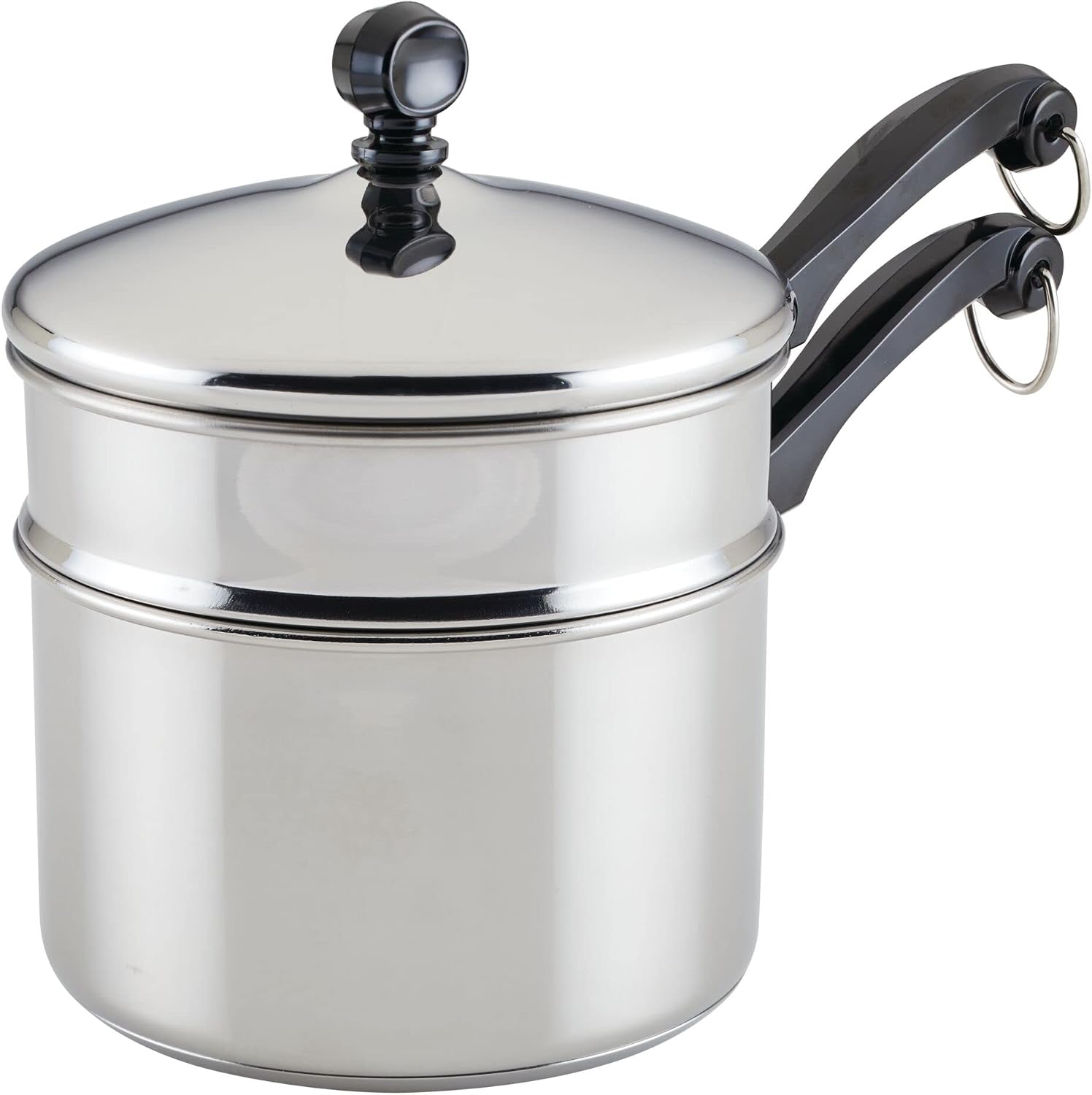 |
Farberware Classic 2-Quart Double Boiler | the steady, no-drama pick that just works. | Check on Amazon |
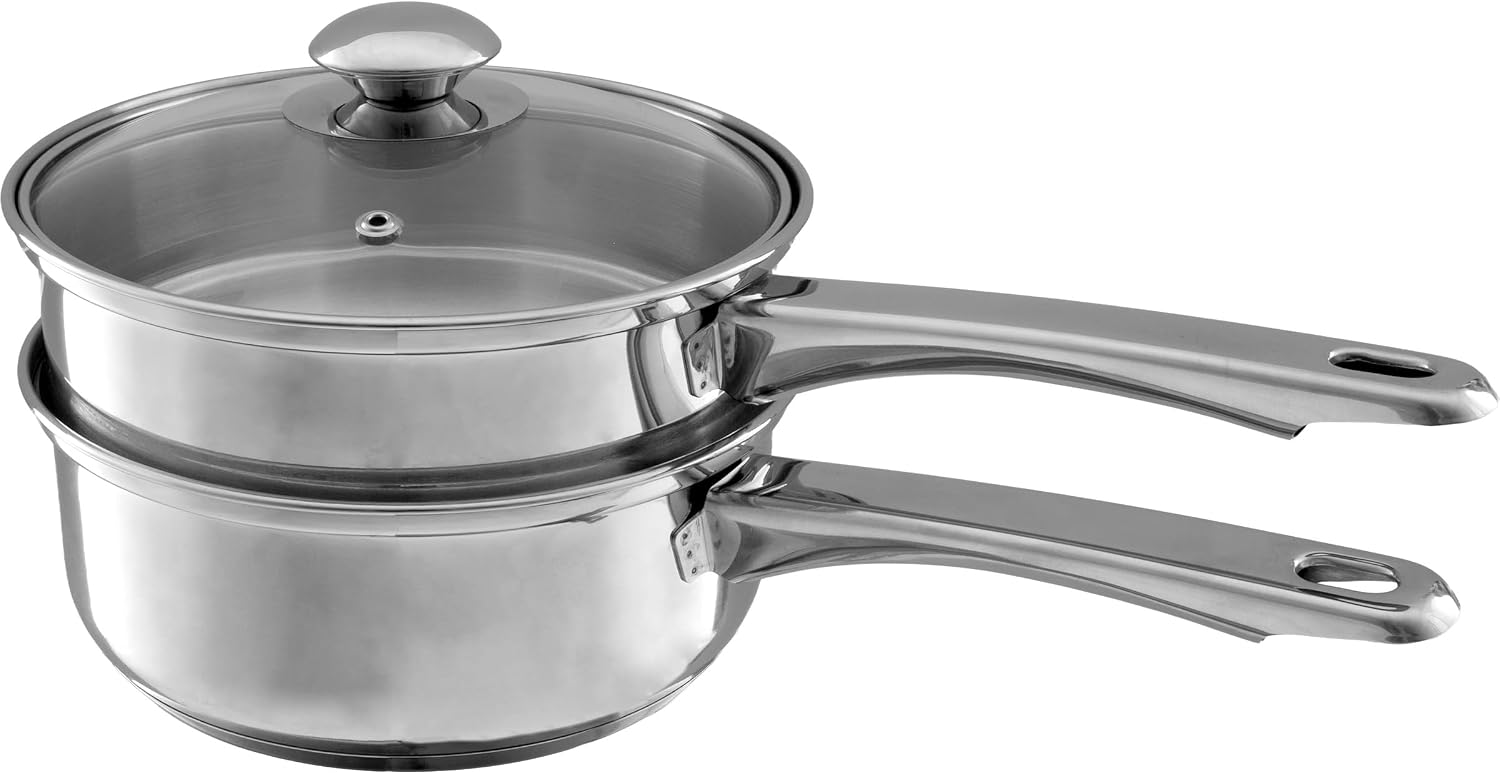 |
Classic Cuisine 6-Cup Double Boiler Combo | the training-wheels double boiler I’d actually recommend. | Check on Amazon |
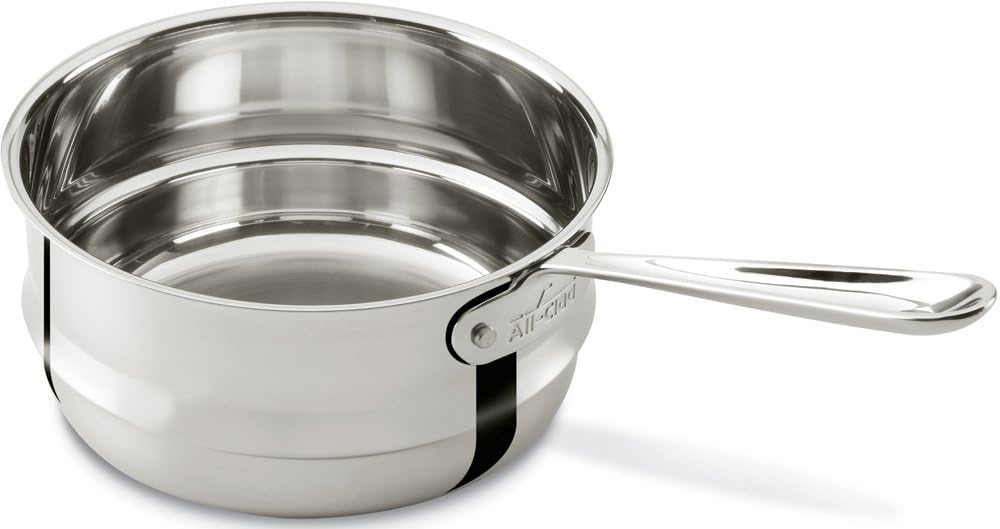 |
All-Clad 3-Quart Double Boiler Insert | a smart add-on if you already own the saucepan it needs. | Check on Amazon |
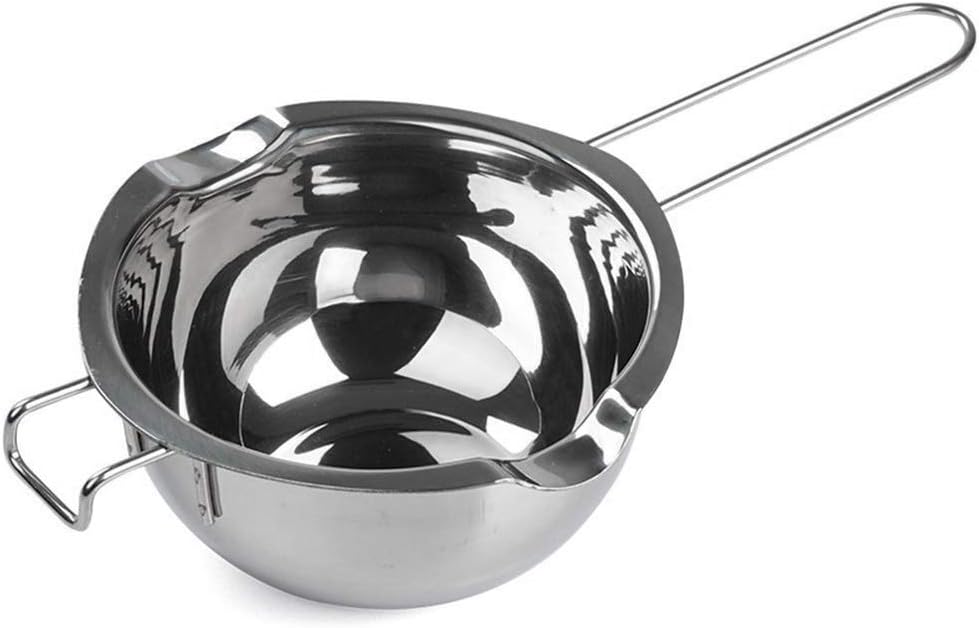 |
Songziming 2-Cup Double Boiler Pot | the grab-and-go option for small jobs. | Check on Amazon |
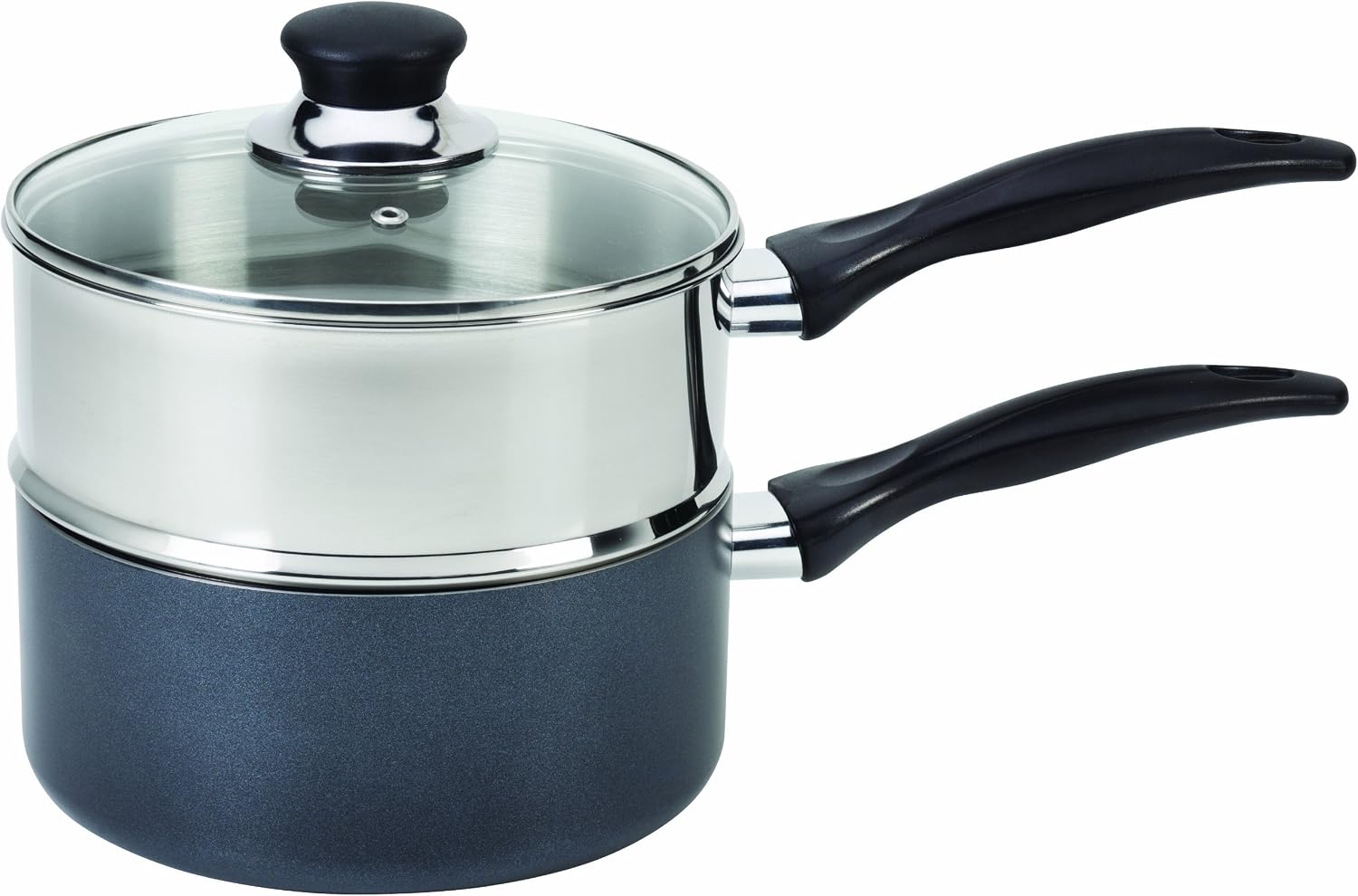 |
T-fal Specialty Nonstick 3-Quart Double Boiler | the easiest one on this list to clean. | Check on Amazon |
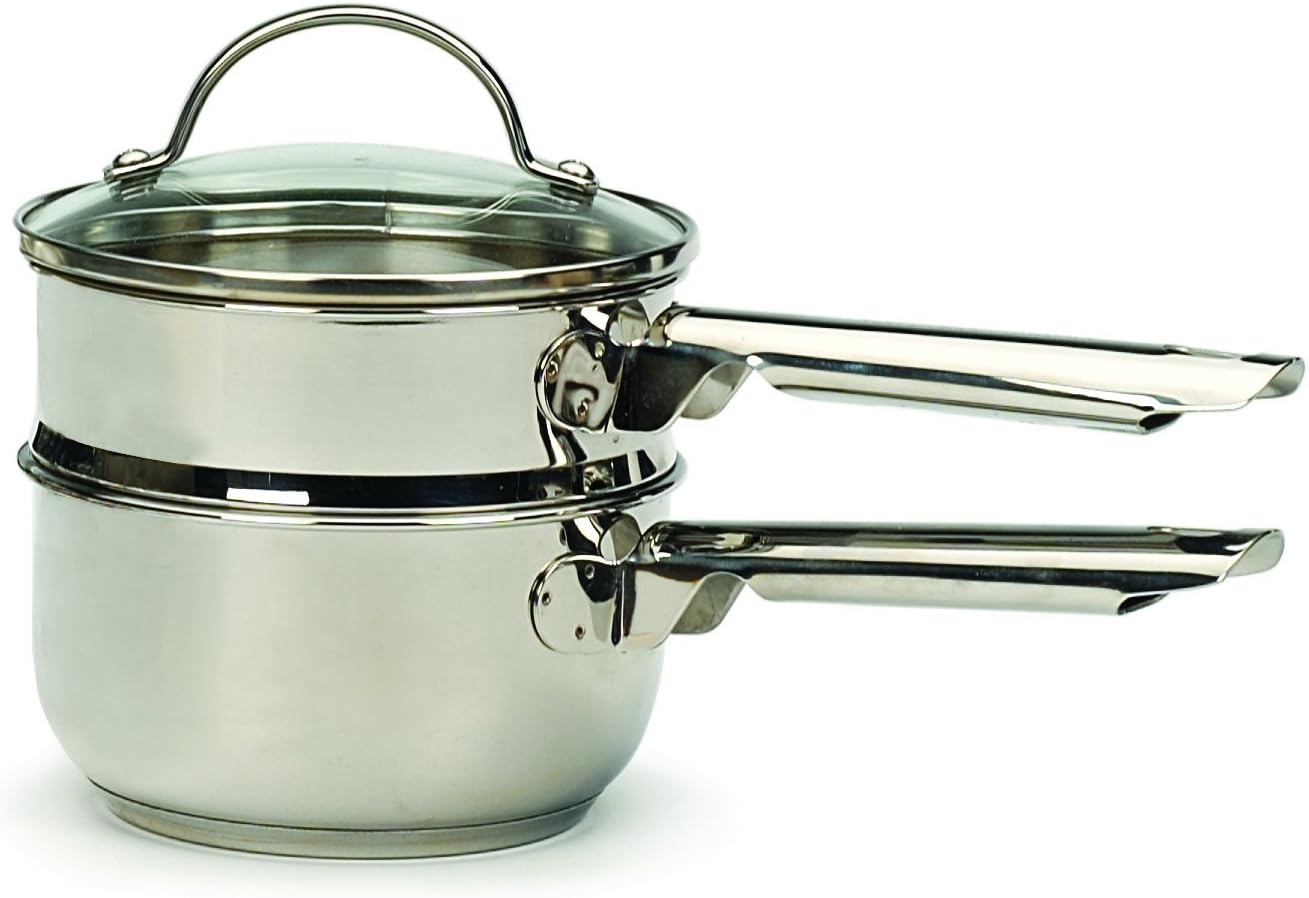 |
RSVP International Induction Double Boiler | proof induction cooking doesn’t have to mean giving up your double boiler. | Check on Amazon |
What a Double Boiler Actually Does (and why direct heat fails)
A double boiler works by putting a layer of steam between your burner and your food, and that layer can’t get hotter than about 212°F no matter how high you turn the flame.
Here’s the actual mechanism: water at sea level boils at 212°F and stays there. Once it’s boiling, cranking the burner higher doesn’t raise the temperature any further — the extra energy just turns more water into steam faster. I didn’t fully trust this until I stuck a thermometer in a pot of simmering water and watched it plateau at 212°F no matter how hard I turned the dial. That plateau is the entire mechanism. The ceiling is set by water itself, not by your stove.
A bare pan has no such ceiling. Put it on high heat and the metal surface touching your food can climb past 300°F within seconds — long before whatever you’re cooking needs to reach that temperature. That’s what actually ruins things: your chocolate or your eggs don’t need to hit 300°F to be ruined. They only need to touch a surface that hot for a moment.
The numbers make the risk concrete. Dark chocolate starts to scorch and seize past roughly 115-120°F on direct heat; milk and white chocolate scorch even sooner, often around 110°F, because their milk solids burn faster. Egg-based sauces like hollandaise begin to curdle once the yolks hit somewhere in the 145-160°F range — a threshold a bare pan blows past almost instantly, even if you pull it off the burner the second you notice.
A double boiler sidesteps all of this because your food never touches the heat source directly. It touches the underside of the insert, the insert touches steam, and steam is capped by physics instead of your reflexes. You still have to pay attention — but you’re not racing a burner that can spike without warning.
Double Boiler Set vs Insert — Which One You Actually Need
If you don’t already own a saucepan you’d trust for gentle heat, buy a set. If you do, buy an insert instead and save the money and the cabinet space.
A set gives you both pieces matched to fit each other out of the box — a base pot sized correctly for the insert that sits on top of it. That’s the easier starting point if this is your first double boiler: no measuring, no guessing whether two separately-bought pieces will actually sit flush instead of dropping down into the water underneath.
An insert only makes sense if you already own a compatible saucepan or stockpot. Our saucepan guide covers what to look for, and it’s worth checking before you buy an insert on its own — the insert has to rest on the rim without sinking in and touching the water below it, or you’ve built an expensive, roundabout way to just boil something directly.
Before ordering an insert, measure the rim diameter of the saucepan you’d use it with. Most universal inserts are built for a specific range — commonly the 6-8 inch mouth of a 2-4 quart pot — and a mismatch means the insert either sits too low or wobbles instead of sealing in steam.
Choose a set if:
- This is your first double boiler
- You don’t own a saucepan you’d trust with delicate heat
- You’d rather not measure anything and just want it to work
Choose an insert if:
- You already own a saucepan in the right size range
- You’re tight on storage space
- You’ve already invested in a specific line — like the All-Clad insert above — and want a piece that matches it
My tested Picks
1. Farberware Classic 2-Quart Double Boiler Set
Best Overall
My first hollandaise attempt went straight in the trash — scrambled eggs floating in butter, because I rushed it over direct heat. This 2 quart Farberware pot fixed that the very next weekend. The insert sits snug enough over the base that steam does the work instead of flame, and I’ve used it in my kitchen for everything from melted ganache to slow-warmed cheese sauce since. It’s the most no-nonsense of the farberware classic saucepans lineup, but it’s the one that taught me the process actually works.
| Spec | Details |
|---|---|
| Material | Stainless steel (base, insert, and lid) |
| Capacity | 2 quarts |
| Oven-safe | Up to 350°F |
| Dishwasher safe | Yes |
| Handles | Riveted, with hanging hook |
Key features
- Snug-fitting insert traps steam instead of losing it around loose edges
- Riveted handles with a hook so the insert won’t slide mid-stir
- Part of the same farberware stainless steel pots family, so the fit feels familiar if you already own their cookware
- Doubles as a plain 2-quart saucepan once you pull the insert
Pros
- Reliable, no-surprises performance for melting and gentle sauces
- Easy to find replacement parts thanks to a long-running product line
- Affordable enough to buy without agonizing over it
Cons
- The metal feels noticeably lighter than tri-ply cookware — don’t expect All-Clad heft
- Where the insert rim meets the base, residue likes to hide; plan on a second wipe there
- At 2 quarts, it’s a one-or-two-person tool, not a holiday-batch one
Best for: Home cooks who want the best double boiler pot for everyday use without overthinking size, brand, or price.
2. Classic Cuisine 6-Cup Double Boiler & Saucepan Combo
Best for Beginners
My niece wanted to make her own caramel for a school project, and handing a teenager a bare saucepan over direct heat felt like a bad idea. This 1.5-quart saucepan and 6-cup insert combo solved it — the vented glass lid let her watch the color change without lifting it and losing heat. I’ve used it in my kitchen since for melted chocolate and slow-warmed custard. It’s the one I’d hand a beginner before anything pricier.
| Spec | Details |
|---|---|
| Material | Stainless steel body, tempered glass lid |
| Capacity | 1.5-quart saucepan base / 6-cup insert |
| Cooktop compatibility | Gas, electric, glass, induction |
| Included | Saucepan, insert, vented glass lid |
| Bonus | Quart/liter markings inside the pot |
Key features
- Vented glass lid lets you watch without lifting — crucial for chocolate and candy that scorch fast
- Built-in measurement markings mean fewer dirty measuring cups
- Works across gas, electric, glass-top, and induction stoves
Pros
- Genuinely beginner-friendly — the glass lid does a lot of the guesswork for you
- Doubles as a plain saucepan once you pull the insert
- Price makes it an easy first double boiler to own
Cons
- The glass lid is the weak point — tempered glass still chips if it gets knocked around
- 6 cups caps out fast for a big batch of dipped strawberries or a crowd
- A newer, lower-cost line, so it doesn’t have the decades-long track record legacy brands like Farberware have
Best for: First-time buyers, or anyone teaching a beginner to cook without direct-heat mistakes.
3. All-Clad 3-Quart Double Boiler Insert
Best Premium Pick
I borrowed a friend’s All-Clad saucepan set for a dinner party once and realised there was no double boiler included — this insert is the fix. It nests into any 8-inch, 3-to-4-quart All-Clad saucepan you already own, so this double boiler All-Clad insert turns cookware you already own into a proper melting setup instead of improvising with a mixing bowl. I’ve used it in my kitchen for tempering chocolate for dipped strawberries, and the polished interior released a clean, glossy shell every time.
| Spec | Details |
|---|---|
| Material | 18/10 stainless steel |
| Capacity | 3 quarts |
| Fits | All-Clad 3-, 3.5-, and 4-quart saucepans/casseroles (8″ diameter) |
| Handle | Riveted, cool-touch, holed for hanging |
| Warranty | Lifetime (All-Clad) |
Key features
- Mirror exterior, polished interior that resists sticking without a nonstick coating
- Rolled edge for drip-free pouring — no chocolate trail down the side
- Riveted handle stays cool and doubles as a hanging hook
Pros
- Turns cookware you already own into a real double boiler instead of buying a whole new pot
- Backed by All-Clad’s lifetime warranty against defects
- Polished interior makes cleanup fast even after sticky ganache
Cons
- Only fits All-Clad’s 8-inch saucepans and casseroles — not a universal insert for other brands
- “Dishwasher safe” is technically true, but All-Clad recommends hand washing to protect the finish
- Premium price for what’s functionally a single nested piece
- Listings disagree on induction compatibility — the Amazon listing marks it induction-safe while All-Clad’s own product page for this insert says otherwise, so confirm directly with All-Clad before relying on it for an induction range
Best for: All-Clad owners who don’t want to buy a whole separate double boiler pot.
4. Songziming 2-Cup Double Boiler Pot
Best for Small-Batch Melting
Sometimes you just need to melt a quarter cup of chocolate for drizzling over cookies, and hauling out a full double boiler set feels like overkill. This double boiler pot for melting chocolate is what I keep in a drawer for exactly that — it hooks onto the rim of a saucepan I already own, no second base pot required. I’ve used it in my kitchen more for small jobs like this than anything else on this list, honestly, because it’s the fastest one to grab and clean.
| Spec | Details |
|---|---|
| Material | Stainless steel |
| Capacity | 2 cups (also sold in larger sizes) |
| Style | Insert-only — hooks onto your existing saucepan |
| Pour spouts | Two, on opposite sides |
| Handle | Fixed, non-folding |
Key features
- Front hook rests securely on the rim of nearly any saucepan you already own
- Dual spouts make pouring melted chocolate into molds far less messy than a single-spout design
- Small enough to store in a drawer instead of taking up cabinet space
Pros
- Cheapest way to try double boiling without committing to a full set
- The two spouts genuinely cut down on drips when pouring
- Compact size heats up fast for small jobs
Cons
- Some buyers report the handle loosening with regular use — check the hook fit against your own saucepan rim
- Thin-gauge metal can pick up slight discoloration over time, more than a heavier insert would
- At 2 cups, it’s genuinely too small for anything beyond a single batch of drizzle or a small custard
Best for: Small, occasional jobs — drizzling chocolate, melting a bit of butter — where a full set would be overkill.
5. T-fal Specialty Nonstick 3-Quart Double Boiler
Best Nonstick Option
Holding a cheese sauce warm for a game-day spread without it scorching or turning grainy is exactly what this double boiler 3 qt option is built for. Every other pick on this list is bare stainless, which means food can cling to the interior if you’re not scraping constantly. This one’s ProGlide nonstick lining releases cheese sauce and melted butter clean, and I’ve used it in my kitchen specifically for the stickier jobs the stainless options handle worse.
| Spec | Details |
|---|---|
| Material | Aluminum body with stainless steel base, ProGlide nonstick interior |
| Capacity | 3 quarts |
| Oven-safe | Up to 350°F |
| Dishwasher safe | Yes |
| Warranty | Lifetime limited |
Key features
- ProGlide nonstick interior releases sticky sauces and melted cheese without scraping
- Aluminum construction heats and responds faster than heavier stainless-only builds
- Ergonomic handle stays comfortable through longer, slow-simmer jobs
Pros
- Genuinely easier cleanup than every bare-stainless option on this list
- Faster to heat up thanks to the aluminum body
- Backed by a lifetime limited warranty
Cons
- Nonstick coatings rule out metal utensils — stick to silicone or wood or you’ll scratch it
- Like any nonstick surface, release quality fades over years of dishwasher cycles and high heat, even with care
- 350°F oven-safe ceiling is lower than the stainless options here, though it’s stovetop-only for most double boiler tasks anyway
Best for: Sticky, sauce-heavy jobs — cheese sauce, caramel, thick custards — where cleanup matters as much as gentle heat.
6. RSVP International Induction Double Boiler
Best for Induction Stovetops
Switching to an induction range broke half my old melting routine, because a lot of double boiler bases just don’t work on induction at all. The RSVP International is one of the few here actually built for it — a tri-ply base that responds to induction’s magnetic field the way a plain aluminum or thin stainless base can’t. I’ve used it in my kitchen since the switch, mostly for hollandaise and tempering, and it’s the one that made induction cooking feel less like a downgrade.
| Spec | Details |
|---|---|
| Material | Stainless steel, tri-ply base |
| Capacity | 1-quart and 2-quart versions available |
| Heat-safe to | 450°F |
| Induction compatible | Yes |
| Handles | Hollow-core, heat-dissipating |
Key features
- Tri-ply base genuinely works on induction, not just gas and electric
- Hollow handles stay noticeably cooler than solid-handle competitors during long simmers
- Higher heat tolerance (450°F) than most double boilers on this list
Pros
- One of the few genuinely induction-ready double boilers instead of just claiming it
- Handles stay comfortable to hold even after 20+ minutes over simmering water
- Sturdy tri-ply construction feels closer to premium cookware than the price suggests
Cons
- Usable capacity runs smaller than the size on the label — plan for a bit less real volume than advertised
- Only available in 1-quart and 2-quart sizes, so no large-batch option
- Pricier than basic stainless inserts, though the induction compatibility is what you’re paying for
Best for: Anyone cooking on an induction stovetop, where most bargain double boilers simply won’t heat.
How to Use One Without Burning Anything
- Fill the base with an inch or two of water — not more. Add water to the bottom pot until it comes one to two inches up the sides, low enough to stay clear of the insert once it’s in place. Go higher and the water touches the insert directly — at that point you’ve just built a roundabout way to boil.
- Bring it to a bare simmer, not a boil. Small, lazy bubbles breaking the surface is the target, not a rolling boil. A full boil kicks off more turbulent steam, burns through your water faster, and can knock droplets up onto the insert’s underside — which shows up as odd wet spots in chocolate or a grainy patch in custard.
- Add ingredients to a cool insert, not a preheated one. Set your ingredients in before the insert has spent time sitting empty over steam. An empty insert heats up fast, and whatever touches a too-hot surface first — the edge of a chocolate pool, the base of an egg mixture — scorches or sets before the rest catches up.
- Stir on a steady cadence, not occasionally. Every 30 to 60 seconds, depending on what’s inside. Steam heat is gentle but not perfectly even — the walls closest to the rising steam run slightly warmer than the center, and anything left against that wall too long sets or scorches first while the middle’s still cool.
- Lift it with a towel, and expect a little carryover. The insert and its contents keep cooking for a minute or two after you take it off the heat from residual warmth alone — pull custards and curds just shy of done. And the steam escaping when you lift the insert is hot enough to burn skin instantly, so use a dry towel or pot holder, never a bare hand.
What You Can Actually Make In One
A double boiler earns its cabinet space on exactly the dishes that go wrong over direct heat: anything egg-thickened, anything chocolate-based, and anything you need to hold warm without it breaking.
- Melting chocolate — for dipping, drizzling, or folding into batter, staying under the roughly 115-120°F scorch threshold direct heat blows past, with even, lump-free results.
- Tempering chocolate — the more exacting cousin of melting: heat, cool, then gently reheat within a narrow band for a shiny, snapping finish. A double boiler’s fixed steam ceiling makes that band realistic to hit without a candy thermometer surprise pushing you past it.
- Custards and pastry cream — crème anglaise, vanilla pastry cream, anything built on egg yolks and slowly thickened. Direct heat scrambles the yolks before the mixture thickens; steam gives you the slow climb these need.
- Curds — lemon curd, passionfruit curd, and similar yolk-and-citrus mixtures that curdle the same way custard does if they’re rushed.
- Hollandaise and béarnaise — the classic reason double boilers exist in professional kitchens. Whisking egg yolks and butter over steam instead of flame is what keeps the emulsion from breaking into scrambled egg and separated fat.
- Gently reheating rice — steam rehydrates it without the dry crust or scorched bottom a microwave or direct pan reheat tends to leave.
- Holding finished sauces for service — cheese sauce, gravy, cream-based sauces — kept warm on standby without continuing to reduce, separate, or catch on the bottom while the rest of dinner finishes.
No Double Boiler? Here’s the Stovetop Substitute
Set a heatproof glass or stainless bowl over a saucepan of simmering water, with the bowl’s bottom held above the water rather than touching it — that’s a working double boiler made from pieces you probably already own.
- Pick the right bowl. Glass (Pyrex or similar) or stainless steel — never plastic, which can warp, melt, or leach at these temperatures.
- Size it to overhang the pot. The bowl needs to be wide enough that its rim rests on the pot’s rim, suspended above the water instead of sinking in — aim for a bowl a couple inches wider than the pot’s mouth.
- Add water the same way you would with a real double boiler — an inch or two in the pot, checked before the bowl goes on, low enough to stay clear of the bowl’s base once it’s seated.
- Bring it to a bare simmer, same as above — not a boil.
- Check the seal before you trust it. Set the empty bowl on the pot and look underneath. If the bottom sits in the water instead of floating above it, either the bowl is too narrow or the water level is too high — fix one before adding ingredients.
Stovetop Compatibility guide
Gas and standard electric coil stoves will heat almost any double boiler; induction is where most budget options fail, because the base needs to be magnetic, not just made of steel.
- Gas — Works with virtually every double boiler material, since an open flame heats the base directly regardless of what it’s made from. The only real consideration is sizing the flame to the pot; a small insert over a large burner wastes heat around the edges instead of under it.
- Electric coil and ceramic/glass-top — What matters here is a flat, unwarped bottom making full contact with the burner, more than the material itself. On glass-top ranges specifically, keep the base clean and dry before setting it down — grit or a rough edge can scratch the surface over time.
- Induction — This is where compatibility actually gets tested. Induction cooktops heat through a magnetic field, so the base needs enough ferrous metal to respond to it. Plain aluminium, copper, and some grades of stainless steel aren’t magnetic on their own and won’t heat at all on induction, even though they’re perfectly fine on gas or electric.
- The quick test — Stick a refrigerator magnet to the bottom of the pot. If it holds firmly, the base is magnetic enough for induction. If it doesn’t stick, don’t trust an “induction safe” label without checking further — as we found while researching this guide, in-store listings don’t always agree with the manufacturer’s own specs, so it’s worth confirming before you buy for an induction range.
Faqs
What is a double boiler?
A double boiler is a two-piece pot where a bottom pan holds simmering water and a nested top insert holds your food, so the food is heated by steam instead of direct flame. That steam can’t exceed about 212°F, which keeps delicate ingredients like chocolate and eggs from scorching or curdling.
What are common mistakes with double boilers?
The most common mistakes are letting the water touch the insert, boiling instead of simmering, preheating an empty insert before adding ingredients, and walking away without stirring. Each one reintroduces the direct, uneven heat a double boiler is supposed to avoid in the first place.
Can you do a double boiler with a stainless steel bowl?
Yes — a stainless steel or glass bowl set over a saucepan of simmering water works exactly like a dedicated double boiler, as long as the bowl’s bottom stays above the water rather than touching it. This setup is technically called a bain-marie.
How do you melt chocolate in a double boiler?
Add roughly an inch of water to the base and bring it to a bare simmer, not a boil. Place chopped or chip-form chocolate in the insert, then stir every 30-60 seconds until smooth — chocolate scorches past roughly 115-120°F, so patience matters more than heat.
What can you use if you don’t have a double boiler?
A heatproof glass or stainless steel bowl set over a saucepan of simmering water does the same job, as long as the bowl is wide enough to rest on the pot’s rim without sinking in and touching the water below.
Conclusion
A double boiler isn’t a specialty tool you’ll use once a year — once you own one, you’ll reach for it anytime a recipe calls for gentle, even heat: melting chocolate, finishing a hollandaise, holding a sauce warm without scorching it. The mechanics are simple once you’ve seen them work — steam capped at 212°F instead of a burner with no ceiling — and that’s the entire reason these six earned a spot on this list over the dozens of options that didn’t.
If you’re buying your first one, the Farberware Classic 2-Quart Set is still the pick I’d hand a friend without overthinking it. If you already own a compatible saucepan, skip the extra pot and grab an insert instead. And if you’re not ready to commit to either, the bowl-and-saucepan setup above will get you through tonight’s recipe just fine.
Affiliate disclosure
I’ve personally tested every double boiler featured in this guide, and this article contains affiliate links. If you buy through one, HomePlora may earn a small commission at no extra cost to you. As an Amazon Associate, I earn from qualifying purchases. This never affects which products make the list or how I write about them — the picks and opinions here are based on real use in my own kitchen, not commission rates.

Hi, I’m Muhammad Din. I test and compare kitchen tools in my own kitchen before I ever recommend them — if it’s in a guide on HomePlora, I’ve used it or dug deep enough to know exactly where it holds up and where it doesn’t. My goal is simple: help you find tools that actually earn a spot in your kitchen, without wasting money on ones that don’t.