
Introduction
Anyone who has ever carved a roast chicken, sliced a juicy watermelon, or cut into a fresh piece of brisket knows how quickly liquid can spill across the counter and turn a simple task into a messy cleanup. Even with a good carving board, juices often run off the surface and create unnecessary clutter around the kitchen.
This is exactly where a juice groove cutting board comes into the picture. Understanding what is a juice groove on a cutting board becomes important when you start noticing how some meat cutting boards or carving boards handle liquid differently than others. Many people search for this feature because they see a cutting board groove but are unsure why it exists or whether it actually helps during food prep.
In this article, we’ll explore what a juice groove is, why it appears on certain boards, and when it becomes useful in real kitchen situations.
Table of Contents
What Is a Juice Groove on a Cutting Board?
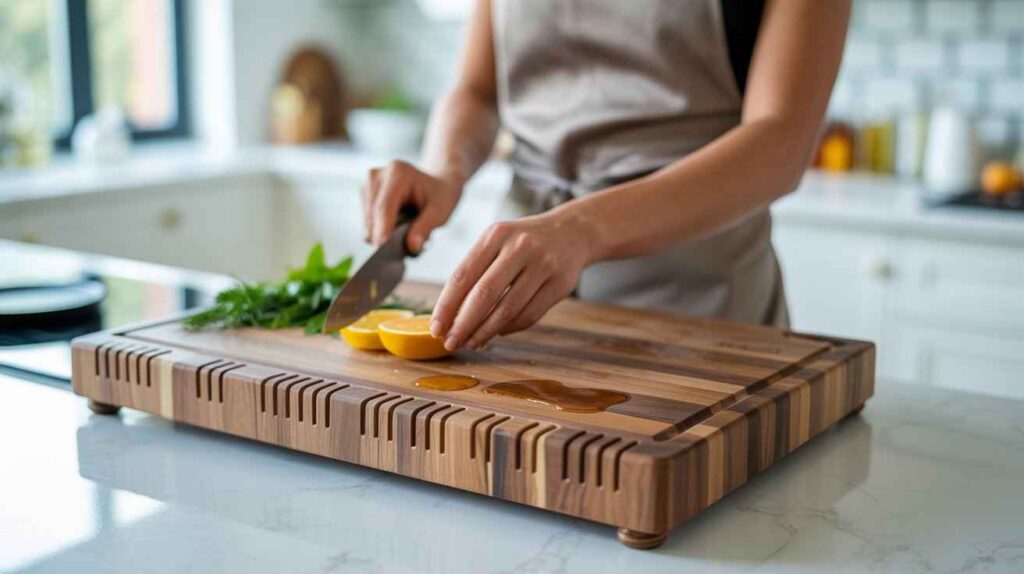
A juice groove on a cutting board is a shallow channel carved around the edge of the board to catch liquid released during food preparation. It is usually found near the perimeter of the cutting surface and helps contain juices from foods like meat, fruit, and roasted items before they run onto the countertop.
How the Groove Is Designed
A juice groove is typically built as a narrow groove channel or perimeter trench surrounding the outer edge of the board. This edge groove creates a barrier that redirects liquid away from the main carving surface.
You will commonly see this feature on:
- Carving boards
- Large wooden cutting boards
- BBQ prep boards
- Meat slicing boards
Some boards have a deep trench for larger amounts of liquid, while others use a thinner channel designed for lighter food prep.
Functional Feature, Not Decoration
Many people assume a juice groove is only a decorative border, but it is actually a functional design feature. The groove is intentionally carved to manage liquid during slicing and carving tasks.
Unlike a flat cutting surface, a board with a perimeter groove includes a built-in channel specifically designed to collect runoff around the edges of the board.
What Does a Juice Groove Actually Do?
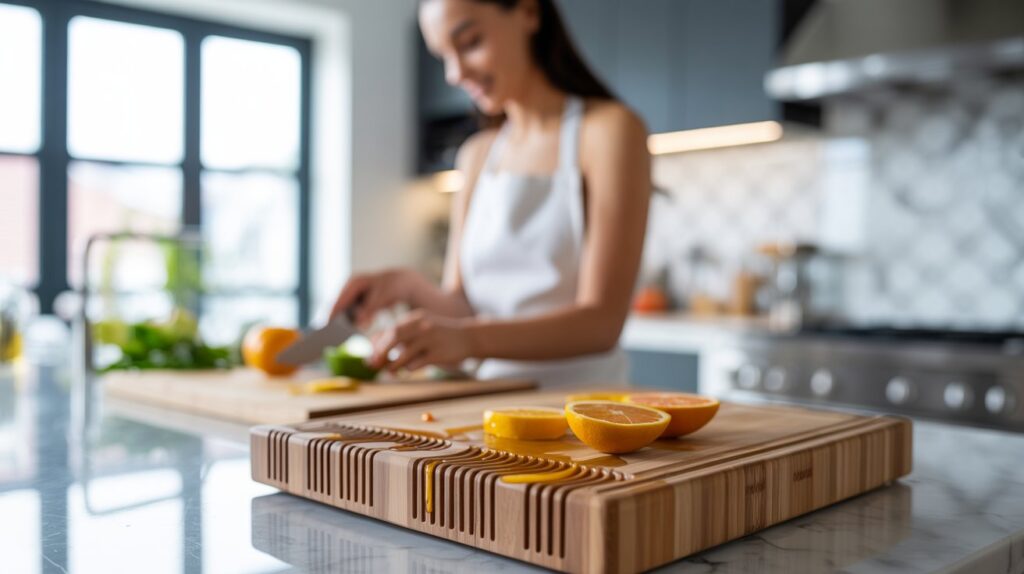
A juice groove helps collect and contain liquid released during food preparation. Instead of allowing juices to spill across the countertop, the groove redirects excess liquid around the board’s edge to keep the workspace cleaner and help prevent overflow during carving or slicing.
Keeps Liquid Under Control
Foods with high moisture can release a surprising amount of liquid while cutting. A juice groove helps contain that runoff before it spreads across the kitchen surface.
This is especially useful when preparing:
- Brisket
- Roast chicken
- Thanksgiving turkey
- Watermelon
- Smoked meats
- Juicy fruits
Without a groove, liquids can quickly run off the board and create a messy prep area.
Helps Prevent Countertop Spills
During carving, juices naturally move outward as pressure is applied with the knife. The groove helps redirect that liquid into a controlled channel instead of letting it drip over the sides.
Compared to a flat board, a grooved board is designed to manage liquid flow more effectively during heavy food prep tasks.
Supports Cleaner Food Preparation
A juice groove also helps keep the cutting area more organised while slicing larger foods. Instead of constantly wiping the counter, the board helps collect liquid in one contained area.
This makes carving brisket, turkey, or roast chicken feel more controlled, especially during large meals or BBQ preparation.
How a Juice Groove Works During Food Preparation
A juice groove works by directing liquid released during cutting toward a channel around the edge of the board. As food releases moisture or juices, the groove catches the runoff before it spills onto the countertop, helping keep the cutting area more controlled during food preparation.
Step 1: Food Releases Liquid
Many foods naturally release moisture while being sliced or carved. This commonly happens with:
- Roast chicken
- Turkey
- Brisket
- Watermelon
- Steak
- Juicy fruits
As pressure from the knife increases, liquid begins spreading across the cutting surface.
Step 2: Liquid Moves Toward the Edge
During carving or slicing, juices gradually travel outward from the center of the board. On a flat surface, that liquid can quickly reach the outer edge and drip onto nearby counters.
A grooved board is designed to redirect that runoff before it escapes the cutting area.
Step 3: The Groove Catches the Runoff
Once the liquid reaches the perimeter channel, the groove collects and contains it in one area. This helps manage excess moisture during larger food prep tasks where juices continue building up while cutting.
Some deeper channels can hold more liquid before overflow occurs.
Step 4: The Workspace Stays More Controlled
By trapping runoff around the board edge, the groove helps reduce liquid spread during preparation. Instead of juices flowing directly onto the countertop, they remain contained inside the board’s outer channel while carving continues.
Benefits of a Cutting Board With a Juice Groove
A cutting board with a juice groove helps contain liquids released during food preparation, making carving and slicing cleaner and easier to manage. The groove collects runoff around the edges of the board before it reaches the countertop.
Cleaner Countertops
One of the main benefits of a juice groove is better spill control. Meat juices, fruit liquids, and excess moisture stay inside the channel instead of dripping across kitchen surfaces. This helps reduce countertop mess during cooking and carving.
Grooved boards are especially useful when preparing foods that release a lot of liquid, such as watermelon, brisket, roast chicken, or turkey.
Better for Meat Carving
Juice groove boards are commonly used for carving roasted or smoked meats. As pressure is applied during slicing, liquids naturally move toward the edges of the board. The groove catches this runoff and helps prevent spills during:
- BBQ preparation
- Holiday meals
- Roast carving
- Large family cooking
This makes carving more manageable and keeps the workspace cleaner during heavy food prep.
Easier Cleanup
Because liquids stay contained on the board, cleanup is usually faster after cooking. Instead of wiping juice from multiple kitchen surfaces, most of the mess stays in one area.
This can help reduce:
- countertop wiping
- liquid drips near sinks
- spills around prep stations
More Organised Food Preparation
During busy cooking sessions, a juice groove helps keep the prep area more controlled by containing excess liquid in one place. Compared to flat cutting boards, grooved boards are often more practical for preparing high-moisture foods and large cooked meats.
Juice Groove vs Flat Cutting Board
A juice groove cutting board is designed for better liquid control during carving and slicing, whereas a flat cutting board provides more uninterrupted prep space for general kitchen tasks. The better option depends on the type of food you prepare and how you use your cutting board most often.
Spill Control
A juice groove board is more suitable for foods that release a lot of liquid, such as turkey, brisket, or watermelon. The outer channel helps keep juices contained during carving.
A flat cutting board, on the other hand, is less effective at controlling runoff because there is no edge barrier to catch excess liquid.
Prep Space
Flat cutting boards usually offer more usable cutting surface since the entire board can be used for chopping and slicing.
Whereas a grooved board dedicates part of the outer edge to liquid collection, reducing the available prep area slightly.
This makes flat boards better for:
- Vegetable prep
- Quick chopping
- Everyday kitchen tasks
Cleaning Convenience
Flat boards are generally simpler to wipe down because they have a completely smooth surface.
Grooved boards may require extra attention around the channel area after heavy food prep. However, many home cooks still prefer them for tasks involving juicy foods because of the added liquid control.
Carving Suitability
Juice groove boards are often better for carving larger foods like:
- Roast chicken
- Brisket
- Turkey
- Smoked meats
Flat boards are usually more suitable for lighter prep work where liquid management is less important.
Which Option Is Better?
Neither style is automatically better for every kitchen. A juice groove board is designed for carving and high-moisture foods, whereas a flat cutting board is often preferred for simple daily food preparation.
The right choice depends on your cooking habits, prep style, and the types of meals you make most often.
Common Problems With Juice Grooves
Although juice grooves can help manage liquid during food preparation, they also come with a few practical drawbacks. Some users find them harder to clean, less spacious for cutting, and occasionally ineffective when shallow channels overflow during heavy carving tasks.
Harder to Clean
One of the most common complaints is the extra maintenance required around the groove area. Unlike a completely flat surface, the channel may need additional scrubbing after food preparation.
Liquids, grease, and small food particles can settle into the groove, especially after carving meat or juicy foods.
Compared to flat boards, grooved boards usually require more detailed cleaning around the edges.
Reduced Cutting Workspace
A juice groove takes up part of the board’s outer perimeter, which slightly reduces the available prep space.
This can feel limiting when:
- Chopping large vegetables.
- Preparing multiple ingredients.
- Using smaller cutting boards.
Flat cutting boards generally provide a larger uninterrupted cutting surface for daily prep work.
Overflow During Heavy Food Prep
Not all juice grooves hold the same amount of liquid. Some shallow channels can fill quickly during large carving sessions.
This is more noticeable when preparing:
- Brisket.
- Turkey.
- Roast chicken.
- Watermelon.
Once the groove reaches capacity, excess liquid may still spill over the board edge.
Trapped Debris in the Channel
Small food particles can sometimes collect inside the groove during cutting. Crumbs, herbs, grease, and meat residue may stick around the perimeter channel if the board is not rinsed promptly.
Boards with rough finishing or narrow grooves are often more difficult to clean thoroughly than smoother designs.
Can Juice Grooves Trap Bacteria?
Juice grooves can trap food residue if not cleaned properly, but regular washing and drying greatly reduce bacteria risk. Like any cutting surface, a juice groove remains food-safe when it is cleaned thoroughly, sanitized when needed, and allowed to dry completely after use.
Why Residue Can Collect in the Groove
During food preparation, small amounts of liquid, grease, or food particles may remain inside the groove channel. If that residue is left sitting for long periods, moisture retention can increase the chance of bacterial growth.
This is more likely to happen after cutting:
- Raw meat
- Poultry
- Juicy fruits
- Cooked roasts
Proper maintenance is the key factor in keeping the board sanitary.
Proper Cleaning Helps Reduce Risk
A juice groove should be cleaned immediately after use with:
- Warm water
- Mild dish soap
- A soft cleaning brush or scrubber
A small cleaning brush can reach into the groove more thoroughly and remove stuck food residue better than simple wiping.
For deeper cleaning, many home cooks occasionally sanitize the board using food-safe cleaning methods recommended for cutting surfaces.
Drying Matters Just as Much
Once washed, the board should be completely dried before it is put away. Leaving moisture inside the groove for extended periods can increase moisture retention around the channel area.
Standing the board upright after cleaning often helps improve airflow and drying.
Wood vs Plastic Hygiene Considerations
Both wood and plastic boards with juice grooves can remain food-safe when maintained properly. Wood naturally absorbs some moisture, whereas plastic surfaces are non-porous and easier to sanitise quickly.
However, poor cleaning habits can create hygiene issues on either material. Regular maintenance matters more than the groove itself.
What Types of Cutting Boards Usually Have Juice Grooves?
Juice grooves are most commonly found on wood, bamboo, plastic, and carving cutting boards. They are typically added to boards designed for handling juicy foods, where liquid control during slicing or carving is more important.
Wooden Cutting Boards
Juice grooves are very common on wooden cutting boards, especially larger prep or serving boards.
They are usually found on:
- Hardwood chopping boards
- End-grain and edge-grain boards
- Carving-style wood boards
Wood is often used for grooved designs because it is popular for serving and heavy food preparation where liquid collection is needed.
Bamboo Cutting Boards
Bamboo cutting boards often include juice grooves, especially in mid to large-sized kitchen boards.
You’ll typically see them on:
- Eco-friendly kitchen boards
- Lightweight prep boards
- Everyday home cooking boards
Grooves are added mainly because bamboo boards are widely used for general food prep where occasional liquid control is useful.
Plastic Cutting Boards
Plastic cutting boards can also feature juice grooves, especially in kitchen sets designed for meat and poultry.
They are commonly found on:
- Commercial-style boards
- Color-coded food prep boards
- Budget-friendly kitchen sets
In these boards, the groove is usually molded into the surface during manufacturing for practical food handling.
Carving Boards
Carving boards are the most common category where juice grooves are essential.
They are typically used for:
- Roast chicken
- Turkey carving
- Brisket and BBQ meats
These boards almost always include deeper or more defined grooves because they are designed specifically for high-juice food preparation.
Who Should Buy a Cutting Board With a Juice Groove?
A cutting board with a juice groove is best for people who regularly prepare foods that release a lot of liquid, such as meat, poultry, roasted foods, or large fruits. The groove helps contain runoff during slicing and carving, making food preparation cleaner and easier to manage.
Best for Meat Preparation
People who frequently cook or carve meat benefit the most from a juice groove board. Foods like brisket, steak, turkey, roast chicken, and smoked meats can release a large amount of juice during cutting.
The groove helps collect excess liquid before it spreads across the countertop, especially during:
- BBQ preparation
- Holiday cooking
- Roast carving
- Large family meals
Useful for BBQ and Outdoor Cooking
BBQ enthusiasts often prefer grooved boards because smoked and grilled meats release juices while resting and slicing. A juice groove helps keep serving areas cleaner during outdoor cooking and large gatherings.
Helpful for Large Meal Prep
Households that cook larger portions may find grooved boards more convenient during busy meal preparation. They are especially useful when carving large roasts, preparing multiple servings, or handling foods with heavy liquid runoff.
Good for Cleaner Food Preparation
People who prefer a tidier workspace may also benefit from a juice groove board. By containing liquid around the edge of the board, it helps reduce spills and limits mess during cooking.
Who May Not Need a Juice Groove Board?
A juice groove may be less useful for people who mainly prepare vegetables, sandwiches, herbs, or simple everyday meals. In these cases, a flat cutting board often provides more usable prep space and quicker cleaning.
Flat boards may also be better for:
- small kitchens
- fast ingredient prep
- lightweight daily cooking
- users who prefer minimal maintenance
Is a Juice Groove Worth It?
A juice groove is worth it if you regularly prepare juicy foods like meat, poultry, or fruits and want better liquid control during cutting. However, if you mostly do light prep work, a flat cutting board may be more practical due to its larger surface and easier maintenance.
When a Juice Groove Is Worth It
A juice groove becomes valuable when your cooking style involves frequent liquid-heavy food preparation.
It is especially useful if you:
- Regularly carve meat (chicken, turkey, brisket)
- Prepare BBQ or roasted foods
- Handle juicy fruits like watermelon or citrus
- Want a more controlled, cleaner prep experience
In these cases, the groove helps keep liquids contained instead of spreading across your counter.
When It May Not Be Necessary
A juice groove may not be essential for everyone, especially if your cooking is simple or minimal.
It is less useful if you:
- Mostly chop vegetables or herbs
- Do quick everyday meal prep
- Prefer maximum cutting space
- Want faster, simpler cleaning
In these situations, a flat board is often more efficient for daily use.
- Juice groove boards = better for liquid control and carving tasks
- Flat boards = better for space efficiency and everyday chopping
Neither option is universally better — it depends on your cooking habits and how often you handle juicy foods.
Conclusion
A juice groove is a simple but practical feature designed to manage liquid during food preparation, especially when working with juicy meats and fruits. It helps keep the cutting area more controlled, but its usefulness really depends on how and what you cook.
For some kitchens, it becomes a helpful tool for cleaner, more organized prep. For others who focus on lighter everyday chopping, a flat board may be more than enough.
In the end, the right choice comes down to your cooking style, not a one-size-fits-all rule.
Faqs
Are Juice Grooves Actually Necessary?
No. Juice grooves are not necessary for every kitchen. They are mainly helpful for people who frequently carve meats or work with juicy foods. For general daily cooking, many home cooks manage perfectly well with flat cutting boards that offer more usable space and simpler maintenance.
Are Juice Grooves Sanitary?
Juice grooves are sanitary when properly cleaned. Like any cutting surface detail, they can hold food residue if ignored, but regular washing, brushing, and thorough drying keep them food-safe. Hygiene depends more on cleaning habits than the presence of a groove itself.
How Deep Should a Juice Groove Be?
A juice groove should be deep enough to contain normal cooking juices without spilling over, but not so deep that it becomes difficult to clean. Most practical designs balance moderate depth with easy maintenance, ensuring both liquid control and convenience during everyday kitchen use.
What Foods Require a Juice Groove Most?
Juice grooves are most useful for high-moisture foods that release liquid while cutting. These include roast chicken, turkey, brisket, steak, watermelon, and other juicy fruits. They help manage runoff during carving and keep the prep area more controlled and organised.
Do All Cutting Boards Need a Juice Groove?
No. Juice grooves are most useful for carving meat or handling foods that release a lot of liquid. For basic fruit and vegetable prep, many home cooks prefer flat cutting boards because they provide more cutting space and are easier to clean.
What Is the Best Size for a Juice Groove on a Cutting Board?
The best size is a moderate-width groove that can hold typical cooking juices without reducing too much cutting space. It should be wide enough for practical liquid collection but not overly deep, as extreme grooves can reduce usability and make cleaning less convenient.
Is a Flat Cutting Board Better for Vegetables?
Yes. A flat cutting board is often better for vegetables because it provides a larger uninterrupted surface for chopping, slicing, and meal prep. Without grooves, you get more usable space and easier movement of ingredients, making it ideal for everyday vegetable preparation tasks.

Hi, I’m Muhammad Din. I test and compare kitchen tools in my own kitchen before I ever recommend them — if it’s in a guide on HomePlora, I’ve used it or dug deep enough to know exactly where it holds up and where it doesn’t. My goal is simple: help you find tools that actually earn a spot in your kitchen, without wasting money on ones that don’t.