

Introduction
Ask five people what makes a good pizza pan and you’ll get five different answers — cast iron, perforated, screen, no holes at all — and most of them are repeating something they read once rather than something they actually tested. I ran the same dough, same oven, same temperature across six pans spanning nearly every material and design on the market, and the results weren’t subtle. Identical pizza, identical setup, completely different bottoms depending on what the dough was sitting on.
This guide is built around finding the best pizza pan for home oven use specifically — not a commercial kitchen with a deck oven, but a standard residential range where preheat time, oven humidity, and pan material all fight each other in ways most buying guides gloss over. Six pans, three genuinely different pan types, and a straight answer on which one actually matches how you cook, not just which one photographs well in a listing.
Best overall: the Lodge Pre-Seasoned Cast Iron Pizza Pan. Cast iron holds heat rather than just transferring it, which is the actual mechanism behind a deeply browned, pizzeria-style bottom crust that most thin metal pans can’t produce — and it does that without any nonstick coating to eventually wear out. It’s not the right pick for everyone: it’s heavy, it needs light seasoning upkeep, and it’s slower to preheat than aluminum. If any of that rules it out, the table below points to the pan built for your specific situation instead.
| Pick | Pan | Best for |
|---|---|---|
| Best Overall | Lodge Pre-Seasoned Cast Iron, 14″ | Deep, char-kissed crust |
| Best for Detroit-Style | LloydPans Detroit Style, 10×14″ | Caramelized cheese edges |
| Best for Families | GoodCook AirPerfect, 15.75″ | Large, perforated, feeds a crowd |
| Best Nonstick | OXO Ceramic Pizza Pan, 15″ | Even browning, easiest release |
| Best for Solo/Beginners | Wilton Silver, 12″ | Personal pizza, lowest cost |
| Best Uncoated | Nordic Ware Naturals Traditional, 14″ | Fastest heat transfer, nothing synthetic on the surface |
Comparison
| Image | Product | Details | Price |
|---|---|---|---|
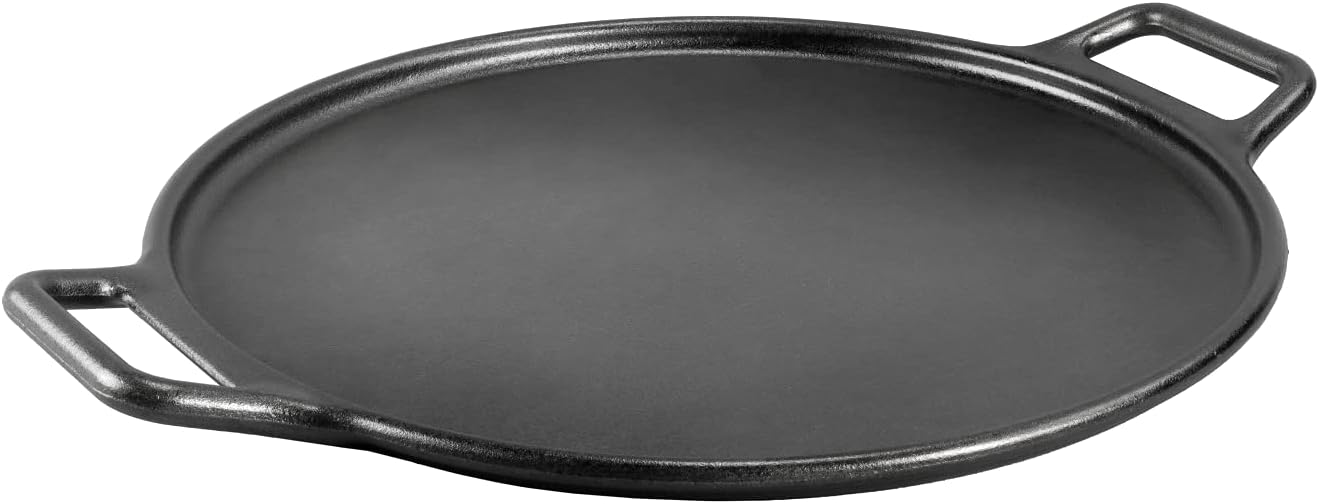 |
Lodge Pre-Seasoned Cast Iron Pizza Pan | the 14 inch pizza pan to reach for when char matters more than convenience. | Check on Amazon |
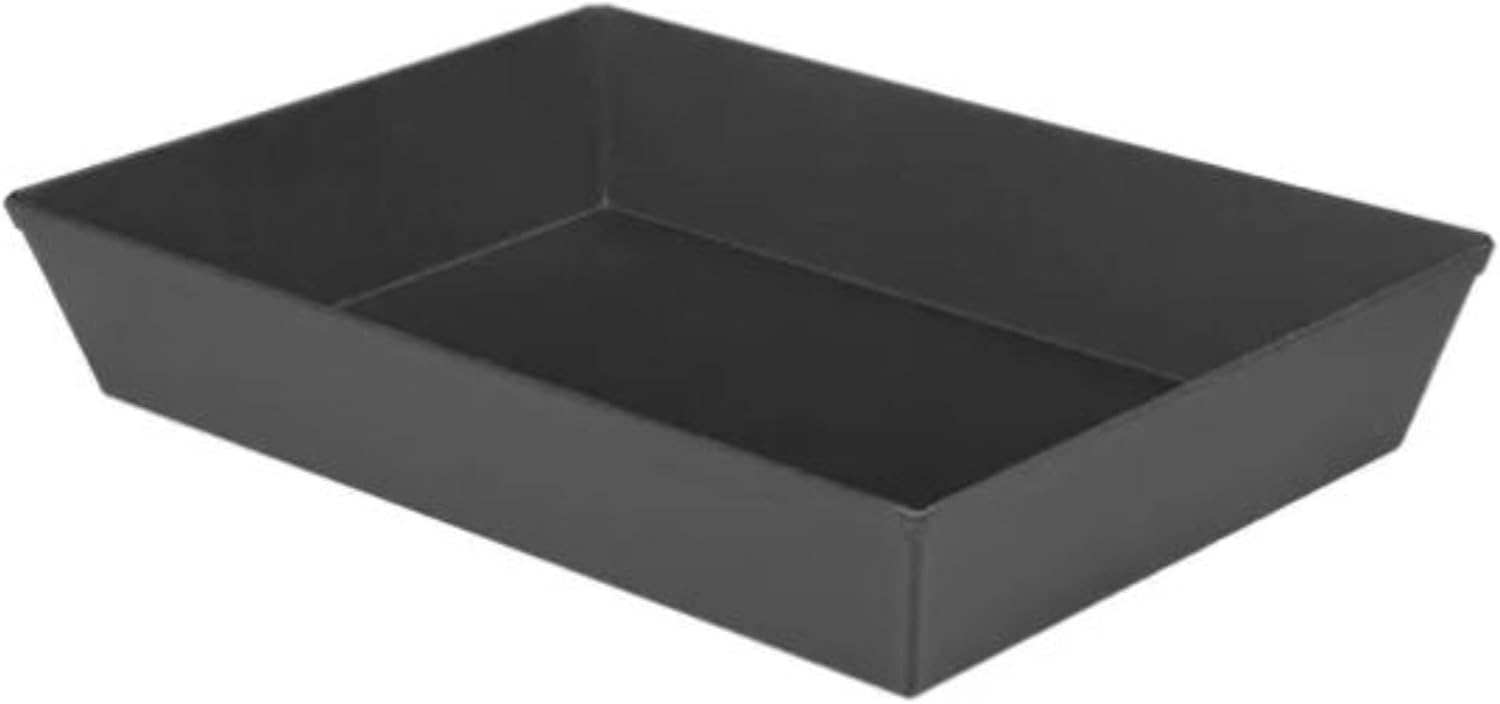 |
LloydPans Detroit Style Pizza Pan | the aluminum pizza pan built around the edges, not the center. | Check on Amazon |
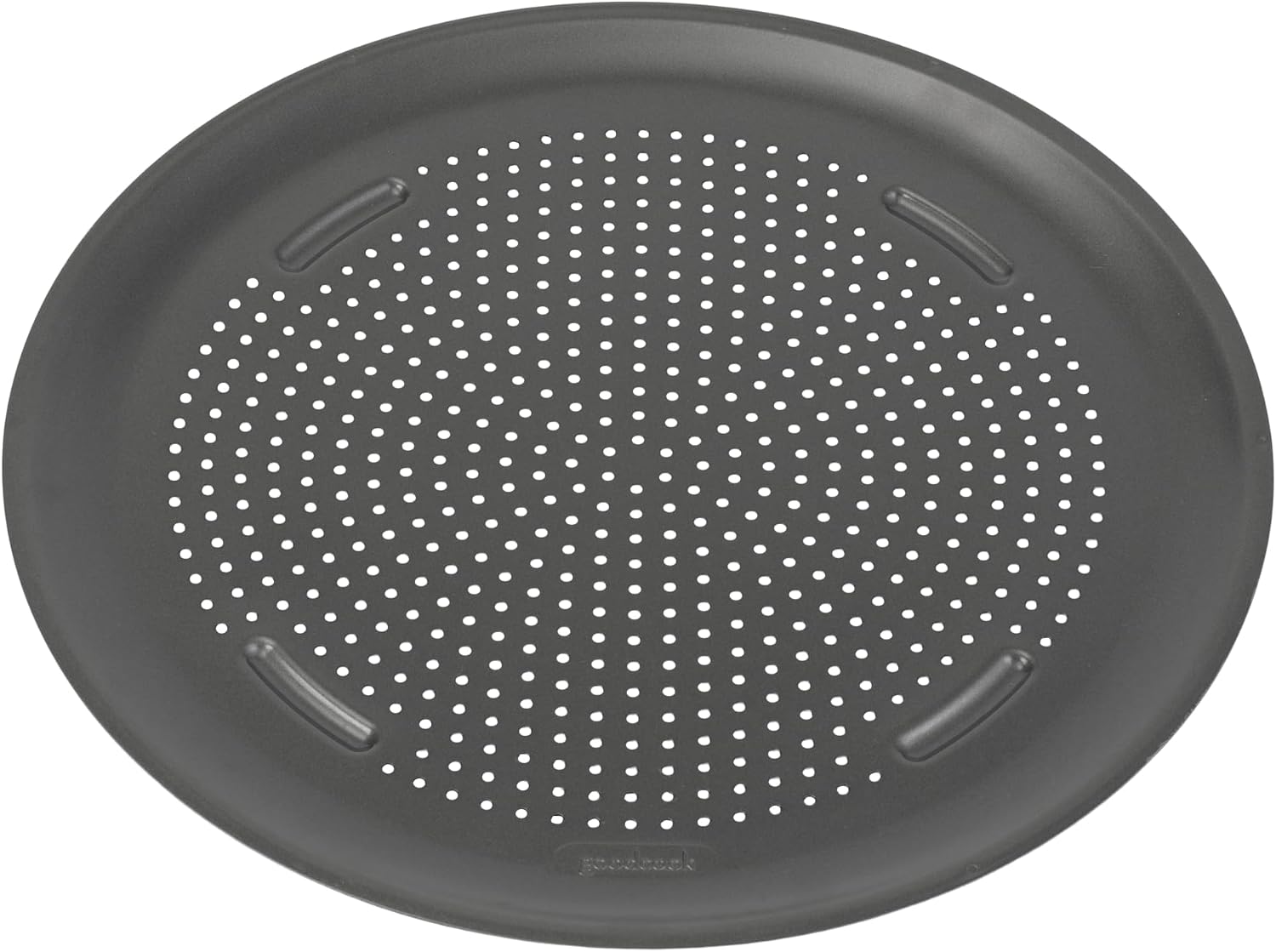 |
GoodCook AirPerfect 15.75″ | the 16 inch pizza pan for feeding a crowd off a single bake. | Check on Amazon |
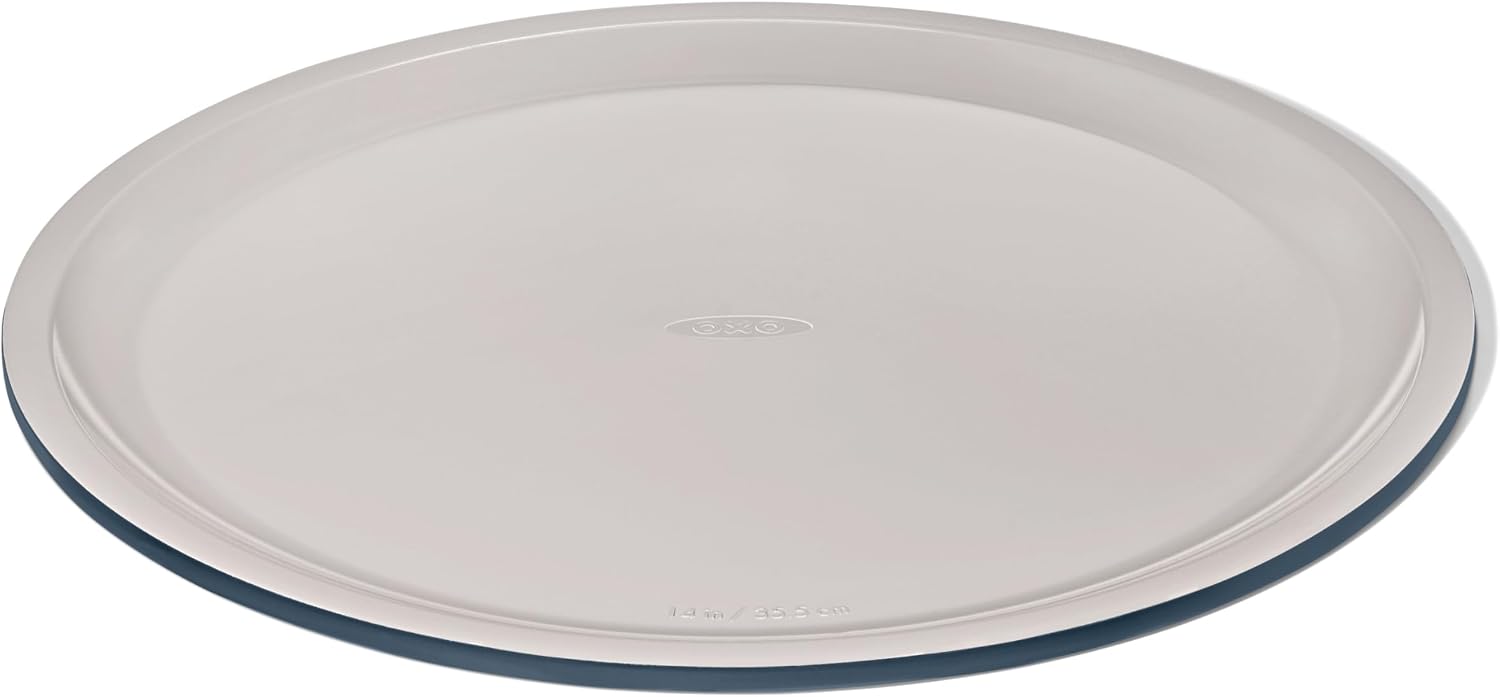 |
OXO Good Grips Ceramic Pizza Pan | the best nonstick pizza pan here, and the only one that isn’t round. | Check on Amazon |
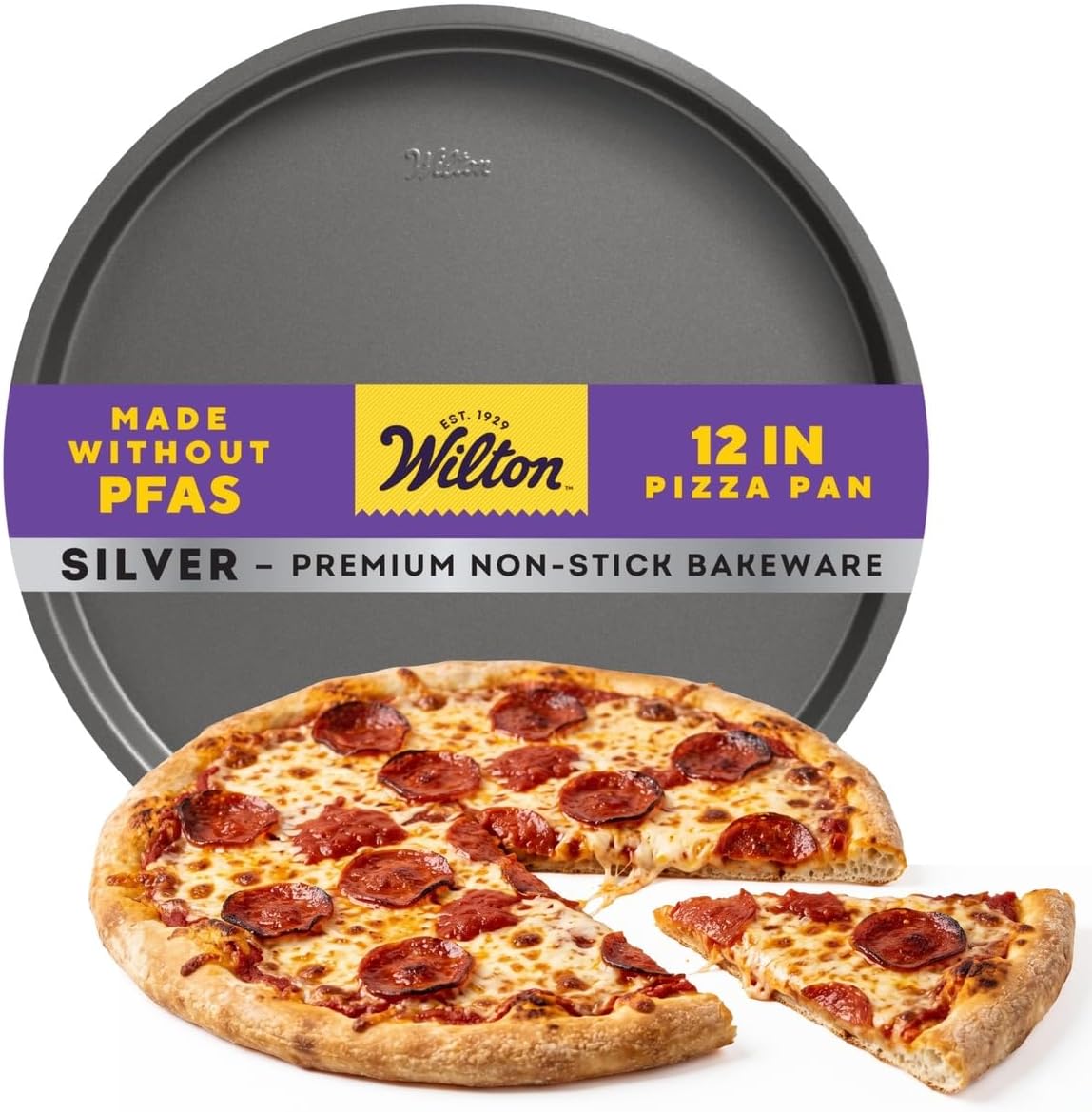 |
Wilton Silver 12″ Pizza Pan | the 12 inch pizza pan sized for one, not a crowd. | Check on Amazon |
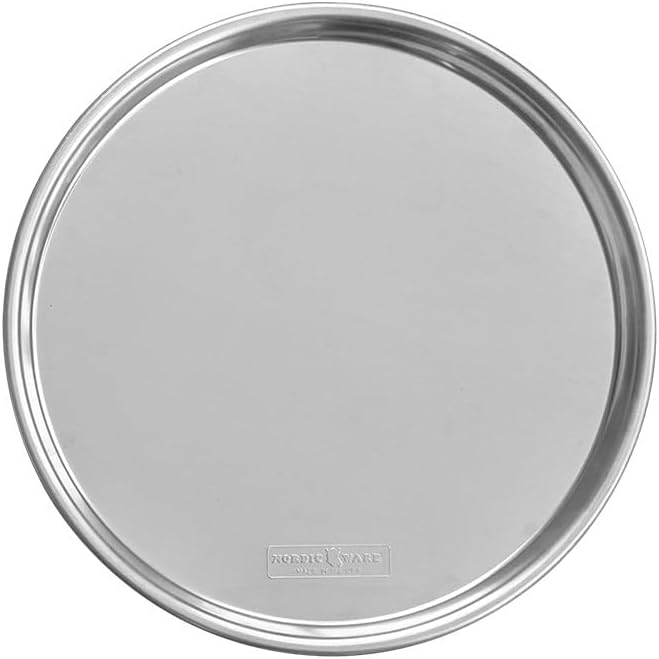 |
Nordic Ware Naturals Traditional Pizza Pan | the pan pizzerias actually use, with nothing added to it. | Check on Amazon |
What Actually Makes a Pizza Pan Bake Better (Not Just Look Different)
A pizza pan’s real job comes down to three physical factors: how fast it transfers heat into the dough, how well it lets steam escape from underneath, and how much heat it holds onto once the oven door opens. Everything else — color, brand, price — is downstream of those three things. Most people skip straight to look for a nonstick coating without ever explaining what’s actually happening under the crust, so here’s the mechanism.
Heat transfer speed
The bottom crust starts cooking the instant it touches the pan, not when the surrounding oven air reaches temperature. A pan that conducts heat quickly — aluminum, mainly — kicks that process off almost immediately. A slower-conducting metal leaves the bottom lagging behind the top, so your cheese is bubbling while the crust underneath is still pale. This is the actual reason preheating the pan in the oven, not just the oven itself, makes a visible difference: dough hitting a hot surface gets an immediate heat kick that a cold pan can’t give it, which is what produces real oven spring in the first minute.
Moisture escape
As dough bakes, the water inside it turns to steam, and that steam has to go somewhere. On a fully solid pan, it collects underneath the crust with nowhere to vent — that’s the real reason you end up with a soggy or gummy crust—it’s not necessarily “too much sauce,” which is what most people assume first. Any venting in the pan surface gives that steam a way out instead of trapping it against the dough. This one factor is the entire reason solid, perforated, and screen pans exist as separate categories, not just style preferences.
Preheat behavior (thermal mass)
Thick, heavy pans — cast iron especially — take longer to come up to temperature, but once hot, they keep radiating that stored heat into the dough even in the seconds right after you open the oven door and cool air rushes in. Thin pans heat almost instantly, but they lose that heat just as fast, so checking on the pizza too often actually costs a thin pan more than a heavy one. Heavy pans reward patience with a more forgiving bake; thin pans reward speed but punish an open oven door.
Those three factors — not the brand on the box — are what actually separate a solid pan from a perforated one from a screen, which is the decision that matters more than anything else before you buy.
Solid, Perforated, or Screen — The Real Decision Before You Buy
The surface type controls how much steam escapes during baking, and that matters more to your crust than almost any other spec on the listing. Most guides frame this as a two-way choice — solid or perforated — and skip the third option entirely, which is a real gap, because a screen behaves nothing like either one.
| Type | What happens to steam | Best for | Real trade-off |
|---|---|---|---|
| Solid | Trapped against the dough, nowhere to vent | Deep-dish, Detroit-style, thicker pan pizza | Thin, cracker-style crust comes out softer than on the other two |
| Perforated | Vents continuously through the holes while dough still sits on solid support | Everyday, all-purpose home pizza; frozen pizza | Overloaded toppings can drip grease through the holes onto the oven floor |
| Screen | Almost no surface for steam to collect against at all | Thin, cracker-style crust; experienced dough handlers | Wet or underdeveloped dough can sag through the mesh before it sets |
Solid pans aren’t a compromise — for a deep-dish or Detroit-style bake, that trapped steam is doing you a favor, softening the interior crumb while the crust structure holds. It’s the wrong tool for a thin crust, but the right one for anything meant to be doughy in the middle.
Perforated pans are the middle ground, and it’s a genuine middle ground rather than a “safe default.” The holes vent enough steam to noticeably crisp the bottom compared to solid, but the dough still rests on continuous support instead of open mesh, so it holds its shape while rising. This is the type that makes sense for most single-pan households — one pan that handles a Tuesday-night frozen pizza and a from-scratch dough equally well.
Screens go further than perforation — there’s no solid metal at all for steam to collect against, since the dough sits almost directly on open wire. The first time I used one, the bottom crisped faster than I expected and I nearly burned it checking the clock instead of the crust. That’s the trade-off: the crispest, most stone-like bottom of the three, but with almost no structural support underneath, which is unforgiving of a wet or poorly developed dough. You’ll also usually need a solid pan or a peel just to transfer the raw pizza onto the screen in the first place — it’s rarely where you build the pizza.
The actual decision: if you’re making one all-purpose pizza a few times a month, perforated solves for crispness and forgiveness at the same time. If you’re committed to a specific style, the type matters more than the brand — deep-dish and Detroit lean solid, thin-crust perfectionists lean screen, and everyone in between is well served by perforated.
Tested Picks
1. Lodge Pre-Seasoned Cast Iron Pizza Pan, 14″
Pull the pan, not the crust, off the shelf if the bottom’s always pale
A pale, floppy center is almost never a dough problem — it’s a heat-transfer problem. Thin metal pans give up their heat the second the oven door opens; cast iron doesn’t. That’s the actual reason cast iron produces the blistered, leopard-spotted bottom you get at a coal-oven pizzeria, and it’s why this stays in rotation for anyone chasing that specific result at home. I’ve run weeknight pies on it more times than I can count, and the crust snaps instead of folding.
| Spec | Detail |
|---|---|
| Material | Pre-seasoned cast iron |
| Diameter | 14 inches |
| Coating | None — natural vegetable-oil seasoning, PFAS-free |
| Handles | Dual cast handles |
| Dishwasher safe | No — hand wash only |
Key features
- Rimless edge lets dough bake flat to the lip instead of curling up a wall, so the crust browns edge-to-edge
- Naturally seasoned with vegetable oil — no synthetic nonstick layer to eventually wear off
- Retains stored heat after the oven door opens, which keeps the bottom actively cooking instead of cooling
- Dual handles built for lifting a fully loaded, screaming-hot pan safely
Pros
- The deepest, most even browning of any pan in this lineup
- Essentially warp-proof — cast iron doesn’t flex under high heat the way thin steel can
- Improves with age, like any well-used cast iron piece
Cons
- Heavy enough that one-handed transfers out of the oven aren’t comfortable
- Needs the same light seasoning upkeep as a cast iron skillet — not a rinse-and-done pan
- Slower to preheat than thin aluminum, so it needs a longer head start in the oven
Best for: anyone who wants pizzeria-style char and doesn’t mind treating it like a cast iron skillet.
2. LloydPans Detroit Style Pizza Pan, 10×14″
Why the edges matter more than the center on a Detroit-style pie
Detroit-style pizza lives or dies at the corners — that caramelized, almost-burnt cheese lace clinging to the pan wall is the entire point of the format, and you can’t fake it with a round pan. This one is built with the same straight sides and sharp corners restaurants use, which is what actually produces that edge. It’s an aluminum pizza pan through and through: 16-gauge, hard-coat anodized, with a factory-applied release coating so there’s no seasoning ritual before the first bake — I’ve pulled it straight from the box into the oven.
| Spec | Detail |
|---|---|
| Material | 16-gauge hard-coat anodized aluminum |
| Dimensions | 10 × 14 inches, 2.5 inches deep |
| Coating | PSTK (Pre-Seasoned Tuff-Kote) release finish |
| Pre-seasoning required | No |
| Dishwasher safe | Hand wash recommended |
Key features
- Straight walls and sharp interior corners — the geometry that actually produces authentic Detroit-style caramelized edges
- Factory PSTK finish means stick-resistance from the first bake, no oil-and-bake seasoning cycle
- Nests inside itself for storage when empty, so it doesn’t eat cabinet space
- Dark anodized finish absorbs heat faster than bare aluminum, which is part of why the crust browns quickly
Pros
- Genuinely commercial-grade — the same pan pizzerias serving this style actually use
- Metal-utensil safe, so a pizza cutter or spatula won’t damage the finish
- Rectangular shape feeds 2-3 people from one bake without needing a second pan
Cons
- Dark coating runs hotter than a light pan, so first-time users may need to shave a few minutes off their usual bake time
- Single-purpose shape — it’s not going to double as a round pizza pan
- Deep dish means a longer bake than a thin round pan, which surprises people expecting a quick 10-minute pizza
Best for: anyone chasing an authentic Detroit-style crust with caramelized cheese edges, not a thin round pie.
3. GoodCook AirPerfect Insulated Pizza Pan, 15.75″
The pan built for a family that can’t agree on toppings
Feeding four people off a 12-inch pan means someone’s always waiting on the second round. This one solves that with a genuinely large 15.75-inch surface and perforations across the whole base, so airflow reaches the middle of the pizza the same way it reaches the edges — no soggy center from an oversized pie. It’s an oven pan for pizza that’s also handled our frozen-pizza nights without complaint, and the molded feet keep it off the counter while it’s still radiating heat.
| Spec | Detail |
|---|---|
| Material | Nonstick carbon steel |
| Diameter | 15.75 inches |
| Design | Fully perforated (pizza pan with holes) |
| Extras | Built-in cutting guides, molded feet |
| Dishwasher safe | Yes (hand wash recommended for longevity) |
Key features
- Perforated base across the full surface promotes airflow underneath, which is what actually crisps a large pie evenly instead of just at the rim
- Cutting guides molded into the pan surface help you slice even portions without a separate cutting board
- Molded feet elevate the hot pan off the countertop after it comes out of the oven
- Nonstick carbon steel construction resists warping under repeated high-heat use
Pros
- Genuinely large enough for a family-size pizza in one bake, not two
- Cutting guides are a small detail that actually gets used every time
- Budget-friendly relative to its size
Cons
- 15.75 inches won’t fit every home oven — worth measuring your rack width first
- Perforated design means sauce or cheese overflow can drip through onto the oven floor if the pie’s overloaded
- Nonstick coating, like any coated pan, will eventually wear with metal utensils despite being marketed as durable
Best for: family-size pizza nights where one large pan needs to replace two smaller ones.
4. OXO Good Grips Non-Stick Pro Ceramic Pizza Pan, 15″
The one pan in this lineup that isn’t actually round
This is worth calling out directly: despite being labeled a 15-inch pizza pan, it’s square — a 14×14-inch interior with rounded corners, not a circle. That shape quietly solves a real problem: square-cut party pizza (the kind cut into small squares instead of wedges) actually fits a square pan better than a round one, with less wasted crust at the corners. Beyond the shape, the coating is doing real work here too — the interior is a deliberately light color, and a light surface reflects more of the oven’s radiant heat than a dark one, which is exactly why this bakes more evenly and browns more gently than a dark-finished pan like the LloydPans above.
| Spec | Detail |
|---|---|
| Material | Heavy-gauge aluminized steel |
| Shape | Square, 14×14″ interior / 15.8×15.8″ exterior |
| Coating | Ceramic non-stick, PFOA-free |
| Extras | Rounded interior corners, expanded rim handles, printed size markings |
| Dishwasher safe | Yes |
Key features
- Square shape with rounded interior corners — genuinely easier to wipe clean than a sharp-cornered rectangular pan
- Light-colored ceramic coating reflects heat rather than absorbing it, producing gentler, more even browning
- Expanded rim doubles as a built-in handle for pulling the pan in and out of the oven
- Pan dimensions are printed directly on the surface, so you’re not guessing which pan is which in a stacked cabinet
Pros
- Best nonstick pizza pan in this group for anyone who’s had food weld itself to a bare metal pan before
- Even, predictable browning thanks to the light interior finish
- Doubles easily as a general sheet pan for flatbread, biscuits, or roasted vegetables
Cons
- The square shape is a genuine adjustment if you’re used to shaping round dough — expect some trimming on your first few bakes
- Ceramic coatings are scratch-resistant, not scratch-proof; metal pizza cutters will shorten its lifespan
- Not dishwasher-safe in the long run if you want the nonstick surface to last — hand washing extends it noticeably
Best for: anyone making square-cut pizza, or who specifically wants a light pan for gentle, even browning over a dark one.
5. Wilton Silver Non-Stick Pizza Pan, 12″
The pan for one person, or a first pizza attempt
Not every pizza night needs to feed four. A 12-inch pan is sized for a personal pie or a two-person split, and it’s small enough to actually fit in ovens that fight with a 15-inch pan for rack space. This is the one I’d hand to someone making their first from-scratch pizza — low commitment, easy cleanup, nothing to season or maintain.
| Spec | Detail |
|---|---|
| Material | Cold-rolled steel |
| Diameter | 12 inches |
| Coating | Non-stick, made without PFAS |
| Design | Widened rim edges for grip |
| Dishwasher safe | Yes (hand wash recommended) |
Key features
- 12-inch diameter fits into smaller ovens and toaster-oven-adjacent spaces that larger pans can’t
- Widened pan edges function as built-in handles, useful when pulling a hot pan out one-handed
- Cold-rolled steel construction resists warping despite its lighter weight
- Non-stick coating means no oil, seasoning, or parchment paper required for a clean release
Pros
- Genuinely the most affordable entry point in this lineup
- Right-sized for a solo dinner or a kid-sized personal pizza night
- Doubles for reheating leftover slices or baking large cookies without needing a second pan
Cons
- Too small for anything beyond a personal or two-person pizza — not a family pan
- Non-stick coating, being thinner than premium options, is the first to show scratches from metal utensils
- No handles beyond the widened rim, so oven mitts are non-negotiable with a fully loaded pan
Best for: solo cooks, small kitchens, or anyone’s first attempt at a homemade pizza.
6. Nordic Ware Naturals Traditional Pizza Pan, 14″
The pan with nothing between the dough and the metal
Every pan in this lineup so far has some kind of coating between the dough and the metal — nonstick, ceramic, or a factory release finish. This one doesn’t. It’s pure, uncoated aluminum, the same material you’d find under the counter at most independent pizza shops, and that bare metal is what gives it the fastest, most direct heat transfer of anything here. The tradeoff is real, and worth knowing before you buy: aluminum reacts with acidic ingredients, so a heavy tomato sauce can leave the surface slightly darkened or pitted over time. It doesn’t affect how the pan bakes, but it will look used.
| Spec | Detail |
|---|---|
| Material | Pure uncoated aluminum |
| Diameter | 15.1″ overall / 14.3″ cooking surface |
| Coating | None |
| Dishwasher safe | No — hand wash only |
| Origin | Made in USA, lifetime warranty |
Key features
- Completely uncoated surface means there’s no nonstick layer to eventually flake or wear off
- Aluminum’s high thermal conductivity transfers oven heat to the dough faster than a coated or cast iron pan
- Won’t rust, and heavy-gauge construction resists warping under repeated high-heat use
- Backed by a lifetime warranty from a brand that’s made pizza pans for decades
Pros
- The most direct heat transfer in this lineup, which shows up as faster, more even crust browning
- Nothing synthetic on the cooking surface at all — appeals to anyone specifically avoiding coated bakeware
- Genuinely built to outlast the coated pans in this list
Cons
- Reacts with acidic sauces over time — expect cosmetic darkening with heavy tomato use, which doesn’t affect safety or baking but does affect looks
- Requires a light coat of oil, flour, or parchment for best release since there’s no nonstick surface
- Dishwasher use causes visible discoloration, so it’s hand-wash only if you want it to stay looking new
Best for: cooks who specifically want an uncoated pan and don’t mind minor cosmetic aging from tomato sauce over time.
Material Guide: What Aluminum, Steel, and Cast Iron Actually Do to Your Crust
“Aluminum” and “cast iron” aren’t single materials — they’re categories, and the specific version you’re holding changes how the pan behaves in ways the packaging rarely explains. Here’s what each variation actually does once it’s in your oven.
Natural aluminum heats the fastest, but it’s the least protected surface
Bare, uncoated aluminum — like the Nordic Ware pan reviewed earlier — has nothing between the metal and your dough, which is exactly why it transfers heat into the crust faster than any coated or clad alternative. The tradeoff is that raw aluminum is chemically reactive: acidic sauce can pit or darken it over time, and it needs oil, flour, or parchment for clean release since there’s no built-in nonstick surface.
Anodized aluminum trades a little speed for durability and a naturally low-stick surface
Anodizing runs an electrochemical process over the aluminum that hardens the surface and closes off its reactive pores, which is why an anodized pan like the LloydPans Detroit pan doesn’t need seasoning the way raw metal or cast iron does. That hardened layer also happens to take color well — which is why anodized pans are almost always sold in a dark finish, a detail that matters more than most buyers realize (more on that below).
Aluminized steel is the compromise pick — rigid, but a step slower to heat
A steel core clad in aluminum, like the pans in the Cuisinart and OXO reviews, resists warping better than pure aluminum because steel simply holds its shape under heat more stubbornly. The cost is conduction speed: steel doesn’t move heat as fast as aluminum alone, so a clad pan runs slightly cooler at the crust than a bare aluminum one at the same oven temperature.
Cast iron sits at the opposite end of the spectrum entirely
Already covered in depth in the Lodge review above — slow to heat, but once hot, it holds that heat longer than anything else here, which is the entire mechanism behind its deep-char results.
Coating durability is the part nobody mentions until it’s already worn out
Nonstick coatings — whether a PTFE-based layer or a ceramic sol-gel finish — are a wear item, not a permanent feature. Metal utensils, high heat cycling, and dishwasher detergent all shorten their working life, and once a coating starts flaking, its nonstick behavior degrades with it. Ceramic coatings tend to resist scratching a little better out of the gate, but in practice lose their slick release faster with repeated use than a well-maintained PTFE coating does.
Where material safety actually enters the picture — and where it doesn’t
This is worth being specific about, because pizza is one of the few things home cooks bake at genuinely high heat. PTFE coatings are stable through normal baking, but their manufacturer-listed safe ceiling sits in the same range many pizza recipes call for — especially with a broiler-assisted finish. That’s different from cookie sheets or cake pans, which rarely get pushed that close to a coating’s limit. PFOA is a separate issue entirely — it was a manufacturing byproduct in older PTFE production, now absent from current PTFE bakeware, so “PFOA-free” describes how the coating was made, not how it behaves at your oven’s max setting. If that gap matters to you, the uncoated aluminum, anodized aluminum, and cast iron pans in this lineup sidestep the question completely — there’s no coating to have a ceiling in the first place.
Dark Pan or Light Pan? Why Your Crust Color Depends on the Finish
Here’s a variable that has nothing to do with material and everything to do with color, and it’s the reason two pans made of the same metal can produce noticeably different bakes. A dark surface absorbs more radiant heat from the oven than a light, reflective one — it’s the same principle behind a black car getting hotter in the sun than a white one. Put a dark pan and a light pan in the same oven at the same temperature, and the dark one runs measurably hotter at the surface.
What this means for your crust, specifically
The anodized LloydPans pan reviewed earlier is dark by design, and that dark finish is part of why it browns quickly and deeply — useful for the caramelized edge a Detroit-style crust depends on, but it also means recipes written with a generic pan in mind can run hot on it. The OXO ceramic pan takes the opposite approach on purpose: its interior coating is a deliberately light color, chosen specifically to reflect heat rather than absorb it, which is why it bakes more gently and evenly, with more margin before anything scorches.
The practical adjustment
If you’re baking on a dark pan and a recipe was written without one in mind, start checking a few minutes earlier than the stated time, or drop the oven temperature by about 25°F to compensate for the extra heat the pan itself is contributing. If you’re on a light pan and want deeper color, either add a few minutes or finish under the broiler for the last minute — that adds surface color without changing how the rest of the bake behaves. Neither pan is “wrong”; the finish just tells you which direction to nudge your timing.
Sizing Your Pan to a Gas or Electric Oven
Before any pan goes in the oven, it has to actually fit — and “fit” means more than just clearing the door.
The measurement part, done properly
Open your oven and measure the interior width at its narrowest point, usually right where the door seal sits, not the widest point in the middle of the cavity. Subtract about 1.5 to 2 inches from that number for airflow clearance on each side — a pan wedged flush against both oven walls blocks the circulation that bakes it evenly, especially in a convection setting. A 16-inch pan in a 22-inch-wide oven cavity looks fine on paper and still bakes unevenly if it’s centered with no breathing room.
Where gas and electric ovens genuinely diverge — and it’s not just where the flame sits
Electric ovens heat from a concealed element in the oven floor, delivering direct, steady radiant heat straight up into whatever pan sits above it. That makes a solid pan’s slower, steam-trapping behavior easier to manage, since the electric element’s dry heat is already working to crisp the bottom regardless of pan type.
Gas ovens heat differently, and the difference matters more than most buying guides admit: combustion produces water vapor as a byproduct, which means a gas oven’s cavity runs slightly more humid than an electric one at the same temperature. That extra ambient moisture is doing the opposite of what you want for a crisp crust — which is exactly why a perforated pan or screen earns its keep more in a gas oven than an electric one. The venting that lets steam escape from under your dough is compensating for humidity the oven itself is adding to the air, not just the moisture the dough releases.
The practical takeaaway
If you’re baking in a gas oven and keep getting a softer bottom than you expect, the perforated or screen-style pans in this lineup will outperform a solid pan by a wider margin than they would in an electric oven. If you’re on electric and a solid pan hasn’t given you trouble, that’s consistent with how the two heat sources actually behave — not a sign you’re doing something wrong.
Why Pizza Actually Sticks to the Pan
Most people who deal with a stuck pizza blame the dough — not enough flour, wrong hydration, should’ve used cornmeal. In most cases, the dough was never the problem. It’s what happens at the edge, past where the dough actually sits.
The real mechanism: melted cheese and sauce bond to metal differently than dough does
Dough sits on a barrier — flour, cornmeal, semolina, oil, or a nonstick coating — and that barrier is specifically what lets it release cleanly. Cheese and sauce that overflow past the crust’s edge don’t have that barrier. They land directly on bare, hot metal, and melted cheese in particular undergoes the same caramelization reaction there that makes it brown and crisp on top of a pizza — except now it’s happening against metal instead of dough, and the result is a hard, glued-on residue rather than a crispy edge. That’s the actual sticking failure most people experience, and it has almost nothing to do with the crust underneath it.
Why this shows up differently depending on pan type
- Solid pans trap that overflow right where it lands, so it caramelizes into a ring around your pizza’s edge — usually the most stubborn spot to clean and the first place people notice sticking.
- Perforated pans let overflow drip through the holes instead of just pooling on the surface, which means the sticking failure moves to the underside of the pan and around the rim of each hole — a different cleanup problem, not a solved one.
- Screens have the least surface area for anything to stick to in the first place, but when cheese does drip through the mesh, it welds into the grid itself, which is genuinely harder to scrape clean than a flat surface.
Preventing it, by pan type
For a nonstick or ceramic-coated pan, keep toppings inside the crust boundary rather than relying on the coating to save you — the coating protects the dough’s contact area, not spilled cheese sitting directly on bare metal at the rim. For an uncoated pan like natural aluminum or cast iron, a light dusting of cornmeal or semolina under the dough does double duty: it helps the crust release, and it gives any overflow something other than bare metal to bond to, so it lifts off instead of scorching in place. For a perforated pan, resist the urge to overload toppings toward the edges specifically — that’s where overflow is most likely to find a hole and drip through.
Storing Multiple Pizza Pans Without Wrecking the Coating
If pizza night happens often enough that you own more than one pan, how you stack them afterward matters more than most people assume — and it’s the one thing that quietly ruins a nonstick coating faster than actual cooking does.
The mechanism: it’s not the stacking, it’s the contact points
Two flat, solid pans stacked directly on each other distribute the weight above them across a wide, even surface — not ideal, but relatively gentle. A perforated pan is a different story. The raised rim around every single hole is a hard point of contact, and when that pan sits against a coated pan above or below it, the weight of anything stacked on top gets concentrated into dozens of tiny pressure points instead of spreading out evenly. Over months of stacking, those points are exactly where a nonstick or ceramic coating starts to show scratches first — not from cooking, from storage.
What actually protects the coating
Separate a perforated pan from any coated pan with a layer of felt pan protectors, a folded kitchen towel, or even a few sheets of parchment before stacking — it doesn’t need to be fancy, it just needs to stop metal-on-metal contact at those raised edges. If two pans share a shelf slot, put uncoated or cast iron pans at the bottom of any stack, since they’re not going to lose a coating no matter what rests against them, and keep your most delicate finish — ceramic, in this lineup — on top where nothing sits on it at all.
The alternative that sidesteps the problem entirely
Storing pans vertically in a slotted rack or divider, the way baking sheets are often organised, removes the weight-bearing contact altogether — nothing is resting on top of anything else. It’s also the reason a pan designed to nest, like the Detroit-style pan reviewed earlier, is worth the small size premium if cabinet space is tight: it’s built to sit inside its own kind rather than flat against a different pan entirely.
Faqs
Is it safe to cut pizza directly on the pan?
Only if the pan has no coating to protect. On the Lodge cast iron, the LloydPans Detroit pan, and the Nordic Ware Naturals Traditional pan, cutting directly on the surface won’t damage anything — there’s no nonstick layer for a blade to gouge. On the GoodCook, OXO, and Wilton pans, move the pizza to a cutting board first; a pizza cutter dragged across a nonstick or ceramic coating is one of the fastest ways to shorten its working life.
Can it go under the broiler or on the grill?
Cast iron handles both without hesitation — it’s built for heat well beyond what a home broiler produces. The uncoated Nordic Ware pan tolerates a broiler finish fine but isn’t built for direct grill flame, since it’s thin bakeware rather than grill-rated cookware. The three coated pans — GoodCook, OXO, and Wilton — are the ones to be careful with: extended broiler use pushes close to what a nonstick or ceramic coating is rated for, and none of them belong on a grill grate over open flame.
How long should a pizza pan last before replacing it?
An uncoated or cast iron pan has no real expiration point — cared for properly, it can outlast the kitchen it’s used in. A coated nonstick or ceramic pan typically holds its performance for 2 to 5 years of regular use before the coating visibly thins. The actual signal to replace any pan isn’t age, it’s behavior: if it no longer sits flat on the rack (warping) or food is sticking to bare metal that used to release cleanly (worn-through coating), that’s the pan telling you it’s done, regardless of how long you’ve owned it.
Do you need to season it like cast iron?
Only the Lodge pan actually needs that maintenance — a light re-oil after washing keeps it from rusting and keeps its release working. The LloydPans pan comes with a factory finish specifically designed to skip that step entirely. The Nordic Ware Naturals pan isn’t iron, so it won’t rust, but a light dusting of oil or flour before baking still helps with release since there’s no coating doing that work for you. The GoodCook, OXO, and Wilton pans have synthetic nonstick coatings — seasoning does nothing to a factory-applied coating, so there’s nothing to maintain there beyond normal washing.
Which is better for baking pizza: a pan with holes or a solid pan?
Neither wins outright — it depends on what you’re baking. A perforated pan, like the GoodCook, vents steam from underneath for a crisper everyday bake, which is what most homemade and frozen pizza benefits from. A solid pan, like the Lodge, LloydPans, or Nordic Ware, holds that moisture in on purpose, which is exactly what a thick, deep-dish, or heavily topped pizza needs to bake through without drying out. Choose based on the crust you make most often, not the one you make occasionally.
Conclusion
Six pans, one dough recipe, one oven — and the differences were never subtle. The Lodge Cast Iron Pizza Pan earned Best Overall because it does something the others structurally can’t: it keeps cooking the crust from stored heat even after the oven door opens, which is the actual mechanism behind a deep, pizzeria-style bottom. It’s not the pan for everyone. If weeknight speed matters more than char, the GoodCook’s perforated surface and family-size footprint will serve you better. If you’re chasing a specific style — Detroit’s caramelized edges, or a pan with nothing synthetic on it at all — the LloydPans and Nordic Ware picks exist for exactly that. The right pan was never the most expensive one in this lineup; it was the one that matched how you actually cook pizza, not how you imagine cooking it on your best night.
Affiliate disclosure
HomePlora is a participant in the Amazon Associates Program. If you purchase a product through one of the links in this article, we may earn a small commission at no extra cost to you. Every pan featured here was selected based on genuine hands-on kitchen use, and our rankings and opinions are never influenced by affiliate partnerships or manufacturer relationships.

Hi, I’m Muhammad Din. I test and compare kitchen tools in my own kitchen before I ever recommend them — if it’s in a guide on HomePlora, I’ve used it or dug deep enough to know exactly where it holds up and where it doesn’t. My goal is simple: help you find tools that actually earn a spot in your kitchen, without wasting money on ones that don’t.