
Some links in this guide may be affiliate links, meaning we could receive a small commission if you buy through them, without any additional cost to you. This support helps us keep producing useful, experience-based kitchen content. We focus on recommending products that are genuinely helpful for everyday cooking and meal preparation.

Introduction
Washing lettuce, herbs, or fresh vegetables often sounds simple until water keeps pooling in the bowl and salads turn soggy before they even reach the table. Many home cooks struggle with this small but frustrating step in meal prep and end up using paper towels or waiting for greens to air-dry.
A salad spinner solves this by quickly removing excess water so ingredients stay crisp and ready to use. The challenge is that not every model works the same in real kitchens—some are easier to use, some dry better, and some last longer.
This guide helps you understand which options actually perform well in everyday home cooking so you can choose the right one with confidence.
Why trust us
This guide is written with a focus on real kitchen use, not just product specifications. Every recommendation is based on how salad spinners actually perform during everyday cooking—washing greens, drying herbs, and handling meal prep tasks. The goal is to help you choose a tool that fits practical needs in a home kitchen, not just what looks good on paper.
What Is a Salad Spinner?
A salad spinner is a simple kitchen tool used after washing fresh produce. It helps remove excess water from leafy greens like lettuce, spinach, and herbs so they don’t turn soggy in the bowl. Most models include an inner basket and an outer bowl, similar to designs seen in tools like the OXO Good Grips salad spinner, where spinning motion separates water from food using centrifugal force.
Purpose
Its main purpose is to dry washed vegetables quickly without using paper towels or waiting for air drying. This improves texture, helps dressings stick better, and keeps salads fresh for longer.
How It Works
You place washed greens in the basket, close the lid, and spin it using a pump or handle. The spinning motion pushes water away from the food into the outer bowl, leaving the produce dry and ready to use.
Who Should Buy It
It is useful for home cooks, meal preppers, and anyone who regularly eats fresh salads or uses herbs in cooking and wants cleaner, faster food preparation with less mess.
Product comparison
| Image | Product | Details | Price |
|---|---|---|---|
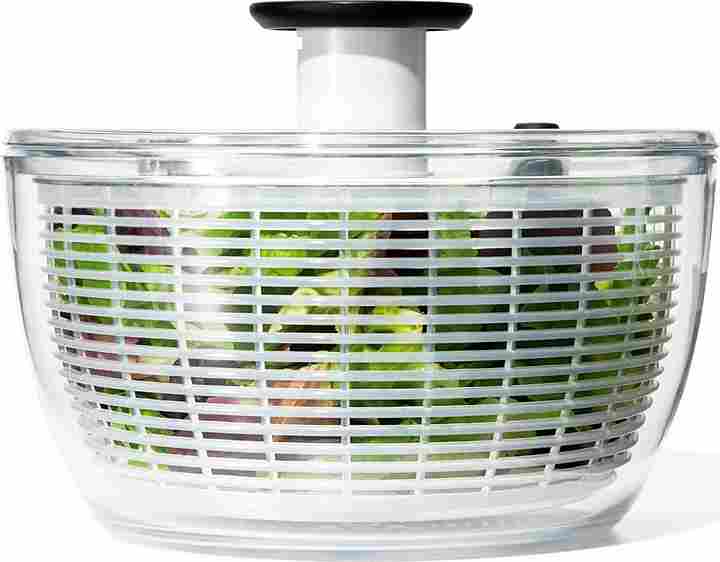 |
OXO One-Touch Spinner | Effortless pump-action design with a fast-drying basket and instant-stop brake system. | Check on Amazon |
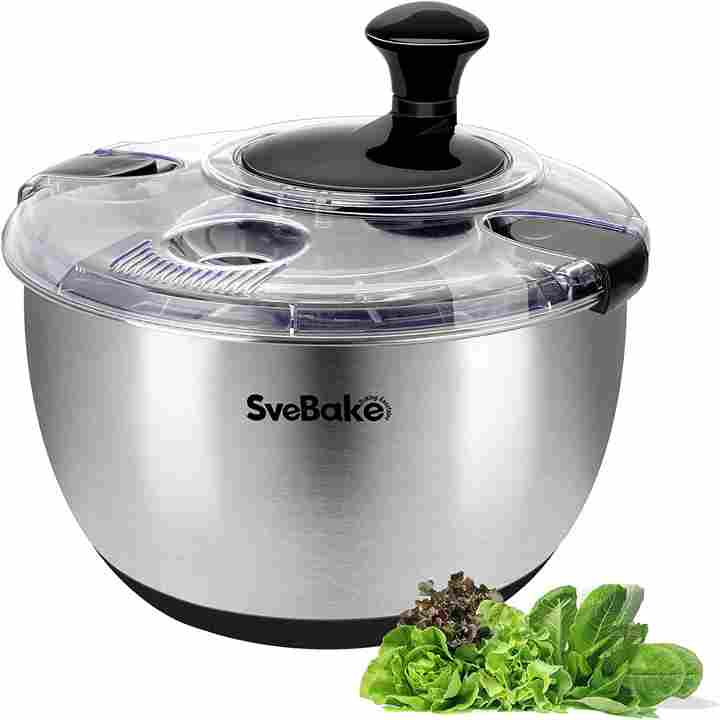 |
Crank-Style Stainless Spinner | Durable metal construction with a secure locking lid and convenient built-in drain spout. | Check on Amazon |
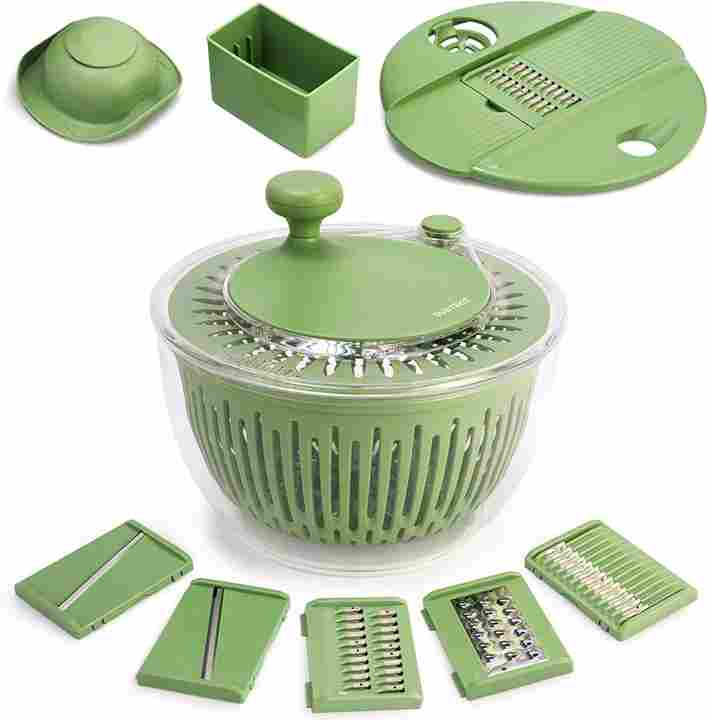 |
All-in-One Salad Prep Spinner | Combines produce drying with five interchangeable cutting blades for faster food preparation. | Check on Amazon |
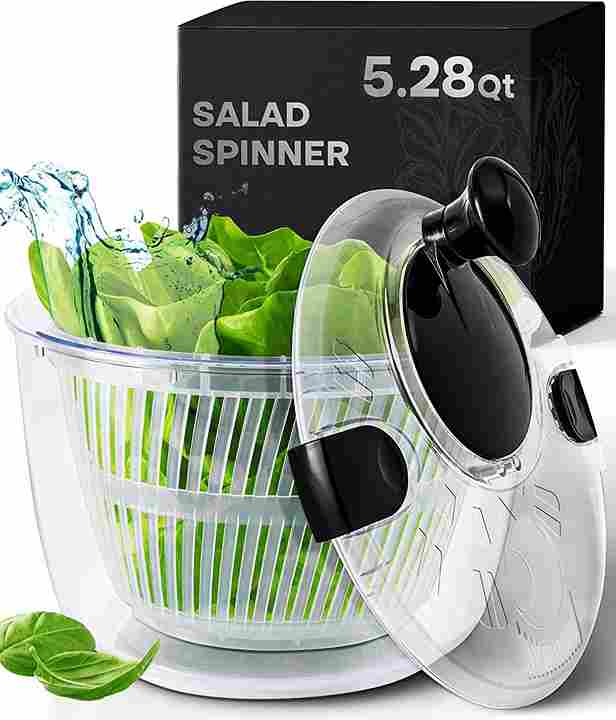 |
Large Drain-and-Dry Spinner | Built-in drainage system allows washing, draining, and drying without removing the lid. | Check on Amazon |
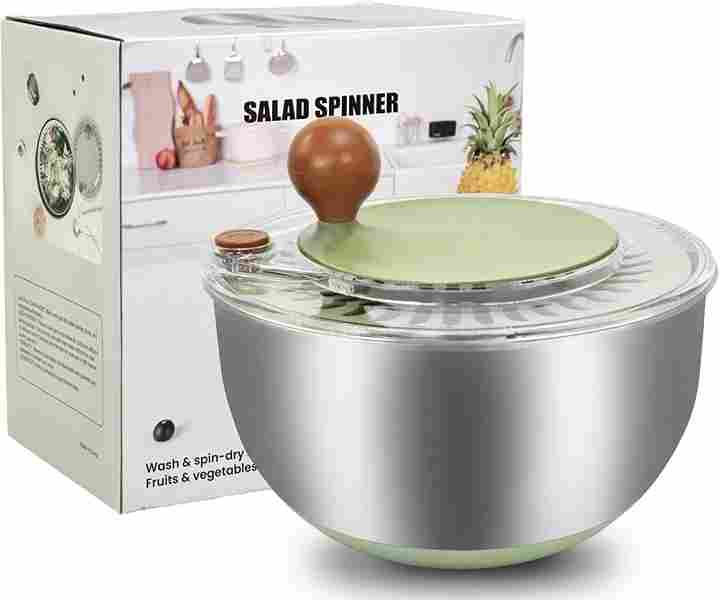 |
Stainless Steel Quick-Stop Spinner | Durable 304 stainless steel construction with a convenient one-touch stop button and non-slip base. | Check on Amazon |
Short on Time? Start Here
If you’re short on time and don’t want to compare dozens of options, this is the model most home cooks can buy with confidence. It combines easy operation, reliable drying performance, simple cleaning, and practical storage in one well-designed package. Whether you’re preparing leafy greens, fresh herbs, or berries, it consistently delivers dry, ready-to-serve ingredients with minimal effort.
OXO Good Grips Salad Spinner
Fast, Effortless Drying for Everyday Meal Prep
- One-handed pump mechanism paired with an instant-stop brake for quick and controlled drying.
What to Consider Before Buying a Salad Spinner
When choosing a salad spinner, the goal is simple: clean, dry greens without hassle. But not all models perform the same, and the right choice depends on how you actually cook at home. A small kitchen that prepares quick salads has very different needs compared to someone doing weekly meal prep for a family.
Size and Capacity
Size matters more than most buyers expect. A small spinner (around 2–3 quarts) works well for 1–2 people and light salad use. Medium sizes (4–5 quarts) fit most home kitchens and are ideal for everyday cooking. Large models (5+ quarts) are better for families or batch meal prep. If you often wash large amounts of greens at once, choosing a bigger bowl saves time and multiple spins.
Material Choice
Most salad spinners come in plastic or stainless steel. Plastic models are lightweight, easier to handle, and usually more affordable, but they can feel less durable over time. Stainless steel versions are sturdier, more stable on the counter, and often last longer, though they are heavier and usually cost more. BPA-free plastic is a safer standard if you go with plastic.
Spin Mechanism
Different designs change how easy the tool feels in daily use. Pump-action models are fast and smooth, crank handles give more control, and pull cords are simple but can wear over time. The right choice depends on how much effort you want to put in during use.
Stability and Safety
A non-slip base is important because spinning at high speed can cause movement on the counter. A secure locking lid also prevents splashing and keeps everything contained during use.
Cleaning and Maintenance
Look for models with removable lids and dishwasher-safe parts. Complex lids that trap water can lead to odor or mold if not cleaned properly.
Extra Functionality
Some spinners double as serving bowls or colanders. This reduces dishwashing and saves storage space, which is useful in smaller kitchens.
The salad spinner is not the most expensive one—it is the one that matches your cooking habits, kitchen space, and how often you actually prepare fresh produce.
Our Top Salad Spinner
1. Premium One-Touch Produce Dryer and Prep Bowl
If you’ve ever rinsed lettuce for a salad only to end up with soggy leaves and watery dressing, this kitchen tool solves that frustration quickly. The OXO salad spinner uses a one-handed pump system that removes excess moisture with very little effort, making meal prep faster and cleaner. In everyday kitchen use, it performs especially well with leafy greens, fresh herbs, berries, and other delicate produce. The basket spins smoothly, the brake stops it instantly, and the bowl is useful enough to serve directly at the table after washing and drying ingredients.
| Feature | Details |
|---|---|
| Capacity | 6.22 Quarts |
| Operation | One-touch pump mechanism |
| Special Feature | Patented brake button |
| Base Type | Non-slip base |
| Cleaning | Dishwasher-safe components |
| Storage | Locking pump for compact storage |
| Product Dimensions | 6.75 x 10.25 x 10.25 inches |
| Weight | 2.5 pounds |
Key Features
- One-handed pump design makes spinning easy and efficient.
- Patented brake button stops the basket instantly.
- Non-slip base helps keep the unit stable during use.
- Basket works as a produce strainer for rinsing vegetables and fruit.
- Outer bowl can double as a serving bowl.
- Locking mechanism keeps the pump flat for easier storage.
- Lid disassembles for more thorough cleaning.
- Suitable for drying greens, herbs, beans, and berries.
Pros
- Requires very little effort to operate.
- Consistently removes water from delicate greens.
- Stable during spinning thanks to the non-skid base.
- Easy-to-clean design helps prevent trapped moisture.
- Multi-purpose bowl and basket add extra value.
- Convenient size for most households.
Cons
- Takes up more cabinet space than collapsible models.
- Plastic construction may not appeal to shoppers looking for stainless steel options.
- Premium price compared to basic produce dryers.
Best For
Home cooks who regularly prepare salads, wash fresh produce, or meal prep vegetables during the week and want a reliable lettuce washer that is quick, easy to use, and simple to clean.
2. Compact Stainless Produce Dryer with Crank Handle
If you’re tired of water pooling at the bottom of your salad bowl or spending extra time drying leafy greens with paper towels, this stainless steel salad spinner offers a more efficient solution. Its crank-operated design creates fast, controlled spinning while the locking lid keeps everything secure during use. In real kitchen prep, it handles lettuce, herbs, and freshly washed vegetables well, and the built-in drain spout makes removing excess water much more convenient without taking the lid apart.
| Feature | Details |
|---|---|
| Bowl Capacity | Suitable for Up to 4.8 Quarts |
| Material | Stainless Steel Bowl with BPA-Free Components |
| Operation | Manual Crank Handle |
| Lid Design | Secure Locking Mechanism |
| Base | Non-Slip Bottom |
| Drain System | Built-In Water Spout |
| Cleaning | Bowl Dishwasher Safe |
| Best Use | Washing and Drying Fresh Produce |
Key Features
- Durable metal bowl designed for everyday food preparation.
- Smooth-turn crank generates quick and consistent drying action.
- Locking lid helps prevent shifting or accidental opening while spinning.
- Integrated drain spout allows water removal without removing the cover.
- Non-slip base keeps the unit steady on the countertop.
- Functions as both a produce washer and drying system.
- Dishwasher-safe bowl simplifies cleanup after use.
Pros
- More durable than many all-plastic alternatives.
- Drain spout reduces mess during meal prep.
- Stable operation with minimal countertop movement.
- Suitable size for daily family salads and vegetables.
- Easy-to-use turning mechanism requires little effort.
Cons
- Smaller capacity than some large-family models.
- Lid components still require hand washing.
- Stainless steel construction can make it slightly heavier than plastic options.
Best For
Home cooks looking for a sturdy vegetable drying bowl that combines washing, draining, and serving preparation in one compact design.
3. Multi-Function Salad Prep and Drying System
Preparing salads often means washing greens, drying them, chopping vegetables, and reaching for multiple tools along the way. This kitchen salad spinner simplifies that process by combining several prep tasks into one unit. In real kitchen use, it works well for rinsing lettuce, drying herbs, slicing cucumbers, shredding vegetables, and even separating egg yolks. The result is less countertop clutter and faster meal preparation, especially on busy weeknights.
| Feature | Details |
|---|---|
| Capacity | Suitable for 3–4 Servings |
| Functions | Washing, Drying, Slicing, Shredding, Dicing |
| Blade Material | 304 Stainless Steel |
| Bowl Material | Food-Grade Components |
| Included Blades | 5 Interchangeable Blades |
| Stability | Non-Slip Base |
| Special Feature | One-Touch Stop Button |
| Cleaning | Dishwasher Safe Parts |
Key Features
- Combines produce washing, drying, and food preparation in one system.
- Includes five interchangeable blades for slicing, shredding, and dicing.
- Built-in egg yolk separator adds extra functionality.
- Non-slip base helps keep the unit steady during operation.
- Quick-stop button improves control while spinning.
- Food-grade construction designed for everyday meal prep.
- Components can be disassembled for easier cleaning.
Pros
- Reduces the need for multiple kitchen tools.
- Saves time when preparing salads and vegetables.
- Useful for a variety of ingredients beyond leafy greens.
- Stable design helps minimize movement on countertops.
- Versatile enough for everyday family cooking.
Cons
- Sharp blade attachments require careful handling.
- More components to clean than a standard produce dryer.
- May feel unnecessary for users who only need basic drying functionality.
Best For
Home cooks who want a single tool that can wash, dry, slice, shred, and prep ingredients while reducing the number of utensils needed during meal preparation.
4. Multi-Purpose Produce Dryer with Built-In Drain
Washing lettuce, drying herbs, and draining vegetables can quickly turn into a messy kitchen task, especially when water ends up everywhere and greens stay damp. This large-capacity spinner simplifies the process by allowing you to wash, drain, and dry ingredients in one container. In everyday use, the rotating handle feels smooth, the drainage system reduces extra steps, and the basket handles everything from leafy greens to berries and even cooked pasta surprisingly well.
| Feature | Details |
|---|---|
| Capacity | 5.28 Quarts |
| Operation | Rotary Handle |
| Functions | Washing, Draining, Drying, Serving |
| Drain System | Built-In Water Drain |
| Base Type | Non-Slip Bottom |
| Lid Design | Dual Locking Clamps |
| Components | Bowl, Basket, and Lid |
| Best Use | Greens, Fruits, Vegetables, Pasta |
Key Features
- Built-in drainage system allows water removal without lifting the lid.
- Large basket accommodates family-sized portions.
- Rotary handle provides smooth and controlled spinning.
- Separate bowl can be used for serving or mixing salads.
- Basket doubles as a colander for rinsing produce.
- Locking lid helps prevent splashes and spills.
- Non-slip base improves stability during use.
Pros
- Convenient drain design reduces mess during food prep.
- Versatile enough for washing, drying, and serving.
- Good capacity for families and meal prep sessions.
- Stable on the countertop during operation.
- Fewer kitchen tools needed thanks to its multi-purpose design.
Cons
- Takes up more storage space than compact models.
- Plastic construction may not feel as premium as metal alternatives.
- Large size may be unnecessary for small households.
Best For
Families, meal preppers, and home cooks who frequently wash fresh produce and want a larger all-in-one solution that minimizes cleanup and kitchen clutter.
5. Large Stainless Produce Dryer with Quick-Stop Button
Nothing is more frustrating than spending time washing fresh greens only to end up with excess water diluting your dressing. This large-capacity produce dryer helps solve that problem by quickly removing moisture from lettuce, herbs, and vegetables before they reach the bowl. In everyday kitchen use, the stainless steel construction feels sturdy, the stop button adds convenience, and the non-slip base keeps everything stable while spinning, making food preparation cleaner and more efficient.
| Feature | Details |
|---|---|
| Bowl Capacity | 5.3 Quarts |
| Material | 304 Stainless Steel |
| Operation | Manual Spin Mechanism |
| Stop Feature | One-Touch Stop Button |
| Base Type | Silicone Non-Slip Base |
| Cleaning | Dishwasher Safe |
| Additional Use | Basket Functions as a Strainer |
| Best Use | Vegetables, Fruits, Herbs, and Greens |
Key Features
- Spacious bowl handles larger batches of produce in one cycle.
- One-touch stop button quickly halts spinning when needed.
- Durable stainless steel body designed for long-term use.
- Silicone base improves stability and protects countertops.
- Basket can be used separately for rinsing and draining ingredients.
- Dishwasher-safe design simplifies cleanup after meal prep.
- Suitable for a variety of fruits, vegetables, and leafy greens.
Pros
- Strong metal construction feels more durable than many plastic models.
- Large capacity works well for families and meal prep.
- Quick-stop feature adds convenience during use.
- Stable design helps prevent sliding on smooth countertops.
- Easy maintenance with dishwasher-safe components.
Cons
- Heavier than lightweight plastic alternatives.
- Requires more storage space due to its larger size.
- Premium materials may increase the overall price.
Best For
Families, home cooks, and meal preppers who regularly wash larger amounts of fresh produce and want a sturdy option that can handle daily use.
How to Use a Salad Spinner Correctly
After washing lettuce or herbs, many people still end up with wet greens that ruin texture and dilute dressing. A salad spinner fixes this, but only if it’s used properly. The goal is not just spinning—it’s controlled water removal without damaging delicate leaves.
Start by rinsing your greens thoroughly under running water. Remove any thick stems or damaged leaves first. Place the washed produce into the inner basket, but avoid overloading it; too much pressure prevents proper airflow and reduces drying efficiency.
Close the lid securely and make sure it locks in place. Begin spinning using the pump, crank, or pull mechanism depending on your model. Let it run for a few seconds, then pause and repeat if needed. This step-by-step spinning helps remove water evenly instead of leaving damp pockets.
Once done, press the brake or stop button if your model has one. Carefully open the lid and check the greens. If they still feel wet, a second short spin is more effective than one long cycle.
After use, pour out collected water and transfer your dry greens to a bowl or store them directly for meal prep. In kitchen use, this method keeps lettuce crisp, herbs fresh, and salad dressing balanced instead of watery.
Types of Salad Spinners
Salad spinners may look similar at first, but the spinning mechanism changes how easy they feel in daily cooking. The right type depends on how often you cook and how much control you want during use.
Pump-Action Salad Spinners
These use a push button on the lid to create spinning motion. Each press increases speed, and many models include a brake to stop instantly. In real kitchen use, they feel quick and effortless, especially when you’re preparing salads in a hurry. This type is common in models like the OXO Good Grips salad spinner.
Crank-Handle Salad Spinners
These operate with a side handle that you turn manually. They give more control over speed and are usually stable during spinning. They are a good choice for users who prefer a steady, predictable motion rather than quick bursts of spinning.
Pull-Cord Salad Spinners
These use a retractable cord that you pull to spin the basket. They are simple and lightweight, but over time the cord mechanism may wear out faster compared to other designs. They still work well for light, occasional use.
Electric Salad Spinners
Less common but available in some modern kitchens, these run on battery or electricity. They require almost no effort, but they take more storage space and are not always necessary for everyday home cooking.
Which Type Works Best?
For most home kitchens, pump-action or crank models offer the best balance of ease, durability, and control. Pull-cord designs suit light users, while electric versions are more of a convenience upgrade than a necessity.
Cleaning and Maintaining a Salad Spinner
After using a salad spinner, most people only rinse it quickly—but leftover moisture trapped in the lid or basket is what usually causes odor, stains, or reduced performance over time. Proper cleaning keeps it hygienic and ensures smooth spinning every time.
Start by separating all parts: the outer bowl, inner basket, and lid. Rinse them immediately after use so lettuce bits or starch from vegetables don’t stick and dry. For everyday cleaning, warm water with mild dish soap is enough to remove residue. Pay special attention to the lid mechanism, as water often gets trapped in small gaps.
Many modern models, including brands like OXO salad spinner, have dishwasher-safe components, but placing the lid on the top rack is usually safer to avoid damage. Always check that moving parts are completely dry before reassembling to prevent mold buildup.
For maintenance, avoid forcing the spinning mechanism if it feels stiff—this usually means food particles are stuck inside. A soft brush or toothpick can help clean tight areas without damaging the structure. Store the spinner with the lid slightly open so airflow keeps it dry.
With simple care, a salad spinner can stay smooth, clean, and reliable for years of everyday kitchen use.
Salad Spinner vs Colander: Which Is Better?
When washing vegetables, most home cooks rely on either a salad spinner or a colander. Both tools handle rinsing, but they behave very differently in real kitchen use. The right choice depends on whether you want speed and dryness or simplicity and minimal equipment.
A colander is basically a draining bowl with holes. You rinse vegetables, shake off excess water, and let gravity do the rest. It’s simple, cheap, and takes very little space. But it rarely removes enough water, which often leaves greens slightly wet.
A salad spinner, on the other hand, actively removes moisture using spinning force. This makes a noticeable difference when preparing lettuce, herbs, or delicate greens where texture matters.
| Feature | Salad Spinner | Colander |
|---|---|---|
| Drying Performance | High (removes most water) | Low (relies on draining only) |
| Speed | Fast drying in seconds | Slower, depends on air drying |
| Effort | Minimal hand spinning | Manual shaking required |
| Food Texture | Crisp and dry greens | Often slightly wet |
| Versatility | Wash + dry + sometimes serve | Only rinsing and draining |
| Storage Space | Larger | Compact |
| Best For | Salads, herbs, meal prep | Basic rinsing tasks |
Which One Should You Choose?
If you regularly prepare fresh salads or meal prep vegetables, a salad spinner is clearly more efficient. It saves time and improves texture. But if you only rinse vegetables occasionally, a colander may be enough for basic kitchen use.
Conclusion
A salad spinner may look like a simple kitchen tool, but in real cooking it makes a clear difference in how fresh and crisp your salads turn out. Instead of dealing with soggy greens or extra prep time, it helps you clean, dry, and prepare vegetables in a more efficient way.
The key is choosing a model that matches your cooking habits—whether you need something compact for light use or a larger, more durable option for regular meal prep. Features like stability, easy cleaning, and smooth spinning matter more in daily use than just design or brand name.
If you often prepare fresh salads, herbs, or washed vegetables at home, this is one of those small kitchen tools that quietly improves your routine every day.
Faqs
Are Salad Spinners Worth It?
Yes, for most home kitchens they are worth it if you regularly eat salads or use fresh greens. The main benefit is better texture—greens stay crisp instead of turning watery—and faster prep since drying takes seconds instead of waiting or using paper towels. If you rarely use fresh vegetables, a simple colander may be enough.
How Long Does a Salad Spinner Last?
A good salad spinner can last 3 to 7 years or more, depending on build quality and usage. The parts that usually wear out first are the spinning mechanism and lid locking system. Stainless steel models or high-quality brands like OXO Good Grips tend to last longer with proper cleaning and storage.
Is the OXO Salad Spinner safe for dishwasher use?
Yes, most parts of the OXO salad spinner are dishwasher safe, especially the bowl and basket. The lid is also dishwasher safe on the top rack. However, hand washing the lid is often recommended if you want to extend the life of the spinning mechanism and prevent moisture buildup in small parts.
How Big of a Salad Spinner Should I Get?
For 1–2 people, a small 2–3 quart model is usually enough. For a family or regular meal prep, a medium size around 4–5 quarts works best. If you often wash large batches of greens at once, a 5+ quart spinner is more practical because it reduces the need for multiple spins.
Is a Stainless Steel Salad Spinner Better Than Plastic?
Stainless steel models are generally more durable, stable, and long-lasting. They also feel more premium and are less likely to stain or absorb odors. Plastic models, on the other hand, are lighter, more affordable, and easier to handle. The better choice depends on your budget and how often you plan to use it.

Hi, I’m Muhammad Din. I test and compare kitchen tools in my own kitchen before I ever recommend them — if it’s in a guide on HomePlora, I’ve used it or dug deep enough to know exactly where it holds up and where it doesn’t. My goal is simple: help you find tools that actually earn a spot in your kitchen, without wasting money on ones that don’t.