

Introduction
Is a Needle Meat Tenderizer Safe is a common concern for home cooks who want to improve meat texture without risking food safety. The short answer is yes, it can be safe when used correctly, but only if proper hygiene and cooking practices are followed.
The concern exists because the sharp needles can push surface bacteria deeper into the meat during tenderizing. This means that bacteria are no longer only on the outside, where heat easily destroys them, but may also be inside the cut.
In this guide, you’ll learn the real risks, how to cook tenderized meat safely, and the correct way to use and clean a needle meat tenderizer to avoid foodborne illness.
Table of Contents
Is a Needle Meat Tenderizer Safe?
Yes. A needle meat tenderizer is safe when properly cleaned and used with meat that is cooked to a safe internal temperature. The main risk is that the needles can transfer surface bacteria deeper into the meat, which makes proper handling and cooking essential.
A needle meat tenderizer is considered safe for home and commercial use when basic food safety practices are followed. The concern people have comes from how the tool works, not from the tool itself being dangerous.
Why safety concerns exist
The main issue is how the needles work inside the meat. When you press a needle tenderizer into raw meat, it creates small channels that break down muscle fibres and improve texture. However, if there are bacteria on the surface of the meat, those needles can carry them slightly deeper into the cut.
This is why food safety experts often highlight caution with mechanically tenderized meat. The risk is not higher if everything is handled correctly—but it can increase if basic hygiene steps are ignored.
How to Use it Safely
To minimise any risk and ensure safe results, follow these steps carefully:
Step 1: Wash the Tenderizer
Clean the needle meat tenderizer thoroughly before and after each use. Use hot water and dish soap to remove any meat particles stuck between the needles. If possible, sanitize it using boiling water or a food-safe sanitizer to kill bacteria.
Step 2: Use a Clean Work Surface
Always tenderize meat on a sanitised cutting board or clean kitchen surface. Avoid using the same surface that has been in contact with other raw foods or unwashed utensils. This prevents cross-contamination.
Step 3: Avoid Cross-Contamination
Keep raw meat separate from other foods at all times. Wash your hands immediately after handling raw meat or the tenderizer. Also, avoid touching kitchen tools, spices, or cooked food while working with raw meat.
Step 4: Tenderize Shortly Before Cooking
Do not leave tenderized meat sitting at room temperature for long periods. Tenderize the meat right before cooking to reduce the chance of bacterial growth. If you need to store it, refrigerate it immediately in a sealed container.
Step 5: Wash and Sanitize After Use
After finishing, clean the tenderizer thoroughly again. Make sure no meat residue remains between the needles. Dry it completely before storing to prevent bacterial growth or rusting. Regular sanitation ensures long-term safe use.
A needle meat tenderizer is not unsafe by design. The real safety depends on how carefully it is handled, cleaned, and how thoroughly the meat is cooked afterward. When these steps are followed, it is a safe and effective kitchen tool.
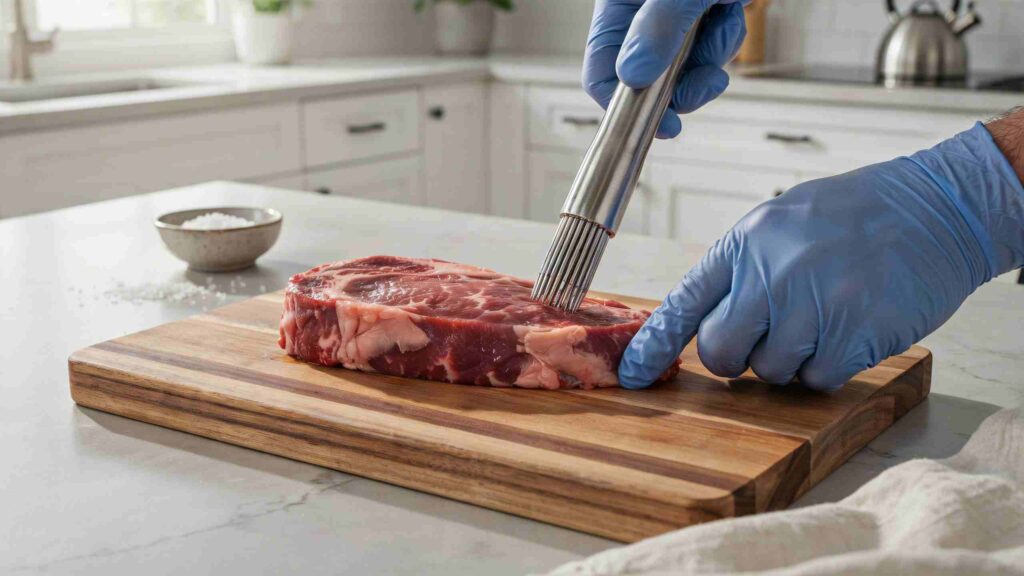
How Does Tenderizing Affect Food Safety?
Tenderizing meat can affect food safety because it may move surface bacteria deeper into the meat where they are harder to remove. This increases the importance of proper handling, cleaning, and cooking. When done correctly, the risk remains manageable, but poor hygiene or under cooking can make it unsafe.
Surface Bacteria vs Internal Bacteria
Raw meat naturally carries bacteria on its outer surface. These bacteria are normally killed during cooking because heat first reaches the outside and gradually cooks inward.
When meat is tenderized using a needle or blade tool, small channels are created inside the meat. If surface bacteria are present, they can be pushed into these deeper layers. Unlike surface bacteria, internal bacteria are not exposed immediately to high heat, which is why proper cooking temperature becomes more critical.
Which Meats Are Most Affected?
Some meats are more sensitive to tenderizing-related safety concerns due to their structure and common cooking styles:
- Beef: Often tenderized for steaks and roasts; risk increases if cooked rare or medium-rare.
- Pork: Requires careful cooking due to internal safety requirements.
- Poultry: Higher natural bacterial load, making hygiene and thorough cooking essential.
- Wild game: Can carry variable bacterial exposure depending on handling and processing conditions.
What Increases Risk?
Food safety risks increase when tenderizing meat if tools are not cleaned properly, hands are not washed, cross-contamination occurs, or the meat is undercooked. Leaving tenderized meat unrefrigerated also increases the chance of bacterial growth. Proper hygiene and thorough cooking significantly reduce these risks.
The most common risk factors include:
- Dirty tools that are not properly washed or sanitized.
- Hands not washed before and after handling raw meat.
- Cross-contamination between raw meat and other foods or surfaces.
- Undercooking meat below safe internal temperatures.
- Leaving tenderized meat at room temperature for too long.
Safe Cooking Temperatures After Using a Needle Tenderizer
Meat that has been tenderized with a needle tenderizer should always be cooked to safe internal temperatures to eliminate any bacteria that may have been transferred inside the meat. The main safety rule is simple: treat tenderized meat as you would ground meat. Proper cooking temperature is the key factor that ensures food safety.
Because needle tenderizing can push surface bacteria deeper into the meat, relying on color or texture is not enough. You must always use a food thermometer and cook to verified internal temperatures.
Safe Internal Cooking Temperatures
| Meat Type | Minimum Safe Internal Temperature |
|---|---|
| Beef | 145°F (63°C) + 3 minutes rest time |
| Pork | 145°F (63°C) + 3 minutes rest time |
| Chicken | 165°F (74°C) |
| Ground-style or heavily tenderized beef cuts | 160°F (71°C) |
Why These Temperatures Matter
Tenderizing creates small channels inside the meat, which can allow bacteria from the surface to move inward. Unlike whole intact cuts where bacteria mostly stay on the outside, tenderized meat may have bacteria distributed throughout.
This is why internal temperature becomes critical rather than relying on cooking appearance. Even if the outside looks fully cooked, the inside must reach a safe temperature to ensure harmful bacteria are destroyed.
Using a food thermometer is the most reliable way to confirm safety, especially for beef and pork where people often prefer medium or medium-rare doneness.
Key Safety
Never assume tenderized meat is safe based on texture or color alone. Always:
- Use a meat thermometer.
- Cook to recommended temperatures.
- Rest meat when required for safety and juice retention.
Does Tenderized Meat Need to Be Cooked Differently?
Tenderized meat does not require a completely different cooking method, but it does require more attention to food safety. The main difference is not how you cook it, but how carefully you monitor internal temperature. Because bacteria can be pushed inside the meat, relying on appearance or doneness alone is not safe.
In short, the cooking technique stays the same, but safety standards become stricter.
Why Tenderized Meat Can Require Extra Attention
When meat is tenderized using needles or blades, small channels are created in the muscle fibers. This process helps soften the meat but can also move surface bacteria into the interior.
Unlike intact cuts where bacteria mostly stay on the outside, tenderized meat may have contamination spread more evenly throughout. This means heat must reach every part of the meat evenly to ensure safety.
Why Internal Temperature Becomes More Important
With tenderized meat, internal temperature becomes the most reliable safety factor.
- Color is no longer a reliable indicator.
- Juices running clear do not guarantee safety.
- Surface browning does not confirm the inside is cooked.
This is why using a food thermometer is essential. The entire cut must reach a safe internal temperature, similar to ground meat standards, to ensure any bacteria inside are fully destroyed.
When Medium-Rare May Be a Concern
Medium-rare cooking is commonly preferred for steaks, but it can be risky with tenderized meat depending on how it was processed.
If a steak has been mechanically tenderized:
- Bacteria may exist inside the cut, not just on the surface.
- Medium-rare temperatures may not be sufficient to kill all bacteria.
- Food safety guidelines often recommend cooking more thoroughly than usual.
This does not mean medium-rare is always unsafe, but it requires knowing whether the meat has been mechanically tenderized and ensuring strict temperature control.
Tenderized meat is not cooked differently in method, but it must be cooked with higher safety awareness. Internal temperature becomes the deciding factor for safety, and doneness based on appearance or preference is not reliable when meat has been mechanically tenderized.
Common Mistakes That Make Needle Tenderizers Less Safe
Most safety issues with needle meat tenderizers come from improper handling rather than the tool itself. When cleaning, timing, or cooking is done incorrectly, the risk of spreading bacteria increases significantly. Avoiding these common mistakes is the key to using a needle tenderizer safely at home.
The tool becomes unsafe when basic food safety rules are ignored.
Using a Dirty Tenderizer
One of the biggest mistakes is using a needle meat tenderizer without properly cleaning it first or after previous use. Meat particles can easily get stuck between the needles, creating a breeding ground for bacteria.
If the tool is not washed thoroughly with hot water and soap after each use, it can transfer contamination directly into fresh meat. This increases the risk of foodborne illness even before cooking begins.
Tenderizing Meat Too Early
Tenderizing meat too far in advance and leaving it at room temperature is another common mistake. Once meat is pierced, bacteria can spread more easily within its structure.
If tenderized meat sits out for too long, bacteria can multiply quickly, especially in warm environments. For safety, meat should be cooked shortly after tenderizing or stored immediately in the refrigerator.
Not Sanitizing the Tool
Many users assume rinsing the tenderizer is enough, but proper sanitization is often skipped. Simple rinsing does not remove all bacteria or protein residue.
Without proper sanitization, harmful microorganisms can survive on the tool and transfer to the next batch of meat. Using hot water, dish soap, or a food-safe sanitizer helps eliminate this risk completely.
Cross-Contamination
Cross-contamination happens when raw meat or the tenderizer comes into contact with other foods, utensils, or kitchen surfaces.
Common examples include:
- Using the same cutting board for vegetables and raw meat
- Touching kitchen handles or spices after handling raw meat
- Placing cooked food on a contaminated surface
This spreads bacteria beyond the meat itself and increases the risk of foodborne illness in other foods.
Under cooking Tenderized Meat
Undercooking is one of the most serious mistakes because tenderized meat may have bacteria inside the cut, not just on the surface.
If the meat does not reach a safe internal temperature, bacteria may survive even if the outside looks fully cooked. This is why relying on color or texture is unsafe—only a food thermometer ensures proper doneness.
Why These Mistakes Matter
Each of these mistakes increases the chance of bacteria surviving or spreading during food preparation. Since needle tenderizers physically alter the structure of meat, food safety depends heavily on proper hygiene, timing, and cooking.
Avoiding these errors ensures that tenderized meat remains safe, flavorful, and properly cooked every time.
Who Should Be Extra Careful With Tenderized Meat?
Certain groups of people need to be more cautious with tenderized meat because their bodies are less able to fight foodborne bacteria. Even small contamination risks can lead to serious illness in these individuals. That’s why proper cooking and food handling become especially important.
In general, anyone with a weaker immune system or higher health sensitivity should take extra precautions when consuming mechanically tenderized meat.
Older Adults
As people age, the immune system naturally becomes weaker. This makes it harder for the body to fight harmful bacteria that may be present in improperly handled or undercooked meat.
For older adults, even mild foodborne infections can lead to serious complications such as dehydration or longer recovery times. Fully cooking tenderized meat is essential for safety.
Young Children
Young children have developing immune systems that are not yet strong enough to handle exposure to harmful bacteria effectively.
Because of this, they are more vulnerable to foodborne illnesses. Tenderized meat should always be thoroughly cooked and never served undercooked or medium-rare to children.
People With Weakened Immune Systems
This group includes individuals with medical conditions or treatments that reduce immune function.
Examples include:
- Cancer patients undergoing chemotherapy
- People with autoimmune disorders
- Individuals taking immunosuppressant medications
- Those with chronic illnesses affecting immunity
For these individuals, even low levels of bacteria can cause serious health issues, making proper cooking and hygiene critical.
Why Extra Caution Is Necessary
Tenderized meat may carry bacteria deeper inside the cut due to the mechanical process used to soften it. This means that relying on surface cooking is not enough.
For high-risk groups, the safest approach is:
- Cooking meat to recommended internal temperatures
- Avoiding undercooked or medium-rare tenderized meat
- Ensuring strict kitchen hygiene practices
Tenderized meat is safe when handled correctly, but certain groups—such as older adults, young children, pregnant individuals, and people with weakened immune systems—should be especially careful. For these individuals, thorough cooking and strict food safety practices are essential to reduce any risk of foodborne illness.
Needle Meat Tenderizer vs Meat Mallet: Which Is Safer?
Both a needle meat tenderizer and a meat mallet can be used safely, but the meat mallet is generally considered safer from a food hygiene perspective. This is because it does not penetrate deep into the meat, reducing the chance of pushing surface bacteria inside. However, safety also depends heavily on cleaning habits and proper cooking.
A mallet has lower contamination risk, while a needle tenderizer offers more effective and even tenderizing but requires stricter hygiene control.
| Factor | Needle Tenderizer | Meat Mallet |
|---|---|---|
| Bacterial Transfer Risk | Higher risk because needles can push surface bacteria deeper into the meat | Lower risk since it flattens meat without deep penetration |
| Cleaning Difficulty | More difficult due to multiple small needles where food particles can get trapped | Easier to clean with simple washing and scrubbing |
| Ease of Use | Quick and efficient for thick cuts, minimal effort needed | Requires physical effort and more time to pound meat evenly |
| Tenderizing Effectiveness | Highly effective; breaks muscle fibers internally and improves marinade absorption | Moderately effective; mainly softens surface and flattens meat |
Which One Is Safer?
From a food safety standpoint, a meat mallet is generally safer because it does not push bacteria into the interior of the meat. A needle meat tenderizer, while more efficient and effective for deep tenderizing, requires stricter hygiene practices, immediate cooking, and proper sanitization after each use.
Ultimately, both tools are safe when used correctly, but the mallet offers a lower-risk option for users who prioritize food safety over convenience or deep tenderizing performance.
Conclusion
Needle meat tenderizers are generally safe to use when they are handled correctly and used with proper food safety practices. They are effective tools for improving meat texture and cooking results in home kitchens.
The real concern is not the tool itself, but the possibility of transferring surface bacteria deeper into the meat during tenderizing. If meat is not handled hygienically or cooked thoroughly, this can increase the risk of foodborne illness.
The solution is simple and practical: always clean and sanitize the tenderizer properly, avoid cross-contamination, and cook meat to safe internal temperatures. When these steps are followed, a needle meat tenderizer remains a safe and useful kitchen tool.
Faqs
Can a needle meat tenderizer spread bacteria?
Yes. A needle meat tenderizer can move bacteria from the surface of meat into deeper layers. This happens when the needles pierce the meat and carry surface contamination inward. Proper cleaning and cooking greatly reduce this risk and make the process safe.
Is it safe to use a needle tenderizer on steak?
Yes, it is safe to use a needle tenderizer on steak when it is handled correctly. The main requirement is that the steak must be cooked to a safe internal temperature after tenderizing. This ensures any bacteria that may have been transferred inside are fully destroyed.
Should tenderized meat be cooked immediately?
Yes, tenderized meat should ideally be cooked soon after it is prepared. Leaving it at room temperature for too long can allow bacteria to multiply more quickly inside the meat. If not cooking immediately, it should be stored in the refrigerator.
Can I still use a needle tenderizer — or should I avoid it?
Yes, you can still use a needle meat tenderizer safely. It does not need to be avoided if proper hygiene and cooking practices are followed. The key is understanding the risks and managing them with correct food safety steps.
Can you sanitize a needle meat tenderizer?
Yes, a needle meat tenderizer can be sanitised effectively. It should be washed with hot soapy water immediately after use and then disinfected using boiling water or a food-safe sanitiser. Proper drying is also important to prevent bacterial growth and rust.

Hi, I’m Muhammad Din. I test and compare kitchen tools in my own kitchen before I ever recommend them — if it’s in a guide on HomePlora, I’ve used it or dug deep enough to know exactly where it holds up and where it doesn’t. My goal is simple: help you find tools that actually earn a spot in your kitchen, without wasting money on ones that don’t.