
Introduction
Most people spend time choosing what goes into their food. Few check what their food comes out of.
A scratched spatula, a faded plastic spoon, or an unlabeled import can transfer heavy metals, PFAS, or plasticizers directly into a meal — with no taste, smell, or visible warning sign.
This guide gives you a practical method for identifying safe kitchen utensils, understanding what certifications actually mean, and knowing when a tool needs replacing — no lab equipment required.
Table of Contents
What Makes a Utensil “Food Safe”?
A utensil is food safe when it meets three conditions:
- Non-reactive — It doesn’t transfer chemicals into food under normal cooking conditions, including heat, acidity, and fat exposure.
- Non-toxic materials — Made from substances free of compounds like BPA, lead, PFAS, phthalates, or heavy metal pigments.
- Structurally intact — No cracks, chips, or surface breakdown that harbor bacteria or accelerate chemical migration.
Food safety isn’t fixed at the point of purchase. It degrades with use, heat exposure, and mechanical wear. A utensil that was safe new may not be safe after two years of daily cooking.
How to Test Utensil Safety at Home
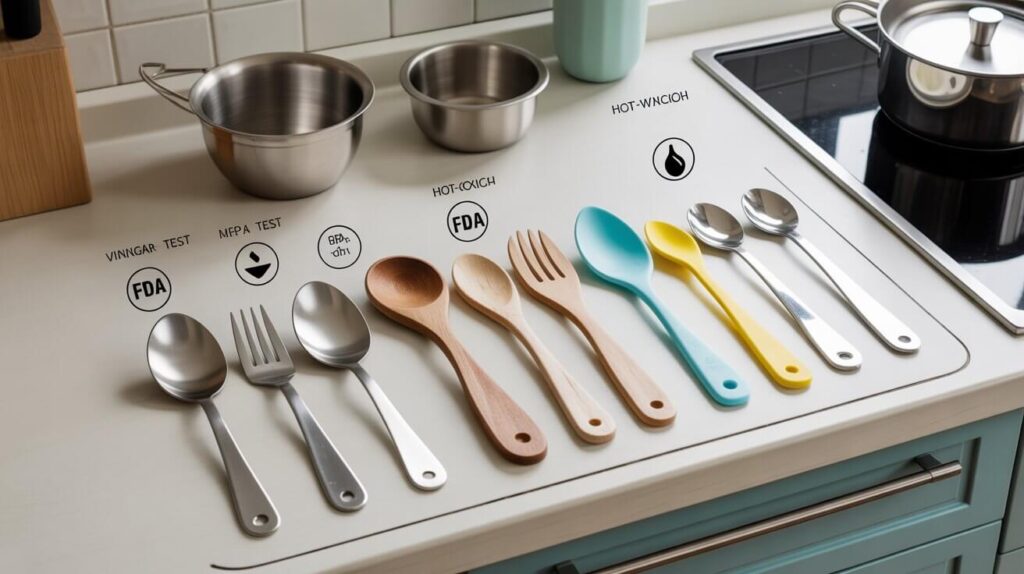
To identify food safe utensils: check for FDA, LFGB, or NSF certification marks; verify material type (stainless steel grade 304+, platinum-cured silicone, and untreated hardwood are the safest options); inspect for cracks, peeling, or chemical odors; and avoid black plastic with no certification, scratched non-stick coatings, and melamine utensils used under heat.
These five tests require no lab equipment. Run them on any utensil you’re unsure about.
Step 1: Visual Inspection
- Examine the full surface — handle, tip, seams, and joints — under direct light.
- Cracks and surface scratches in plastic or coated tools create micro-sites for bacterial growth and significantly accelerate chemical leaching, especially under heat.
- Discard any utensil with visible cracks, peeling coating, deep scratches, warping, or heat-related discoloration. These aren’t cosmetic issues — they’re functional safety failures.
Step 2: The Smell Test
- Smell the utensil at room temperature. Then run it under hot water for 30 seconds and smell again.
- Low-quality plastics off-gas volatile organic compounds, particularly when exposed to heat. Food-grade materials are manufactured to minimise this. A chemical smell means the material composition is suspect.
- A faint or neutral smell is acceptable. Any sharp petroleum or chemical odor — especially when warm — indicates non-food-grade material. Replace it.
Step 3: The Silicone Pinch Test
- Pinch a section of the silicone firmly and twist it.
- Pure food-grade silicone is made from silica and oxygen. It maintains its color under mechanical stress. Cheaper silicone contains fillers (calcium carbonate, clay, or chalk) added to reduce production costs. These fillers compromise heat resistance and food safety.
- If the silicone turns white at the pinch point, it contains fillers and is not 100% food-grade. Consistent color = quality silicone. White stress marks = lower-grade product.
Step 4: Heat Resistance Test
- Expose the utensil to cooking-level heat. Hold a silicone spatula in a 200°C (390°F) oven for 5 minutes, or dip a plastic spoon briefly into boiling water.
- Food-safe materials are rated for cooking temperatures. Inferior plastics warp, soften, or release odors when heated — which is precisely when they’re in contact with your food.
- Any warping, softening, melting, or new chemical odor after heat exposure means the material is not safe for food use at cooking temperatures.
Step 5: Check Labels and Certification Marks
- Look for printed or embossed certification marks on the handle, base, or original packaging.
- FDA-compliant, LFGB-certified, and NSF-approved products have passed standardised testing for chemical migration into food. These aren’t marketing terms — they require third-party testing.
- The presence of a verified certification mark is the strongest single indicator of food safety. No certification = no verified safety guarantee. “Non-toxic” printed by a brand without a certification body behind it means nothing legally.
Food Safe Certifications Explained
Not all labels carry equal weight. Here’s what each one actually tests — and how much to trust it:
| Certification | Region | What It Tests | Trust Level |
|---|---|---|---|
| FDA (21 CFR) | USA | Chemical migration limits for food-contact materials | High |
| LFGB §30/31 | EU / Germany | Heavy metals, volatiles, migration into food simulants (acid, oil, alcohol) | Very High — stricter than FDA |
| NSF International | USA / Global | Sanitation, material safety, cleanability | High |
| BPA-Free | Global | Absence of Bisphenol-A only | Medium — addresses one chemical, not all |
| Food-Grade Silicone | Global | Heat resistance, no fillers, non-reactive | High if platinum-cured |
| REACH Compliant | EU | Restriction of hazardous chemicals broadly | High |
What to know before trusting a label:
- “BPA-free” is not a full safety guarantee. Many BPA-free plastics substitute BPS or BPF — structurally similar compounds with similar endocrine-disrupting concerns. Treat BPA-free as a minimum requirement, not a certificate of safety.
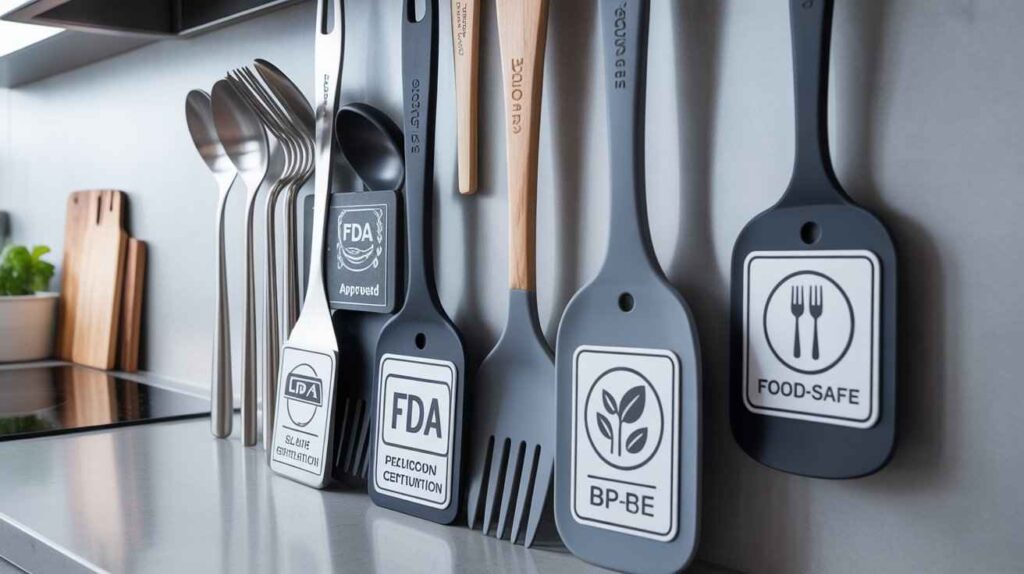
- The glass-and-fork symbol (🍴 embossed on European products) indicates compliance with EU Regulation No 1935/2004 for food-contact materials — one of the most reliable visual cues when buying imported products.
- LFGB testing is more rigorous than FDA testing because it tests migration into food simulants — acidic solutions, oils, and alcohols — not just water.
- “Dishwasher safe” and “microwave safe” do not mean food safe. These terms describe structural tolerance only. They say nothing about chemical migration.
Material Safety Guide
Stainless Steel
Safety rating: Excellent
Stainless steel is the benchmark for food-contact utensils. It’s non-reactive, non-porous, and doesn’t leach chemicals under normal cooking conditions.
- Grade 304 stainless steel (18/8 or 18/10) is commonly used in kitchen tools because it resists rust, prevents corrosion, and does not react with food ingredients
- Grade 316 provides better resistance with high-acid foods (tomatoes, citrus) and is common in professional kitchens
- What to look for: “18/8,” “18/10,” or “304 SS” stamped on the utensil
- What to avoid: Cheap stainless with no grade marking — lower chromium content means faster corrosion and potential metal transfer into acidic dishes
Food-Grade Silicone (Platinum-Cured)
Safety rating: Excellent when certified
Platinum-cured silicone is stable up to 260°C (500°F), doesn’t react with food, and holds its properties across thousands of uses. It’s the safest flexible material for cooking.
- Passes the pinch test — no white stress marks when twisted
- Labeled “100% food-grade silicone” or “platinum-cured”
- Peroxide-cured silicone (cheaper manufacturing method) is less thermally stable and may off-gas at high heat — it often smells slightly after heating
- Avoid: Unmarked silicone, strong chemical smells when heated, or products failing the pinch test
Wood and Bamboo
Safety rating: Good with proper care
Untreated hardwood (maple, walnut, beech) and bamboo are naturally antimicrobial when dry. Studies from the UC Davis Food Safety Lab found that bacteria drawn into dry wood grain didn’t reproduce and died off over time — the opposite of plastic surfaces which can harbor and grow bacteria in scratches.
The catch: this antimicrobial effect only works when the wood is properly maintained and kept dry.
- Oil monthly with food-safe mineral oil or beeswax to seal surface pores
- Never soak in water — this opens the grain and creates bacterial risk
- Replace when deep cracks or black staining (mold penetration) appear
- Avoid: Painted or varnished wooden utensils unless the finish is explicitly rated for food contact; composite wood products with unknown adhesives
Plastic — What’s Safe vs What’s Not
Safety rating: Varies significantly by resin type
Plastic is not a single material. The resin identification code—the number displayed inside the recycling symbol—helps determine the type of plastic you are dealing with.
| Code | Material | Food Safe? | Key Notes |
|---|---|---|---|
| PETE | Polyethylene Terephthalate | Single use only | Degrades with repeated heat/washing |
| HDPE | High-Density Polyethylene | Yes | Common in containers; stable |
| PVC | Polyvinyl Chloride | No | Contains phthalates; avoid for cooking |
| LDPE | Low-Density Polyethylene | Yes | Flexible; generally stable |
| PP | Polypropylene | Yes | Best food-safe plastic; heat tolerant to ~130°C |
| PS | Polystyrene | No | Leaches styrene, particularly with heat or fat |
| Other | Mixed or Polycarbonate | Avoid | Often contains BPA, BPS, or other plasticizers |
If a plastic utensil has no resin code and no certification mark, treat it as unverified and avoid using it with hot food.
A specific note on black plastic utensils: Black plastic is frequently manufactured from recycled electronics waste — which can contain brominated flame retardants (BFRs) and heavy metals. A 2023 study published in Chemosphere found BFR levels in black plastic kitchen utensils that exceeded safe exposure thresholds in several tested products. If you’re buying black plastic kitchen tools, LFGB or FDA certification is non-negotiable.
Materials to Avoid Outright
- Scratched or chipped non-stick coatings — PTFE (Teflon) is considered safe when intact. Degraded or scratched coating flakes into food and loses its inert barrier properties.
- Untreated or decoratively painted aluminum — Untreated aluminum leaches into acidic food (tomatoes, vinegar-based dishes). Anodized aluminum is safe. Decorative paint on cooking surfaces may contain lead, particularly in imported products.
- Melamine — Safe at room temperature for serving. Leaches formaldehyde and melamine compounds when heated above 70°C or used with acidic foods. Do not use melamine utensils for cooking.
- Unlabeled imports with decorative finishes — Bright pigmented coatings on low-cost imported tools have repeatedly tested positive for lead and cadmium in FDA import checks.
Common Mistakes That Make Safe Utensils Unsafe
Using Metal Utensils on Non-Stick Surfaces
What happens: Metal utensils scratch non-stick coatings, exposing base metal and creating coating fragments that enter food. Once the coating is scratched, the pan is no longer non-stick or fully safe.
Fix: Use only silicone or wooden utensils on all non-stick surfaces. Even plastic can scratch softer coatings.
Exceeding a Plastic Utensil’s Heat Rating
What happens: Plastics heated beyond their rated temperature soften, warp, and begin off-gassing plasticizers into hot food — exactly when it’s most harmful.
Fix: Polypropylene (#5) handles up to ~130°C. If you’re regularly stirring something at a higher temperature, switch to stainless steel or food-grade silicone.
Equating “Dishwasher Safe” With “Food Safe”
What happens: Dishwasher-safe means the product won’t warp in a high-heat wash cycle. It makes no statement about chemical migration, material toxicity, or food contact safety.
Fix: Verify food safety through certifications and material type separately from dishwasher tolerance.
Keeping Utensils Past Their Safe Lifespan
What happens: Structural degradation compounds over time. A three-year-old scratched plastic spatula leaches at a fundamentally different rate than when it was new.
Fix: Inspect utensils quarterly. Replace immediately on any sign of visible damage, chemical odor, or surface breakdown — not when you “get around to it.”
Trusting “Non-Toxic” Labels Without Certification
What happens: There are no specific regulations governing the use of the term “non-toxic.”. Any manufacturer can print it on packaging without any testing, third-party verification, or regulatory review.
Fix: Accept only FDA, LFGB, NSF, or equivalent third-party certification as meaningful safety evidence. Brand claims mean nothing without a certifying body behind them.
Cross-Using Utensils Across Raw and Cooked Food
What happens: A spatula used to flip raw chicken and then used on cooked food introduces live pathogens to a finished meal — a separate safety issue from chemical contamination, but equally serious.
Fix: Use color-coded or designated separate utensils for raw meat, raw produce, and cooked food. This is especially important for households with children, elderly members, or immunocompromised individuals.
Maintenance: How to Keep Utensils Food Safe Over Time
Daily Cleaning
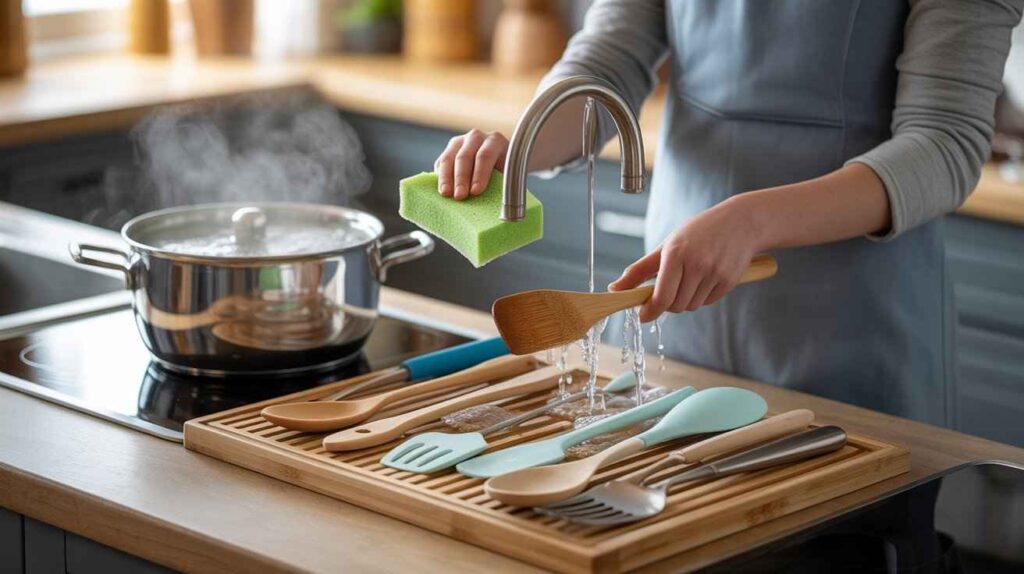
- Wash utensils with warm water and mild dish soap immediately after use — not hours later.
- Residual food (especially acidic or fatty food) accelerates surface degradation in plastics and wood. Delayed washing means prolonged contact.
- Immediate washing preserves surface integrity and prevents bacterial colonisation in porous materials.
Deep Sanitizing (Weekly or After Raw Meat Contact)
- For heat-safe utensils, submerge in a solution of 1 tablespoon bleach per gallon of water for 2 minutes. Alternatively, use a dishwasher sanitise cycle (60°C+).
- Standard washing removes visible contamination but doesn’t reliably eliminate pathogens, particularly in any micro-scratches on plastic or worn surfaces.
- Pathogen load is reduced to food-safe levels. For wooden utensils, use a 1:1 white vinegar solution instead — bleach damages wood grain.
Wooden Utensil Conditioning
- Apply food-safe mineral oil (or a beeswax/mineral oil blend) to wooden utensils monthly, rubbing it into the grain with a cloth and allowing it to absorb fully.
- Oil seals the porous wood surface, blocking water absorption, preventing cracking, and eliminating the conditions for bacterial colonisation.
- Properly conditioned wood stays structurally intact, maintains its antimicrobial properties when dry, and lasts significantly longer.
Proper Storage
- Store utensils in a clean, dry container. Never leave them submerged in water, packed tightly in damp conditions, or stored in a drawer where moisture accumulates.
- Moisture is the accelerating factor in degradation for both wood (cracking, mold) and lower-grade metals (corrosion, rust).
- Dry storage extends material life and prevents contamination between tools.
When to Replace Your Utensils (Replacement Checklist)
Plastic Utensils — Replace If:
- Visible cracks, deep scratches, or surface whitening
- Chemical smell when heated or washed in hot water
- Persistent discoloration or staining that won’t clean out
- No resin code and no certification mark
- 2–3+ years of heavy daily use
Silicone Utensils — Replace If:
- Fails the pinch test (white stress marks when twisted)
- Tears, delamination, or separation at joint points
- Persistent chemical odor after washing
- Bubbling, pitting, or tackiness on the surface
Wooden Utensils — Replace If:
- Deep cracks running through the grain (not surface-level)
- Black staining that doesn’t resolve — indicates mold penetration
- Splintering along edges or handles
- Persistent sour or rotten smell after sanitizing
Metal Utensils — Replace If:
- Rust spots on stainless steel (indicates low-grade alloy composition)
- Peeling, flaking, or lifting on any coated surface
- Warped structure that traps food in inaccessible areas
- Welds or joints showing separation or corrosion
Conclusion
Maintaining food safe cooking habits is crucial for protecting your health and ensuring every meal is safe. By choosing safe kitchen utensils and understanding materials, certifications, and proper maintenance, you can reduce exposure to harmful chemicals and prevent contamination. Prioritising long term utensil safety through regular inspection, proper cleaning, and timely replacement of worn or damaged tools ensures your kitchen remains a safe and healthy environment. Following these practices allows you to cook confidently, safeguard your family, and make informed decisions about every utensil in your kitchen.
Faqs
Can a utensil be food safe when purchased but become unsafe over time?
Yes — and this is one of the most underappreciated aspects of kitchen safety. Chemical migration increases as materials degrade. A scratched plastic spatula releases more compounds than an intact one. Heat cycling, mechanical wear, and chemical exposure (acidic food, harsh detergents) all accelerate this. Regular inspection and timely replacement are as important as the initial purchase decision.
Is stainless steel always food safe?
High-grade stainless steel (304 or 316) is reliably safe for food contact. However, inexpensive stainless with lower chromium content can corrode and release metals over time. The 18/8 or 18/10 marking on a utensil indicates the chromium-nickel ratio and confirms you’re working with proper food-grade alloy.
Is BPA-free enough of a safety guarantee?
No. BPA-free confirms the absence of Bisphenol-A, but many BPA-free plastics substitute BPS or BPF — structurally similar compounds with similar endocrine-disrupting profiles. For full assurance, look for LFGB, FDA, or NSF certification, which tests the product broadly rather than screening for a single chemical.
Does dishwasher-safe also mean food safe?
No. Dishwasher-safe only indicates the utensil can withstand washing in a dishwasher. It does not guarantee the material is non-toxic or certified food safe.
Does the color of a utensil affect its safety?
Not directly — but it’s a useful proxy. Black plastic warrants extra scrutiny because it’s commonly made from recycled electronics waste containing flame retardants. Brightly pigmented coatings on cooking surfaces (ceramic, enamel) deserve certification verification because pigment compounds vary widely in their leaching behaviour.

Hi, I’m Muhammad Din. I test and compare kitchen tools in my own kitchen before I ever recommend them — if it’s in a guide on HomePlora, I’ve used it or dug deep enough to know exactly where it holds up and where it doesn’t. My goal is simple: help you find tools that actually earn a spot in your kitchen, without wasting money on ones that don’t.