
Introduction
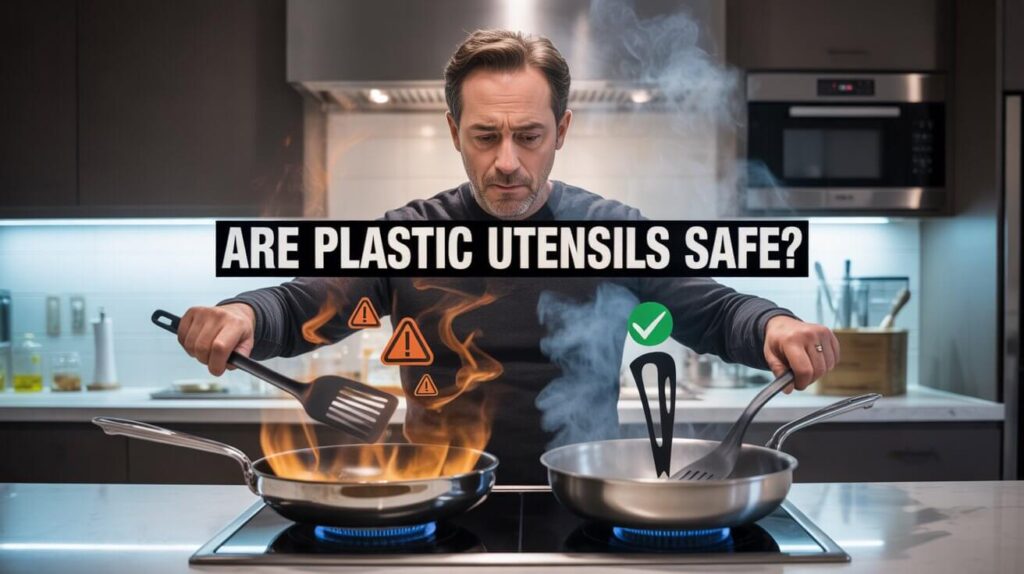
Plastic utensils are found in almost every modern kitchen because they are lightweight, affordable, and convenient. But many people still wonder: are plastic utensils safe for cooking and everyday use?
The concern is valid. Under certain conditions, plastic can break down and release substances such as BPA, phthalates, or microplastics, especially when exposed to high heat or repeated wear. Understanding how plastic behaves in real kitchen environments—and how to use it correctly—can help you avoid unnecessary risks while keeping your cooking routine practical.
Table of Contents
Are plastic utensils unsafe or safe?
Plastic utensils are generally safe when made from food-grade materials like polypropylene (PP) or nylon and used within recommended temperature limits. However, low-quality plastics, high heat exposure, and worn utensils can increase the risk of chemical leaching and microplastics contamination. For high-heat cooking, safer alternatives like silicone, stainless steel, or bamboo are recommended.
The safety of plastic utensils depends on three key factors:
1. Type of Plastic
Not all plastics are equal.
- Safer options:
- Polypropylene (PP)
- Food-grade nylon
- More concerning materials:
- Melamine (can degrade under heat)
- Low-quality or recycled plastics
- Some black plastic utensils (may contain additives)
2. Heat Exposure
Plastic becomes less stable at high temperatures.
- Safe: stirring warm foods
- Risky: prolonged contact with hot pans or boiling oil
3. Condition of the Utensil
Scratched or worn utensils are more likely to:
- Release microplastics
- Trap bacteria
- Break down faster under heat
Plastic utensils are safe when used properly, but misuse increases risk.
How Heat Affects Plastic Utensils
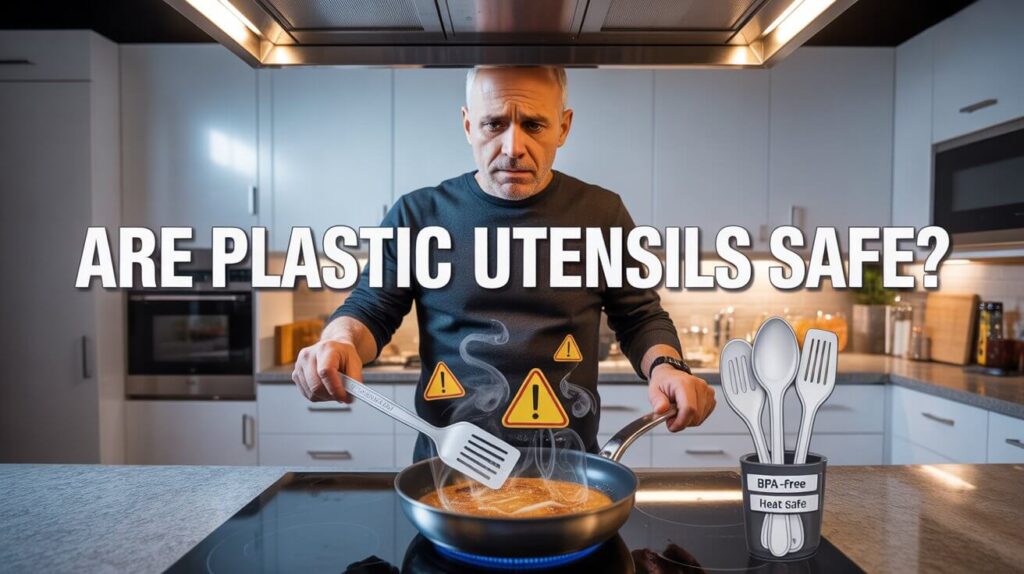
Heat is the biggest factor influencing plastic safety in the kitchen.
What happens under high heat?
- Plastic may soften or warp.
- Chemical bonds can weaken.
- Small particles (microplastics) may shed into food.
Temperature Guidelines
- Polypropylene (PP): safe up to ~130–160°C.
- Nylon: can tolerate slightly higher heat.
- Melamine: not suitable for high-heat cooking.
Direct flame or prolonged frying temperatures can exceed these limits.
Key Health Concerns Linked to Plastic Utensils
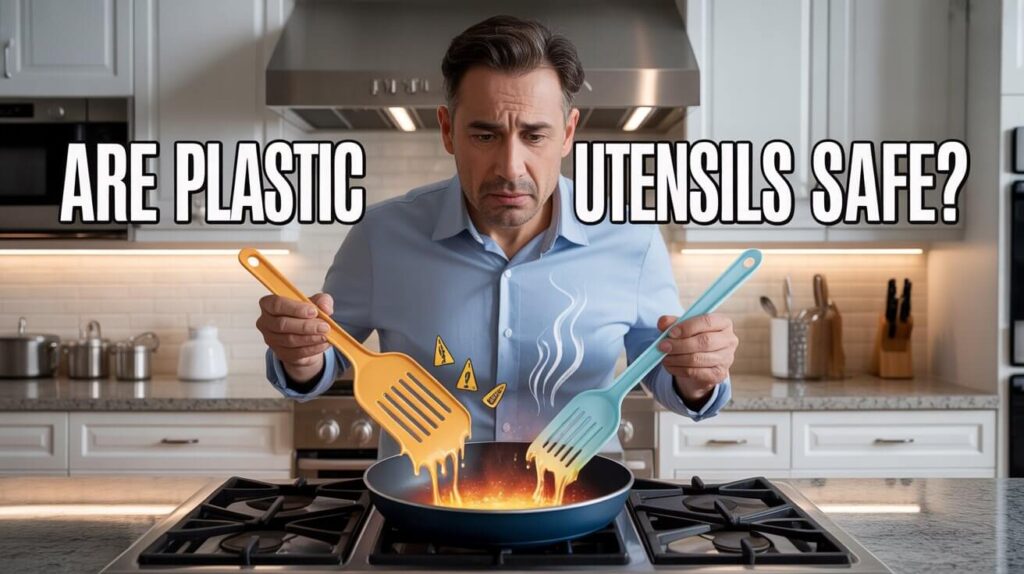
While occasional use is unlikely to cause harm, long-term misuse may increase exposure to certain substances.
1. Chemical Leaching
Some plastics may release:
- BPA (in older or low-quality plastics).
- Phthalates (used for flexibility).
These are known as endocrine disruptors, which may affect hormone balance over time.
2. Microplastics
Worn utensils can shed tiny plastic particles into food. Research on long-term effects is still ongoing, but reducing exposure is considered a safer approach.
3. Additives in Black Plastic
Some black utensils may contain recycled materials or flame-retardant residues, making them less predictable under heat.
How to Use Plastic Utensils Safely if You Choose Them
Using plastic utensils safely involves following simple yet effective guidelines to minimise chemical exposure and maintain kitchen safety. The first step is to ensure that your utensils are made from high-quality, food-grade plastics such as polypropylene (PP) or nylon, which are designed to withstand normal cooking temperatures. Avoid exposing plastic utensils to direct heat, open flames, or boiling liquids for extended periods, as this can cause chemical leaching of BPA, phthalates, or other harmful compounds. Replace scratched, warped, or discoloured utensils promptly, since damaged surfaces increase the risk of micro plastic shedding. When cooking, use plastic utensils for stirring or serving rather than prolonged contact with hot cookware. Additionally, consider supplementing your kitchen with silicone, stainless steel, or bamboo utensils for tasks involving high heat, as these alternatives are chemical-free and durable. By following these practices, you can safely incorporate plastic utensils into your daily cooking without compromising health or food safety.
Safer Alternatives to Plastic Utensils
Silicone
- Heat-resistant and flexible.
- Non-reactive and durable.
Stainless Steel
- Extremely durable.
- No chemical leaching.
- Ideal for high-heat cooking.
Bamboo or Wood
- Natural and eco-friendly.
- Gentle on cookware.
- Requires proper drying and care.
Many kitchens use a combination of materials for the best balance of safety and convenience.
Pros and Cons of Using Plastic Utensils in Your Kitchen
| Pros of Plastic Utensils | Cons of Plastic Utensils |
|---|---|
| Lightweight and easy to handle, making stirring, serving, and mixing convenient in daily cooking. | Low-quality or damaged plastic utensils can leach chemicals like BPA and phthalates, especially when exposed to high heat, posing health risks. |
| Affordable and widely available, suitable for households on a budget. | Prone to melting, warping, or scratching under direct heat or prolonged cooking, which may increase microplastic shedding. |
| Non-reactive with acidic or alkaline foods, preventing taste alteration. | Black or recycled plastics may contain flame retardants or other harmful substances, increasing potential chemical exposure. |
| Dishwasher safe and easy to clean, offering practicality for busy kitchens. | Less durable than alternatives like stainless steel, silicone, or bamboo, often requiring replacement after heavy use. |
| Available in various colors, designs, and sizes for aesthetic and functional flexibility. | Environmental concerns: plastic utensils are non-biodegradable and contribute to long-term plastic pollution. |
Food safety organisations like the FDA state that approved food-grade plastics are safe when used as intended. However, experts consistently recommend avoiding excessive heat exposure and replacing damaged utensils to reduce potential risks.
From a kitchen perspective, most safety issues come not from the material itself—but from how it is used over time.
Conclusion
Plastic utensils are safe for everyday use when they are high-quality, used correctly, and replaced when worn. However, they are not the best choice for high-heat cooking.
For maximum safety:
- Regularly inspect and replace old utensils.
- Use plastic for low to medium heat tasks.
- Use silicone or stainless steel for high heat.
Faqs
Do Plastic Kitchen Utensils Leach Chemicals?
Plastic kitchen utensils can release chemicals if exposed to high heat, scratched surfaces, or low-quality materials. Food-grade plastics like polypropylene (PP) or nylon are designed to limit chemical migration, but damaged or overheated utensils may still allow small amounts of substances such as BPA or phthalates to enter food. Using utensils within recommended temperatures and replacing worn items reduces this risk.
Should I Throw Away All My Plastic Kitchen Tools?
Not all plastic utensils need to be discarded. Tools made from food-grade materials and used correctly are generally safe. Focus on replacing damaged, warped, or discoloured items, especially those exposed to direct heat or boiling liquids, while supplementing your kitchen with safer alternatives for high-temperature cooking tasks.
Are White Plastic Cooking Utensils Safe to Use?
White or transparent utensils made from food-grade plastics are generally safer for cooking because they usually contain fewer additives and are less likely to include recycled or flame-retardant compounds. Using them within the recommended temperature range and avoiding prolonged exposure to high heat helps maintain safety.

Hi, I’m Muhammad Din. I test and compare kitchen tools in my own kitchen before I ever recommend them — if it’s in a guide on HomePlora, I’ve used it or dug deep enough to know exactly where it holds up and where it doesn’t. My goal is simple: help you find tools that actually earn a spot in your kitchen, without wasting money on ones that don’t.