
Introduction
Learning how to use a mandoline slicer correctly helps you create fast, uniform slices for vegetables, fruits, chips, salads, and meal prep with more consistency than a regular knife. A proper mandoline slicer guide also makes it easier to achieve even cuts for better cooking results and cleaner food presentation. Because the blade is extremely sharp, using the right technique and controlled movement is important for safer and more accurate slicing.
Table of Contents
What a Mandoline Slicer Actually Does
A mandoline slicer is a kitchen tool designed to cut fruits and vegetables into thin, even slices much faster and more consistently than a knife.
Why People Use a Mandoline Slicer
The main purpose of a mandoline slicer is to create uniform cuts with minimal effort. Instead of manually slicing each piece with a knife, the blade allows ingredients to glide across the surface for quick and consistent results.
This helps improve:
- slicing speed
- thickness consistency
- food presentation
- prep efficiency
What a Mandoline Slicer Is Used For
A mandoline slicer is commonly used for:
- thin potato slices for chips
- cucumber slices for salads
- evenly cut onions
- shredded cabbage for slaw
- julienned carrots and vegetables
Because the slices are uniform, foods also cook more evenly compared to hand-cut pieces.
Adjustable Thickness for Different Cuts
Most mandoline slicers include adjustable settings that change the thickness of each slice. Some models also support:
- straight cuts
- crinkle cuts
- waffle cuts
- julienne strips
This makes the tool more versatile than a standard kitchen knife for repetitive slicing tasks.
Mandoline Slicer vs Knife
A knife gives more manual control, while a mandoline slicer focuses on speed and consistency. For recipes that require thin, identical slices, a mandoline slicer is usually faster and more precise.
Why Uniform Slices Matter
Even slices are important because they:
- cook at the same rate
- improve texture consistency
- create cleaner food presentation
- reduce uneven browning
This is especially useful for dishes like potato chips, gratins, salads, and vegetable trays.
Before You Start: Safety Setup, Injury Prevention & Beginner Mistakes
Mandoline slicer safety starts before the first slice. A stable setup, proper grip, and controlled movement help reduce the risk of cuts and make the tool easier for beginners to handle safely.
Set Up a Safe Slicing Area
Before using a mandoline slicer, make sure the surface underneath is flat and stable. A slippery cutting board or uneven counter can cause the slicer to shift during use.
For better control:
- place the slicer on a non-slip surface
- keep the blade setting locked in place
- make sure the slicer feels steady before starting
A stable setup gives more control than trying to balance the slicer in the air or against a loose bowl.
Always Use the Hand Guard
The hand guard is designed to keep fingers away from the blade while holding vegetables securely. Many beginner injuries happen when users skip the guard for speed or convenience.
Using the hand guard helps:
- improve grip stability
- reduce finger exposure
- maintain safer pressure control
Some users also wear cut-resistant gloves for extra protection, especially when slicing firm vegetables.
Common Beginner Mistakes
Many mandoline slicer injuries happen because of simple handling mistakes rather than the tool itself.
Common problems include:
- rushing through slicing
- using too much force
- holding vegetables with bare fingers
- using the slicer on an unstable surface
- trying to slice very small pieces
Fast movement may feel efficient, but controlled movement is usually safer and more accurate.
The Safest Way to Prevent Cuts
The best way to avoid cutting yourself with a mandoline slicer is to use slow, controlled motion instead of aggressive pressure. Consistent movement gives better stability and keeps the blade path predictable.
A slower pace often creates:
- cleaner slices
- better control
- reduced slipping risk
- safer hand positioning
For beginners, control matters more than speed.
Step-by-Step Guide: How to Use a Mandoline Slicer
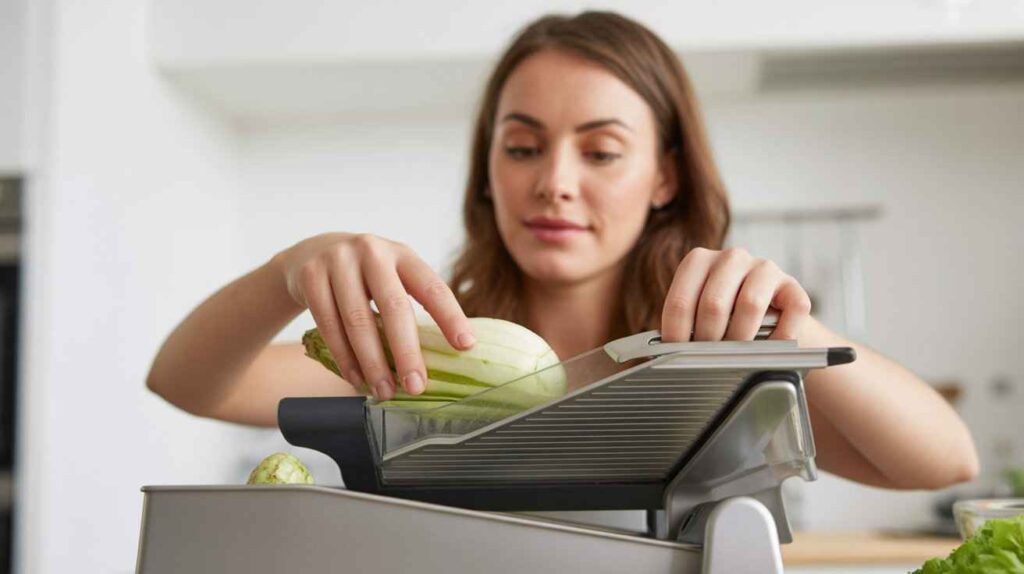
To use a mandoline slicer, place it on a stable surface, adjust the thickness setting, secure the vegetable with the hand guard, and slide it across the blade using smooth, controlled motion.
1. Position the Mandoline Slicer Correctly
Set the mandoline slicer on a steady, level surface before you begin slicing. The slicer should stay firmly in place without wobbling or shifting during use.
2. Select the Slice Thickness
Adjust the thickness setting based on the type of cut you want. Thin settings work well for chips and salads, while thicker settings are better for larger vegetable slices.
3. Place the Vegetable Securely
Position the vegetable firmly inside the hand guard or holder. The vegetable should feel stable and centred before moving it toward the blade.
4. Hold the Guard Firmly
Grip the hand guard with steady pressure to keep the vegetable secure while slicing. A firm grip gives better control than holding the food directly by hand.
5. Use Smooth Sliding Motion
Slide the vegetable across the blade using slow, even strokes. Consistent motion creates cleaner slices and better thickness uniformity than fast or uneven movement.
6. Stop Before the Final Small Piece
Finish slicing before the remaining piece becomes too small to control comfortably. Small end pieces are harder to stabilise and can reduce slicing accuracy.
What Proper Mandoline Slicing Should Feel Like
A properly used mandoline slicer should feel:
- smooth during movement
- stable on the surface
- consistent in slice thickness
- controlled instead of forceful
Even pressure usually produces cleaner and more uniform slices than aggressive motion.
Cleaning and Maintenance After Use
Mandoline slicer cleaning should be done immediately after use to prevent food residue from drying around the blade and surface. Quick cleaning also helps maintain smoother slicing performance over time.
Clean the Slicer Right After Use
Rinse the mandoline slicer as soon as you finish using it. Fresh residue is easier to remove than dried food stuck near the blade edges.
For better cleaning results:
- rinse under warm water
- remove visible food particles
- clean grooves and blade areas carefully
Immediate rinsing is usually faster and easier than scrubbing dried residue later.
Be Careful Around the Blade
The blade remains sharp even during cleaning, so avoid wiping directly across the cutting edge with your fingers or cloth.
A safer approach is to:
- clean from the side of the blade
- use a soft brush or sponge
- avoid direct hand pressure near sharp edges
Controlled cleaning reduces accidental contact with the blade.
Dry the Mandoline Completely
After washing, dry all parts thoroughly before storage. Moisture left around the blade or frame can lead to rust spots or surface wear over time.
For best results:
- use a dry towel
- air dry hidden areas if needed
- make sure the blade section is fully dry
Dry storage usually protects the blade better than leaving moisture trapped on the surface.
Build a Simple Maintenance Habit
Regular maintenance helps the mandoline slicer stay smooth and consistent during long-term use.
A good routine includes:
- checking the blade for buildup
- inspecting adjustable parts
- keeping the surface dry between uses
- storing the slicer in clean condition
Simple maintenance habits often help the slicer last longer and perform more consistently.
Storage and Long-Term Safety Handling
Proper mandoline slicer storage helps protect the blade, reduce accidental contact, and keep the tool in safe condition between uses. Storing the slicer carefully is just as important as using it correctly.
Keep the Blade Covered
Always store the mandoline slicer with the blade covered or locked if the model includes a safety setting. An exposed blade can easily cause accidental cuts when reaching into cabinets or drawers.
For safer storage:
- use the included blade guard
- lock adjustable blades when possible
- keep sharp edges fully covered
Covered blades are safer than leaving the cutting edge exposed inside storage spaces.
Choose a Safe Drawer or Cabinet Spot
Place the mandoline slicer in a secure area where it will not slide, shift, or press against other kitchen tools. Loose storage can damage the blade and increase the chance of accidental contact.
A better storage setup includes:
- flat drawer placement
- separate space from knives or utensils
- stable positioning without stacking heavy items on top
Dedicated storage usually keeps the slicer more secure than overcrowded kitchen drawers.
Keep It Out of Reach of Children
Because mandoline slicers contain extremely sharp blades, they should always be stored in areas children cannot easily access.
Safer options include:
- high cabinets
- locked kitchen drawers
- storage containers with blade protection
Proper placement reduces the risk of unintended handling or injury.
Check the Slicer Before Reusing
Long-term storage can sometimes loosen adjustable parts or shift blade settings. Before using the slicer again, inspect the frame and blade position to make sure everything feels secure and properly aligned.
Regular handling checks help maintain:
- stable blade positioning
- smoother slicing performance
- safer long-term use
When NOT to Use a Mandoline Slicer
A mandoline slicer is designed for controlled, uniform slicing, but it is not the right tool for every ingredient or setup. Using it in the wrong conditions can reduce stability, damage food texture, or increase handling risk.
Very Small Vegetables
Tiny vegetables or short leftover pieces are difficult to hold securely on a mandoline slicer. As the food becomes smaller, control decreases and the blade area becomes harder to manage comfortably.
Examples include:
- small radishes
- garlic cloves
- short carrot ends
- trimmed vegetable pieces
For very small ingredients, a knife usually provides better precision and control.
Soft or Delicate Fruits
Soft fruits can become crushed or uneven when pressed against the blade surface. Ingredients with high moisture or delicate texture may lose shape during slicing.
This commonly happens with:
- ripe tomatoes
- peaches
- strawberries
- overripe fruits
A mandoline slicer works better with firm produce than soft, fragile ingredients.
Unstable or Slippery Surfaces
Using a mandoline slicer on an unstable surface can reduce control and affect slicing consistency. Movement underneath the slicer may cause shifting during use.
Avoid using the slicer on:
- wet countertops
- uneven cutting boards
- loose trays or bowls
- slippery kitchen surfaces
Stable placement generally provides safer and more consistent handling than unsupported positioning.
Extremely Hard or Irregular Foods
Very hard ingredients or unevenly shaped foods may not glide smoothly across the blade. Irregular surfaces can interrupt slicing flow and create inconsistent results.
Foods that may not work well include:
- frozen produce
- oversized root vegetables
- hard squash with uneven surfaces
Firm, evenly shaped vegetables usually perform better on a mandoline slicer than rough or irregular items.
Why Proper Food Choice Matters
A mandoline slicer performs best when the ingredient is stable, firm, and easy to control. Choosing the right foods helps improve slice consistency, handling comfort, and overall cutting precision.
Conclusion
Understanding how to use a it properly can help you create faster, cleaner, and more uniform slices for everyday meal preparation. Using controlled movement and careful handling around the blade helps improve both slicing accuracy and overall safety. With the right technique, a mandoline slicer can become a reliable kitchen tool for consistent and efficient food prep.
Faqs
Can beginners use a mandoline slicer?
Yes, beginners can use a mandoline slicer with proper control and attention. It is designed to make slicing faster, but careful handling is important for best results.
Do you really need a safety guard?
Yes, a safety guard is strongly recommended for protection. It keeps fingers away from the blade while maintaining better grip on the food.
Why does the mandoline slicer cut unevenly?
Uneven cuts usually happen due to inconsistent pressure or incorrect thickness settings. Keeping steady motion helps improve slice uniformity.
What is the safest mandoline slicer technique?
The safest technique is slow, controlled sliding with steady pressure. Rushing or forcing the food increases the risk of errors and uneven slicing.
How do you hold vegetables on a mandoline slicer?
Vegetables should be held firmly using the safety guard or holder. This keeps them stable while keeping fingers away from the blade.