

Introduction
Frying bacon, searing burgers, or shallow-frying chicken can leave a fine layer of grease across your stovetop before dinner is even on the table. Splatter screens for cooking help reduce that mess by blocking hot oil droplets while allowing steam to escape, so your food can still brown instead of turning soggy under a solid lid. We tested a range of them over bacon-heavy mornings and greasy stir-fries to see which designs actually hold up in daily use. Not every screen performs the same way — the right choice depends on your pan size, mesh design, handle, stability, and how easy it is to clean afterward. Here’s what actually matters when picking one for everyday cooking.
A stainless steel, multi-size set is often the best choice for cooking with different pan sizes — the U.S. Kitchen Supply 3-Piece Splatter Set is the strongest all-around pick, since its three sizes fit almost any pan and the fine mesh holds up over repeated high heat without warping. That said, the right choice still depends on your pan and what you’re frying: a single 13-inch screen is plenty if you mainly cook in one large skillet, while high-splatter foods like popcorn, fried chicken, or bacon do better under an extra-fine mesh screen built specifically for heavier splatter.
How Does a Splatter Screen Work, and Why Use One?
A splatter screen is a kitchen tool placed over a frying pan or skillet to reduce hot oil and grease from splashing onto your stovetop and nearby surfaces. Most are made with fine metal mesh or perforated material, which helps block larger grease droplets while allowing steam to escape. Unlike a solid pan lid, a splatter screen protects against grease without sealing in as much moisture.
How Does a Splatter Screen Work?
When you fry bacon, burgers, chicken, or other foods in hot oil, moisture from the food can rapidly turn into steam and disturb the hot fat, sending small droplets of oil into the air. Those droplets can land on your hands, stovetop, backsplash, and nearby counters.
A splatter screen works as a physical barrier between the pan and the surrounding kitchen. Its mesh or perforated surface catches or redirects many of the larger oil droplets while the openings allow steam to pass through.
This balance is the main reason a splatter screen is different from simply covering a pan with a lid. You get protection from much of the grease without completely trapping the steam produced during cooking.
Splatter Screen vs. Pan Lid: What’s the Difference?
The two tools may look like they serve the same purpose, but they behave differently during cooking.
| Splatter Screen | Solid Lid | |
|---|---|---|
| Blocks grease | Yes | Yes |
| Vents steam | Yes | No — traps it |
| Effect on crisp texture | Preserves it | Can soften it |
| Visibility while cooking | Yes | Usually blocked |
| Best for | Frying, searing, sautéing | Simmering, steaming |
A splatter screen is usually the better choice when you’re frying or searing and want to reduce grease mess while keeping the cooking surface relatively open. A solid lid is more appropriate when you want to trap heat and moisture, such as when simmering or steaming food.
Why Does a Splatter Screen Have Mesh or Holes?
The openings are an important part of the design. A screen with no openings would behave more like a solid lid, trapping steam and creating condensation.
Fine mesh or small perforations provide a compromise: they create a barrier against many hot grease droplets while still giving steam a path to escape. The exact level of protection depends on the screen’s mesh density, hole size, pan coverage, and how aggressively the food is splattering.
This is why finer isn’t automatically better. A very fine mesh may catch more grease, but it can also be more difficult to clean when oil dries inside the mesh. A screen with larger openings may be easier to clean but may allow more small droplets through.
What Does a Splatter Screen Actually Protect Against?
A good splatter screen can help reduce:
- Grease spots on the stovetop
- Oil splashes around the frying pan
- Mess on nearby countertops and backsplashes
- Direct contact with some hot oil droplets
- Cleanup after frying greasy foods
It is particularly useful when cooking foods that naturally produce more splatter, such as bacon, sausages, burgers, chicken, and foods shallow-fried in oil.
However, it is important to set realistic expectations. A splatter screen does not create a completely sealed barrier. Some fine oil droplets can still escape through the mesh or around the edges of the pan. Cooking temperature, oil quantity, pan size, and the moisture content of the food all affect how much splattering occurs.
Does a Splatter Screen Stop Steam?
No. A properly designed splatter screen is intended to let steam escape.
This matters because steam trapped under a solid lid can condense and drip back into the pan. When you’re aiming for a crisp, golden finish, too much trapped moisture can prevent the food from browning properly. A mesh or perforated screen gives steam an escape route while still helping control grease.
That makes a splatter screen especially useful for cooking methods where you want less mess without turning the pan into a covered, steamy environment.
Do Splatter Screens Really Work?
Yes, but they work best when you think of them as grease-splash control rather than a complete grease-proof shield.
The right screen can noticeably reduce the amount of oil reaching your stovetop and surrounding surfaces. However, it won’t eliminate splatter completely, particularly when cooking at very high heat or when the screen doesn’t properly cover the pan.
For the best results, choose a screen that sits securely over your cookware, use the correct size, and avoid overheating the oil. A splatter screen is most effective when its design matches the pan and the type of cooking you’re doing.
A splatter screen is essentially a vented barrier for frying and sautéing. It helps block hot grease droplets from spreading around your kitchen while allowing steam to escape through its mesh or perforated surface.
If you regularly fry bacon, sear burgers, cook sausages, or shallow-fry food, a well-fitting splatter screen can make cooking less messy and reduce the time you spend cleaning grease from your stovetop. It won’t replace a pan lid for simmering or covered cooking, but for greasy stovetop cooking, it fills a useful gap between leaving the pan uncovered and sealing it completely.
Comparison
| Image | Product | Details | Price |
|---|---|---|---|
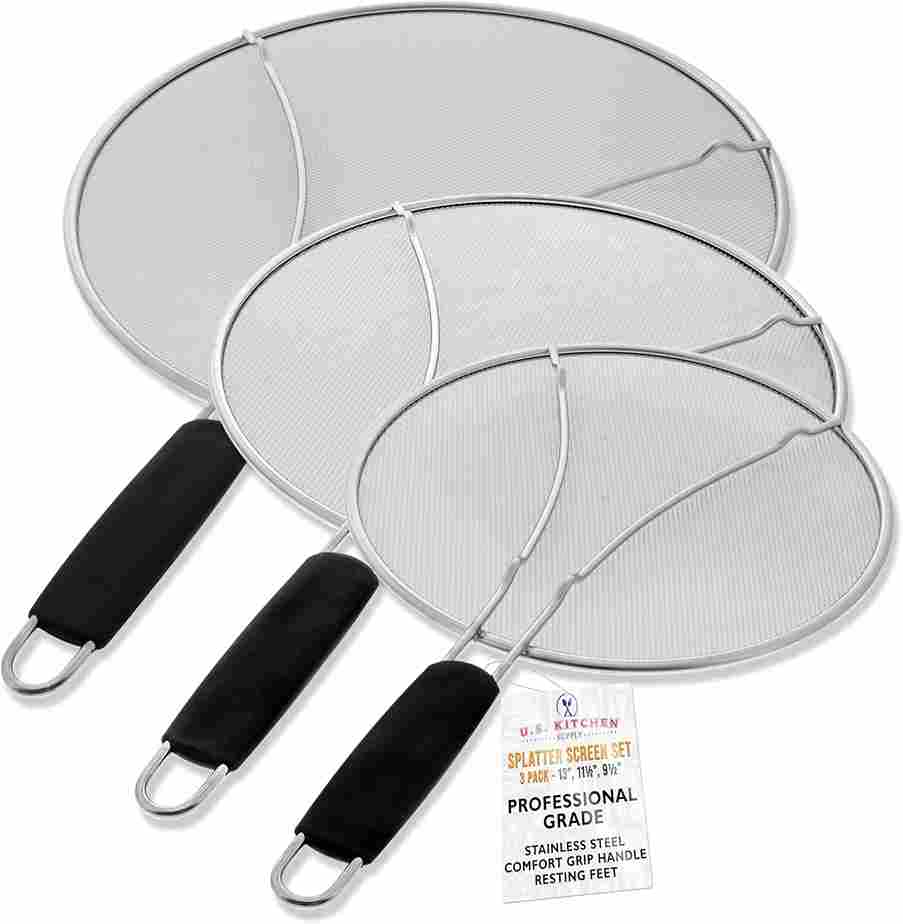 |
U.S. Kitchen Supply Splatter Guard Set | Three stainless steel mesh sizes that block grease without trapping steam, with resting feet that keep your counter clean between batches. | Check on Amazon |
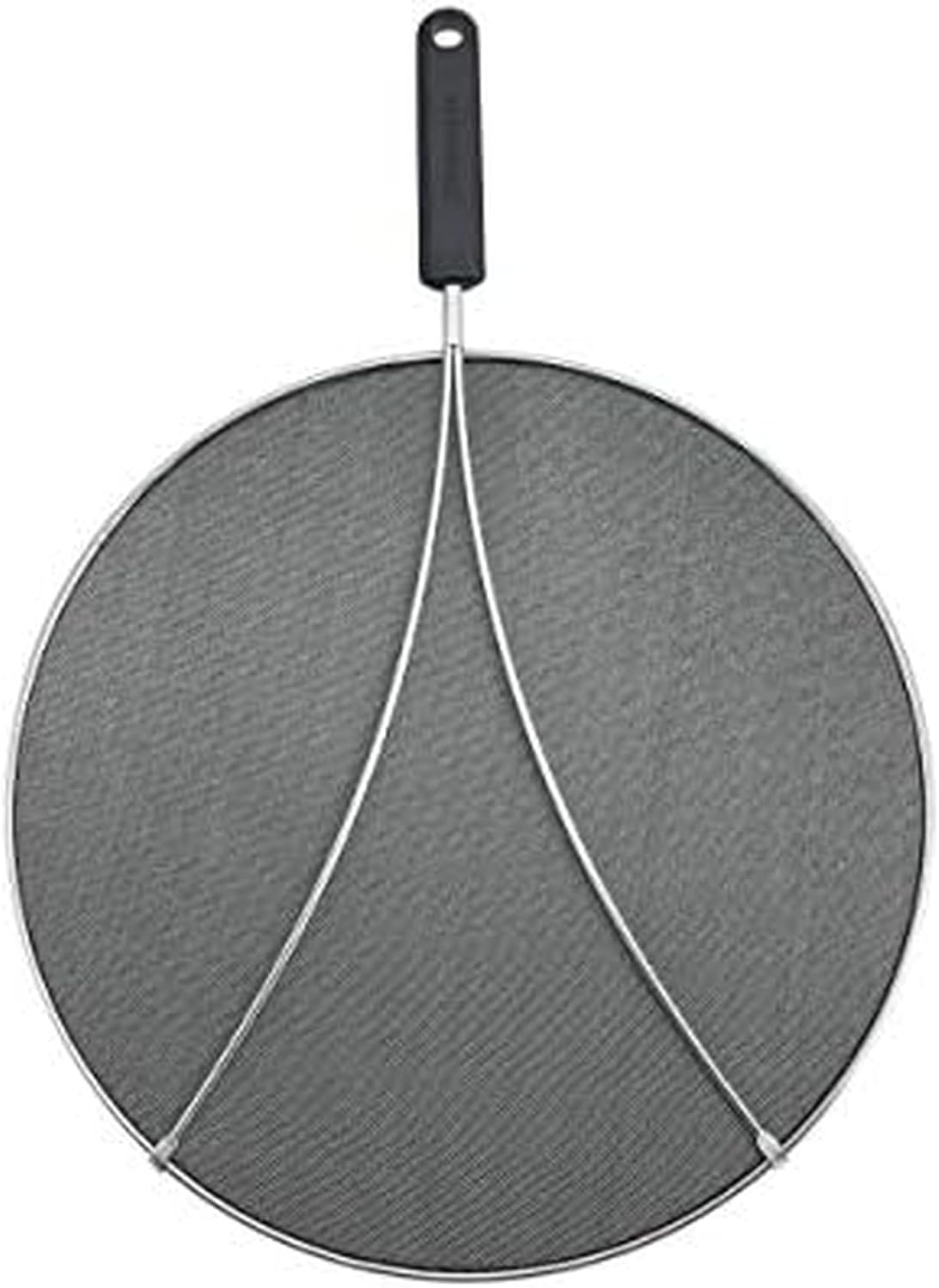 |
KitchenAid Odor-Filtering Splatter Screen | 13-inch stainless mesh screen that blocks grease, vents steam, and pulls cooking odors out of the air. | Check on Amazon |
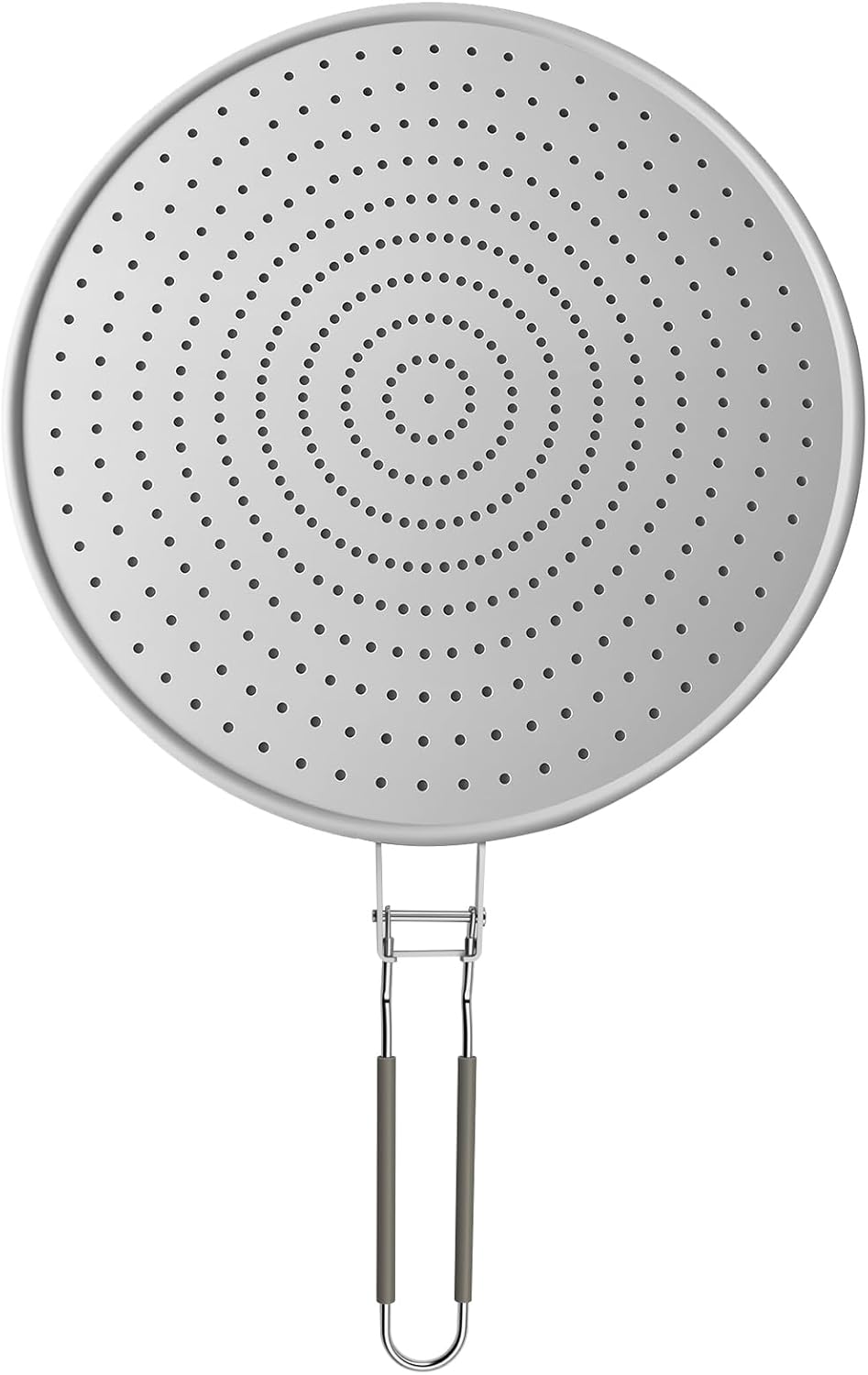 |
Foldable Silicone Splatter Screen | 13-inch, rust-proof splatter guard with a flat-folding handle that also works as a strainer or cooling rack. | Check on Amazon |
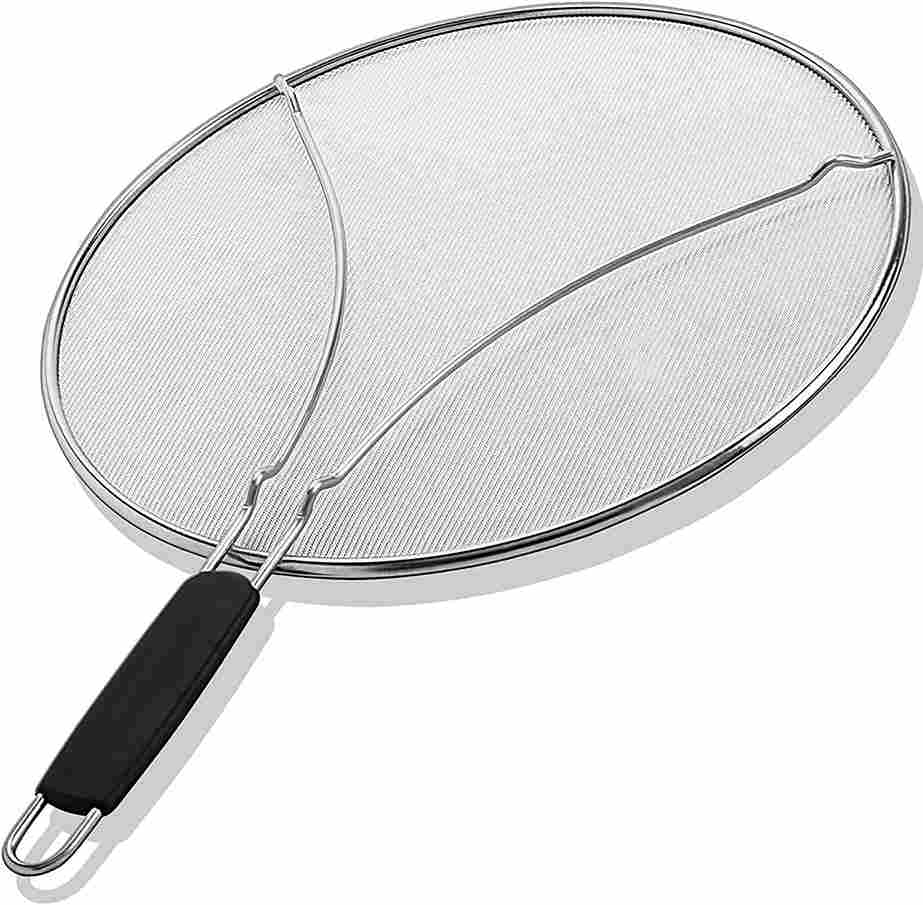 |
Extra-Fine Mesh Splatter Screen | 13-inch, heavy-duty screen with a raised edge built for popcorn, bacon, and fried chicken. | Check on Amazon |
How We Evaluated Them
We used these splatter screens in everyday kitchen situations, from frying bacon and burgers to sautéing foods that tend to send grease across the stovetop. We paid attention to the things that matter during cooking: how securely each screen sits on the pan, how easy it is to lift and handle, how well it keeps grease under control without trapping too much steam, and how frustrating it is to clean afterward. We recommend the options that proved genuinely to use, not simply the ones with the longest feature list.
How to Pick the Best Splatter Screen for Your Kitchen
The right splatter screen should match your pan, cooking habits, and cleanup preferences. Before buying, check the pan’s actual rim size and shape, then consider the screen’s mesh or vent pattern, material, handle, stability, steam release, and cleaning. A well-fitting screen that stays steady and lets steam escape is usually more useful than simply choosing the finest mesh or largest size.
Measure Your Pan Before Buying
What size splatter screen do I need? Measure across the top of your pan from inside rim to inside rim, then compare that measurement with the screen’s usable coverage. Don’t rely only on the size printed on your pan or the product listing, as cookware dimensions can vary between brands and designs.
The rim shape matters, too. A round skillet with straight sides is easier to match than a pan with a sloped or flared rim. A screen that’s too small can leave gaps for grease to escape, while an oversized one may overhang awkwardly or become less stable.
If you regularly cook with different-sized pans, a multi-size splatter screen set can be more practical than trying to make one screen fit every piece of cookware.
Mesh vs. Perforated Splatter Screens
The screen’s surface design affects the balance between grease protection, steam release, visibility, and cleaning.
- Fine mesh: Provides good grease-splash protection and lets you see the food while cooking. However, the tiny openings can hold onto grease and may require more effort to clean.
- Coarse mesh: Allows more airflow and can be easier to wash, but may let more fine oil droplets through.
- Perforated metal: Uses punched holes instead of woven wire. It is rigid and durable, although larger openings may provide less protection from fine grease mist.
- Silicone: Lightweight, flexible, and usually easy to clean. The trade-off is that it may not feel as rigid as a metal screen.
There is no universal winner. If controlling grease is your priority, a fine mesh may suit you best. If easy cleaning and flexible handling matter more, perforated metal or silicone may be more convenient.
Stainless Steel vs. Silicone: Which Is Better?
Are stainless steel splatter screens better than silicone? Not necessarily. The better choice depends on how you cook and what matters most to you.
Stainless steel is a good option if you prefer a rigid screen that holds its shape and feels stable over a hot pan. Fine stainless steel mesh can also provide strong grease control and good visibility. The downside is that metal can become hot, while fine mesh may take longer to clean when grease dries inside it.
Silicone is lightweight, flexible, and won’t rust. Many silicone models are also easy to clean and convenient to store. However, flexible designs may not feel as sturdy as rigid metal screens and can behave differently depending on the shape of your cookware.
For frequent high-heat cooking, stainless steel is often the more durable-feeling choice. For easy handling, storage, and cleanup, silicone can be a practical alternative.
Handle Design Matters More Than You Think
The handle affects how comfortable the screen is to use when you need to stir, check, or remove food.
Look for enough clearance between your hand and the hot pan or rising steam. A longer handle can provide more distance from the heat, while a folding handle is useful when cabinet or drawer space is limited.
Also consider your stovetop layout. A long handle that extends over a neighbouring burner or bumps into a control knob can become annoying in everyday use. Side handles can make larger screens easier to balance, but their position may put your hands closer to the heat.
The best handle is one you can grip securely and lift naturally without touching the hot screen or accidentally tipping grease toward yourself.
Look for a Stable Fit
A splatter screen only works well if it stays where you put it. It should rest securely on the pan’s rim without constantly sliding or wobbling when you move the handle or stir the food.
Round frying pans and skillets are generally easy to match, while unusual cookware shapes may need a specially designed screen. Check the rim shape before buying if your pan has sloped sides or an irregular opening.
Also think about what happens when you lift the screen. A good design should be easy to remove without tipping collected grease onto your counter or hand. Resting feet are another useful feature because they keep the greasy cooking surface off your worktop when you need to set the screen down.
Think About Steam, Not Just Splatter
More coverage isn’t always better. When frying or searing, you want moisture to escape so food can brown and crisp properly.
A solid lid traps more steam and condensation, while a mesh or perforated screen allows steam to escape through its openings. This makes a splatter screen useful when you want to reduce grease mess without turning the pan into a covered, steamy environment.
The best choice is a screen that strikes the right balance between grease protection and airflow. Wider openings can allow more grease droplets through, while ultra-fine mesh may take extra effort to clean. For everyday cooking, look for a design that limits splatter while still allowing enough steam to escape.
Cleaning and Grease Buildup
Are splatter screens easy to clean? It depends on the design. Smooth silicone is usually simple to wipe or wash, while dishwasher-safe models can make cleanup even easier. Stainless steel is durable and generally straightforward to clean, but fine mesh can trap grease in its small openings.
If you cook bacon or other fatty foods often, clean the screen soon after it cools rather than letting grease dry into the mesh. A soft brush can help loosen residue from fine screens.
Always check the manufacturer’s care instructions before putting a screen in the dishwasher. Some products may have handles, coatings, or other components that require hand-washing.
For frequent frying, cleaning convenience matters almost as much as splatter protection. A screen that works well but is frustrating to scrub may end up being left in the cupboard.
Quick Buying Checklist
Before buying a splatter screen, ask:
- Does it cover the actual opening of my pan?
- Will it sit securely on the rim?
- Do I prefer fine mesh, perforated metal, or silicone?
- Is grease protection or easy cleaning more important to me?
- Is the handle comfortable and safely positioned?
- Will it fit my available storage space?
- Does it allow enough steam to escape?
- Is it dishwasher safe if that’s important to me?
The best splatter screen isn’t necessarily the most expensive or the finest-meshed. Choose one that fits your cookware securely, suits your cooking style, provides enough ventilation, and is easy enough to clean that you’ll actually use it regularly.
Best Splatter Screens
1. U.S. Kitchen Supply 3-Size Stainless Steel Splatter Guard Set
Frying bacon on a weekday morning shouldn’t end with grease across your stovetop, up the backsplash, and onto the counter you just wiped down. That’s the exact problem this three-piece stainless steel splatter screen set solves — one of its three sizes seats over almost anything you cook in, from a small omelet pan to a wide sauté pan or stockpot, so you’re not stuck using one screen that’s either too small or swimming over the rim. In our kitchen, the mesh kept the grease where it belonged, on the pan instead of the stovetop, and the resting feet meant we weren’t hunting for a clean spot to set it down between batches.
| Spec | Details |
|---|---|
| Included sizes | 13″, 11.5″, 9.5″ (fits most skillets, sauté pans, and pots) |
| Material | Fine stainless steel mesh with stainless rim |
| Handle | Folding comfort-grip handle |
| Base | Built-in resting feet |
| Cleaning | Dishwasher safe |
| Storage | Flat, stackable design |
| Overall dimensions | 12 x 12 x 1 inches |
| Weight | 15.2 oz |
Key Features
- Three sizes in one set, so there’s almost always a match for whatever pan or pot is on the stove
- Fine mesh blocks oil droplets while still letting steam escape, instead of trapping heat the way a solid lid would
- Resting feet lift the mesh off the counter between uses, so it’s not sitting in its own grease puddle
- Folding handles flatten down for storage, and all three stack together instead of eating up drawer space
- Dishwasher safe, so the mesh doesn’t need to be hand-scrubbed after a greasy fry
Pros
- Covers nearly every pan size in the kitchen with one purchase
- Stainless steel resists rust, so it holds up after repeated high-heat use
- Resting feet solve the “where do I set this down” problem mid-cook
- Easy cleanup — straight into the dishwasher
Cons
- The handle on the smallest screen sits closer to the mesh, so it warms up faster than the other two when the burner’s running hot
- Fine mesh needs a rinse soon after cooking, or dried grease gets harder to scrub out later
- No true hanging loop, so stacking in a drawer is the more realistic storage option than hanging
Best for
Home cooks who fry or sauté often enough that a single splatter screen size never quite fits what’s actually on the stove that day.
2. KitchenAid 13-Inch Odor-Filtering Splatter Screen
Frying fish or bacon doesn’t just splatter grease across the stove — it leaves that smell hanging in the kitchen long after the pan’s been put away. This splatter screen tackles both problems at once, using a stainless mesh to contain grease while a built-in carbon filter pulls cooking odors out of the air as steam passes through it. In our kitchen, dinner smells faded noticeably faster than usual, and the grated top let out enough steam that fried food stayed crisp instead of going soft underneath.
| Spec | Details |
|---|---|
| Size | 13-inch diameter |
| Material | Stainless steel mesh |
| Special feature | Built-in activated carbon odor filter |
| Design | Grated top for steam release |
| Color | Black |
| Product dimensions | 12.99 x 0.59 x 18.7 inches |
| Weight | 7.4 ounces |
Key Features
- Activated carbon filter pulls cooking odors out of the air as you fry, instead of just containing grease
- Grated design vents steam so fried food stays crisp instead of turning soggy underneath the screen
- Stainless steel mesh holds up to regular high-heat frying without warping
- Single 13-inch size fits most standard skillets and sauté pans
- Lightweight build makes it easy to lift on and off the pan mid-cook
Pros
- Odor filter is a genuine point of difference from a standard mesh screen
- Stainless steel build feels sturdy and should outlast lighter materials
- Vents steam well enough that food comes out fried, not steamed
- Black finish hides grease staining better than bare metal
Cons
- Comes in one size only, so it won’t fit a much smaller or larger pan as well as a multi-piece set would
- The carbon filter isn’t something you rinse clean — it likely needs replacing over time, and the listing doesn’t say how often
- No dishwasher-safe claim listed, so hand-washing is the safer bet
Best for
Cooks who fry strong-smelling foods often — fish, bacon, anything with garlic — and want odor control alongside the usual grease protection, more than someone who needs multiple screen sizes for different pans.
3. Foldable Silicone Splatter Screen, 13-Inch
Reaching for a metal splatter screen after it’s sat over a hot pan usually means a careful grab so you don’t burn your hand, then wedging its rigid shape into a crowded drawer. This silicone splatter screen for frying pan skips both problems — the handle folds flat, and silicone won’t rust the way metal mesh eventually does. In our kitchen, it draped over a 12-inch skillet without slipping, and the vented holes let bacon crisp instead of steaming in its own moisture.
| Spec | Details |
|---|---|
| Size | 13-inch |
| Material | 100% silicone, BPA-free, food-grade |
| Handle | Foldable, flat-folding |
| Design | Vented hole pattern for steam release |
| Cleaning | Dishwasher safe |
| Other uses | Strainer, steaming lid, cooling rack |
Key Features
- The foldable handle lies flat, making it easy to slide the screen into a drawer without taking up extra space
- 100% silicone build means no rust, even after years of stovetop use
- Vented hole pattern lets steam escape so fried food stays crisp, not soggy
- Food-grade, BPA-free silicone that won’t leach anything into hot oil
- Doubles as a strainer, steaming lid, or cooling rack when it’s not covering a pan
Pros
- Rust-free, unlike metal mesh screens that can develop rust when left damp after washing
- Folding handle genuinely saves drawer space compared to a rigid handle
- Dishwasher safe with a surface that wipes clean easily
- Flexible fit works over pans a rigid metal screen might not sit flush on
Cons
- Comes in one 13-inch size only, so it won’t shrink down for a small saucepan
- Silicone doesn’t feel as rigid in hand as a stainless mesh screen, especially lifting it off a very hot pan
- Vented holes run a bit larger than fine mesh, so very fine grease mist can still get through
Best for
Cooks tight on drawer space who want a splatter guard that folds flat and won’t rust over time, more than someone who needs a multi-size set for very different pans.
4. Extra-Fine Mesh Stainless Steel Splatter Screen, 13-Inch
Popping corn or frying chicken on the stove throws grease and hot kernels farther than a flimsy screen can handle, which is where a heavier frying pan splatter guard earns its keep. This one uses an extra-fine stainless mesh with a raised edge, so oil that hits the screen runs back down toward the pan instead of dripping over the side onto the burner. In our kitchen, it held up fine over popcorn’s sharper pops, and the fine weave meant almost nothing made it past the mesh onto the stovetop.
| Spec | Details |
|---|---|
| Size | 13-inch diameter |
| Material | Stainless steel, extra-fine mesh |
| Handle | Stainless steel |
| Shape | Round with raised edge, flat base |
| Compatibility | Fits most pots, pans, and skillets; gas compatible |
| Cleaning | Dishwasher safe, rust-free |
| Weight | 0.79 lbs |
Key Features
- Extra-fine stainless mesh built for high-splatter foods like popcorn, bacon, and fried chicken
- Raised edge channels oil back toward the pan instead of dripping over the side
- Heavy-duty stainless construction holds its shape over sustained high heat
- Stainless steel handle secures to the cookware handle for a steadier grip while frying
- Dishwasher safe and rust-free for easy cleanup after greasy cooking
Pros
- Extra-fine mesh catches finer splatter than a standard-gauge screen
- Raised edge keeps oil contained instead of running off the side onto the stove
- Heavy-duty build feels sturdier than lighter stainless options
- Works across gas and most standard cookware
Cons
- Single 13-inch size only, so it won’t scale down for a small pan
- No nonstick coating, so stuck-on grease needs a proper wash rather than a quick wipe
- Handle sits close to the pan’s own handle, which can crowd a smaller stovetop setup
Best for
Cooks who regularly fry high-splatter foods like popcorn, fried chicken, or bacon in one main pan and want the finest mesh available, more than someone juggling multiple pan sizes.
What a Good Splatter Screen Actually Does?
A good splatter screen does more than simply sit over a frying pan. It should reduce grease splashes, allow enough steam to escape, stay securely in place, and be easy to handle and clean. The best designs balance these features without creating new problems, such as trapped moisture, awkward storage, or grease-covered countertops.
It Covers the Pan Without Getting in the Way
A useful screen should cover the cooking surface well enough to reduce grease escaping around the edges, but it shouldn’t be so oversized that it becomes unstable or difficult to lift. The screen should rest naturally on the pan rim and stay steady when you check or stir your food.
It Controls Splatter While Letting Steam Escape
The whole point is to reduce grease mess without turning your frying pan into a sealed container. A well-designed mesh or perforated surface blocks many hot oil droplets while allowing steam to vent. This helps you fry, sauté, or sear without unnecessarily trapping moisture that can soften crisp food.
It Has a Handle You Actually Want to Use
A comfortable, heat-resistant handle makes a bigger difference during real cooking than flashy extra features. You should be able to lift the screen quickly to flip food or check browning without putting your hand too close to hot steam or grease.
It Doesn’t Wobble or Tip Easily
Stability is an underrated quality. A screen that shifts every time you touch the handle can let grease escape and make cooking frustrating. Look for a design that sits securely on the pan rim and remains balanced when you lift or reposition it.
It Is Easy Enough to Clean
Fine mesh can catch grease effectively, but those tiny openings can also hold onto oily residue. A good splatter screen should be practical to clean after cooking, whether that means dishwasher-safe construction or a surface that rinses easily by hand. If cleaning takes longer than the cooking itself, you’re less likely to use it regularly.
It Doesn’t Promise More Than It Can Deliver
Even the best splatter screen won’t stop every oil droplet. Some grease can escape through the mesh or around the pan’s edges, especially during aggressive frying. A genuinely good screen is one that meaningfully reduces the mess, not one that claims to create a completely grease-free kitchen.
The best splatter screen is one that fits securely, controls grease, vents steam, handles comfortably, and cleans without a fight. Those practical details matter more than unnecessary accessories or clever marketing claims. If a screen performs well in these areas, it becomes a tool you’ll actually reach for whenever the bacon starts popping or the frying pan gets messy.
Common Splatter Screen Mistakes to Avoid
A splatter screen can make frying and sautéing much less messy, but only when you use the right one correctly. The biggest mistakes usually come from poor fit, unrealistic expectations, and overlooking practical details such as steam release and cleaning.
1. Choosing the Wrong Size
A screen that is too small leaves gaps around the pan where grease can escape. One that is too large may overhang the rim and become unstable when you lift it.
Better approach: Measure the pan’s opening across the top rim and choose a screen that rests securely over the cookware you use most.
2. Assuming Finer Mesh Is Always Better
A finer mesh can block more grease, but the tiny openings may hold onto oily buildup and require extra cleaning. You don’t necessarily need the tightest mesh for everyday frying.
Better approach: Choose a mesh that gives you enough splatter protection without making routine cleaning a chore.
3. Expecting Zero Grease Splatter
Even a good screen won’t stop every oil droplet. Fine grease mist can escape through the mesh, while splatter can also come out around uncovered edges or when you lift the screen.
Better approach: Think of a splatter screen as a way to reduce grease mess, not eliminate it completely.
4. Using It Like a Solid Pan Lid
A splatter screen is designed to reduce grease while allowing steam to escape. Treating it like a sealed lid can work against the reason you bought it, especially when you’re trying to brown or crisp food.
Better approach: Use a splatter screen for frying and sautéing, and switch to a solid lid when you actually need to retain heat and moisture.
5. Ignoring the Handle
A screen can have excellent mesh and still be frustrating if the handle becomes too hot, sits too close to the burner, or is awkward to grip.
Better approach: Look for a handle that gives your hand enough clearance from heat and steam. If storage space is limited, a folding handle can also be useful.
6. Forgetting About Storage
Flat screens can take up more cabinet or drawer space than expected, especially if you have several cookware accessories.
Better approach: Before buying, check whether the handle folds, whether the screen can hang, or whether it stacks neatly with other kitchen tools.
7. Choosing Dishwasher Safety Over Everything Else
Dishwasher-safe construction is convenient, but it shouldn’t be your only buying criterion. A screen that cleans easily but doesn’t fit your pan properly won’t solve the main problem.
Better approach: Prioritise fit, stability, grease control, and steam ventilation first, then consider dishwasher compatibility as a convenience feature.
8. Removing the Screen Carelessly
Grease collected on the screen can drip when you lift it suddenly or tilt it toward yourself. This is an easy way to turn a helpful cooking tool into another source of mess.
Better approach: Lift the screen carefully and keep it level when possible. If you need to set it down during cooking, resting feet can help keep the greasy surface away from your counter.
9. Using a Warped or Damaged Screen
A bent rim or warped screen may no longer sit securely over the pan. Gaps can increase splatter, while an unstable screen can shift when you stir or lift it.
Better approach: Replace a screen that no longer sits flat or securely on your cookware.
Quick Takeaway
The best way to avoid splatter screen problems is simple: match the screen to your pan, choose a practical mesh or vent design, keep your expectations realistic, and handle it carefully. A good splatter screen should reduce grease cleanup without making cooking, steam release, or maintenance more difficult.
How to Use a Splatter Screen Safely
To use a splatter screen safely, place it securely over the pan before grease starts popping, keep the handle away from direct heat, and lift it carefully when you need to check or stir the food. Remember that a splatter screen reduces grease spray but does not completely seal the pan or stop every hot oil droplet.
1. Choose the Right Size
Use a screen that covers the pan opening properly and rests securely on the rim. A screen that is too small can leave gaps for grease to escape, while one that is too large may become awkward or unstable when you lift it.
2. Put It on Before the Splattering Starts
Position the screen over the pan before adding food to hot oil or before the cooking reaches its most active stage. This is especially useful when frying bacon, burgers, sausages, or other foods that release a lot of fat.
Avoid placing your hand directly over the pan when positioning the screen. Hold it by the handle and keep your hand clear of rising steam.
3. Keep the Handle Clear of Direct Heat
Make sure the handle isn’t sitting directly over another burner or close to an open gas flame. Metal handles can become hot, and even heat-resistant grips may warm up during extended cooking.
If the handle becomes hot, use appropriate protection when removing the screen rather than grabbing it with bare hands.
4. Lift the Screen Carefully
When you need to stir, flip, or check your food, lift the screen slowly and keep your face and hands away from the rising steam. Grease collected on the underside can also drip, so avoid tilting the screen toward yourself or across the stovetop.
If the screen is heavily coated with grease, place it on its resting feet or another heat-safe surface rather than directly on your counter.
5. Don’t Treat It Like a Sealed Lid
A splatter screen is designed to reduce grease spray while allowing steam to escape. It should not be used as a pressure lid or treated as a completely sealed cover.
For frying and searing, the open design is useful because it lets moisture escape. For simmering or cooking food that needs trapped heat and moisture, use the appropriate pan lid instead.
6. Check Heat Limits and Care Instructions
Before using a silicone or coated splatter screen at high heat, check the manufacturer’s instructions for its maximum temperature and stovetop compatibility. Don’t assume that every screen is safe for oven use or direct contact with a flame.
After cooking, allow the screen to cool before cleaning it, especially if grease has collected on the surface.
Quick Safety Tip
The safest way to use a splatter screen is to match it to your pan, position it before splattering begins, keep the handle away from direct heat, and lift it slowly to avoid hot steam and dripping grease. A screen helps control cooking mess, but sensible heat control and careful handling are still essential.
How to Clean a Splatter Screen
The easiest way to clean a splatter screen is to wash it soon after cooking, before grease dries inside the mesh or vent holes. Let the screen cool first, then soak it in warm, soapy water and gently scrub away the grease with a soft brush. If the manufacturer says it is dishwasher safe, you can use the dishwasher for easier cleanup.
1. How to Clean a Stainless Steel Mesh Splatter Screen
- Let it cool completely: Never handle a hot screen with water. Allow the grease to cool and the screen to become safe to touch.
- Remove loose grease: Rinse the screen under warm water to loosen fresh oil and food residue.
- Soak in warm, soapy water: Leave it for a few minutes to soften grease trapped in the fine mesh.
- Clean gently: Use a soft dish brush or an old, soft toothbrush to loosen grease from the mesh. Avoid harsh scrubbing, as it can bend or damage the delicate wires.
- Rinse and dry thoroughly: Rinse away the soap and shake off excess water. Dry the screen completely before storing it to prevent lingering moisture and odours.
Kitchen tip: Don’t wait until grease has hardened in the mesh. Cleaning the screen while the residue is still fresh is usually much easier than trying to remove baked-on oil later.
2. How to Clean a Silicone Splatter Screen
Silicone screens are generally easier to clean because grease doesn’t become trapped in woven mesh. Wash the surface with warm water and washing-up liquid, paying attention to the vent holes where oil can collect.
Many silicone splatter screens are dishwasher safe, but always check the manufacturer’s care instructions first. If you clean it in the dishwasher, position the screen so both sides are fully exposed to water and detergent.
3. Can You Put a Splatter Screen in the Dishwasher?
Yes, many splatter screens are dishwasher safe, but not all of them are. Check the product’s care instructions before putting it in the dishwasher, especially if it has a coated handle, non-metal components, or a special finish.
Stainless steel screens are often suitable for dishwasher cleaning, while silicone models are commonly dishwasher friendly as well. However, dishwasher-safe doesn’t always mean the screen will come out completely grease-free, particularly when fine mesh has accumulated heavy oil residue.
4. How to Remove Stubborn Grease From a Splatter Screen
For dried or stubborn grease, soak the cooled screen in hot water with washing-up liquid before brushing it gently. If grease remains trapped in fine mesh, repeat the soaking process rather than using excessive force, which can deform the screen.
Avoid harsh abrasive pads unless the manufacturer specifically recommends them. They can scratch certain surfaces or damage coatings.
5. How Often Should You Clean a Splatter Screen?
Clean the screen after every use, especially after frying bacon, burgers, sausages, or other fatty foods. Regular cleaning prevents grease from building up and makes each wash much quicker.
The best cleaning routine is simple: cool it, wash it, rinse it, dry it, and store it. A few minutes of cleaning after cooking is far easier than dealing with layers of hardened grease later.
Faqs
What Are the Best Alternatives to a Splatter Screen?
If you don’t have a splatter screen, you can use a loose-fitting pan lid, a splatter guard, or a fine mesh cooking cover designed for heat. A lid offers more coverage but traps more steam, while a mesh alternative provides better ventilation.
Can you use a splatter screen on a nonstick pan?
Yes, you can use a splatter screen on a nonstick pan. Choose a lightweight screen with smooth edges and avoid dragging it across the nonstick coating to prevent scratches.
Do splatter screens stop all grease?
No. Splatter screens reduce grease splashes but do not stop every oil droplet. Some fine mist can pass through the mesh, and grease may escape around the edges, especially during vigorous frying.
Can a splatter screen prevent oil burns?
A splatter screen can reduce your exposure to hot oil droplets, which may lower the chance of minor splashes reaching your hands. However, it is not a complete safety barrier, so handle hot pans carefully and use appropriate heat protection when needed.
Can you leave a splatter screen on while cooking?
Yes, you can generally leave a heat-safe splatter screen over the pan while cooking. It is designed to let steam escape while reducing grease splatter, but you should still follow the manufacturer’s heat-use instructions and remove it carefully because the handle or frame may become hot.
How often should you replace a splatter screen?
There is no fixed replacement schedule. Replace your splatter screen when the mesh becomes damaged, the frame or handle loosens, it develops significant rust or corrosion, or it no longer sits securely on your pan. With proper care, a quality screen can last for years.
Conclusion
The right pick isn’t the one with the longest feature list — it’s the one that matches your pan, your cooking habits, and how much patience you have for scrubbing mesh. Here’s how we’d match each screen to a specific kitchen situation.
Best All-Around: U.S. Kitchen Supply 3-Size Stainless Steel Splatter Guard Set
If you don’t want to think about which screen fits which pan, this is the one to grab. Three sizes cover almost everything from a small omelet pan to a wide sauté pan, the resting feet solve the “where do I put this mid-fry” problem, and it’s dishwasher safe. It’s the closest thing to a set-it-and-forget-it buy in this lineup.
Best for Frequent Frying: KitchenAid 13-Inch Odor-Filtering Splatter Screen
If frying is a near-daily habit — fish, bacon, anything with garlic — grease isn’t the only thing piling up, the smell is too. The built-in carbon filter is the one feature here that actually addresses that, which the other three screens don’t attempt at all.
Best for Large Skillets: U.S. Kitchen Supply 3-Size Set
Its largest screen was built with wide sauté pans and stockpots in mind, not just a standard skillet. If your go-to pan runs bigger than average, this is the only option in the lineup explicitly sized for it rather than a generic 13-inch fit.
Best for Limited Storage: Foldable Silicone Splatter Screen
The handle folds completely flat, and there’s no rigid metal shape competing for drawer space. If your kitchen storage is already tight, this is the only screen here that packs away like a flexible tool instead of a rigid one.
Best for Easy Cleaning: Foldable Silicone Splatter Screen
No woven mesh means no grease hiding in tiny openings. Wipe it down or run it through the dishwasher and you’re done — a real edge over any fine stainless mesh, which needs a rinse soon after cooking or the grease dries in and gets harder to remove.
Best Stainless Durability: Extra-Fine Mesh Stainless Steel Splatter Screen
The heaviest-duty build in the group — extra-fine mesh, a raised edge that channels oil back into the pan instead of over the side, and construction rated to hold its shape through popcorn’s sharper pops without warping. If you want the screen to outlast the others under repeated high heat, this is it.
Best Value: U.S. Kitchen Supply 3-Size Set
Rather than buying three separate screens to match three different pans, this set gets you all three sizes in a single purchase. It’s the most practical value case here — more coverage per order, not just a lower price tag.
Whichever you land on, the test is the same one from the start: a splatter screen for cooking that doesn’t match your pan, your frying habits, or your tolerance for cleanup isn’t going to earn a permanent spot on your stovetop — no matter how good it looks on the shelf.
Affiliate disclosure
To help keep HomePlora running, some product links in this guide may be affiliate links. If you buy something through one of these links, we may earn a small commission at no extra cost to you. Our recommendations are based on the product’s features, practical use, and suitability for your kitchen—not on whether a product offers an affiliate commission.

Hi, I’m Muhammad Din. I test and compare kitchen tools in my own kitchen before I ever recommend them — if it’s in a guide on HomePlora, I’ve used it or dug deep enough to know exactly where it holds up and where it doesn’t. My goal is simple: help you find tools that actually earn a spot in your kitchen, without wasting money on ones that don’t.