

Introduction
If you’ve ever watched broth run down the side of a spoon before it reaches your mouth, or refilled a bowl five or six times because the spoon barely holds a full bite, the problem isn’t you — it’s the spoon. The best soup spoons solve this with one specific trait: a bowl that’s deeper relative to its width than a standard tablespoon, which is what actually keeps liquid in the spoon instead of letting it slide back out on the way up. A soup spoon isn’t just a spoon for soup — it’s a shape built around that depth-to-width ratio, and that ratio is the real difference between a spoon that works and one that just looks the part.
I’ve used and compared soup spoons in my own kitchen to see which ones actually hold up to that standard, and that’s exactly what this guide is built around.
Comparison
| Image | Product | Details | Price |
|---|---|---|---|
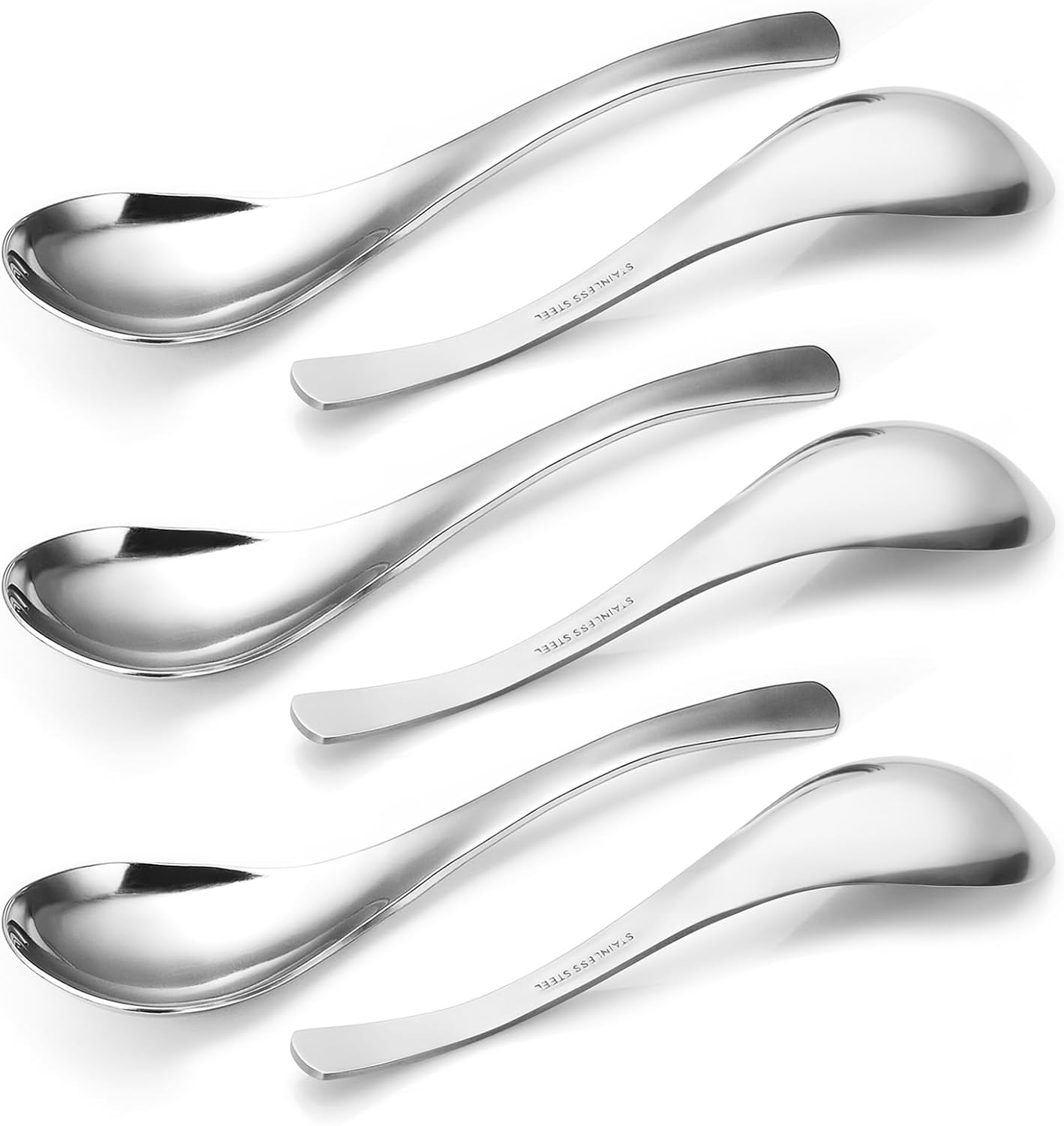 |
HIWARE Heavy-Weight Wide-Head Spoon | built for the bites a regular spoon can’t scoop in one try. | Check on Amazon |
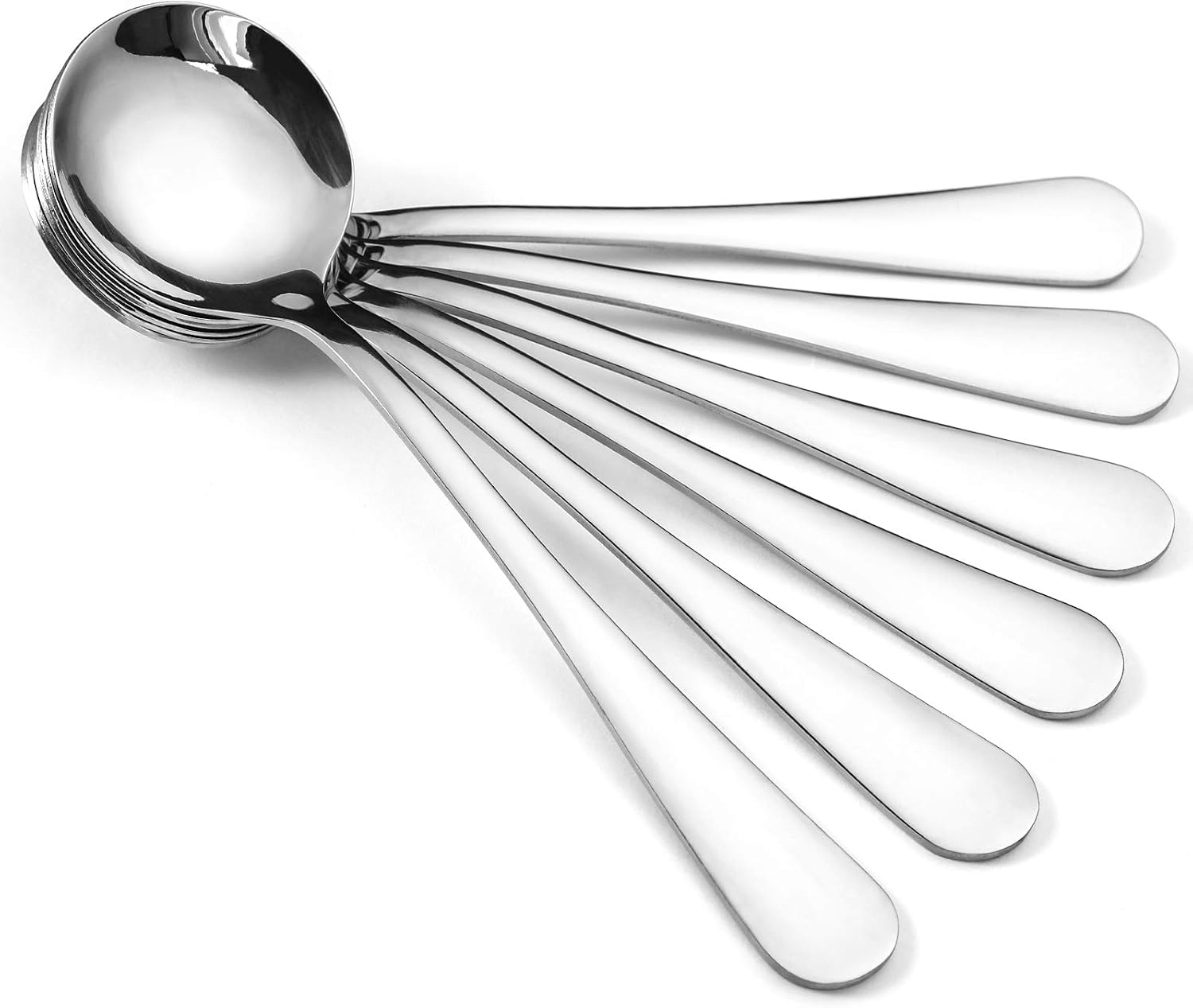 |
Hiware Bouillon Spoon Set | twelve pieces of genuinely useful, everyday versatility. | Check on Amazon |
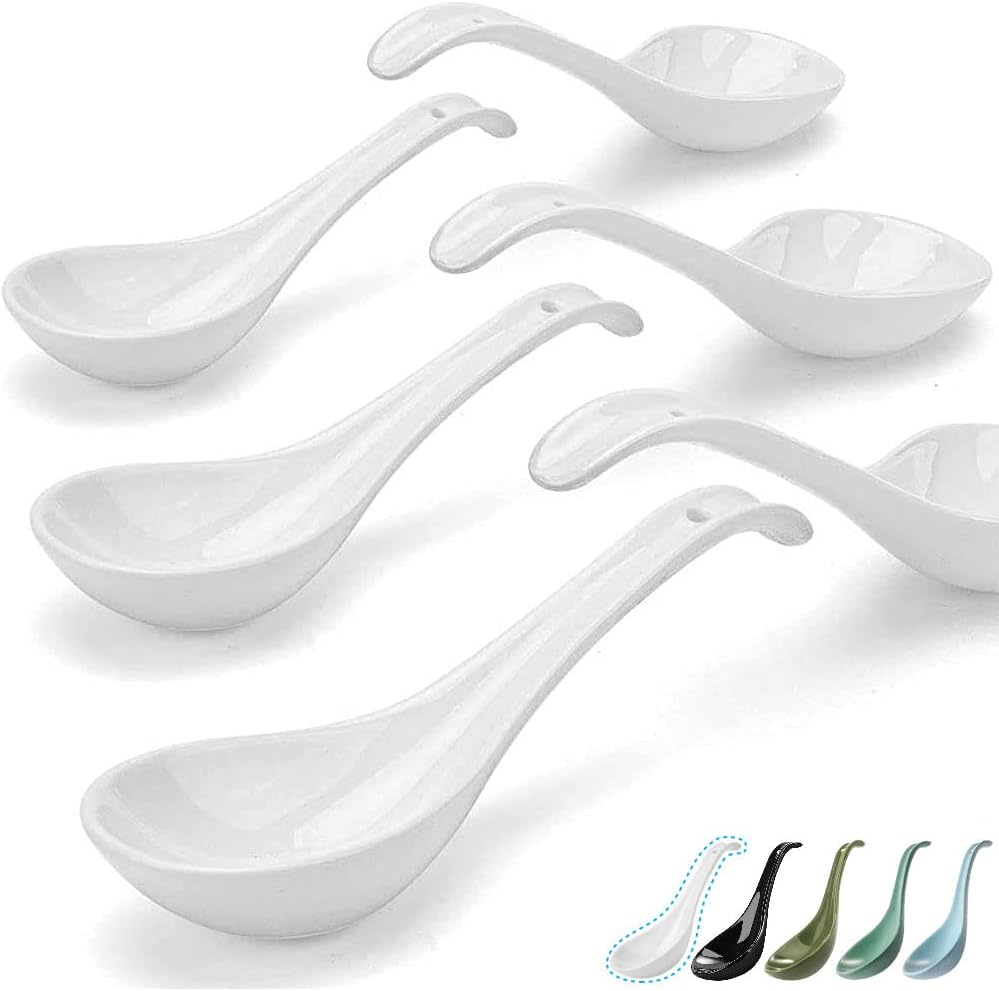 |
Artena Porcelain Deep-Bowl Spoon | real capacity that doesn’t chip apart after a month of use. | Check on Amazon |
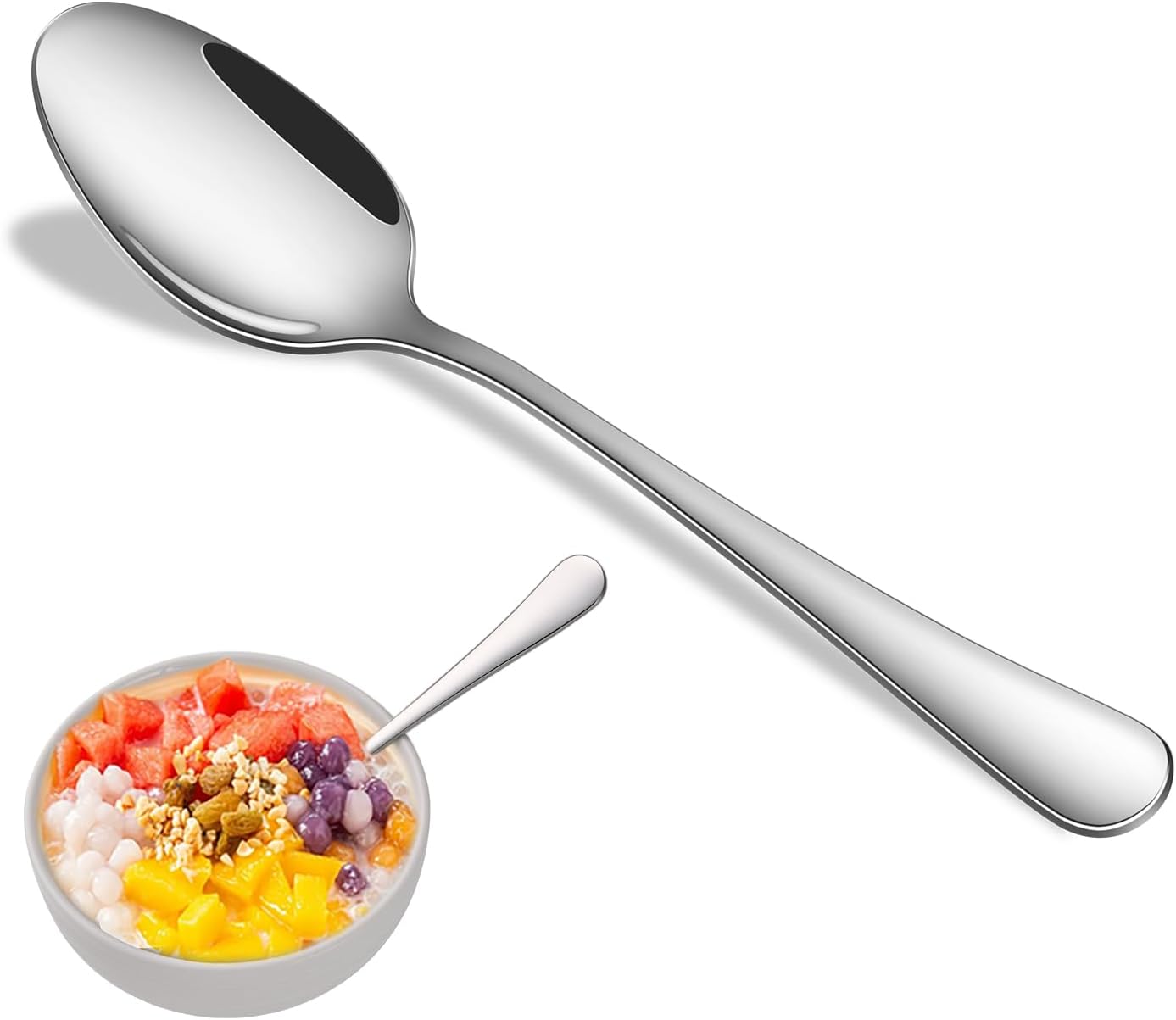 |
Stainless Soup Spoon Set | simple, dependable, and easy to forget you own. | Check on Amazon |
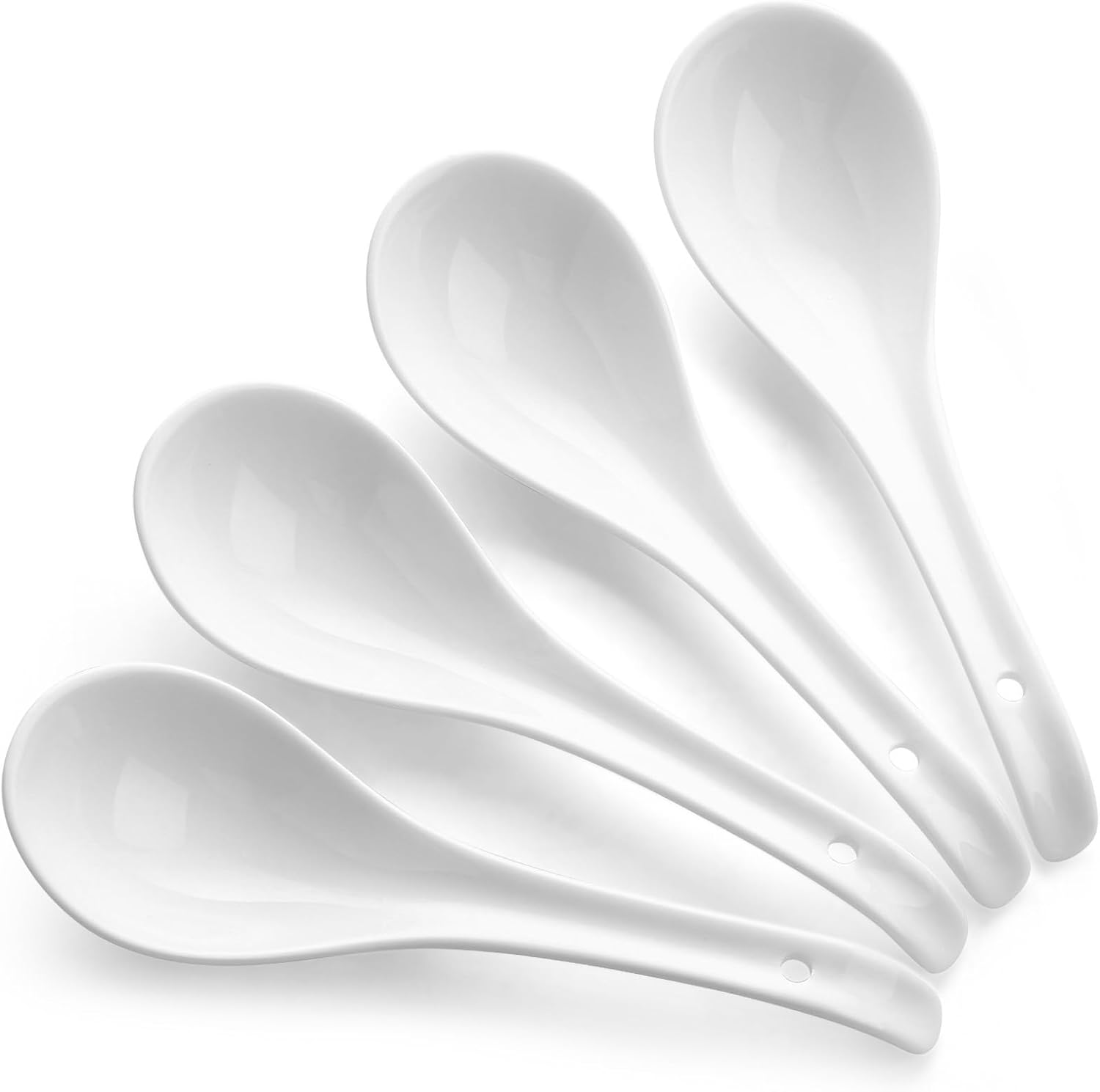 |
DOWAN Ceramic Ramen Spoon | the lip-safe pick for noodle night. | Check on Amazon |
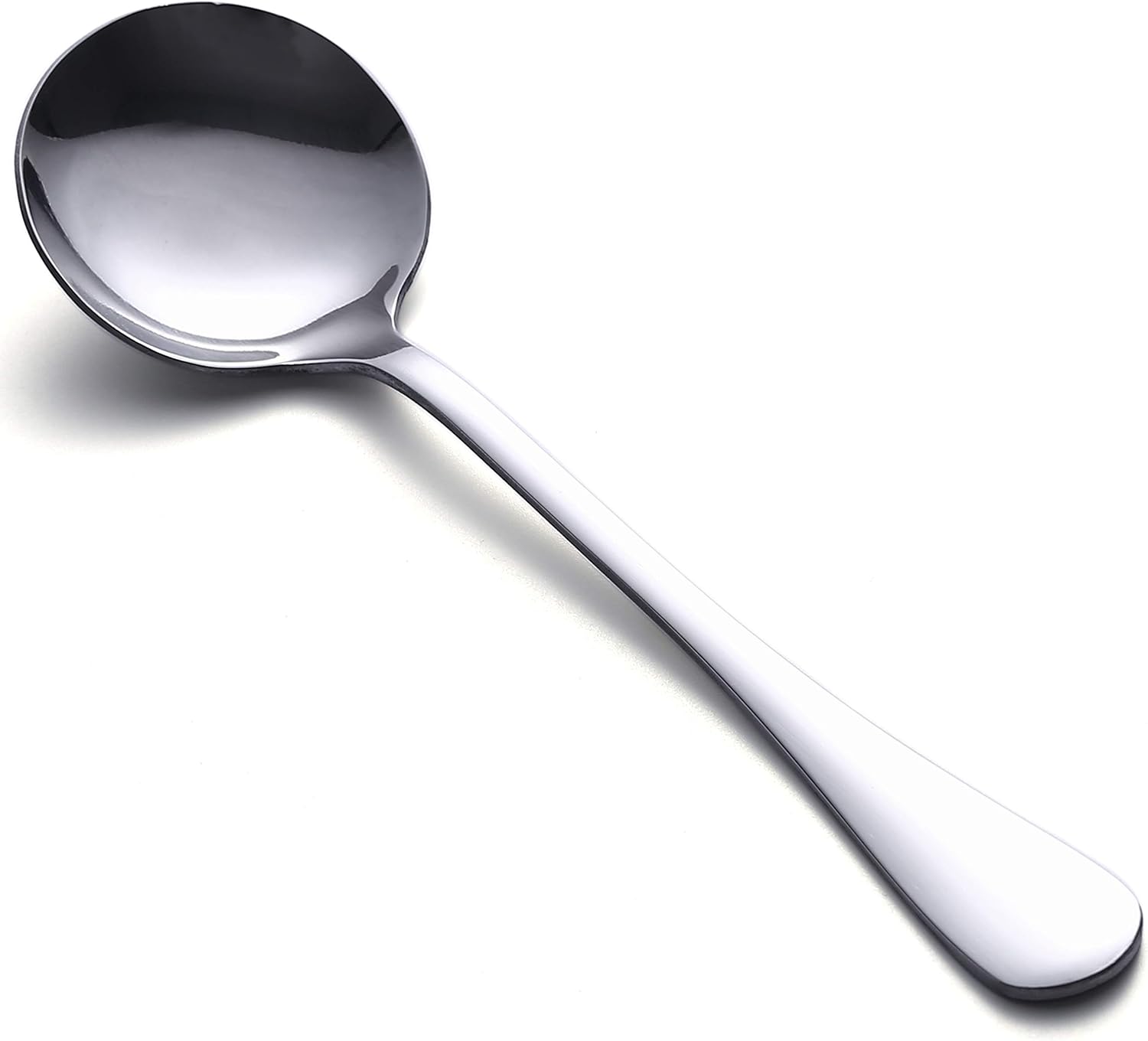 |
HAPPY KIT Heavy-Weight Round Spoon | the one that feels like it’s actually there. | Check on Amazon |
The Three Geometries: Why One “Soup Spoon” Doesn’t Fit Every Soup
A soup spoon comes in three genuinely different shapes, and each one solves a different problem. A Western bouillon spoon is shallow and wide to cool hot, clear broth faster. An Asian-style notched spoon is deep with a flat bottom, built to scoop noodles and dumplings along with the broth. A deep-bowl spoon has extra capacity and a sturdier handle, made to carry gravy and solid ingredients together the way a curry or stew needs. Which one actually helps you at the table depends on what’s in the bowl, not on which one looks the most elegant.
Most buying guides show you these three shapes side by side and stop there. What they skip is the why — the actual reason each shape exists, which is what tells you whether it will earn its place in your drawer or just sit there.
Western Bouillon/Cream Spoon: Built to Cool Broth Faster
A bouillon spoon, sometimes called a cream soup spoon, has a shallow, round bowl that’s noticeably wider than a standard dinner spoon. That width isn’t a style choice — it’s a heat problem being solved with geometry.
Hot liquid loses heat mainly at its surface, where it’s exposed to air. A wide, shallow spoon spreads the same amount of broth across more surface area than a narrow one does, so it cools faster in the few seconds between leaving the bowl and reaching your mouth. That’s exactly what you want with a very hot, clear broth like consommé or bouillon, where there’s nothing solid sitting in the spoon to slow the heat down.
This is why the shape shows up in formal Western table settings and almost nowhere else. It was built for one specific category of soup — thin, clear, served piping hot — not for soup in general.
Asian-Style Notched Spoon: Built for Noodles, Not Just Broth
An Asian-style soup spoon looks almost the opposite of a bouillon spoon. Instead of shallow and wide, it’s deep with a flat bottom, and it usually has a small hook or notch at the end of the handle.
Both details solve real problems specific to noodle-based soups like ramen, pho, and wonton soup. The flat bottom lets the spoon sit upright and stable on the table, which matters because these meals involve constantly switching between chopsticks and a spoon rather than holding it the whole time. The depth of the bowl is what lets you scoop broth and a noodle or dumpling in one motion, instead of chasing the broth with one utensil and the solids with another.
The hook at the end of the handle does one specific job: it catches on the rim of the bowl so the spoon doesn’t slide in and disappear while your other hand is busy with chopsticks. It’s a small detail, but it’s the reason this design has stayed almost unchanged across Chinese, Japanese, Korean, and Vietnamese versions of the same spoon for generations. Try eating a bowl of pho with a flat Western spoon instead, and the problem shows up immediately — it just doesn’t sit right in the bowl.
Deep-Bowl Spoon: Built to Carry Gravy and Solids Together
A deep-bowl spoon takes the noodle spoon’s depth and goes further — bigger capacity, a heavier build, and a sturdier handle. This is the shape built for thick, ingredient-heavy dishes: curry, dal, chowder, beef stew.
The reason comes down to what’s actually being lifted. A thin broth flows off a spoon easily, so a shallow bowl works fine. A thick gravy or stew clings to whatever’s holding it — that’s simply how a thicker liquid behaves, not a design flaw — and it needs real depth to keep the liquid and the solids together until they reach your mouth instead of sliding off the sides. The heavier handle exists for the same reason a heavier ladle does: lifting dense, chunky food repeatedly puts more strain on a thin handle than clear broth ever will, and a flimsy handle flexes or bends under that weight over time.
| Spoon Type | Bowl Shape | Best For | Typical Material |
|---|---|---|---|
| Western Bouillon/Cream Spoon | Shallow, wide, round | Consommé, bouillon, clear broths | Stainless steel, silver-plate |
| Asian-Style Notched Spoon | Deep, flat-bottomed, hooked handle | Ramen, pho, wonton, miso | Ceramic, porcelain, stainless steel |
| Deep-Bowl Spoon | Deep, oval, heavier handle | Curry, dal, chowder, stew | Heavy-gauge stainless steel |
Once you know which of these three shapes actually matches what you cook, the next question is simple: which specific spoon within that shape is worth buying.
How to Choose Based on What You Actually Cook
The fastest way to pick a soup spoon isn’t by price or finish — it’s by looking at what’s actually going into the bowl. A thin, clear broth needs a completely different shape than a thick stew loaded with meat and vegetables, and matching the spoon to the food is what actually stops the dribbling, the spilling, and that “this bowl needs six refills” feeling.
Think of it less as buying “a soup spoon” and more as answering one question: is what you’re eating mostly liquid, mostly solid-and-liquid together, or somewhere in between? That single answer points straight to the right shape.
Clear Broths (Consommé, Bouillon, Chicken Broth)
If what’s in the bowl is thin and mostly liquid, a Western bouillon or cream soup spoon is the right call. Its shallow, wide bowl spreads the broth out so it cools faster on the way to your mouth — exactly the trait you want with something served close to boiling. Porcelain or ceramic is worth the small upgrade here, since a metal spoon will heat up almost as fast as the broth itself against your lips.
Chowder, Bisque, and Creamy Soups
Once cream, potato, or corn enters the bowl, a shallow bouillon spoon starts to fall short — there simply isn’t enough room to catch the solid pieces along with the liquid. A deeper bowl earns its place here, one with enough capacity to scoop broth and a chunk of vegetable together instead of chasing one with the other.
Ramen, Pho, Congee, and Noodle Soups
Noodle-based soups have a different problem entirely: you’re switching between chopsticks and a spoon constantly, and a flat-bottomed, notched spoon exists specifically to sit steady on the table or hook onto the bowl’s rim between bites. Ceramic is the more comfortable pick if the broth is served very hot, since it won’t transfer heat to your lips the way stainless does — but if you’d rather not worry about chipping, a stainless version in the same notched shape gets you most of the way there.
Curry, Dal, and Stew
This is where a deep-bowl spoon does its real job. Thick gravies cling to whatever’s holding them, so the spoon needs genuine depth to keep the sauce and the solid ingredients together instead of letting them slide off the sides. The heavier handle isn’t decorative either — repeatedly lifting dense, ingredient-packed food puts more strain on a spoon than clear broth ever will, and a flimsy handle will flex under that weight over time.
Kids, Everyday Meals, and Mixed Households
If soup in your house means whatever’s left in the pot on a Tuesday, skip the specialty shapes and go with a dishwasher-safe stainless spoon in a moderate, all-purpose bowl. It won’t be the ideal match for any single soup, but it won’t fail at any of them either — and it survives daily use without the chip risk ceramic carries.
One thing worth knowing before you buy: if your household regularly eats both broths and noodle soups, you don’t have to pick one shape and compromise. Owning one bouillon spoon and one notched Asian-style spoon costs very little extra and outperforms any single “do-everything” spoon at both jobs.
| What’s in the Bowl | Best Geometry | Best Material Match |
|---|---|---|
| Clear broth, consommé, bouillon | Western bouillon/cream spoon | Porcelain or ceramic |
| Chowder, bisque, cream soup | Deep-bowl spoon | Stainless or ceramic |
| Ramen, pho, congee, noodle soup | Asian-style notched spoon | Ceramic (or stainless for durability) |
| Curry, dal, stew | Deep-bowl spoon, heavier handle | Heavy-gauge stainless |
| Everyday, mixed, kids | Standard moderate bowl | Dishwasher-safe stainless |
Once you know which row you actually fall into, the product picks below are organized around these exact same categories — so you’re matching a real spoon to a real answer, not guessing from a list.
Top Picks
1. HIWARE Heavy-Weight Wide-Head Soup Spoon
Anyone who’s tried to scoop a whole wonton or a slice of soggy baguette out of French onion soup with a normal spoon knows the problem — the head is just too narrow, so you end up chasing it around the bowl instead of eating it. This heavy duty soup spoon is built with a noticeably wider head specifically to solve that, picking up a big piece of solid food and the broth around it in one pass instead of two or three tries. I’ve reached for one of these every time I’ve made French onion soup at home, mostly because a narrow spoon just can’t keep up with a bread-and-cheese topping.
| Spec | Detail |
|---|---|
| Material | Extra heavy-weight, food-grade stainless steel |
| Pieces | 6 |
| Length | ~6.4″ |
| Bowl design | Wide, deep head with a smooth polished curve |
| Handle | Extra-thickened, ergonomic |
| Dishwasher safe | Yes (no harsh detergents) |
| Best suited for | Ravioli, wonton, French onion soup, stews, udon, ramen |
Key features
- A noticeably wider spoon head than a standard soup spoon, built specifically to scoop large solid pieces — wonton, ravioli, dumplings — in one motion instead of several smaller ones
- An extra-thick handle gauge that resists bending under a fully loaded spoon, where a thinner handle starts to flex over time
- One smooth, continuous curve from handle to bowl with no seam or ridge to catch against your lip
- Dishwasher safe without needing a harsh detergent to keep the polish looking new
Pros
- Real weight in the hand that feels solid rather than flimsy
- Wide head genuinely cuts down how many scoops a chunky, solid-heavy soup takes
- Holds up to daily dishwasher use without dulling
Cons
- A small number of buyers have reported a unit arriving with visible scratches from the factory finishing process — worth a quick look when it arrives
- The handle runs a little short, which a few reviewers with larger hands found slightly cramped
Best for: chunky, ingredient-heavy soups — French onion, minestrone, wonton or dumpling soup — where a narrow spoon head makes you work for every bite.
2. Hiware 12-Piece Bouillon Spoon Set
If you’ve ever hosted dinner and realized you own exactly two spoons that actually fit a soup bowl, this set solves that problem outright. It’s a full dozen stainless steel soup spoons, so a table for six or eight never means mixing patterns or raiding the everyday flatware drawer. I keep a set of these in my own kitchen for that reason — they’re the first thing I reach for anytime soup, congee, or hot cereal shows up at the table.
| Spec | Detail |
|---|---|
| Material | 18/8 stainless steel |
| Pieces | 12 |
| Finish | High-polish mirror |
| Handle | Extra-thick, ergonomic |
| Dishwasher safe | Yes (skip harsh detergents) |
| Best suited for | Bouillon, cereal, ramen, pho, udon, hot chocolate |
Key features
- 18/8 stainless resists rust and pitting through daily dishwasher cycles — the 18% chromium content is what’s actually doing the corrosion-resisting, not just the “stainless” label
- Noticeably thicker handle than typical flatware, so it doesn’t feel thin or flimsy in the hand
- Mirror-polished finish that blends with almost any existing table setting
- Twelve pieces means it doubles as a full soup course for a dinner party, not just a two-person set
Pros
- Enough spoons to actually set a full table
- Handle thickness holds up through long soup-heavy meals
- Finish stays clean through repeated dishwasher use
Cons
- Twelve is more than most two-person households need day to day
- Water spots show up if you don’t towel-dry before putting them away
Best for: anyone who wants one versatile stainless steel soup spoon set that also covers cereal, dessert, and everyday table use.
3. Artena Porcelain Deep-Bowl Soup Spoon
Anyone who’s eaten a thick corn chowder or beef stew with a flat, shallow spoon knows the frustration — half the good stuff slides right back into the bowl before it reaches your mouth. These deep soup spoons solve that with a genuinely oversized oval bowl instead of a token curve. This is the spoon I reach for anytime I’m making a chunkier soup at home; the depth actually holds a full bite instead of just broth.
| Spec | Detail |
|---|---|
| Material | Ultra-fine porcelain |
| Pieces | 6 |
| Length | 6.75″ |
| Bowl design | Deep oval with hook-end handle |
| Dishwasher/microwave/oven safe | Yes |
| Color | Bright white |
Key features
- The oval bowl is genuinely deeper than a standard tablespoon, which is what lets it hold chunks of vegetable, meat, or noodle alongside the broth in one scoop
- A small hook at the end of the handle catches on the bowl’s rim, so it doesn’t slide in and disappear while you’re not looking
- High-fired porcelain holds up to daily bumps better than a lower-temperature glazed ceramic would
- Doubles easily for cereal, rice dishes, and desserts
Pros
- Real capacity per spoonful for chowders, stews, and thicker soups
- Hook design genuinely stops it from submerging
- Safe in the dishwasher, microwave, and oven — not true of every ceramic piece
Cons
- Chip-resistant isn’t the same as unbreakable — a hard drop on tile will still crack it
- Six pieces is on the small side for a large family gathering
Best for: chowders, bisques, and any chunky soup where you want a full bite per spoonful, plus everyday cereal and dessert duty.
4. 8-Piece Stainless Steel Soup Spoon Set
Not everyone wants to think hard about a soup spoon — some people just want eight of them that don’t bend, don’t rust, and go straight in the dishwasher without a second thought. This soup spoon set is built for exactly that mindset: no hook handle, no deep-bowl engineering, just a straightforward stainless spoon sized right for a bowl of soup. I’ve had a set of these in daily rotation at home for months, and they’ve never once been the reason a meal went wrong.
| Spec | Detail |
|---|---|
| Material | Premium food-grade stainless steel |
| Pieces | 8 |
| Length | 7.3″ |
| Finish | Mirror polished |
| Dishwasher safe | Yes |
| Best suited for | Everyday soup, cereal, general table use |
Key features
- Stainless construction resists rust and staining through regular dishwasher cycles
- Slightly thickened handle for grip, without extra ornamentation or a specialty bowl shape
- Mirror finish stays clean as long as you skip abrasive scrubbers, which strip the polish layer that resists staining in the first place
- Sized closer to a traditional dinner tablespoon than a dedicated deep bowl, so it’s useful well beyond soup
Pros
- Inexpensive way to add a soup-appropriate spoon to an existing flatware set
- No learning curve or unusual shape
- Eight pieces covers most households without excess
Cons
- Bowl is closer to a standard tablespoon curve, so it holds a bit less broth per scoop than the ceramic or bouillon-style options
- No distinguishing design feature if you specifically want a shape built around chunkier soups
Best for: anyone who wants a plain, dependable soup spoon set without paying for design flourishes they won’t notice day to day.
5. DOWAN Ceramic Ramen Spoon
Ramen night at home usually exposes the problem fast — a regular Western spoon is too shallow and too hot-handled for a bowl of broth loaded with noodles and toppings. This ceramic soup spoon is shaped specifically for that job: a deep oval bowl that scoops broth and noodles in the same motion, in porcelain that stays cool enough at the rim to actually sip from. This is the spoon that sits by my stove every time I make ramen or pho at home.
| Spec | Detail |
|---|---|
| Material | Ceramic (porcelain) |
| Pieces | 4 |
| Dimensions | 6.75″L x 2″W |
| Bowl design | Deep oval with hook-end handle |
| Dishwasher safe | Yes |
| Best suited for | Ramen, pho, wonton, miso, udon |
Key features
- Porcelain conducts heat far more slowly than stainless steel, which is the actual reason the rim stays comfortable against your lips even with a just-off-the-stove bowl
- Same hook-end handle as the deep-bowl option above, keeping it from sliding into the bowl between bites
- Deep, wide oval shape built specifically around noodle-soup eating — scooping broth and noodles together instead of separately
- Dishwasher safe despite being ceramic, no hand-wash-only routine required
Pros
- Genuinely more comfortable against the lips than metal for very hot broth
- Bowl shape purpose-built for noodle soups, not soup in general
- Holds up fine to dishwasher cycles
Cons
- Four-piece set is small for a bigger household
- Still requires more care around drops than a stainless equivalent
Best for: ramen, pho, and other Asian noodle soups where not burning your lips on a metal rim actually matters.
6. HAPPY KIT Heavy-Weight Round Soup Spoon
There’s a specific kind of disappointment in picking up a new spoon and having it feel like it might bend under a scoop of thick stew. These round soup spoons go the other direction entirely — a noticeably heavier gauge of stainless steel that sits solidly in your hand instead of floating. I picked up a set for my own kitchen after getting tired of flimsier spoons that never felt like they’d last, and the extra weight is the first thing you notice.
| Spec | Detail |
|---|---|
| Material | Premium stainless steel, heavier gauge |
| Pieces | 8 |
| Dimensions | 7.2″ x 1.9″ |
| Bowl design | Round |
| Dishwasher safe | Yes |
| Best suited for | Soup, cereal, stews, noodle soups |
Key features
- Noticeably thicker steel gauge than typical dinner spoons, giving it real heft without changing the actual bowl size
- That added weight lowers the center of gravity, so it’s less likely to tip over when set down mid-meal
- Round bowl works equally well for soup, cereal, or dessert instead of being locked into one cuisine
- Mirror-polished finish holds up to regular dishwasher use
Pros
- Genuinely substantial in the hand, not just marketed that way
- Versatile round shape suits everyday use beyond soup
- Eight pieces is enough for most families
Cons
- The extra weight some people love will feel like overkill to anyone who prefers a lighter, more delicate spoon
- Round bowl isn’t as specialized for noodle-heavy Asian soups as a notched, deep-oval design
Best for: anyone who judges spoon quality by how substantial it feels in hand and doesn’t mind a bit of extra weight.
How Stainless Steel, Ceramic, Porcelain and Melamine Actually Perform
Stainless steel heats up fast against your lips but never chips. Ceramic and porcelain both stay cooler at the rim, though porcelain resists chipping far better because of how it’s fired. Melamine barely transfers heat at all and is nearly impossible to crack, but it can’t go in the microwave. Which one actually suits you comes down to which of those trade-offs you’re willing to live with.
Stainless Steel: Fast Heat Transfer, Built to Last
Metal conducts heat quickly because its atoms are packed with electrons that move energy along almost instantly. That’s why a stainless soup spoon can feel warm at the rim within seconds of dipping into a just-off-the-stove pot, even though the spoon itself started out cool. I’ve picked one straight out of a bowl of hot ramen broth and felt that heat come through almost immediately — it’s a real trade-off, not a minor detail.
You’ll also see grades like 18/8 or 18/10 stamped on stainless spoons. The first number is the percentage of chromium, which is what actually resists rust. The second is nickel, which adds shine and a slightly tougher resistance to pitting over time. 18/10 holds its polish a bit longer; 18/8 performs almost identically for home use and usually costs less.
Stainless won’t chip or crack the way ceramic can, but a thin, lightweight spoon can bend slightly under real force — a heavier gauge is what prevents that, not the material itself. It’s also dishwasher safe with zero precautions, which isn’t true of every material on this list.
Ceramic and Porcelain: Cooler to the Touch, But Not the Same Material
Porcelain is technically a type of ceramic — the difference is the firing temperature. Porcelain is fired much hotter, which vitrifies the clay more completely and leaves far fewer microscopic gaps in the surface. That density is exactly why a porcelain spoon resists chipping noticeably better than a standard glazed ceramic one; there’s simply less room for a chip to start.
Both materials insulate heat far better than metal, for the same reason a ceramic mug’s handle stays cooler than a metal cup’s rim — clay-based materials are naturally slow to conduct heat. That’s what lets a ceramic or porcelain soup spoon stay comfortable against your lips straight out of a simmering pot.
The real weak point for both is the rim, where a dishwasher rack, a stray fork, or a hard countertop bump can catch it. Porcelain holds up meaningfully better here, but “more resistant” isn’t “chip-proof” — a hard drop on tile will still crack either one. Most pieces are dishwasher safe, with one exception worth knowing: hand-painted or gold-trimmed patterns are usually better hand-washed, since it’s the metallic trim — not the porcelain underneath — that dishwasher heat and detergent can dull over time.
Melamine: Nearly Unbreakable, With One Real Limit
Melamine is a hard plastic resin, and plastics are naturally poor conductors of heat — that’s the entire reason a melamine soup spoon can sit in a hot bowl and still feel close to room temperature at the handle. It’s also the toughest of the four against impact; drop it on tile and it bounces instead of cracking, which is exactly why it shows up so often in kids’ dinnerware and outdoor sets.
The dishwasher isn’t the issue with melamine — it’s the microwave. Manufacturers specifically warn against microwaving melamine, because that fast, concentrated heat can degrade the resin in a way a dishwasher’s slower, steadier heat doesn’t. If you regularly reheat soup in the same bowl you eat from, that’s worth knowing before you buy.
| Material | Heat-to-Lip | Chip/Dent Risk | Dishwasher Safe | Cost |
|---|---|---|---|---|
| Stainless Steel | Warms quickly | Won’t chip; can bend if thin | Yes, no precautions | Low–Mid |
| Ceramic | Stays cool | Chips at the rim over time | Yes (hand-wash if hand-painted) | Mid |
| Porcelain | Stays cool | More chip-resistant than ceramic | Yes (hand-wash if trimmed) | Mid–High |
| Melamine | Stays cool | Nearly unbreakable | Yes (never microwave) | Lowest |
None of these four wins outright — each one is trading heat comfort against durability in a different way. The next question is which of those trade-offs actually matches what you cook and how carefully your kitchen treats its dishes.
How to Actually Use a Soup Spoon Correctly
In Western dining, you scoop away from your body, sip from the side of the spoon, and never slurp. In many Asian dining traditions, lifting the bowl to drink broth directly, and slurping noodles, isn’t rude at all — it’s expected. Neither rule is arbitrary. Each one solves a real physical problem at the table.
The Western Method: Scoop Away, Sip From the Side
The instruction to “scoop away from you” isn’t just old-fashioned manners. Dip the spoon at the near edge of the bowl and pull it toward the far side, and the spoon stays over the bowl for almost the entire motion. Scoop toward yourself instead, and the loaded spoon has to travel back across open table to reach your mouth — so any drip lands on the cloth or your lap instead of falling back where it started. Scooping away simply keeps gravity on your side for longer.
Sipping from the side of the spoon instead of the tip comes down to the same bowl geometry that shapes everything else about a soup spoon. The side of a round bowl is the widest, flattest part of the rim, so tipping the spoon to your lips from there means the broth crosses a short, even stretch of edge. Sip from the pointed tip instead, and you have to tilt your head back further while the liquid crosses more curved surface on the way out — which is exactly when it tends to spill over the sides.
Slurping is avoided in formal Western settings, and the spoon rests on the underplate between spoonfuls rather than staying in the bowl. In a full table setting, the soup spoon sits to the right of the dinner knife, positioned as the outermost utensil since soup is usually the first course served.
The Asian Method: Lift, Sip, and Slurp on Purpose
Lifting the bowl straight to your mouth is completely normal for miso soup, congee, and most home-style Asian meals. Part of the reason is practical: these bowls are usually smaller and lighter than a Western soup bowl, so lifting one is easy and safe, and it frees your spoon or chopsticks to handle the solid ingredients at the same time.
Slurping noodles in dishes like ramen or udon isn’t a lapse in manners — it’s built around how flavor actually reaches your brain. Drawing air in along with the noodles carries aroma compounds up toward the smell receptors at the back of your nose, and smell is a huge part of how flavor registers. Slurping, in other words, is a way of tasting more, not a way of caring less about politeness.
This is also where the notched, hook-handled spoon from the Asian-style design earns its keep: it lets you set the spoon down mid-bowl without it disappearing, so your other hand stays free for chopsticks.
| Situation | Western Etiquette | Asian Etiquette |
|---|---|---|
| Direction of scoop | Away from you | Less strict — bowl-lifting takes over |
| Drinking straight from the bowl | Considered impolite | Common and accepted |
| Slurping | Avoided | Often expected, especially with noodles |
| Resting the spoon | On the underplate | On the bowl’s rim or the table |
Once you know why each rule exists, “correct” stops being about which culture’s manners you’re following and starts being about which technique actually keeps the broth in the bowl and off your shirt.
Soup Spoon vs Dessert Spoon: What Actually Separates Them
A soup spoon has a wide, round, shallow bowl built to spread hot broth out so it cools evenly and pours cleanly off a curved rim. A dessert spoon has a narrower, oval bowl that tapers to a point, built to be put fully into your mouth for solid food like pudding, pie, or ice cream. That one shape difference is also the exact reason a dessert spoon dribbles the moment you try to sip soup with it.
Why a Dessert Spoon Actually Dribbles on Soup
It’s not that a dessert spoon is “too small” for soup — plenty of them hold nearly as much liquid as a soup spoon does. The real problem is the shape of the edge the liquid has to cross.
A soup spoon’s bowl is round, so the rim forms one continuous curve. When you tilt it to sip, the broth can spill evenly along any point of that curve, which is exactly what lets you drink straight from the side without a mess.
A dessert spoon’s bowl is oval and narrows to a point at the tip. Tilt it the same way, and the liquid rushes toward that narrow point instead of spreading evenly — it piles up at the corners and spills over the sides before it ever reaches the tip cleanly. That’s the actual mechanical reason for the dribble. It’s geometry, not a flaw in the spoon.
| Feature | Soup Spoon | Dessert Spoon |
|---|---|---|
| Bowl shape | Round | Oval, tapered tip |
| Rim | One continuous curve | Curves meeting at a point |
| Built for | Sipping liquid from the side | Scooping solid or semi-solid food |
| Typical use | Broths, bouillon, chowder | Pudding, pie, ice cream, cereal |
Not the same as a soup ladle. A soup ladle moves soup from the pot to the bowl. A soup spoon moves it from the bowl to your mouth. They solve two completely different steps of the same meal.
If you’ve ever wondered why a “spoon is a spoon” logic falls apart at the dinner table, this is the answer: the bowl’s curve decides what it’s actually good for, long before size ever enters the picture.
Faqs
What’s the difference between a soup spoon and a bouillon spoon?
A bouillon spoon isn’t a separate category — it’s one specific type of soup spoon. “Soup spoon” is the umbrella term for any spoon built to eat liquid-heavy food, while “bouillon spoon” refers specifically to the shallow, round, Western-style version made for clear broths. Every bouillon spoon is a soup spoon, but not every soup spoon is a bouillon spoon.
Why are soup spoons round instead of oval like a tablespoon?
A round bowl has one continuous curved rim, so tipping it to sip lets liquid pour evenly from any point along the edge. A tablespoon’s oval bowl narrows to a point at the tip, which funnels liquid toward that one spot and causes it to spill over the sides before it gets there. The round shape exists to make sipping clean, not just to look different.
What is a soup spoon used for?
It’s a personal eating utensil for consuming soup, broth, and similar liquid-heavy foods directly at the table — not for cooking or serving. Its deep, round bowl is shaped to carry a full spoonful of liquid to your mouth without spilling, which is the one job it’s built around.
Is a soup spoon a tablespoon?
No. A tablespoon has a narrower, oval bowl and also doubles as a measurement unit, while a soup spoon has a rounder, deeper bowl built specifically to hold and sip liquid without dribbling. They can look similar in size, but the bowl shape is different for a reason.
Are soup spoons dishwasher safe?
Most are. Stainless steel, plain ceramic, and porcelain soup spoons all handle regular dishwasher cycles fine. The two exceptions: melamine spoons should never go in the microwave even though they’re dishwasher safe, and hand-painted or gold-trimmed porcelain lasts longer if you hand-wash it to protect the trim.
Can you use a soup spoon for cereal or dessert?
Yes. The same deep, round bowl that holds broth without spilling works just as well for milk and cereal or soft desserts like pudding — it’s one of the more versatile pieces in a flatware set, not a single-purpose tool.
Final Verdict: Which Soup Spoon Should You Actually Buy?
The real answer isn’t one single spoon — it’s whichever shape matches what’s actually in your bowl most nights. For a household where soup means everything from weeknight broth to the occasional bowl of ramen, the Hiware 12-Piece Bouillon Spoon Set is the one I’d reach for first: stainless, dishwasher-safe, deep enough to hold a real bite, and enough pieces in the set to actually set a table with when people come over.
If your kitchen leans hard in one direction instead — nightly ramen, thick chowder, or you just want the simplest, cheapest option that won’t let you down — go back to the “How to Choose Based on What You Actually Cook” section above and pick from that row instead of defaulting to “best overall.” That match matters more than any single product recommendation.
A soup spoon only covers one part of setting a table. If you’re also sorting out teaspoons, the Teaspoon guide covers that exact comparison. And don’t confuse a soup spoon with a soup ladle — the ladle moves soup from pot to bowl, the spoon moves it from bowl to mouth, and a well-stocked kitchen needs both. The Soup Ladle guide covers that other half of the job.
Affiliate disclosure
Some links in this guide are affiliate links, which means we may receive a commission if you make a purchase through them. You won’t pay anything extra, and your support helps us continue creating useful kitchen content.

Hi, I’m Muhammad Din. I test and compare kitchen tools in my own kitchen before I ever recommend them — if it’s in a guide on HomePlora, I’ve used it or dug deep enough to know exactly where it holds up and where it doesn’t. My goal is simple: help you find tools that actually earn a spot in your kitchen, without wasting money on ones that don’t.