

Introduction
When you’re baking a full tray of cookies, small differences in dough portions can quickly become noticeable. Larger cookies may need more time in the oven, while smaller ones can brown too quickly. The right cookie dough scoops for baking help you portion dough faster and more consistently, but not every scoop handles soft, sticky, chilled, or dense dough equally well. A good scoop is more than a convenience tool—it acts as a portion-control tool that helps you achieve more consistent size, texture, browning, and presentation from batch to batch. The best choice depends on your usual cookie size, dough consistency, hand comfort, and how often you bake.
What Is the Best Cookie Scoop?
The best cookie scoop depends on the size of cookies you bake, the type of dough you handle, and how often you use it. For most home bakers, a medium-sized scoop with a comfortable handle and reliable release mechanism is the most practical choice.
- Best Overall: A medium #40 oxo scoop with a sturdy stainless steel bowl and smooth release mechanism.
- Best for Consistent Everyday Cookies: A 2-tablespoon medium scoop that portions similar amounts of dough for each cookie.
- Best for Small Cookies: A #60 or similarly sized small scoop for mini cookies and bite-sized treats.
- Best for Large Cookies: A #20 or large-capacity scoop for bakery-style cookies and generous portions.
- Best for Heavy or Chilled Dough: A durable stainless steel scoop with a strong handle and good leverage.
- Best Budget Option: A simple stainless steel scoop without complicated moving parts if you only bake occasionally.
- Best for Frequent Bakers: A comfortable spring-loaded or trigger-release scoop that reduces hand effort during large batches.
If you only want one cookie scoop, start with a medium size. It is generally the most versatile for everyday drop cookies. If you regularly bake different cookie sizes, a three-size set can be more useful than buying several individual scoops
Do You Really Need a Cookie Scoop?
You don’t need a cookie scoop to bake great cookies, but it can make the process much easier. If you regularly bake large batches, sticky dough, or evenly sized cookies, a scoop saves time and helps create consistent portions that bake more evenly.
For occasional baking, a tablespoon or kitchen scale can work just as well. If you bake cookies often, a medium cookie scoop is a practical upgrade; if you rarely bake, you can easily manage without one.
Comparison
| Image | Product | Details | Price |
|---|---|---|---|
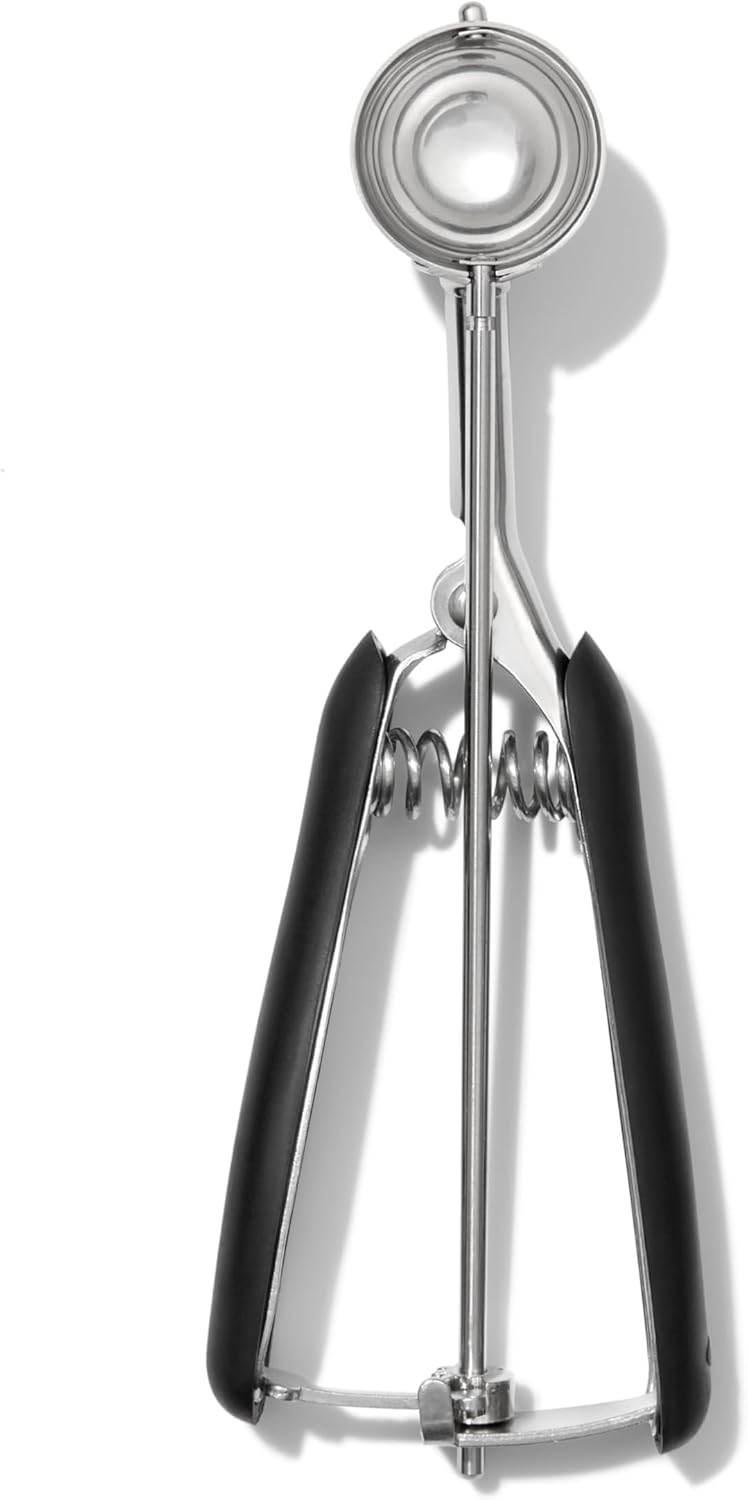 |
OXO Medium Cookie Scoop | A sturdy stainless steel #40 scoop with a smooth-release wiper and comfortable spring-loaded handle for neat, uniform cookie portions. | Check on Amazon |
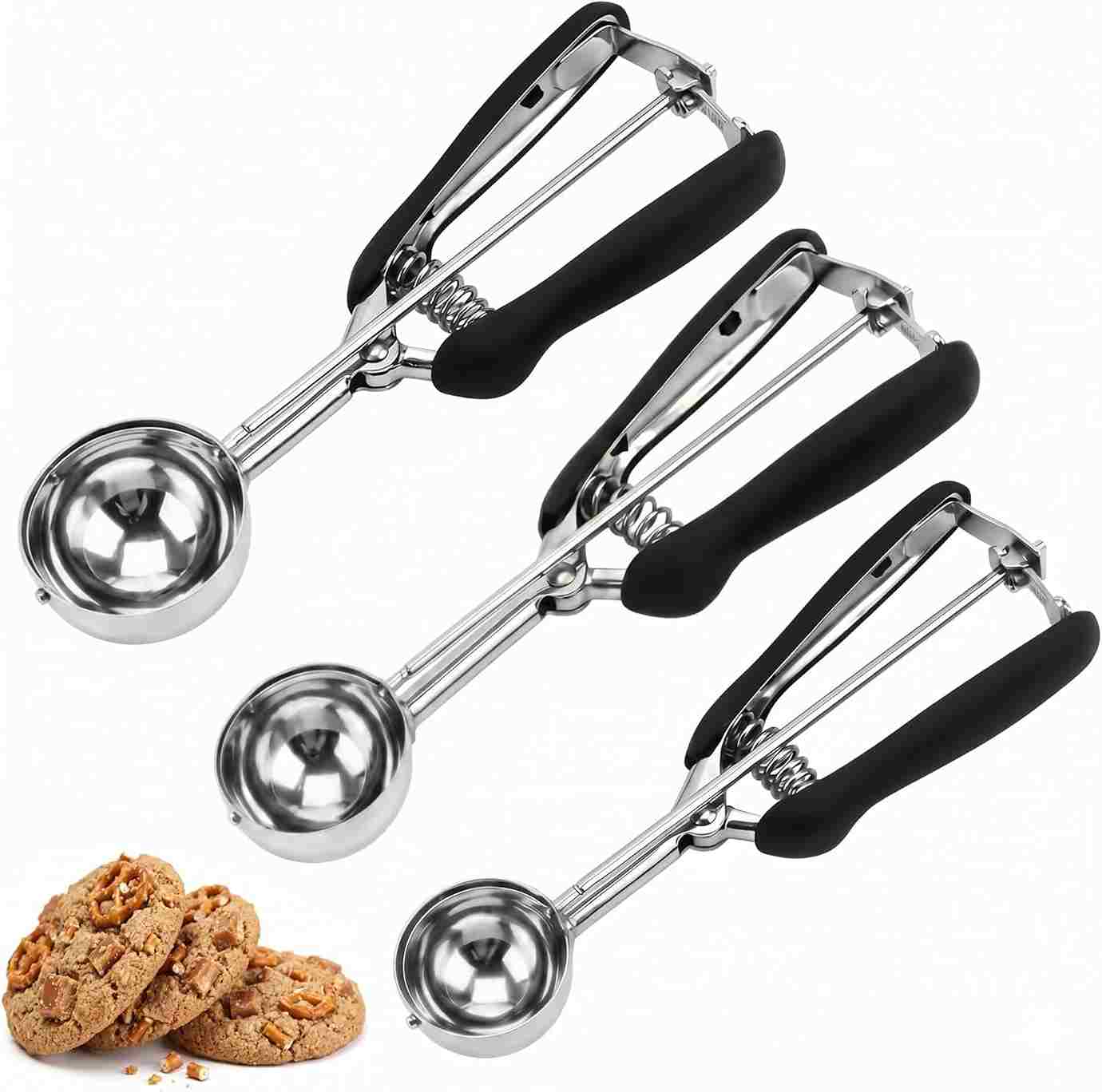 |
3-Piece Stainless Steel Scoop Set | Three durable stainless steel scoop sizes with trigger release and non-slip handles for consistent portioning of cookie dough, ice cream, and other kitchen mixtures. | Check on Amazon |
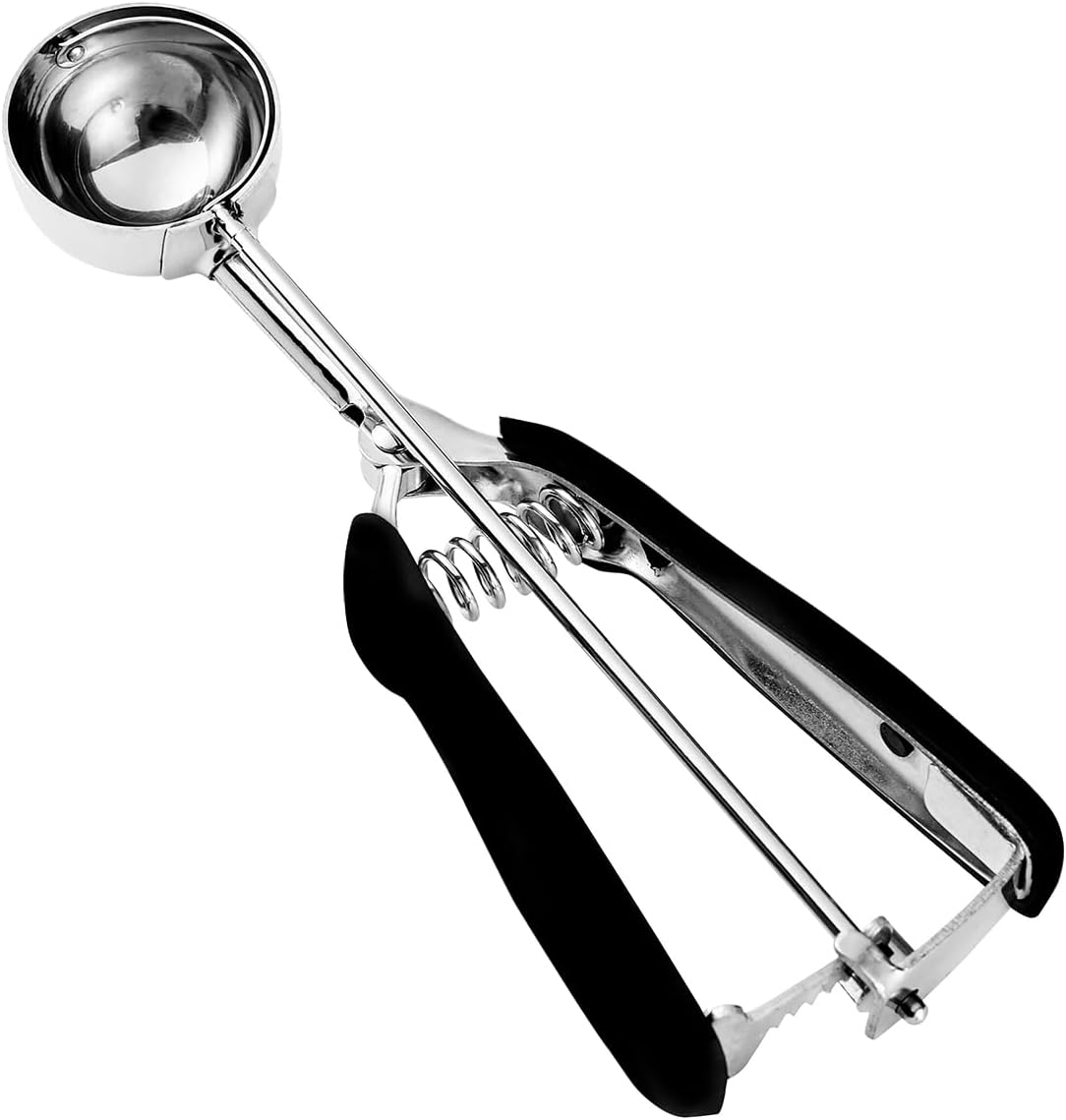 |
HOMURE 2-Tbsp Trigger Scoop | A 2-tablespoon spring-trigger scoop with a comfortable rubber grip for consistent, effortless portions. | Check on Amazon |
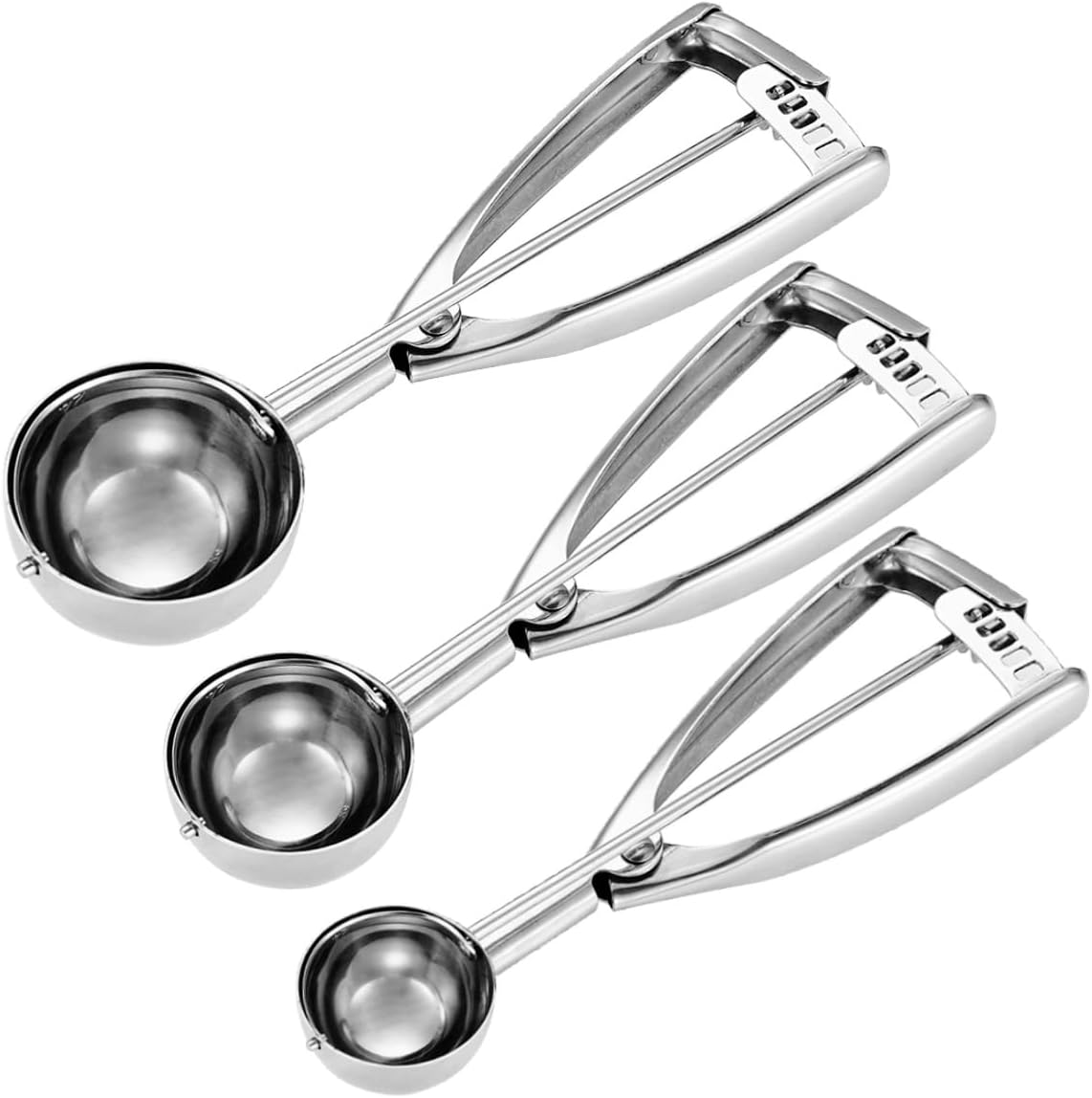 |
Fayomir Trigger Scoop Trio | Three sizes, spring-trigger release, heavy-duty stainless steel for consistent scooping every batch. | Check on Amazon |
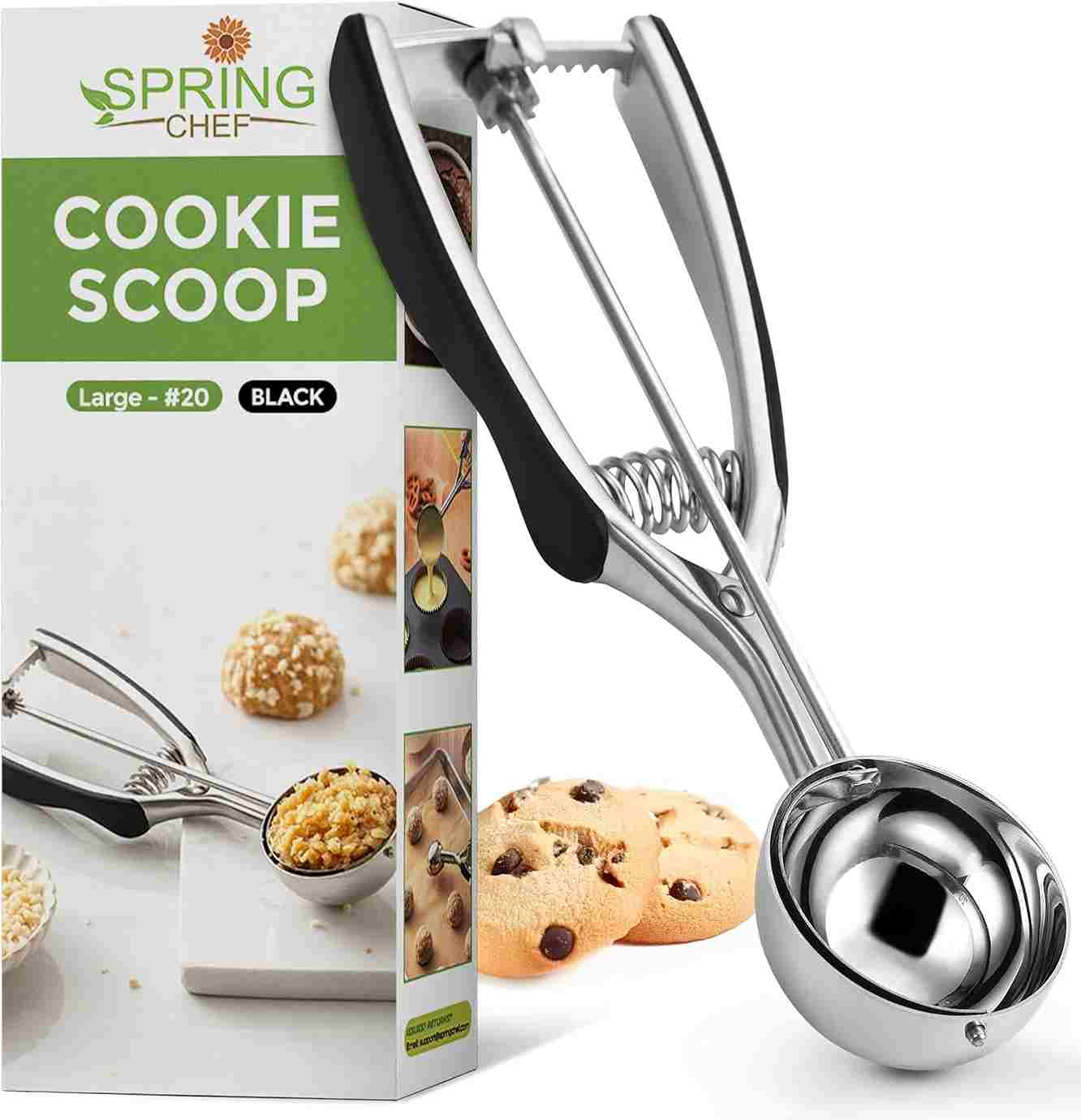 |
Spring Chef Seamless #20 Scoop | A single-piece #20 cookie scoop with wiper trigger release, built for large, bakery-style cookies without stuck dough. | Check on Amazon |
How to Choose the Right Cookie Scoop
The right cookie scoop isn’t whichever one has the most five-star reviews online. It’s the one that matches three things about how you actually bake: the cookie size you make most often, how your dough behaves once it’s mixed, and how your hand holds up after the twentieth scoop in a batch. Get those three right, and differences in brand or price stop mattering nearly as much as most buying guides suggest.
Choose Based on the Cookie Size You Usually Bake
Start with your go-to recipe, not the scoop. If your favorite chocolate chip recipe says “drop by rounded tablespoons,” a medium scoop matches that instruction without you eyeballing it every time. If you mostly make small bite-sized cookies for cookie tins or gifting, a smaller scoop keeps every batch the same size without extra shaping. If you’re the person known for bakery-style jumbo cookies, size up. Stretching a small scoop’s worth of dough into a “big” cookie usually just gives you a thin, over-spread cookie instead of the thick, chewy one you were going for.
Baking a mix of sizes depending on occasion? A medium scoop is the one that covers the most recipes, which is why it’s the one worth owning first if you’re only buying one.
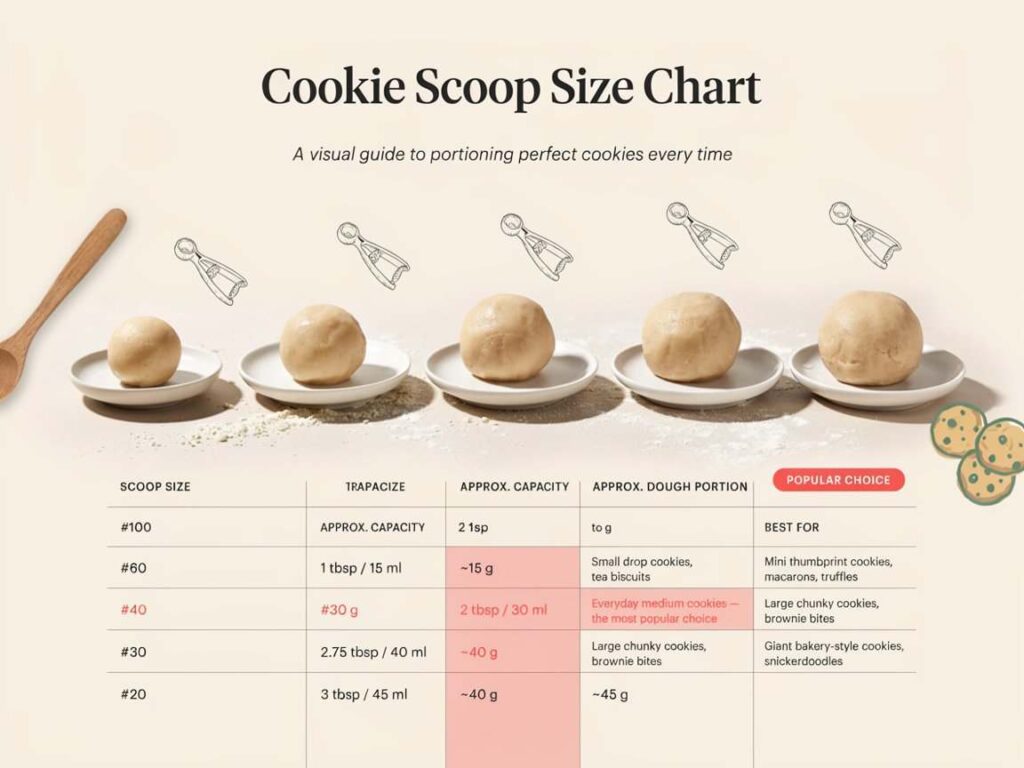
Cookie scoop size chart:
Choose Based on Dough Consistency
The scoop that works well for one dough can frustrate you with another. It helps to think about the dough you make most, not cookie dough in general:
- Soft dough (standard drop-cookie dough at room temperature) scoops easily with almost any mechanism, since it flows into the bowl and releases without much resistance.
- Sticky dough (oatmeal raisin, molasses, brown-sugar-heavy recipes) tends to cling to the scoop’s walls. It performs best in a scoop where the internal sweeper clears the full bowl, not just part of it, since leftover dough in the corners means you’re stopping to scrape it out by hand.
- Thick, stiff dough (shortbread-style or dense sugar cookie dough) takes real hand force to press into the bowl. A stiffer spring can turn scooping into a workout over a full batch.
- Chilled dough (rested in the fridge, common for flavor and spread control) firms up enough that a narrow scoop opening makes it harder to load. A slightly wider bowl opening helps it go in without forcing.
- Frozen dough can’t really be scooped once it’s fully hard. [In my testing], the reliable order is to scoop the dough while it’s still soft or lightly chilled, then freeze the pre-formed balls, not the other way around.
Choose the Right Release Mechanism
Most cookie scoops on the market combine more than one of these mechanisms in a single design, but it still helps to know what each part is actually doing.
Sweeper-Style Scoops
Inside the bowl, a wire or flat blade sweeps across the interior when you squeeze the handle, physically pushing dough out. This is what gives you consistent portions, since the sweep defines the same volume every time. With sticky dough, the one thing worth checking before you buy is whether the sweep covers the entire bowl or only part of it; a partial sweep is what leaves dough stuck behind.
Trigger-Release Scoops
Here the handle has a lever you squeeze with your fingers rather than your whole palm, which pulls the internal blade across the bowl. It’s built for one-handed, repetitive use, which matters more than it sounds like once you’re forty cookies into a batch. The trade-off is that a trigger means more small moving parts, and those are the first thing to feel stiff or gritty if dough dries inside the joint.
Spring-Loaded Scoops
The spring is what resets the handle after each squeeze, so you’re not manually pulling it back open before the next scoop. That’s genuinely useful for big batches, since it removes one motion per cookie. It’s also the part most likely to wear out first. [In my testing], stiff or dense dough is what strains a spring the fastest, so if you bake dense cookies often, it’s worth checking how much resistance the spring has before you buy, not just what the handle is made of.
Simple Non-Mechanized Scoops
No lever, no spring, no internal blade, just a fixed bowl shape you release dough from by hand, often with a light tap or a second utensil. These suit occasional bakers more than high-volume ones, and they’re the easiest of all four types to clean since there’s nothing to get stuck. The trade-off is consistency: portions depend on your own technique each time, and doing the “release” work by hand for an entire batch tires your hand faster than a mechanism would.
Choose Based on Hand Comfort
A scoop that a food blogger loves might feel wrong in your hand, and that’s worth taking seriously:
- Small vs. large hands — a trigger spaced for an average adult hand can feel like a stretch for smaller hands, which affects control on every single squeeze, not just the first one.
- Grip strength — this depends on the spring’s resistance, not the scoop’s size label. If anyone in the house has reduced grip strength, a lighter trigger action matters more than which disher size you pick.
- Repetitive scooping — for holiday baking or big batches, count the hand motions per scoop. Whichever mechanism needs fewer separate movements is the one that holds up over forty repetitions.
- Hand fatigue — tied directly to spring stiffness and how far the trigger has to travel. A spring that feels fine for ten cookies can feel tiring by cookie thirty.
- One-handed operation — matters if your other hand is holding a baking sheet, a timer, or a kid. Trigger and sweeper mechanisms are built for one-handed use; simple non-mechanized scoops usually need a free second hand to help release the dough.
Choose Based on Cleaning Requirements
Moving parts are where dough hides. Sticky, sugar- or butter-heavy dough works its way into the pivot joint and spring housing of trigger and spring mechanisms, and a quick rinse under the tap doesn’t always reach it. Rinsing right after use, before the dough dries in place, matters more for these scoops than the material they’re made from. A simple non-mechanized scoop, with no joints to clean around, will always be the fastest of the four to wash.
One more thing worth checking rather than assuming: “dishwasher safe” on the packaging sometimes covers the bowl and handle exterior only, not the internal spring. It’s a small detail, but it’s the difference between a scoop that lasts and one whose action turns stiff after a few months.
Our Top Cookie Scoop Picks
1. OXO Good Grips Medium Cookie Dough Scoop
When cookie dough is thick and sticky, a basic spoon can leave you with uneven portions and cookies that bake at different speeds. This medium scoop is designed to make portioning quicker and more consistent, while its stainless steel bowl handles denser dough without feeling flimsy. In kitchen use, the internal wiper helps release dough cleanly, while the spring-loaded, non-slip handle reduces hand strain during larger batches. It is a practical choice for home bakers who want uniform 2.75-inch cookies without repeatedly shaping dough by hand.
| Specification | Details |
|---|---|
| Brand | OXO |
| Material | Stainless steel |
| Scoop Size | #40 |
| Dough Capacity | 1.5 tablespoons / 22.5 ml |
| Approx. Cookie Size | 2.75-inch diameter |
| Dimensions | 8.3 × 2.7 inches |
| Weight | 0.13 kg |
| Handle | Spring-loaded, non-slip grip |
| Release System | Stainless steel internal wiper |
| Dishwasher Safe | Yes |
| Color | Black/Silver |
| Quantity | 1 scoop |
Key Features
- #40 medium scoop: Portions approximately 1.5 tablespoons of dough for consistently sized cookies.
- Stainless steel bowl: Strong enough to work through relatively dense cookie dough and other firm mixtures.
- Built-in wiper: Pushes the dough out smoothly, helping reduce sticking and mess during portioning.
- Spring-loaded handle: Provides leverage and makes repeated scooping easier during larger baking batches.
- Non-slip grip: Offers a more secure hold when your hands are busy or slightly greasy.
- Dishwasher safe: Makes cleanup easier after working with sticky cookie dough.
Pros
- Produces consistently portioned cookies with less effort.
- Medium size works well for everyday cookies.
- Stainless steel construction feels durable for regular home baking.
- Internal wiper helps with clean dough release.
- Comfortable handle is useful when preparing multiple trays.
- Dishwasher-safe design simplifies cleanup.
Cons
- A #40 scoop may feel undersized if you prefer making large, bakery-style cookies.
- The mechanism adds moving parts that may require extra attention when cleaning by hand.
- One medium size may not be enough if you regularly bake both mini and large cookies.
Best For
Best for home bakers who want consistent, medium-sized cookies with quick, low-mess dough portioning. If you’re comparing the best cookie scoop options, the OXO Good Grips cookie scoop is particularly practical for chocolate chip and similar drop-cookie recipes where uniform portions matter.
2. 3-Piece Stainless Steel Cookie Scoop Set
When one cookie recipe calls for small portions and another needs oversized, bakery-style scoops, using one scoop for everything becomes frustrating. This three-piece set solves that problem by giving you three practical sizes for portioning cookie dough, ice cream, muffin batter, and more. In everyday kitchen use, the trigger release makes sticky mixtures easier to drop onto trays, while the rubberized grip helps reduce hand fatigue. The main limitation is that the scraper leaves a small clearance gap, so a little food may remain inside the bowl.
| Specification | Details |
|---|---|
| Set Includes | 3 cookie scoops |
| Material | 18/8 stainless steel |
| Scoop Sizes | #60, #40, and #20 |
| Small Scoop Capacity | 1 tbsp / 15 ml / 0.5 oz |
| Medium Scoop Capacity | 2 tbsp / 30 ml / 1 oz |
| Large Scoop Capacity | 3 tbsp / 45 ml / 1.5 oz |
| Handle | Soft, non-slip rubber grip |
| Release System | Trigger-operated mechanism |
| Dimensions | 8.79 × 2.1 inches |
| Weight | 0.5 kg |
| Cleaning | Hand wash and dishwasher safe |
| Color | Silver |
Key Features
- Three handy sizes—With #60, #40, and #20 sizes, this set handles small, medium, and large cookie portions without requiring multiple separate tools.
- 18/8 stainless steel construction: The food-grade stainless steel body is sturdy and designed to resist corrosion during regular kitchen use.
- Trigger-release design: A quick squeeze releases cookie dough and other mixtures smoothly onto trays, baking sheets, or into bowls.
- Comfortable rubber grip: The thicker, non-slip handle gives you better control and can make repeated scooping less tiring.
- More than a cookie tool: This baking scoops set can also portion ice cream, muffin batter, meatballs, mashed potatoes, and similar foods.
- Easy cleanup: The scoops are designed for both hand washing and dishwasher cleaning.
Pros
- Three sizes cover a wide range of baking and portioning tasks.
- #40 medium scoop is practical for everyday cookies.
- Stainless steel construction feels more durable than lightweight plastic alternatives.
- Trigger release is useful when working with sticky or dense mixtures.
- Non-slip handles are comfortable for repeated scooping.
- Dishwasher-safe design makes cleanup convenient.
Cons
- The three-piece set may be unnecessary if you only bake one standard cookie size.
- The release scraper does not remove every bit of food because of the small clearance between the mechanism and scoop bowl.
- The set is relatively heavier than a basic single scoop, which may matter during long prep sessions.
- The larger #20 scoop may produce portions that are too large for recipes designed around smaller cookies.
Best For
Best for home bakers who want multiple scoop sizes in one set. The range of scoop sizes makes this set a practical choice for bakers who prepare different types of cookies, from small bite-sized treats to larger bakery-style portions. It is also a practical choice for cooks who want a versatile portioning tool for ice cream, muffins, meatballs, and other foods.
3. HOMURE 2-Tbsp Trigger Scoop
Scooping muffin batter or cookie dough by hand for a big batch can leave your wrist aching before the tray’s even half full, and eyeballing size means uneven bakes. This 2-tablespoon scoop solves that with a spring trigger that pushes dough out with barely any squeeze, plus a rubber grip that doesn’t dig into your palm. In kitchen performance, it kept a batch of thirty muffins nearly identical without hand fatigue setting in.
| Specification | Details |
|---|---|
| Brand | HOMURE H |
| Diameter | 45 mm (1 25/32″) |
| Material | 18/8 stainless steel |
| Handle | Thick rubber grip, non-slip |
| Release Mechanism | Spring trigger |
| Dimensions | 8.5″ L x 2.75″ W |
| Weight | 0.19 kg |
| Color | Black |
| Cleaning | Dishwasher safe |
Key Features
- Spring trigger releases dough with a light squeeze, easing wrist strain over long batches
- Rubber grip stays comfortable and non-slip even with wet or floury hands
- 18/8 stainless steel scoop head resists rust, corrosion, and bending over time
- Doubles as a portion scoop for muffins, cupcakes, meatballs, and melon balls
- Designed for comfortable use with both the left and right hand
Pros
- Consistent 2-tablespoon portions every scoop, useful for even baking
- Sturdy stainless steel construction that holds up to daily use
- Versatile beyond cookies — handles ice cream and cupcake batter well
- Dishwasher safe and stain resistant for easy cleanup
Cons
- Comes in only one size, so a different portion means buying a separate scoop
- Black coating is on the handle only — some may prefer an all-metal look
- Spring mechanism needs a quick rinse if batter dries inside it after use
Best For
Bakers who mainly need one consistent scoop size — ideal for muffins, cupcakes, and standard cookies rather than a full multi-size set.
4. Fayomir Trigger-Release Scoop Trio
Anyone who’s scooped cookie dough by hand knows the mess — sticky fingers and uneven balls that bake unevenly, some done early, some still doughy. This heavy duty cookie scoop set fixes that with three sizes and a spring trigger that releases dough clean, no scraping needed. In kitchen performance, batch after batch came out the same size, meaning even baking without babysitting the oven. It’s a small tool, but it changes how relaxed a baking session feels.
| Specification | Details |
|---|---|
| Brand | Fayomir |
| Set Includes | Small (1 Tbsp / #60), Medium (2 Tbsp / #40), Large (3 Tbsp / #20) |
| Material | 18/8 stainless steel |
| Release Mechanism | Cog-and-ratchet spring trigger |
| Handle Design | Ambidextrous (works in either hand) |
| Dimensions | 8.7″ L x 2.8″ W |
| Weight | 0.43 kg |
| Color | Silver |
| Cleaning | Dishwasher safe |
Key Features
- Three sizes cover everything from small cookies to muffin batter and even meatballs
- Thickened stainless steel scoop head and handle resist bending after repeated use
- Trigger release cuts hand fatigue during long batches — no thumb-pushing needed
- Ambidextrous handle works whether you scoop left- or right-handed
- Food-grade steel and dishwasher-safe cleanup keep it low maintenance day to day
Pros
- Uniform scoop sizes give even baking without watching the oven closely
- Sturdy build holds up to repeated, heavy use in a busy kitchen
- Trigger action releases sticky dough cleanly, cutting down on cleanup
- Handles thicker mixes like cookie dough and meatballs, not just batter
- Stays rust and stain resistant after repeated washing
Cons
- The trigger can feel a bit stiff with very cold or dense dough until it softens slightly
- Only one color option (silver), so no personalization
- No extra-small size for tiny bite-sized cookies or macarons
Best For
Home bakers who bake cookies, muffins, or meatballs in batches and want consistent sizing without extra tools. It also doubles well as an ice cream scoop or melon baller when you need a clean, portioned scoop for other foods.
5. Spring Chef Seamless #20 Scoop
Large cookie recipes — the bakery-style 3.5-inch kind — often go wrong when a cheap scoop’s welded seam traps sticky dough, forcing you to dig it out with a spoon between every scoop. This #20 cookie scoop solves that with a single-piece stainless bowl and a wiper that clears dough in one swipe. In kitchen performance, it turned out a dozen big cookies with barely a pause between scoops, no scraping or size guessing needed.
| Specification | Details |
|---|---|
| Brand | Spring Chef |
| Scoop Size | #20 / 2.93 Tbsp |
| Cookie Yield | ~3.5″ cookies |
| Material | Grade 304 18/8 stainless steel, single-piece bowl |
| Handle | Ergonomic, soft grip |
| Release Mechanism | Trigger with wiper |
| Dimensions | 8.46″ L x 2.48″ W |
| Weight | 5.6 oz |
| Color | Black |
| Cleaning | Dishwasher safe |
Key Features
- Single-piece stainless bowl avoids the welded seam where dough usually gets stuck
- Built-in wiper clears sticky dough clean with one swipe of the trigger
- Ergonomic handle keeps grip comfortable through a full tray of large cookies
- Size #20 scoop yields bakery-style 3.5-inch cookies without measuring
- Works well beyond cookies — cupcakes, meatballs, muffins, and melon balls
Pros
- No seam for dough to hide in, unlike two-piece scoop heads
- Wiper makes cleanup between scoops fast, even with sticky dough
- Comfortable handle reduces wrist strain during big batches
- Large capacity means fewer scoops per batch, saving time
- Versatile enough for ice cream, muffins, and portioning meat
Cons
- Large size isn’t ideal for small cookies or delicate portions like macarons
- Being a bigger scoop, it can feel heavy in smaller hands after extended use
- Black finish shows flour dust more than a plain steel one would
Best For
Bakers who want large, bakery-style cookies (or big batches of muffins and meatballs) without wrestling with stuck dough or wrist fatigue.
Cookie Scoop Materials: Stainless Steel vs Plastic
For most home bakers, stainless steel is the better long-term choice because it is stronger, handles firm cookie dough more confidently, and is less likely to crack or deform with regular use. Plastic scoops are lighter and often cheaper, making them suitable for occasional baking or softer dough.
Stainless Steel Cookie Scoops
Stainless steel is a strong choice when you want a scoop that can handle regular baking without feeling fragile. It is especially useful if you often prepare thick, chilled, or dense cookie dough that requires more pressure to portion.
- Durability: A well-made stainless steel scoop can withstand frequent use and is less likely to crack or bend under normal kitchen conditions.
- Corrosion resistance: Quality stainless steel resists rust and corrosion, making it suitable for repeated washing and long-term kitchen use.
- Structural strength: The rigid bowl holds its shape when scooping firmer mixtures, which can make portioning feel more controlled.
- Heavy dough: If you regularly bake dense oatmeal or peanut butter cookies, stainless steel generally provides more confidence than lightweight plastic.
- Long-term use: For frequent bakers, the higher upfront cost can be worthwhile because a sturdy scoop is more likely to remain useful for years.
The downside is that stainless steel models can feel heavier, particularly when you are portioning several trays of dough. Some models also cost more than basic plastic alternatives.
Plastic Cookie Scoops
Plastic scoops can make sense if you bake occasionally and mainly work with soft, easy-to-scoop dough. Their biggest advantage is that they are lightweight and often more affordable.
- Lower weight: A lightweight scoop can be comfortable for quick baking tasks and may be easier for children to handle.
- Lower cost: Plastic models are often a budget-friendly way to try a cookie scoop without spending much.
- Potential durability limitations: Cheaper plastic can crack, warp, or become brittle over time, particularly if exposed to heat or heavy use.
- Suitable use cases: They can work well for occasional bakers who prepare soft cookie dough and don’t need a tool for demanding, repetitive use.
The quality of plastic varies considerably. A well-designed plastic scoop may perform perfectly well for light use, but I would be more cautious about relying on a budget model for thick dough or frequent batch baking.
Which Material Is Better for Most Home Bakers?
Choose stainless steel if you bake regularly, prepare firm dough, or want a scoop for long-term use. Its strength and durability make it the safer all-around investment for a busy home kitchen.
Choose plastic if you bake only occasionally, prefer a lightweight tool, or want the lowest-cost option for soft dough.
My recommendation is simple: for one cookie scoop that you expect to use for years, choose a comfortable stainless steel model with a reliable release mechanism. The material matters, but don’t overlook the handle and release system—an uncomfortable stainless steel scoop can still be frustrating to use during a large batch.
How to Use a Cookie Scoop Properly
To use a cookie scoop properly, fill it with an even amount of dough, level the portion without tightly packing it, release it onto the baking sheet, and keep the spacing consistent. The key is to portion every cookie as evenly as possible so they spread and bake at a similar rate.
Step 1: Prepare the Dough at the Right Temperature
The dough should be firm enough to scoop but not so cold that you have to force the scoop through it. Very soft dough may stick to the scoop, while heavily chilled dough can be difficult to portion.
If the recipe calls for chilled dough, follow the recipe instructions rather than warming it just to make scooping easier.
Step 2: Fill the Scoop Evenly
Push the scoop into the dough and fill the bowl completely. Try to use the same motion each time so every portion is similar.
Avoid loosely filling some scoops and tightly packing others. Different amounts of dough can cause cookies on the same baking sheet to finish at different times.
Step 3: Level the Dough
For more consistent cookies, remove any excess dough that rises above the scoop. You don’t need to press the dough firmly into the bowl; simply aim for a repeatable, even portion.
This is especially helpful when using a scoop with a defined capacity, such as a medium #40 scoop.
Step 4: Release the Dough Onto the Baking Sheet
Position the scoop close to the lined baking sheet, then activate the release mechanism if your scoop has one. A smooth release helps keep the dough portion intact and reduces the need to reshape it by hand.
If the dough sticks inside the scoop, check whether it is too soft or whether the scoop needs cleaning.
Step 5: Keep the Portions Evenly Spaced
Leave enough room between dough portions for the cookies to spread during baking. The ideal gap between each portion varies by recipe, so use the spacing recommended in the instructions whenever provided.
Using the same portion size and spacing helps your cookies bake more evenly and gives the whole batch a more uniform shape and texture.
Don’t Overwork the Dough
Once the dough is portioned, avoid repeatedly rolling and reshaping each piece unless the recipe calls for it. Excessive handling can warm the dough and may affect the final texture.
The simplest approach is best: scoop consistently, release cleanly, space the portions properly, and let the oven do the rest.
Common Cookie Scoop Mistakes That Cause Uneven Cookies
Uneven cookies usually come from inconsistent dough portions, incorrect scoop size, or poor spacing on the baking tray. Even the best cookie scoop cannot fix cookies that are overfilled, tightly packed, or placed too close together. A few simple adjustments can help your cookies bake more evenly and look consistent from one batch to the next.
Using the Wrong Scoop Size
Choosing a scoop that is too large or too small for your recipe can change the final cookie size, baking time, and texture. If you want standard everyday cookies, a medium scoop is often a practical choice. For mini or bakery-style cookies, use a size that matches the recipe rather than trying to adjust the baking time for an unsuitable scoop.
Overfilling the Scoop
An overfilled scoop creates larger portions, even if you use the same scoop for every cookie. These cookies may need longer to bake and can turn out softer or less evenly cooked than smaller portions.
For consistent results, fill the scoop in a similar way each time and remove excess dough before releasing it.
Packing Dough Too Tightly
Pressing dough firmly into the scoop can create heavier portions than intended. This is especially easy to do with thick dough when trying to fill every gap.
Instead, scoop enough dough to fill the bowl evenly without aggressively compressing it. The goal is to create repeatable portions, not tightly packed dough balls.
Scooping Dough at the Wrong Temperature
Dough temperature can make a big difference. Very cold dough may be difficult to scoop and encourage you to press harder, while warm, soft dough can stick to the scoop and become difficult to release.
Follow the recipe’s recommended chilling instructions. If the dough is too firm to scoop comfortably, give it a little time to soften rather than forcing the tool through it.
Using Different Portion Sizes in One Batch
Even small differences in dough quantity can affect how quickly cookies bake. If some portions are noticeably larger than others, the smaller cookies may be ready before the larger ones.
Try to use the same scoop size and the same filling motion throughout the batch. If you change scoop sizes, bake those portions separately when possible.
Ignoring Dough Spread
A perfectly consistent scoop does not guarantee identical-looking cookies. Some doughs spread widely during baking, while others stay thick and compact.
Ingredients such as butter, sugar, flour, and the temperature of the dough all influence how much cookies spread. If your cookies are spreading more than expected, check the recipe and dough temperature before blaming the scoop.
Placing Dough Portions Too Close Together
Even a perfect cookie scoop cannot compensate for poor spacing on the baking tray. If dough portions are placed too close together, spreading cookies can merge into each other and bake unevenly around the edges.
Leave enough space between portions for the cookies to spread according to the recipe. When you’re unsure, bake a small test batch first. This lets you see how much the cookies spread before committing the entire tray.
Consistent cookies come from more than using the right scoop. Use the correct size, portion the dough consistently, avoid overpacking, follow the recipe’s temperature instructions, and give each cookie enough room to spread.
How to Care for and Clean a Cookie Scoop
To keep a cookie scoop working properly, clean it soon after use, remove dough from the release mechanism, and dry it thoroughly. The exact cleaning method depends on the scoop’s material and construction, so always follow the manufacturer’s care instructions when available.
Is a Cookie Scoop Dishwasher Safe?
Some cookie scoops are dishwasher safe, but not all models should go in the dishwasher. Check these factors before putting yours through a cycle:
- Materials: Stainless steel is generally more dishwasher-friendly than some plastics or coated handles.
- Manufacturer instructions: If the manufacturer recommends hand washing, follow that guidance to protect the scoop.
- Moving mechanisms: Springs, triggers, and internal sweepers may benefit from gentler hand cleaning.
- Construction: Scoops with multiple joined parts can trap water or food residue, so thorough drying is important.
If you’re unsure, hand washing with warm water and mild dish soap is the safest general approach.
How to Clean Dough From the Mechanism
Cookie dough can get trapped around the internal wiper, spring, or trigger, particularly when the dough is sticky or chilled.
Start by rinsing the scoop with warm water to soften any residue. Use a small soft brush or an old toothbrush to reach around moving parts and remove dough that a sponge cannot reach. Operate the release mechanism several times while rinsing to help loosen hidden residue.
Avoid letting dough dry completely inside the mechanism. Once hardened, it becomes much more difficult to remove and can interfere with smooth release.
How to Prevent Rust or Corrosion
Quality stainless steel is naturally resistant to rust, but it still benefits from proper care. Dry the scoop thoroughly after washing, especially around springs, joints, and small gaps where water can remain trapped.
If your scoop has a plastic or rubber handle, avoid harsh cleaners that could damage the material. For stainless steel models, don’t use abrasive scouring pads unnecessarily, as they can scratch the surface.
If you notice rust spots developing, check the manufacturer’s care recommendations rather than assuming the scoop is still suitable for continued food use.
How to Keep the Release Mechanism Working Smoothly
A release mechanism works best when it is kept clean and free from dried dough. After washing, move the trigger or sweeper several times to ensure no residue remains inside.
Don’t force a stiff mechanism. If the scoop suddenly becomes difficult to operate, inspect it for trapped dough or debris before applying pressure. For most food-contact kitchen tools, cleaning and thorough drying are preferable to adding household lubricants, unless the manufacturer specifically recommends a food-safe lubricant.
With regular cleaning and careful drying, a good cookie scoop should continue to portion dough smoothly and consistently for a long time.
Faqs
Is a Cookie Scoop Worth Buying?
Yes, especially if you bake cookies regularly or want evenly sized portions. A cookie scoop speeds up dough portioning and helps cookies bake more consistently. If you only bake occasionally, a spoon or kitchen scale can work just as well.
Are Stainless Steel Cookie Scoops Better?
For most frequent bakers, stainless steel is the better long-term choice because it is durable, sturdy, and better suited to firm or chilled dough. Plastic scoops are lighter and often cheaper, making them suitable for occasional baking and softer dough.
Why Does My Cookie Scoop Stick to the Dough?
Your dough may be too soft, sticky, or warm, or the scoop may have dough residue inside the bowl or release mechanism. Chilling the dough according to the recipe, keeping the scoop clean, and using a smooth release mechanism can help. Avoid packing very sticky dough tightly into the scoop.
How Many Tablespoons are in a Cookie Scoop?
It depends on the scoop size. A #60 scoop typically holds about 1 tablespoon, a #40 scoop about 2 tablespoons, and a #20 scoop about 3 tablespoons. Scoop sizes can vary between manufacturers, so check the stated capacity in tablespoons or millilitres when buying.
Conclusion
A good cookie scoop can make a bigger difference than it first appears. It helps you portion dough consistently, reduce messy hand shaping, and keep cookies closer in size so they bake at a similar rate. However, the best scoop is not necessarily the most expensive one. Choose a size that matches your usual cookies, a release mechanism that suits your dough, and a handle that feels comfortable during repeated use. For most home bakers, a durable medium scoop is a practical starting point, while frequent bakers may benefit from a multi-size set or an easy-release design. Ultimately, the right scoop should make your baking more consistent without making the process more complicated.
Affiliate disclosure
You may find affiliate links throughout this article. If you purchase a product through one of these links, HomePlora may earn a small commission, at no additional cost to you. We recommend products based on their quality, practical usefulness, and how well they suit different cooking and baking needs. Your support through these purchases helps us continue creating useful, experience-based kitchen content.

Hi, I’m Muhammad Din. I test and compare kitchen tools in my own kitchen before I ever recommend them — if it’s in a guide on HomePlora, I’ve used it or dug deep enough to know exactly where it holds up and where it doesn’t. My goal is simple: help you find tools that actually earn a spot in your kitchen, without wasting money on ones that don’t.