

Introduction
A cutter can look flawless in the product photo — sharp lines, perfect proportions — and still fall apart the moment it hits real dough. The edge flattens fine detail on a snowflake, the metal bends under firm pressure, or the dough tears clean in half instead of releasing whole. That gap between how a cutter photographs and how it actually performs is exactly why this guide exists. Every pick here for the best cookie cutters for baking was judged on how it handled an actual bake — clean cuts, shape retention, and dough release — not on how many pieces came packed in the box.
I use many cookie cutter in my kitchen and the Wilton’s 4-Piece Comfort Grip Set is the best overall pick for most home bakers — its stainless steel cutting edge under a cushioned grip gives clean, defined shapes without the hand strain that throws off consistency over a big batch. That said, plastic cutters are safer for young kids, individual cutters make more sense if you only bake occasionally, a larger set is worth it for shape variety, and specialty cutters are best saved for detailed decorating work.
At-a-Glance Comparison
| Image | Product | Details | Price |
|---|---|---|---|
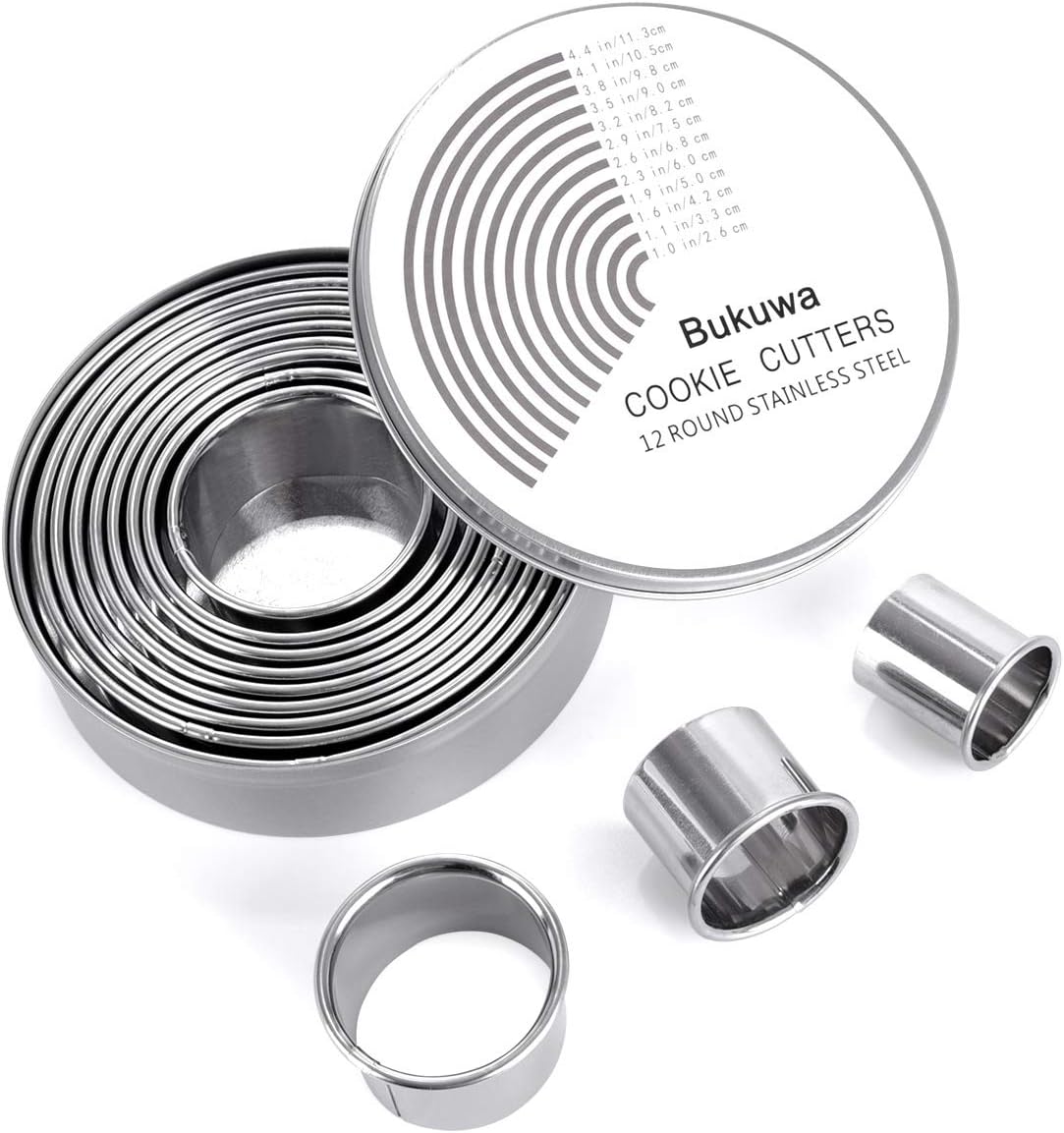 |
Bukuwa 12-Piece Round Cutter Set | 12 graduated 18/8 stainless steel round cutters with rolled edges, dishwasher-safe care, and a storage tin. | Check on Amazon |
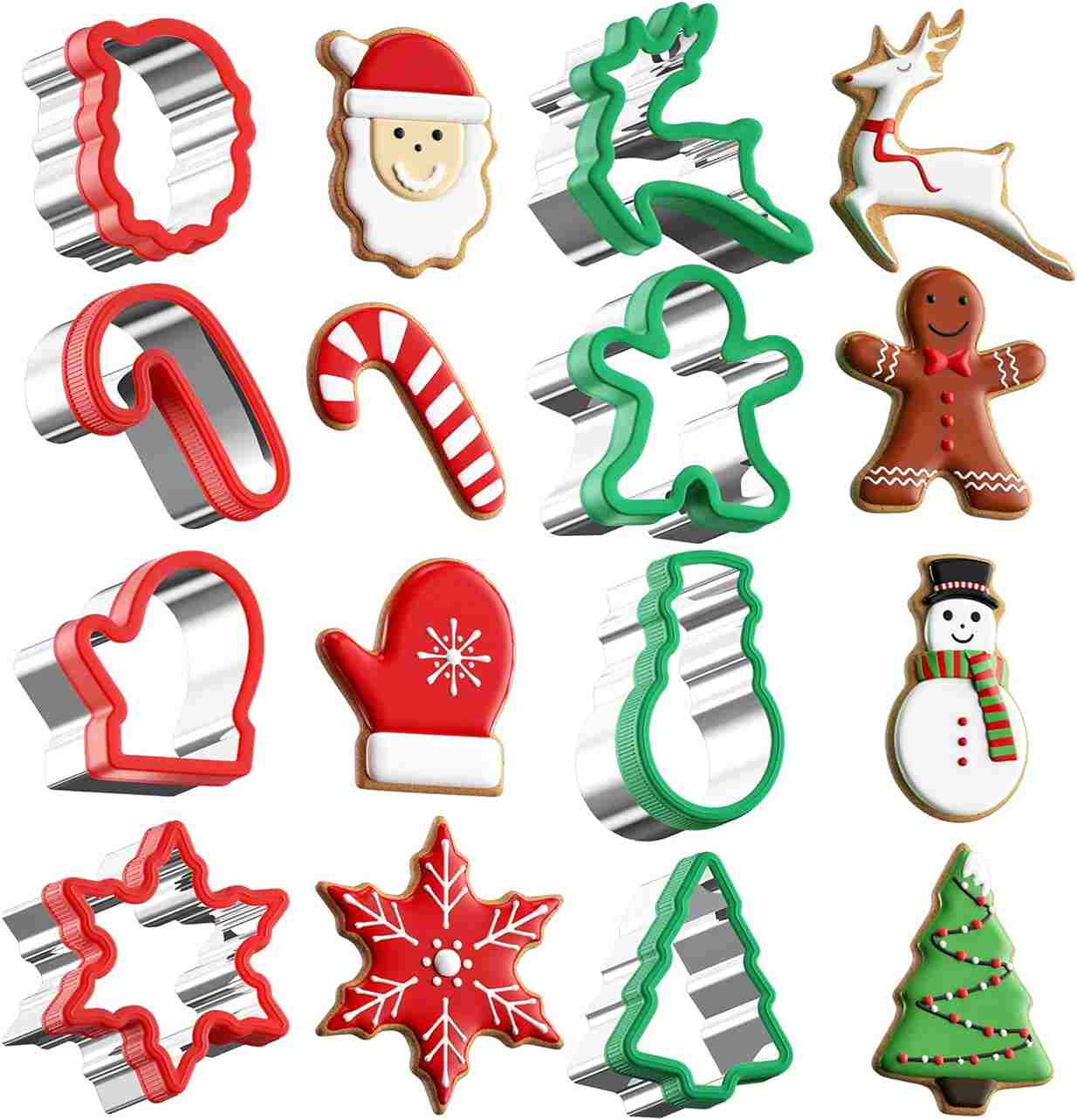 |
Tiblue 8-Piece Christmas Cutter Set | Eight festive stainless steel cutters with comfort-grip handles for easier holiday baking and food shaping. | Check on Amazon |
 |
Wilton 4-Piece Comfort Grip Cutter Set | Four stainless steel shape cutters with cushioned grips for more comfortable, controlled cutting. | Check on Amazon |
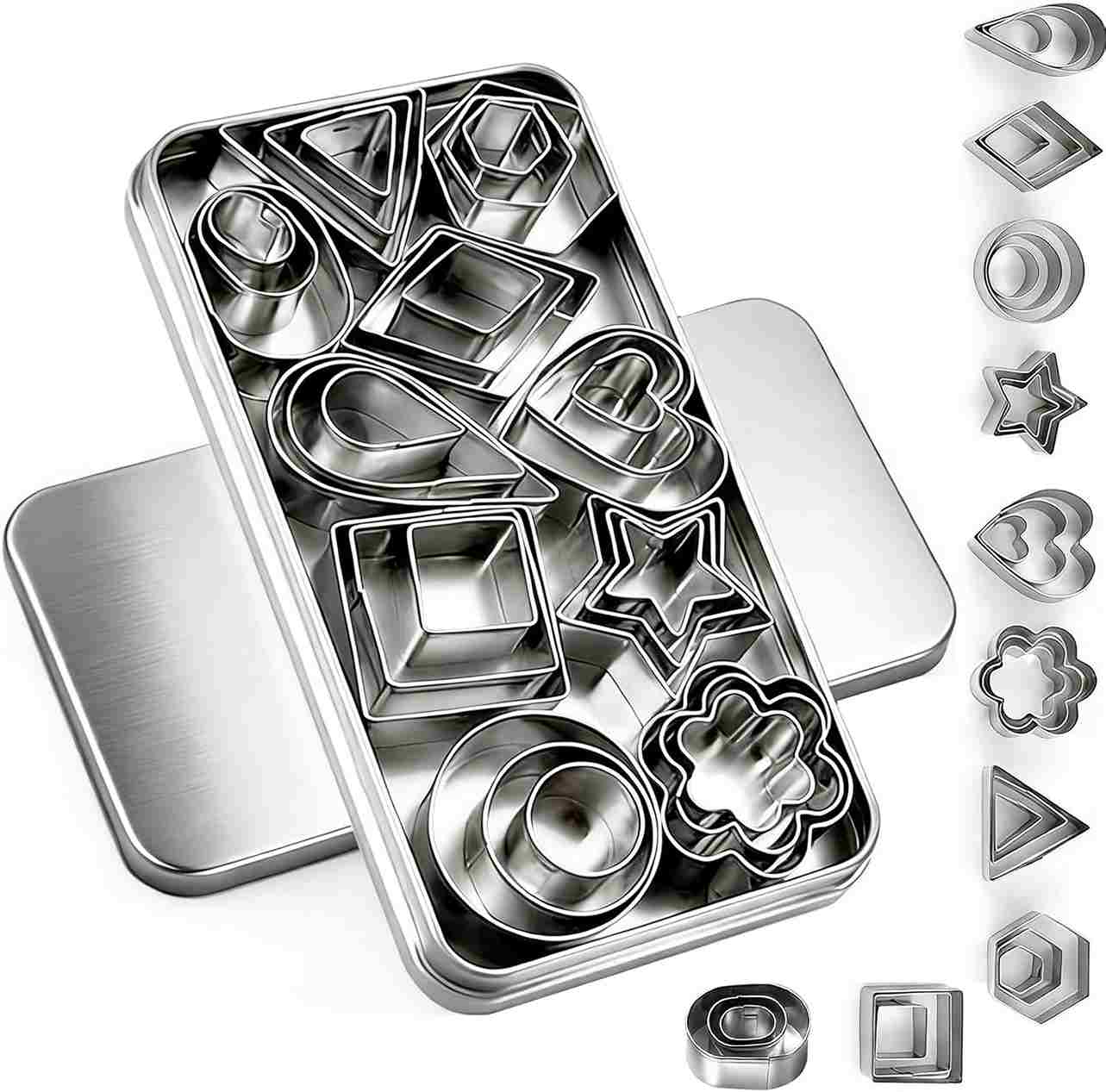 |
PEAKCLOUDS 30-Piece Mini Cutter Set | 30 compact metal cutters in 10 shapes for miniature cookies, fondant details, small food decorations, and creative projects. | Check on Amazon |
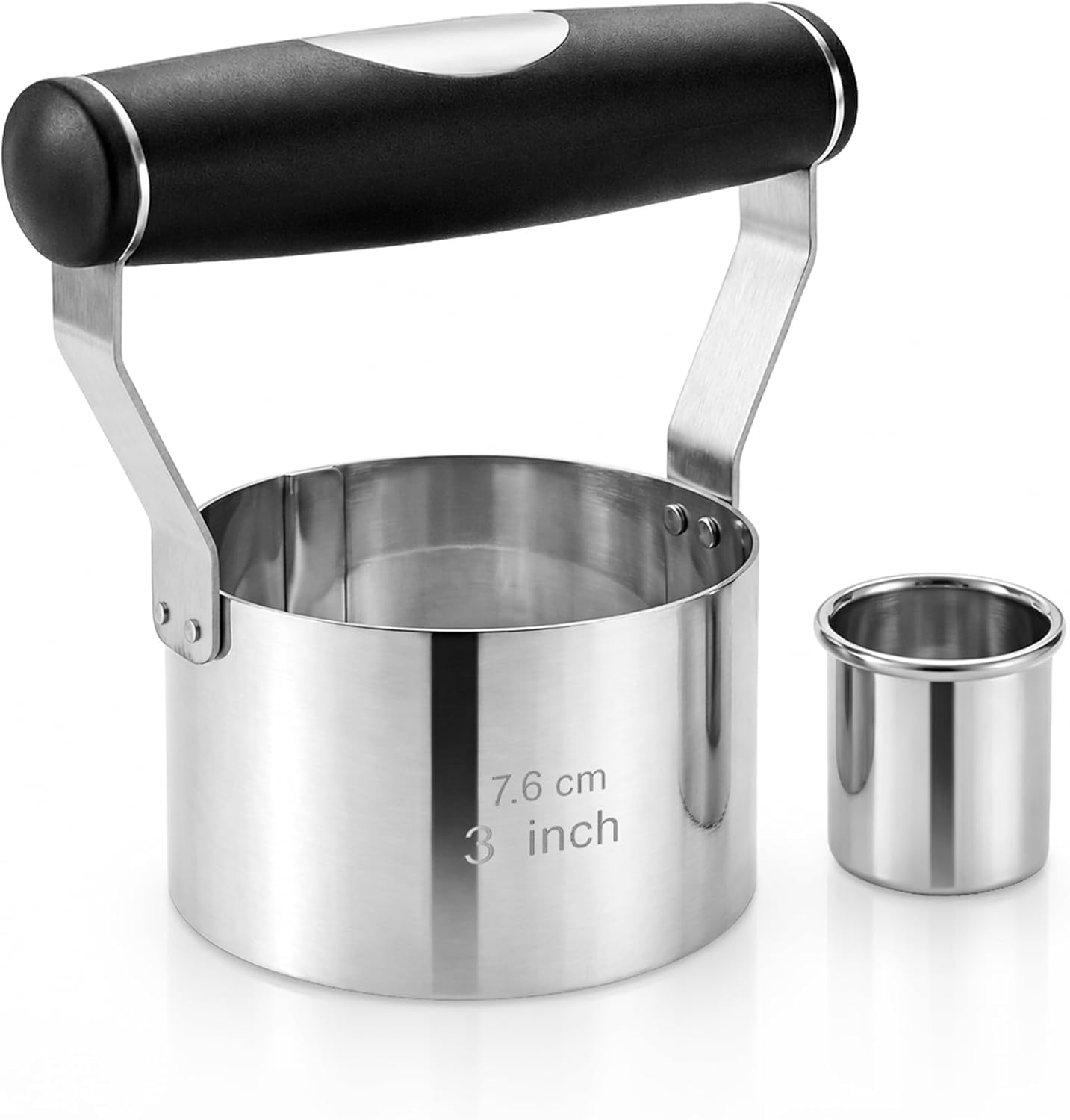 |
Vosturdy Soft-Grip Round Biscuit Cutter | A comfortable 3-inch stainless steel round cutter with a soft ergonomic handle and an additional 1.2-inch cutter for smaller baking projects. | Check on Amazon |
Cookie Cutters vs. Dough Cutters vs. Bench Scrapers
A cookie cutter cuts specific decorative shapes out of rolled dough, a dough cutter (also called a pastry blender) is generally used to work cold fat into flour rather than to cut shapes at all, and a bench scraper is a flat-edged tool for dividing dough into portions and clearing it off the counter. They show up in the same recipes, but they’re solving three different problems, not competing for the same job.
Cookie Cutters: Shape-Specific Cutting
A cookie cutter is built around one job — pressing and cutting a repeatable shape out of rolled dough, whether that’s a simple circle or a detailed holiday design. Round cookie cutters are sometimes sold or labeled as “biscuit cutters” as well, since the same simple shape works for both, but anything with a more specific outline (a star, an animal, a letter) is a cookie cutter specifically, not a general-purpose tool.
Dough Cutters: One Name, Two Different Tools
This is worth being precise about, because “dough cutter” doesn’t point to just one product. Most commonly, it refers to a pastry blender — a handled tool with curved wires or blades used to cut cold butter or shortening into flour until it forms coarse crumbs, which is a mixing step for pie crust, biscuits, or scones, not a shaping or portioning step. In some cases, the term also refers to a round cutter used to divide bread or roll dough into individual portions, making it more similar to a cookie cutter than a pastry blender. If a listing or recipe just says “dough cutter” without a picture, it’s worth checking which one is actually meant before buying.
Bench Scrapers: Dividing and Cleaning, Not Shaping
A bench scraper is a flat, sturdy tool, typically rectangular with a straight cutting edge, that helps divide dough into even portions, move freshly cut pieces without pulling or stretching them, and clear excess flour or stuck dough from the work surface. It has no interest in creating a shape — its straight edge only produces straight lines, so it can portion dough into squares or strips but can’t replicate what a cookie cutter does.
Where They Actually Overlap
A bench scraper can substitute for a round cookie cutter in a rough way — pressed down and rocked, it can cut a straight-edged square or rectangle of dough — but it won’t create round, curved, or intricate designs. A pastry blender, on the other hand, has essentially no overlap with the other two: it’s a mixing tool used before the dough is even rolled out, not a cutting tool used on rolled dough at all.
Quick Way to Tell Them Apart
| Tool | Main Job | Works on Rolled Dough? | Produces Shapes? |
|---|---|---|---|
| Cookie cutter | Cuts a specific decorative shape | Yes | Yes — the whole point of the tool |
| Dough cutter (pastry blender) | Cuts cold fat into flour | No — used before rolling | No |
| Bench scraper | Divides dough, cleans the counter | Yes, for straight cuts only | Straight-edged shapes only (squares, strips) |
If you’re shaping cookies, you want a cookie cutter. If a recipe says to “cut in” cold butter, that’s a pastry blender, not a cutter for dough you’ve already rolled out. And if you’re portioning bread or biscuit dough into even pieces, a bench scraper does that faster and cleaner than trying to press a round cutter through a whole batch one piece at a time.
Top picks
1. Bukuwa 12-Piece Graduated Stainless Steel Round Cookie Cutter Set
When you’re making biscuits, scones, or round cookies in different sizes, using the same cutter for every recipe can quickly become limiting. The Bukuwa set solves that problem with 12 graduated round cutters, ranging from about 1 to 4.4 inches, so you can choose a size that better matches your recipe instead of improvising with a glass or another kitchen tool. The rolled top edges are designed to make pressing into firmer dough more comfortable, while the included tin keeps the full set organised between baking sessions.
| Detail | Information |
|---|
| Brand | Bukuwa |
| Material | 18/8 stainless steel |
| Number of Pieces | 12 |
| Shape | Round, graduated sizes |
| Size Range | Approx. 1–4.4 inches (2.6–11.3 cm) |
| Finish | Polished |
| Colour | Silver |
| Oven Safe | Up to 500°F (manufacturer claim) |
| Care | Dishwasher safe |
| Storage | Tin storage box included |
| Weight | Approx. 0.23 kg |
| Included Components | Cookie moulds and cutters |
Key Features
- 12 graduated round sizes: Gives you more flexibility for cookies, biscuits, scones, pastries, doughnuts, and other round preparations.
- 18/8 stainless steel construction: A practical material choice for regular baking, with good resistance to rust when properly cared for.
- Rolled top edges: Designed to make pressing the cutters more comfortable, particularly when working with firmer or chilled dough.
- Thin cutting edges: Help create cleaner outlines without requiring excessive pressure.
- Smooth welded seams: Reduce rough areas that can make a cutter uncomfortable to handle or harder to clean.
- Dishwasher safe: Makes cleanup easier after working with floury or sticky dough.
- Tin storage box: Keeps the 12 sizes together and makes it easier to find the right cutter when you need it.
- Useful beyond cookies: The round shapes can also be used for biscuits, scones, pastry, fondant, empanadas, and other suitable food-preparation tasks.
Pros
- 12 graduated sizes cover a useful range of everyday baking needs
- Stainless steel construction is a practical choice for repeated home use
- Rolled edges can make pressing into dough more comfortable
- Round cutters are versatile for cookies, biscuits, scones, and pastry
- Dishwasher-safe design simplifies cleanup
- Included tin helps keep the set organised
Cons
- Round shapes only, so it is not suitable if you want stars, hearts, or seasonal designs
- The smallest cutters may be less useful for bakers who mainly make standard-sized cookies
- The set has no dedicated handles, so comfort will still depend on how you grip and press the cutter
- Although the manufacturer describes the cutters as rust-resistant, proper drying and storage are still sensible for long-term care
Best For
Best for home bakers who want a practical set of stainless steel cookie cutters in multiple round sizes. The graduated range is especially useful if you regularly make cookies, biscuits, scones, or pastry and want more control over the finished size. If you are looking for high quality cookie cutters without buying a large collection of unrelated shapes, this set offers a focused option for everyday round-cut baking.
2. Tiblue 8-Piece Christmas Shape Cookie Cutter Set
When holiday baking turns into a family activity, plain round cutters can feel a little boring—especially when you’re trying to make cookies that look festive without spending hours shaping them by hand. This Tiblue set includes eight classic seasonal designs with comfort-grip handles, making it easier to press shapes into cookie dough, fondant, or soft foods. The stainless steel cutting molds should hold their form well during regular use, while the removable grips make cleanup more manageable.
| Product Detail | Description |
|---|
| Manufacturer | Tiblue |
| Construction | 430-grade stainless steel with polypropylene (PP) |
| Set Quantity | 8 cookie cutters |
| Available Designs | Reindeer, Christmas tree, snowflake, Santa Claus, candy cane, snowman, gingerbread figure, and glove |
| Cutter Height | Around 1.57 inches |
| Appearance | Silver |
| Surface | Smooth, polished finish |
| Cleaning Method | Hand washing is recommended |
| Notable Features | Comfortable grip and sturdy build |
| What You Get | Eight cookie cutters with protective covers |
Key Features
- Eight festive designs: Includes popular holiday shapes for Christmas cookies, gingerbread treats, and seasonal baking.
- 430 stainless steel cutters: The metal cutting molds are designed for repeated use and should resist bending better than very thin, flimsy cutters.
- Comfort-grip handles: The PP grips give you a more comfortable surface to press, which is useful when working with chilled or firmer dough.
- Smooth cutting edges: Designed to make pressing through cookie dough easier while reducing rough contact with your hands.
- Removable handles: The grip and metal cutter can be separated, making it easier to clean around the connection points.
- Beyond cookie dough: Suitable for shaping fondant, sandwiches, pancakes, brownies, bread, cheese, and other soft foods.
- Kid-friendly baking activity: The colorful holiday shapes can make decorating and baking more engaging for children, although young children should still be supervised around the metal edges.
- Giftable holiday theme: The seasonal designs make the set useful for Christmas baking and homemade edible gifts.
Pros
- Eight useful Christmas-themed shapes in one set
- Comfort grips make pressing easier than using bare metal cutters
- Stainless steel construction is suitable for regular seasonal baking
- Removable handles simplify cleaning around the grip area
- Useful for both baking and simple food-shaping projects
- Good choice for family holiday baking and decorating
Cons
- The shapes are strongly Christmas-focused, so the set may spend much of the year in storage
- Only eight designs, with no basic everyday shapes included
- Hand washing is the safer care choice despite the listing also mentioning dishwasher compatibility
- Intricate seasonal shapes may require well-chilled dough and careful handling to preserve small details
Best For
Best for families and home bakers who want Christmas-themed cookie cutters that are comfortable to press and fun to use with children. The combination of festive shapes and grip handles makes this set particularly suitable for holiday cookie decorating, gingerbread baking, and making themed sandwiches or treats. If you mainly bake seasonal cookies rather than everyday shapes, these Christmas Cookie cutters offer a focused collection without buying a large mixed-shape set.
3. Wilton 4-Piece Stainless Steel Cookie Cutter Set with Comfort Grips
When you want to make a few decorative cookies without storing a huge collection of seasonal cutters, a small, versatile set can be the more practical choice. This Wilton set includes four shapes—a circle, star, butterfly, and flower—with stainless steel cutting edges designed for clean outlines. The cushioned grips are the main advantage here, making repeated pressing more comfortable than squeezing bare metal cutters. It is a useful option for simple cookie decorating, fruit shapes, and small baking projects.
| Detail | Info |
|---|---|
| Brand | Wilton |
| Material | Stainless steel |
| Set Size | 4 pieces |
| Included Shapes | Circle, star, butterfly, and flower |
| Grip Design | Comfort-grip handles |
| Colour | Assorted |
| Care | Hand wash only |
| Product Dimensions | Approx. 3.99 × 4.22 × 7.13 inches |
| Main Use | Cutting decorative shapes in dough and other suitable foods |
Key Features
- Four useful shapes: Includes a circle, star, butterfly, and flower for everyday baking and simple decorative projects.
- Stainless steel cutting edges: Designed to create clean, defined shapes when pressed through suitable cookie dough.
- Comfort-grip handles: The cushioned grip provides a more comfortable pressing surface, particularly helpful when making several batches.
- Compact collection: Four carefully selected shapes take up less storage space than a large multi-piece cutter set.
- Polished finish: Gives the cutters a smooth appearance and makes them easy to wipe clean after use.
- Beyond cookie dough: The cutters can also be useful for shaping soft foods such as fruit, depending on the food’s texture.
Pros
- Comfortable grip is a useful advantage for repeated cutting
- Durable stainless steel build is well suited to everyday baking at home
- Includes both basic and decorative shapes
- Small four-piece set is easier to store
- Useful for cookies and simple food-shaping projects
Cons
- Only four shapes, so it lacks the variety of a larger themed set
- Hand washing is required, which adds a little cleanup time
- The set may feel limited for bakers who frequently make detailed or seasonal cookies
- No dedicated holiday shapes are included
Best For
Best for home bakers who want a small selection of decorative cookie cutters with comfortable handles. The mix of basic and playful shapes works well for casual baking, children’s cookie projects, and simple food presentation. It is particularly suitable if you prefer a compact collection rather than a large cutter box filled with shapes you rarely use.
4. PEAKCLOUDS 30-Piece Mini Multi-Shape Cookie Cutter Set
When you’re decorating small cookies, cutting fruit for a child’s lunch, or making tiny fondant details, standard-sized cutters can simply be too large for the job. This PEAKCLOUDS set focuses on miniature shapes, with 30 metal cutters covering 10 different designs and sizes from about 0.6 to 2 inches. The compact format is useful for small portions and detailed projects, while the stainless steel construction is designed for repeated use. Just keep in mind that these are specialty mini cutters, not an everyday replacement for full-sized cookie cutters.
| Product Information | Details |
|---|---|
| Brand Name | PEAKCLOUDS |
| Construction Material | Metal |
| Total Cutters | 30 pieces |
| Number of Designs | 10 different shapes |
| Cutter Dimensions | Approximately 0.6–2 inches (1.5–5 cm) |
| Available Colour | Silver |
| Surface Finish | Painted |
| Cleaning | Dishwasher safe |
| Freezer Compatibility | Suitable for freezer use |
| Overall Product Size | Approx. 6.73 × 3.58 × 0.67 inches |
| Suitable For | Cookies, fondant, fruits, vegetables, and compatible craft projects |
Key Features
- 30 mini cutters in 10 shapes: Gives you plenty of small shapes for decorative baking, lunchbox treats, and creative food presentation.
- Miniature size range: The 0.6–2-inch range is useful when standard cookie cutters are too large for small cookies or detailed decorations.
- Metal construction: Designed for repeated use and suitable for cutting dough and other soft foods.
- Multiple kitchen uses: Useful for small cookies, fondant decorations, fruit, vegetables, crackers, and tea sandwiches.
- Suitable for creative projects: The cutters can also be used with polymer clay for non-food craft projects, provided they are kept separate from kitchen use.
- Freezer safe: Useful when preparing shaped dough or other suitable foods ahead of time.
- Family-friendly activity: The variety of small shapes can make baking and food preparation more engaging for children, with adult supervision recommended.
- Compact design: The small cutters take up little storage space compared with larger multi-piece collections.
Pros
- Large quantity of 30 cutters with 10 different shapes
- Excellent size range for miniature cookies and small decorations
- Useful for both baking and creative food presentation
- Suitable for fondant, fruit, vegetables, and other soft foods
- Compact cutters are easy to store
- Freezer-safe construction makes it convenient to prepare and store shaped foods ahead of time
Cons
- Mini sizes are not ideal for making standard-sized cookies
- Small cutters can be easier to misplace or harder to clean individually
- The set may offer more pieces than a casual baker actually needs
- Painted finish may require more careful handling than plain, uncoated metal
- If used with polymer clay, the cutters should be kept separate from those used for food
Best For
Best for bakers who regularly make miniature cookies, small food decorations, or detailed fondant designs. The wide selection of tiny shapes is particularly useful for children’s baking activities, lunchbox treats, tea sandwiches, and creative cake decorating. It is also a good choice for crafters who want versatile shape cutters, although a separate set should be kept exclusively for non-food materials.
5. Vosturdy Ergonomic Handle Biscuit Cutter, 3″ with 1.2″ Mini
When cutting biscuit dough repeatedly, a thin metal rim can become uncomfortable, especially when the dough is chilled or firm. This Vosturdy round cutter addresses that problem with a wide soft-grip handle that gives your hand a more comfortable pressing surface. The stainless steel cutting edge is designed for clean round shapes, while the compact design works for biscuits, cookies, doughnuts, and pastry. A smaller 1.2-inch cutter is also included for mini portions and decorative uses.
| Detail | Info |
|---|---|
| Brand | Vosturdy |
| Cutter Shape | Round |
| Main Cutter Size | 3 inches |
| Additional Cutter | 1.2-inch small biscuit cutter |
| Quantity | 1 set |
| Finish | Polished |
| Colour | Silver |
| Handle | Wide soft ergonomic grip |
| Included Components | 3-inch cutter and 1.2-inch cutter |
| Main Uses | Biscuits, cookies, doughnuts, pastry, fondant, and sandwich cuts |
Key Features
- Comfortable soft-grip handle: Provides a wider surface to press against, which can be more comfortable during repeated cutting.
- Stainless steel cutting rim: Designed to cut through dough and pastry cleanly without relying on excessive force.
- 3-inch round size: A practical size for standard biscuits, cookies, and doughnut shapes.
- Additional 1.2-inch cutter: Useful for smaller biscuits, mini treats, or decorative food preparation.
- Riveted handle connection: Designed to provide a secure attachment between the grip and stainless steel cutter.
- Multi-purpose design: Can be used for biscuit dough, cookie dough, pastry layers, fondant, sandwiches, and similar soft foods.
- Dishwasher safe: Makes post-baking cleanup more convenient than hand-washing only tools.
- Compact storage: The round cutter design takes up little space in a kitchen drawer.
Pros
- Soft grip makes repeated pressing more comfortable
- Stainless steel construction suits regular home baking
- 3-inch size is useful for standard biscuit portions
- Smaller 1.2-inch cutter adds flexibility for mini treats
- Suitable for several baking and food-preparation tasks
- Dishwasher-safe care simplifies cleanup
Cons
- Only round shapes are available, so it is not suitable for decorative or seasonal cutouts
- The product listing describes the set as including two cutter sizes, but the unit count is listed as one, which may be confusing
- A 3-inch cutter may be larger than preferred for smaller cookies or bite-sized biscuits
- The soft grip adds comfort but also creates an additional area that may need attention during cleaning
Best For
Best for home bakers who prioritise comfortable pressing and mainly make round biscuits, cookies, and pastry. The 3-inch cutter is a practical everyday size, while the smaller 1.2-inch option gives you more flexibility for mini treats and decorative portions. It is especially useful for bakers who find traditional metal biscuit cutters uncomfortable to press repeatedly.
What Makes a Cookie Cutter Actually Good?
A good cookie cutter should cut cleanly without tearing the dough, stay rigid when pressed, feel comfortable in your hand, and release the dough without constant sticking. The best cutter is not necessarily the one with the most shapes or the lowest price. It is the one that works well with your dough, holds its shape, and suits the cookies you actually bake.
1. A Clean, Well-Designed Cutting Edge
The cutting edge is the part that directly shapes your cookie. A well-made cutter should press through the dough cleanly rather than crushing, dragging, or pulling the edges out of shape.
This matters most with detailed sugar cookies. Small points, narrow sections, and tight corners can become distorted when the cutting edge is poorly formed or the cutter flexes during use.
However, the sharpest possible edge is not automatically the best choice. A narrow, uncovered metal edge can make clean cuts, but pressing it repeatedly can become uncomfortable during large batches of cookies. For regular baking, look for a cutter with a defined cutting edge and a safer, comfortable top edge.
2. The Cutter Should Be Rigid Enough to Hold Its Shape
A cookie cutter that bends when you press it into chilled dough can turn a clean design into an uneven one.
This problem is especially noticeable with large cutters or shapes with long, thin sections. If the cutter flexes, one side may cut deeper than the other, or delicate details may lose their definition.
Stainless steel is often a practical choice for frequent home baking because it generally offers good rigidity and durability. But material alone does not determine quality. The cutter’s thickness, construction, seams, and overall shape also affect how well it performs.
A good cutter should feel stable in your hand rather than flimsy or easily distorted.
3. Cutter Depth Should Match Your Dough
Cutter depth is easy to overlook, but it matters when working with thicker dough.
A shallow cutter may not separate a thick piece of gingerbread or biscuit dough completely, leaving part of the base attached. A deeper cutter gives you more room to press down evenly and can be more practical for thicker rolled dough.
Before buying, consider the recipes you normally make. If you mainly roll thin sugar-cookie dough, a shallow or standard cutter may be perfectly adequate. If you regularly make thicker biscuits, gingerbread, or pastry, a deeper cutter can be more useful.
4. The Shape Should Match the Dough You Use
A good cookie cutter cannot fix dough that is too warm, too soft, or poorly chilled.
For example, a detailed snowflake cutter may produce excellent results with firm, chilled sugar-cookie dough but struggle with a soft dough that spreads immediately after cutting. Likewise, intricate shapes with narrow points require more care than simple circles or hearts.
Think of the cutter and dough as a pair:
- Simple shapes: Usually easier for everyday cutout cookies.
- Detailed shapes: Work best with dough that holds its edges well.
- Large cutters: Benefit from rigid construction to prevent flexing.
- Small cutters: Useful for decorations but can be harder to handle.
- Deep cutters: Helpful for thicker dough and biscuits.
If the dough is wrong for the shape, even a high-quality cutter may produce disappointing results.
5. It Should Be Comfortable to Press
The difference between an average cutter and a comfortable one becomes obvious when you are cutting dozens of cookies.
A cookie cutter with a rolled, elevated, or padded upper rim provides a softer, more comfortable area for your hand to press down on. This can be especially helpful when working with firm or chilled dough.
For children, comfortable handling can make baking more enjoyable, but adult supervision is still important around metal cutting edges. A comfort grip improves handling; it does not make a cutter completely child-safe.
6. Cutting and Dough Release Are Two Different Things
A cutter can create a clean outline and still be frustrating if the dough sticks inside after every press.
Dough release depends partly on the recipe and temperature. Very soft or sticky dough is naturally more likely to cling to the cutter, while chilled dough is generally easier to handle. Depending on the recipe, a light dusting of flour can also help.
The cutter’s design still matters. A smooth interior surface is generally easier to work with than one with rough seams or areas where dough can collect. Simple shapes also tend to release more easily than highly detailed designs with narrow corners.
So when judging a cutter, ask two separate questions:
Does it cut the shape cleanly?
Does the dough come out without a struggle?
A cutter needs to do both well to be genuinely practical.
7. Shape Complexity Changes the Difficulty
Not every attractive cutter is equally easy to use.
A simple round cutter has fewer places where dough can catch or tear. Intricate designs such as snowflakes, reindeer, and character shapes have delicate points and tight sections, so they work best with firmer dough and careful cutting.
If you are new to cutout cookies, start with simpler designs. Once you are comfortable managing dough temperature and thickness, you can move to more intricate cutters.
This is also why a cutter that performs beautifully for one baker may feel frustrating to another. The best cutter depends partly on your skill level and the type of dough you use.
8. Construction Quality Matters More Than the Number of Shapes
A 100-piece cookie cutter set may look like a bargain, but a large quantity does not automatically mean better value.
A smaller collection of durable, useful cutters can be more practical than a box filled with shapes you rarely use.
Before buying, pay attention to:
- Whether the cutter feels rigid
- Whether the cutting edge is evenly formed
- Whether seams are smooth and secure
- Whether the top edge is comfortable to press
- Whether the shape is easy to release from dough
- Whether the cutters are simple to clean
- Whether they can be stored without becoming a tangled mess
For most home bakers, a few reliable everyday shapes combined with a handful of favourite seasonal cutters are often more useful than an oversized collection.
9. Size Is a Bigger Buying Decision Than Most People Expect
The same cookie shape can behave differently at different sizes.
A large cutter creates a bigger cookie that may require more baking time, while a tiny cutter can be useful for decorations and small treats but may be fiddly to handle.
Think about your usual recipes before buying. If you mainly make standard sugar cookies, medium-sized cutters may be more useful than unusually large or miniature ones.
Cookie size also affects baking. Smaller cookies can bake quickly and become crisp if left unattended, while larger cookies may need more time to cook through without over-browning the edges.
Sharp Edge vs. Comfortable Edge: Which Is Better?
The ideal cookie cutter balances cutting performance with handling comfort.
The cutting edge should be defined enough to create a clean outline, while the upper edge should be comfortable enough to press repeatedly. A cutter that cuts well but hurts your hand during a large baking session is not necessarily a great everyday tool.
For most home bakers, I would prioritise:
- A clean and consistent cutting edge
- Rigid construction
- Comfortable pressing
- Easy dough release
- A size and shape that suit your recipes
You do not need the sharpest-looking cutter on the market. You need one that performs consistently without making the baking process harder.
How to Tell If the Problem Is the Cutter or Your Dough
Not every messy cookie shape means the cutter is poor quality.
If the dough stretches when you lift the cutter, the dough may be too warm or soft. If the cutter changes shape when pressed, the tool may be too flexible. If the outline looks clean before baking but spreads afterward, the problem is more likely related to the dough or baking conditions.
Use this quick diagnosis:
- Dough tears during cutting: Check the dough temperature and the cutter’s cutting edge.
- Cutter bends under pressure: Look for stronger, more rigid construction.
- Dough sticks inside: Chill the dough and consider light flouring if suitable for the recipe.
- Small details disappear during baking: Check whether the dough spreads too much.
- Shape is uneven before baking: Inspect the cutter for flexing or distortion.
- Thick dough does not separate fully: Consider a cutter with greater depth.
This is why buying the most expensive cutter is not always the solution. Good results come from the right combination of cutter design, dough consistency, temperature, and technique.
Common Cookie Cutter Buying Mistakes
1. Buying Too Many Shapes
A large set can look impressive, but most home bakers repeatedly use only a small number of favourite shapes.
2. Choosing Appearance Over Construction
A beautiful design is not very useful if the cutter bends easily, has rough seams, or is uncomfortable to press.
3. Ignoring Cutter Size
Think about the cookies you actually make. A collection of tiny cutters will not help much if you mainly bake large decorated cookies.
4. Assuming All Stainless Steel Cutters Are Equal
Stainless steel can be an excellent material, but it does not guarantee identical performance. Thickness, edge design, seams, rigidity, and overall construction can vary between cutters.
5. Forgetting Storage
A large collection of loose cutters can quickly become difficult to organise. If you buy a multi-piece set, consider whether the pieces nest together or come with a practical storage solution.
6. Choosing Detailed Shapes Too Early
Intricate designs look appealing, but they demand more from both the cutter and the dough. If you are a beginner, simple shapes may give you more consistent results.
A genuinely good cookie cutter is rigid, well constructed, comfortable to press, capable of making a clean cut, and easy to release from the dough. Its performance also depends on whether the cutter’s size and shape suit the dough you normally make.
When comparing cookie cutters, look beyond the number of pieces in the box. Pay attention to the cutting edge, structural strength, cutter depth, comfort, shape complexity, size, and ease of cleaning.
For most home bakers, a small collection of well-made cutters that you use regularly is a better investment than a huge set filled with shapes that spend most of their time at the back of a kitchen drawer.
Cookie Cutter Materials
Stainless steel holds a cutting edge the longest and resists rust best, tin-plated steel allows for finer, more intricate shapes at a lower cost but needs more care to avoid rust, and plastic or silicone are safer and cheaper but work more like a stamp than a true cutting edge. No single material wins across every situation — it depends on the shapes you’re after, how often you bake, and how the cutters get stored between uses.
| Material | Cutting Edge | Rust/Corrosion Risk | Good for Detailed Shapes | Dishwasher Safe | Typical Durability |
|---|---|---|---|---|---|
| Stainless steel | Sharp, holds edge well over time | Low | Moderate — simpler shapes are more common | Usually, check listing | High |
| Tin-plated steel | Sharp when new | Higher if not dried promptly | High — thin gauge suits intricate designs | Generally hand-wash recommended | Moderate |
| Copper | Sharp, holds fine detail well | Can tarnish over time | High — traditional choice for detail work | No | Moderate, with care |
| Plastic | Minimal true edge — closer to a stamp | None | Low to moderate | Usually yes | Moderate — can crack or warp over years |
| Silicone | No true cutting edge — presses/embosses | None | Moderate, pattern-dependent | Usually yes | High, flexible |
Stainless Steel: Longest-Lasting Edge, Simpler Shapes
Stainless steel generally holds its cutting edge longer than tin and resists rust well, which is useful for cutters stored between seasons. It’s less commonly the material used for very intricate or tightly detailed shapes, since a thicker, more durable gauge of steel is harder to stamp into fine points than thinner metal.
Tin-Plated Steel: The Traditional Pick for Detail Work
Thin-gauge tin-plated steel is what allows a lot of the more detailed holiday and character shapes to be made affordably, and it cuts well when new. The tradeoff is the plating itself — it can wear down over repeated use, and once bare metal is exposed, rust becomes a real risk if the cutter isn’t dried thoroughly before storage. Hand-washing rather than dishwasher cycles is generally the safer approach for this material.
Copper: A Traditional, Less Common Option
Copper cutters hold fine detail well and have a long history in baking, though they’re less commonly sold on major retail platforms today compared to stainless or tin. One thing worth checking specifically: some older or unlined copper cutters aren’t intended for direct food contact, so it’s worth confirming a piece is food-safe lined rather than assuming raw copper is fine to use. Copper also tarnishes over time and typically needs more careful drying and occasional polishing than steel.
Plastic: Safer and Cheaper, But Not a True Cutting Edge
Plastic cutters generally work more like a stamp — pressing an outline into the dough — rather than slicing through it the way metal does. That makes them a reasonable choice for softer dough or for kids helping in the kitchen, since there’s no sharp metal edge involved, but they tend to struggle more with firmer or thicker dough, and the plastic itself can crack or warp after repeated use over several seasons.
Silicone: Flexible, But Shares Plastic’s Main Limitation
Silicone cutters share the “press rather than cut” characteristic of plastic, and their flexibility makes it easy to pop a finished shape free — though that same flexibility means squeezing too hard while cutting can distort the shape rather than produce a clean edge. Like plastic, silicone doesn’t rust and is generally dishwasher-safe.
A Quick Way to Decide
- Want intricate holiday or character shapes and don’t mind hand-washing? Tin-plated steel is the traditional fit.
- Want cutters that last for years with less rust risk? Stainless steel is the more durable everyday choice.
- Baking with kids, or working with very soft dough? Plastic or silicone removes the sharp-edge concern.
- Looking for a display piece or heirloom-style set? Copper fits that role, but confirm it’s food-safe lined before using it on actual dough.
What Size — and How Many — Should You Buy?
Most home bakers only need 3 to 4 cutter sizes between 2.5″ and 4″, plus one small size for garnish or tea cookies. A well-chosen dozen pieces will get more actual use in your kitchen than a 100-piece set that mostly sits in a drawer.
How Size Actually Changes What Comes Out of the Oven
Cutter size isn’t just a visual choice — it changes how the cookie bakes and holds together.
- Baking time and spread: Larger cookies generally need a little longer in the oven, and their edges are more exposed to spread before the center sets. A large star-shaped cutter used with thinly rolled dough may droop slightly before you transfer it to the baking sheet, whereas smaller shapes are usually easier to lift without losing their form.
- Portioning: Size decides how many cookies one batch of dough gives you. A 4″ cutter might get you a dozen cookies from a recipe that would yield two dozen at 2.5″ — worth knowing before you’re baking for a party.
- Storage: Every extra size is another shape competing for drawer space. A tin of 12 well-chosen sizes stores flat and stays organized; a sprawling set of near-duplicate hearts and stars in six sizes each just becomes clutter you dig through.
Set or Individual Cutters — How to Decide
Go with individual cutters if:
- You have one or two go-to shapes (a round for biscuits, a specific holiday shape) and don’t want anything else taking up space
- You bake occasionally and a full set would mostly go unused
Go with a small, focused set if:
- You bake for holidays or events where shape variety actually matters
- You want a few sizes of the same shape (mini, standard, large) rather than a dozen different shapes
Is a 100-Piece Cookie Cutter Set Actually Better?
Not usually. In practice, most home bakers rotate through the same 5 to 6 shapes across a whole baking season, regardless of how many came in the box. Bulk sets pack in variety by adding near-identical sizes of the same shape rather than genuinely new ones, and the thinner metal used to hit that price point tends to bend faster under repeated pressing. A 100-piece set can be worth it if you decorate cookies professionally or sell at markets and need shape range on demand — but for everyday baking, it often sacrifices practical quality and valuable storage space just to offer a higher piece count.
A Starter Collection
Rather than buying one huge set upfront, build a small capsule that actually matches how you bake:
- One standard round or basic shape (2.5″–3″) for everyday baking, biscuits, or sandwiches
- One holiday or seasonal set (8–10 pieces) for the occasion you bake for most
- One mini size (1″–1.5″) for garnish, tea cookies, or fondant detail work
- One larger statement shape (4″+) if you gift decorated cookies or want a centerpiece design
That’s roughly 15–20 pieces total — enough range for most baking situations, without the storage problem a bulk set eventually becomes.
How to Use Cookie Cutters for Clean, Consistent Shapes
Clean, sharp cookie shapes come down to three things: cold dough, a light dusting between cuts, and pressing straight down without twisting. Get those right and the cutter itself does most of the work.
Chill the Dough First
Action: Chill your rolled-out dough for 15–20 minutes before cutting, especially in a warm kitchen.
Reason: Cold butter holds its structure. Warm dough is soft and sticky, so the cutter drags instead of cutting cleanly.
Result: The dough holds a crisp, defined edge straight through baking instead of slumping into a rounder, blurred shape.
If you’ve ever pulled a tray out of the oven and found your stars had turned into soft blobs, this is usually the missing step — not the cutter.
Dust the Cutter Between Cuts
Action: Dip or lightly dust the cutter’s edge in flour (or powdered sugar for delicate dough) every few cuts.
Reason: A bare metal or plastic edge builds up surface tension against sticky dough, which is what causes tearing on release.
Result: The dough drops out clean, with no dragging at the edges — especially noticeable on detailed shapes like a snowflake or gingerbread man, where narrow points are the first thing to tear.
Don’t overdo the flour. Too much dries out the cut edge and dulls the shape’s detail instead of protecting it.
Press Straight Down — Never Twist
Action: Push the cutter straight down through the dough in one motion, then lift straight back up.
Reason: Twisting feels like it helps the cutter “cut through,” but it actually shears the dough at an angle instead of a clean vertical cut.
Result: A true, undistorted shape — a circle stays round, a star’s points stay sharp, instead of coming out slightly warped or lopsided.
This one habit is the most common reason two people can use the exact same cutter and get different results.
The Reason Some Shapes Hold and Others Don’t
A sharp cutter alone won’t guarantee a perfect cookie. Shape retention comes from dough, temperature, and cutter working together — chilled dough holds its structure, a light dusting lets it release without tearing, and a straight press keeps the cut true. Skip any one of those, and even a well-made cutter will give you a rougher result than it’s capable of.
Dishwasher Safety, Rust Prevention & Storage
Not every cookie cutter that’s labeled “dishwasher safe” actually holds up to repeated dishwasher cycles — and the difference usually comes down to material, coating, and how the piece is built. Hand-drying and the right storage add years to a set that would otherwise rust or bend in a drawer.
Why “Dishwasher Safe” Isn’t the Full Story
A dishwasher-safe label mostly reflects what the material can survive once, not what holds up over months of regular use.
- Solid stainless steel genuinely tolerates the dishwasher well — it won’t rust from water exposure alone.
- Painted or coated metal can dull, chip, or discolor faster under repeated heat and detergent, even if the listing says dishwasher safe.
- Seams and riveted handles — like a handle attached to a cutter rim — trap water and dough bits in the joint, where rust can start even on a “safe” material.
- Plastic with a comfort grip can warp slightly near the heating element on a top-heavy dishwasher rack.
If a cutter has a painted finish or a riveted handle, hand-washing it is the safer habit, regardless of what the box claims.
Why Hand-Drying Prevents Rust
Rust forms when moisture sits on metal, not from washing itself. A cutter left wet in a drawer — or air-dried inside a stack where water gets trapped between pieces — is what actually causes the orange spotting bakers complain about, even on “rust-resistant” stainless steel.
Towel-drying each piece before it goes back into storage takes a few extra seconds and is the single biggest reason one baker’s set lasts a decade while another’s starts spotting within a year.
Storage That Actually Matches Your Collection
Storage problems usually come from mismatching the system to how much you own, not from the cutters themselves.
Small collections (under 15 pieces):
A tin box or divided container keeps everything sorted and dry, and it’s easy to see what you have at a glance. This is the right scale for a single holiday set or a basic round-cutter collection.
Larger collections (20+ pieces across multiple sets):
A stackable tray system or a hanging rack keeps shapes from tangling together the way loose pieces do in a bin. It also makes it obvious when a shape has gone missing, instead of discovering it mid-batch.
Whatever the size, the goal is the same: dry storage where pieces aren’t pressed tightly against each other, since trapped moisture between two cutters is often worse than water on a single exposed piece.
Can Cookie Cutters Be Used for More Than Cookies?
Yes — a good cookie cutter works just as well on fondant, biscuit dough, sandwiches, and soft foods like cheese or fruit. The material and edge sharpness decide what it handles well, not the name on the box.
Baking Uses Beyond Cookie Dough
Fondant and gum paste: A sharp metal edge cuts fondant cleanly for cake decorating, especially on detailed shapes like a star or flower where a dull edge would drag and distort the design.
Biscuit and scone dough: Round cutters do double duty here, since biscuit dough is denser than cookie dough. A cutter with a firm, rigid edge holds up better than a thin, flexible one that can buckle under the extra pressure.
Pastry and pie dough: Small shapes cut from pie dough scraps make a simple decorative edge or topper — a use for a mini cutter that would otherwise sit unused most of the year.
Everyday Kitchen Uses
Sandwiches: Pressing a shaped cutter through bread turns a plain lunch into something a picky kid will actually eat — one of the most common uses for a basic round or star cutter outside of baking entirely.
Fruit and soft vegetables: A cutter can shape watermelon, cheese, or cucumber for a party platter, though firmer produce like carrots needs to be softened or thinly sliced first, since a standard cutter isn’t built to force through raw, hard vegetables.
Pancakes: A metal cutter placed in a hot pan works as a simple mold for a perfectly round or shaped pancake, provided the handle (if it has one) can tolerate direct heat.
Where This Doesn’t Work
Not every cutter is suited to every job. A cheap plastic cutter that flexes on cookie dough will struggle even more on firmer foods like biscuit dough or raw fruit. And a cutter with a painted or coated finish isn’t the best choice for cutting food meant to be eaten raw off the cutter’s edge, like fruit or sandwiches — a plain, food-grade stainless steel cutter is the safer pick for that kind of direct food contact.
If you already own a decent stainless steel set for cookies, it’s worth treating that as a multi-purpose tool rather than buying a separate one for sandwiches or fondant — the same sharp edge that gives a clean cookie shape does the same job everywhere else.
Faqs
Are metal or plastic cookie cutters better?
Neither wins outright — it depends on who’s using them. Metal holds a cleaner edge and keeps detailed shapes crisp, while plastic is gentler on small hands and safer for kids to handle unsupervised.
Can you use a drinking glass instead of a cookie cutter?
In a pinch, yes, for a basic circle. But a glass rim is thicker and duller than a real cutter, so it tends to compress the dough’s edge rather than slice through it cleanly.
Do cookie cutters need to be sharp?
A functional edge matters more than an aggressively sharp one. What actually gives a clean cut is a firm, well-formed edge — not a blade-like sharpness, which isn’t necessary and isn’t ideal for family baking.
Why does dough keep sticking to my cutter?
Most often it’s warm dough, no dusting between presses, or a twisting motion on release — technique issues more than a fault with the cutter itself, unless the surface is rough or painted.
What’s the difference between a cookie cutter and a biscuit/cookie stamp?
A cutter slices all the way through the dough to create a shape. A stamp presses a pattern into the surface without cutting through it — two different jobs, occasionally combined in one design.
Conclusion
Piece count is the least reliable way to judge a cookie cutter. What actually determines whether a set earns its place in your kitchen is construction quality, how cleanly the edge cuts, whether the shapes match what you actually bake, and whether the set is easy to store without becoming clutter.
- Most home bakers, no strong preference yet → Wilton’s 4-piece comfort grip set — the safest all-around pick, mixing basic and decorative shapes with a comfortable press.
- Everyday rounds — biscuits, scones, sandwiches → Bukuwa’s 12-piece graduated set, for size flexibility without buying single-use cutters.
- Holiday and seasonal baking → Tiblue’s 8-piece Christmas set, for genuine shape detail during the one time of year it matters most.
- Mini and detail work — fondant accents, tea cookies, craft crossover → PEAKCLOUDS’ 30-piece mini set.
- Repeated pressing, biscuit-heavy baking → Vosturdy’s ergonomic handle cutter, for hands that tire from bare-rim cutters.
Affiliate disclosure
This article may contain affiliate links to products we believe are useful for home bakers. If you decide to buy through one of these links, we may receive a small commission at no additional cost to you.

Hi, I’m Muhammad Din. I test and compare kitchen tools in my own kitchen before I ever recommend them — if it’s in a guide on HomePlora, I’ve used it or dug deep enough to know exactly where it holds up and where it doesn’t. My goal is simple: help you find tools that actually earn a spot in your kitchen, without wasting money on ones that don’t.