
Introduction
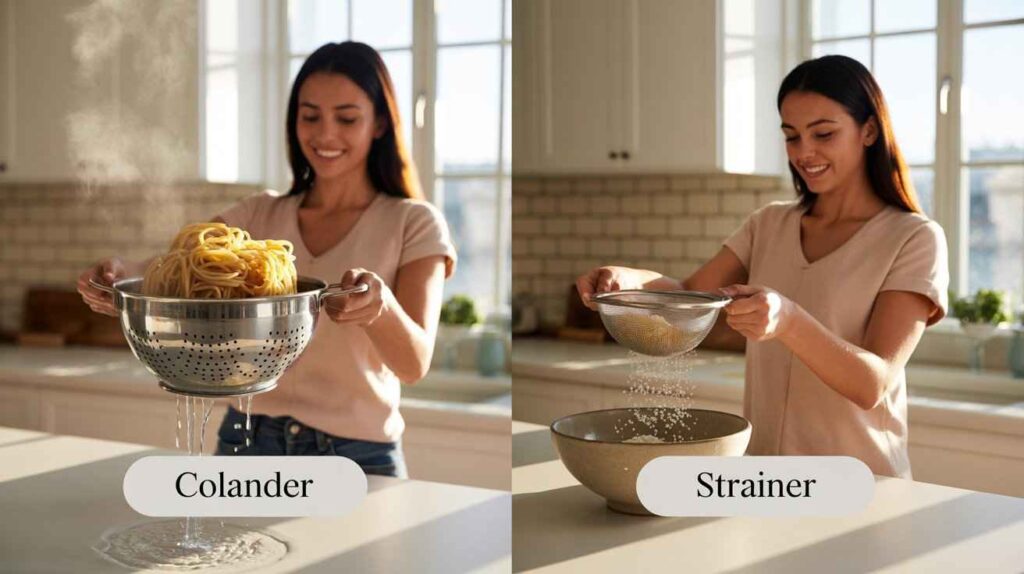
Boiling a pot of spaghetti and reaching for a draining tool often leads to confusion. The water needs to go, but the food has to stay. In another kitchen, someone rinses rice and notices grains slipping away. A sauce is poured, but seeds and pulp don’t separate cleanly. This is where the question around colander vs strainer usually starts, especially when buying kitchen tools online and everything looks similar at first glance.
Both tools remove liquid from food, but they are built for different cooking jobs. One is designed for fast draining of larger ingredients, while the other focuses on controlled filtering of smaller particles and liquids. Their structure, size, and filtering style decide how food behaves during preparation.
A draining basket with wide openings works best when handling pasta, vegetables, or boiled potatoes because water escapes quickly without slowing down cooking. A kitchen strainer or fine mesh version performs better when dealing with rice, tea, sauces, or stocks where precision matters and small particles must stay behind.
This guide explains when to use each tool, key differences, and which one makes more sense for your kitchen.
Table of Contents
What Is a Colander?
A colander is a bowl-shaped kitchen tool designed to drain water from food quickly. It usually has large holes across the bottom and sides, along with sturdy side handles that make it easier to carry hot ingredients from the sink or stovetop. Unlike a fine mesh sieve that filters tiny particles, this draining basket is built for larger foods that need fast water removal without trapping steam.
Most home cooks use it for draining spaghetti, rinsing potatoes, washing lettuce, cleaning berries, or cooling boiled vegetables after cooking. The open hole design allows water to flow out rapidly while keeping heavier ingredients inside the bowl.
When pouring a pot of pasta into a draining bowl, the water escapes within seconds while the noodles stay separated instead of becoming soggy. The wider shape also gives vegetables and fruits more room to rinse evenly under running water.
These kitchen drainers come in stainless steel, plastic, and silicone styles. Stainless steel models are often preferred for hot foods because they handle boiling water better, while collapsible silicone versions fit more easily inside smaller kitchen cabinets.
A large pasta drainer works best when handling bulky ingredients or bigger meal portions, especially compared to smaller mesh strainers that are better suited for rice, sauces, or tea leaves.
What Is a Strainer?
A strainer is a compact kitchen tool used to remove liquid while holding back small food particles and finer ingredients. Most models use tightly woven mesh instead of large drainage holes, which gives better control when working with grains, sauces, broth, or loose particles. Unlike a pasta drainer that handles bulky foods, a mesh sieve focuses on precision filtering and smoother pouring.
Many home cooks use it for washing rice, rinsing quinoa, steeping tea, straining soup stock, or removing seeds and pulp from tomato sauce. The fine screen catches tiny particles while allowing liquid to flow through steadily without spilling ingredients into the sink.
When rinsing uncooked quinoa, a fine mesh basket prevents small grains from slipping away, while a standard draining bowl would leave gaps large enough for grains to escape. The same controlled filtering helps when pouring hot broth into another pot because the mesh catches herbs, bones, or food residue more effectively.
Most kitchen sieves come with a long handle or resting hooks that make pouring easier over bowls and saucepans. Stainless steel versions are often preferred because they resist rust and handle heat better during cooking and baking tasks.
A mesh strainer works best when recipes require cleaner texture, smoother liquid, or more precise filtering than a standard colander can provide.
Colander vs Strainer: Key Differences
Although both tools help remove liquid from food, they are designed for different kitchen tasks. A pasta drainer handles larger ingredients and heavy water flow, while a mesh sieve gives better control when working with smaller particles, grains, or sauces.
| Factor | Colander | Strainer |
|---|---|---|
| Hole Size | Large drainage holes | Fine mesh or tiny perforations |
| Best Food Type | Pasta, vegetables, potatoes | Rice, quinoa, tea, sauces |
| Filtering Precision | Lower | Higher |
| Capacity | Larger bowl design | Smaller filtering basket |
| Draining Speed | Faster for bulky foods | Slower but more controlled |
| Pouring Control | Less precise | Better for liquids and fine ingredients |
Hole Size
A draining bowl uses wider holes that release water quickly, while a kitchen sieve relies on tighter mesh to catch smaller food particles. This difference matters when rinsing grains or filtering liquid-based recipes.
When washing quinoa or rice, a fine mesh filter prevents ingredients from slipping into the sink, while larger openings can allow tiny grains to escape.
Food Size
A pasta basket works better with bulky foods like spaghetti, broccoli, boiled potatoes, or leafy greens because it holds larger portions more comfortably. A smaller mesh tool is more suitable for tea leaves, berries, soup stock, or baking ingredients.
Trying to drain heavy pasta in a small sieve can become difficult because the narrow basket fills too quickly and traps steam near the handle.
Precision
A mesh filtering tool gives more control when pouring hot liquids or removing small particles from sauces and broth. A colander focuses more on fast draining instead of smooth filtering.
When making tomato sauce, the fine screen helps separate seeds and pulp while keeping the liquid texture smoother.
Capacity
Most colanders have a deeper bowl shape that can handle family-sized portions of food. Strainers are usually smaller and designed for lighter kitchen tasks or controlled pouring.
Draining a large pot of spaghetti becomes easier with a wider draining basket because the noodles have enough space to release heat and excess water evenly.
Speed
A colander removes water much faster from large ingredients because of its open drainage design. A strainer works more slowly but provides cleaner filtering for delicate foods and liquids.
This difference becomes noticeable when rinsing vegetables compared to straining homemade broth.
Best Use Cases
A colander is usually the better option for pasta, fruits, potatoes, lettuce, and boiled vegetables. A mesh strainer performs better for grains, sauces, tea, stock, and baking preparation.
Most home kitchens benefit from having both tools because each one handles different cooking tasks more efficiently.
Can both replace each other?
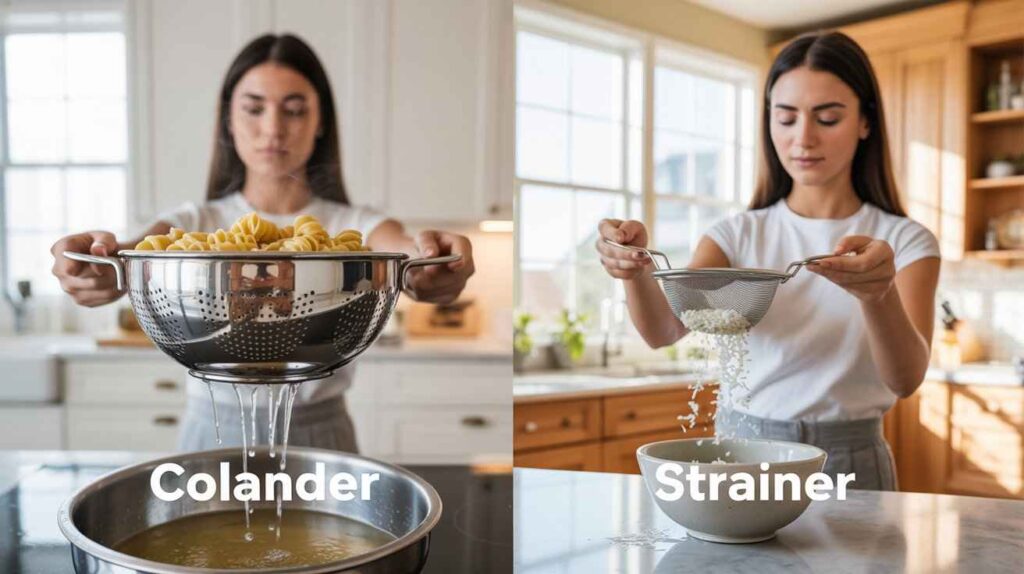
A colander and a fine mesh kitchen sieve share the same goal, removing liquid from food, but they don’t handle it in the same way. One is built for bulk draining, the other for precision filtering. Because of that, replacement works only in certain situations, not across the board.
A mesh strainer can handle small portions of pasta when nothing else is available. It will drain the water, but the smaller bowl fills quickly, and the handle often struggles under heavier food. Steam also builds up faster, which slows down the process and makes it less comfortable to use with large batches.
On the other side, a colander can step in for basic rinsing tasks like washing rice or draining broth, but it cannot stop fine grains or small particles from escaping. When dealing with quinoa, tea leaves, or seed-heavy sauces, the wider holes make it unsuitable for clean filtering.
A pasta strainer works better for quick, lightweight jobs, while a draining basket is built for volume and heat management. Each one can temporarily cover the other’s role, but performance drops when the task moves outside its design.
In a busy kitchen, both tools support different cooking styles. One handles heavy lifting, the other handles precision work.
Which Is Better for Different Kitchen Tasks?
Different cooking jobs need different tools. A draining basket handles volume and heat, while a fine mesh sieve focuses on control and filtration. Choosing the right one changes texture, speed, and even final taste.
Best for Pasta
A colander handles pasta better because it manages large quantity and boiling water easily. The wide bowl shape lets spaghetti, penne, or fusilli drain fast without sticking or steaming inside the pot.
A mesh sieve struggles here since it fills quickly and slows drainage. Pasta can clump, and hot steam stays trapped longer, affecting texture.
Best for Rice
A fine mesh strainer performs better for rice. Small grains pass safely through tight mesh while excess starch washes away cleanly.
A traditional draining bowl allows grains to slip through larger holes, especially with basmati or long-grain varieties, leading to waste and uneven rinsing.
Best for Vegetables
A colander is more suitable for washing lettuce, broccoli, spinach, or potatoes. The open structure gives water full access, helping dirt wash away quickly.
A mesh sieve is slower for leafy greens because water flow is restricted and volume is limited. It works only for small portions.
Best for Sauces
A fine mesh strainer wins for sauces, broth, and stock. It removes seeds, pulp, and herbs while keeping liquid smooth and clean.
A colander cannot separate fine particles, so sauces come out cloudy or textured instead of refined.
Best for Baking
A mesh sieve is the clear choice for baking tasks like sifting flour, cocoa powder, or powdered sugar. It breaks clumps and creates a lighter texture for batter and dough.
A draining basket has no role here since its large holes cannot filter fine dry ingredients properly.
A colander dominates when food is bulky, hot, and needs fast draining. A mesh strainer takes over when precision, smooth texture, or small particles matter.
Using the wrong tool doesn’t just slow cooking—it changes the final result of the dish.
Which One Should You Buy First?
Choosing between a colander and a fine mesh sieve depends on how you cook daily. Both serve different roles, so the better first purchase changes with kitchen habits and cooking style.
Beginner Cooks
A draining basket is the better starting point. It handles everyday tasks like boiling pasta, washing vegetables, and draining potatoes without much technique. It is forgiving, fast, and works for most basic meals.
A mesh sieve becomes more useful later when cooking becomes more detailed and recipes require cleaner textures or ingredient control.
Small Kitchens
A mesh sieve fits better when storage space is limited. It takes less room and can handle multiple light tasks like rinsing grains, straining tea, or filtering small portions of food.
A full-size draining bowl is bulkier and harder to store, especially in compact cabinets.
Frequent Cooks
Having a colander first makes more sense for people who cook daily meals in larger quantities. It speeds up prep work, especially for pasta, boiled vegetables, and family-sized portions.
A mesh sieve can be added later to handle precision tasks that the larger tool cannot manage cleanly.
Pasta Lovers
A draining basket is the clear first choice. Pasta cooking relies heavily on fast water removal, and a wide bowl design handles boiling water and heavy portions better than a fine mesh tool.
A sieve becomes secondary unless sauces or broth-based recipes are part of the routine.
Bakers
A fine mesh sieve should come first. Baking depends on smooth dry ingredients, and sifting flour, cocoa, or powdered sugar directly affects texture and consistency.
A colander adds little value here since it is not designed for dry ingredient control.
A colander fits better for heavy cooking, large portions, and fast draining. A mesh sieve fits better for precision work, small ingredients, and smooth textures.
The first purchase should match the type of meals made most often in the kitchen.
Common Mistakes People Make with both
Most kitchen problems with draining tools come from using the wrong design for the wrong food. A simple mismatch changes texture, safety, and even how much food gets wasted.
Using wide-hole draining bowl for rice or quinoa
Small grains slip straight through the openings, leaving half the portion behind in the sink. Rinsing becomes messy, and the texture turns uneven because starch is not removed properly.
Using a mesh sieve for heavy ingredients
A fine screen is not built for bulk foods like boiled potatoes or pasta. The weight puts pressure on the handle and frame, making it hard to hold steady. Water drains slowly, and food starts steaming inside instead of releasing heat properly.
Choosing cheap plastic that bends under heat
Low-quality plastic softens when exposed to boiling water. Over time it warps, loses shape, and becomes unstable on bowls or sinks. Hot liquids can also create a safety issue during draining.
Ignoring handle comfort and grip
Thin or poorly designed handles make it difficult to control hot ingredients. When draining pasta or lifting a sieve full of broth, weak grip increases the risk of spills and burns.
Picking tools that are too small
Small capacity leads to repeated batches. Pasta overflows, vegetables stack unevenly, and water flow slows down. Cooking becomes slower and less efficient.
Using fine mesh for large food loads
A mesh strainer fills up quickly when overloaded with food. This causes clogging, slower drainage, and strain on the frame. The result is uneven washing and longer prep time.
Outcome of These Mistakes
Food loss through holes, unstable handling, slow draining, and steam buildup are the most common results. Instead of improving cooking flow, the wrong choice interrupts it and affects final texture.
Conclusion
The real difference between a colander and a strainer comes down to how food behaves during cooking. One is built for speed and volume, handling heavy ingredients like pasta and vegetables without slowing the process. The other focuses on control, keeping small grains, sauces, and fine textures clean and consistent.
Instead of choosing one over the other, the smarter approach is matching the tool to the task. Large meals, boiling water, and bulky foods need a wide draining bowl. Delicate ingredients, grains, and liquids that need clarity depend on a fine mesh kitchen sieve.
A well-prepared kitchen usually includes both, not as extras, but as basic essentials that support different cooking styles. When used correctly together, they make everyday cooking smoother, faster, and more precise.
For a complete kitchen setup, it also helps to explore related guides on pasta strainers, fine mesh tools, and essential kitchen utensils that fill the gaps between everyday cooking tasks.
Faqs
Is a colander the same as a strainer?
No, they are not the same tool. A colander is built for draining large foods quickly, while a strainer is designed for filtering finer particles and liquids.
A colander uses bigger holes for fast water flow, while a strainer relies on fine mesh for control and precision.
Draining pasta works best in a colander, while filtering broth or tea needs a strainer.
Can you wash rice in a colander?
Not reliably, because grains can slip through the openings. It is not designed for small particles.
The structure works better for bulky foods, not fine grains like rice or quinoa.
Rice rinsing is smoother and safer with a fine mesh strainer where grains stay inside while water flows out.
Why do strainers have fine mesh?
They are made with fine mesh to catch small particles while allowing liquid to pass through smoothly.
This design gives better control when working with liquids, sauces, or tiny ingredients.
Straining soup stock or removing seeds from tomato sauce requires that level of precision.
What is the best tool for draining pasta?
A colander is the best option for draining pasta because it handles large portions and hot water efficiently.
Its wide bowl design allows fast drainage without trapping steam inside.
Freshly boiled spaghetti drains evenly without sticking when poured into a colander.
Do I need both a colander and a strainer?
Yes, both are useful because they serve different kitchen tasks.
One handles bulk draining, while the other manages fine filtering and small ingredients.
A complete kitchen setup usually includes both for pasta, vegetables, rice, sauces, and baking tasks.
Which material lasts the longest?
Stainless steel lasts the longest compared to plastic or silicone.
It resists heat, does not warp, and handles heavy use without losing shape.
Hot pasta water and boiling stock are easier to manage in a stainless steel tool without damage over time.
What do Americans call colanders?
Americans simply call them colanders, and the term is widely used in kitchens and stores.
The name is standard across cooking tools used for draining pasta, vegetables, and other foods.
In most U.S. kitchens, “colander” refers to the same bowl-shaped draining tool with large holes used for

Hi, I’m Muhammad Din. I test and compare kitchen tools in my own kitchen before I ever recommend them — if it’s in a guide on HomePlora, I’ve used it or dug deep enough to know exactly where it holds up and where it doesn’t. My goal is simple: help you find tools that actually earn a spot in your kitchen, without wasting money on ones that don’t.