
Introduction
A new mortar and pestle often feels dusty, rough, and unreliable when you first try to use it. The first grind can easily ruin spices with a gritty texture and weak flavor because of leftover stone particles from manufacturing. This is a common problem many home cooks face but don’t fully understand.
If you are wondering how to season a mortar and pestle, the process is simple but essential. Proper seasoning removes stone dust, smooths the inner surface, and prepares it for safe, flavourful grinding. In this guide, you will learn exactly how to season it the right way so your spices, herbs, and pastes come out clean, smooth, and full of natural aroma every time.
Table of Contents
What Does “Seasoning a Mortar and Pestle” Actually Mean?
Seasoning a mortar and pestle is the process of preparing a new tool for safe and effective use by removing loose stone particles, smoothing the grinding surface, and conditioning the interior before it comes into contact with food.
Many people think seasoning simply means cleaning a mortar and pestle, but the two are different. Cleaning removes visible dirt, while seasoning helps remove microscopic stone dust left behind during manufacturing. If these tiny particles remain, they can mix into spices, herbs, and sauces, creating an unpleasant gritty texture.
During seasoning, ingredients such as rice, salt, or garlic are ground against the surface. This process gradually smooths rough areas inside the bowl and pestle, reducing loose particles that could end up in your food. It also helps fill and condition some of the natural pores found in stone mortars, making them better suited for grinding ingredients consistently.
Another benefit of seasoning is flavor protection. A properly seasoned mortar and pestle is less likely to transfer unwanted dust, odors, or residue into fresh ingredients. As a result, spices release their natural oils more cleanly, and pastes, marinades, and spice blends develop a purer flavor.
A simple way to think about seasoning is that it is similar to breaking in a new cast-iron pan. Before a pan performs at its best, it needs preparation. The same is true for a mortar and pestle. Taking the time to season it properly creates a smoother grinding surface, improves performance, and helps ensure better-tasting results every time you cook.
Why Seasoning Your Mortar and Pestle Matters Before First Use
Seasoning a new mortar and pestle is not just a recommended step—it is an important part of preparing many stone tools for cooking. A new granite, basalt, or volcanic stone mortar often contains tiny stone particles and rough surfaces left behind during manufacturing. If you use it immediately, those particles can affect both the texture and flavour of your food.
One common problem is a gritty texture in food. When loose stone dust mixes with spices, herbs, or sauces, it can leave behind an unpleasant sandy feel. This is especially noticeable in smooth preparations such as curry pastes, pesto, guacamole, and spice blends.
Another issue is ruined spice aroma. Fresh spices release delicate essential oils when crushed. If stone dust and residue are present, they can interfere with those natural flavors and aromas, making the final result less vibrant than it should be.
A new mortar and pestle can also create uneven grinding force. Rough spots inside the bowl cause ingredients to grind inconsistently, making it harder to achieve a smooth paste or evenly crushed spices. Seasoning helps smooth these areas so the pestle moves more naturally and efficiently.
Most people think seasoning is optional—but it’s not for stone tools. Proper seasoning removes loose particles, improves grinding performance, and helps protect the true flavor of your ingredients. In my experience, taking a little time to season a new mortar and pestle before first use leads to better results from the very first recipe.
How to Season a Mortar and Pestle
Seasoning a mortar and pestle is best viewed as a preparation process rather than a quick cleaning task. The goal is to remove loose stone particles, smooth the grinding surface, and prepare the tool for years of cooking. Use the following method to prepare your mortar and pestle properly for long-term use.
Step 1: Dry Grind Rice to Remove Stone Dust
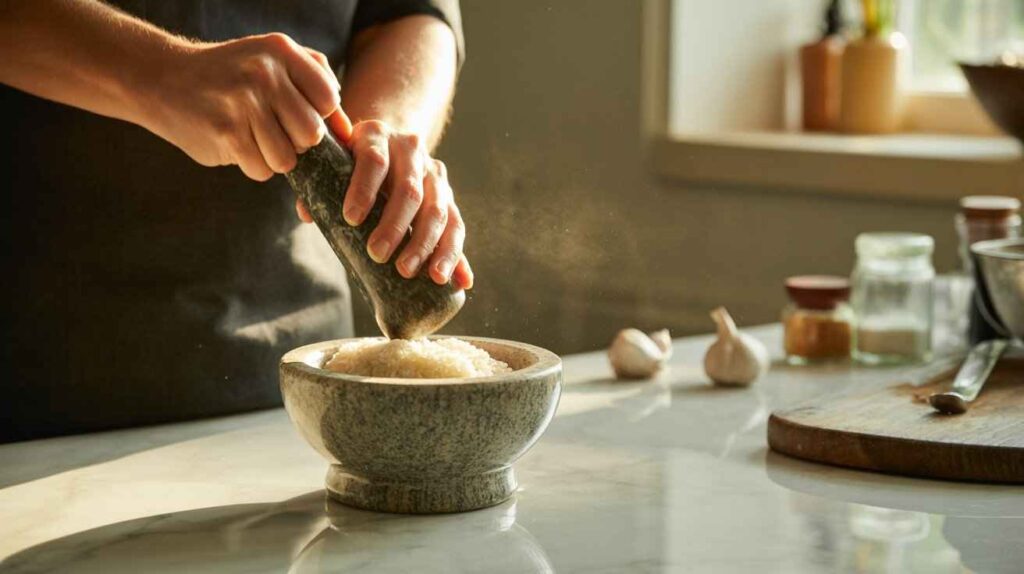
Start by adding a handful of uncooked white rice to the mortar. Grind it firmly against the bottom and sides until it turns into a powder.
Rice works well because it is hard enough to act as a natural abrasive while also trapping loose stone dust and grit. As you grind, you may notice the rice powder turning gray or off-white. This discoloration shows that particles are being removed from the surface.
Discard the rice and repeat the process until the powder remains mostly white. For most new granite mortars, this takes two to four rounds.
Step 2: Use Coarse Salt for Deeper Cleaning
After the rice test, add a small amount of coarse salt and grind it around the bowl.
Coarse salt helps clean deeper grooves and rough spots that rice may not fully reach. Its larger crystals provide extra scrubbing power, helping remove remaining residue from the manufacturing process. Fine table salt is less effective because it breaks down too quickly during grinding.
Work the salt across the entire interior surface, then discard it when finished.
Step 3: Condition the Surface with Garlic and Spices
Next, add a few peeled garlic cloves along with a small amount of spices such as cumin, peppercorns, or coriander seeds. Grind them into a thick paste.
This stage does more than add aroma. Garlic and spices help pull out any lingering dust while naturally conditioning the grinding surface for food preparation. Think of it as the final transition from a raw stone tool to a kitchen-ready mortar and pestle.
As someone who regularly uses granite mortars for spice blends and curry pastes, I consider this one of the most important parts of the process. Don’t rush this stage—it often determines how well the mortar performs for years to come.
Step 4: Rinse and Air Dry Completely
Discard the garlic paste and rinse the mortar and pestle thoroughly with warm water. Avoid using soap unless the manufacturer’s instructions specifically recommend it.
Natural stone can absorb soap residue, which may later affect the flavor of spices, herbs, and other ingredients. A thorough water rinse is usually all that is needed after seasoning.
Allow the mortar and pestle to air dry completely before storing or using it. Once dry, it is ready for everything from crushed spices and garlic to pesto, salsa, and curry pastes.
Do All Mortar and Pestle Types Need Seasoning?
No, not every mortar and pestle requires the same level of seasoning. Whether you need to season it depends mainly on the material and how porous the surface feels. As a general rule, rougher materials need more preparation, while smoother materials need very little or none at all.
Granite Mortar and Pestle (Seasoning Is Essential)
Granite is one of the most popular materials for mortar and pestles because its textured surface grinds spices efficiently. However, new granite mortars often contain loose stone particles and manufacturing dust. Proper seasoning is necessary to remove this residue, smooth the surface, and prevent grit from getting into food.
Marble Mortar and Pestle (Light Seasoning Recommended)
Marble is smoother and less porous than granite, so it usually does not require extensive seasoning. However, a light seasoning process can still help remove surface dust and prepare the mortar for food use. One or two rounds of rice grinding are often enough.
Ceramic Mortar and Pestle (Usually Optional)
Most glazed ceramic mortar and pestle sets have a smooth, non-porous surface that does not require traditional seasoning. A thorough wash and rinse are often sufficient. However, unglazed ceramic models may benefit from light seasoning to remove any remaining manufacturing residue.
Wooden Mortar and Pestle (Condition Rather Than Season)
Wooden mortar and pestle sets do not need stone-style seasoning. Instead, they benefit from proper conditioning and maintenance. Keeping the wood clean, dry, and occasionally treated according to the manufacturer’s recommendations helps protect the surface and extend its lifespan.
If you’re unsure whether your mortar and pestle needs seasoning, use this simple rule: If it feels porous or gritty, treat it as stone and season it. In my experience, spending a few extra minutes seasoning a questionable surface is far better than discovering stone dust or rough particles in your finished food.
How to Check If Your Mortar and Pestle Has Been Seasoned Correctly
A properly seasoned mortar and pestle should feel clean, smooth, and ready to grind food without releasing dust or grit. Instead of guessing, use these three simple tests to confirm that the seasoning process is complete.
1. Rice Stays White Test
Grind a small amount of raw white rice in the mortar. If the ground rice stays mostly white, it means most loose stone particles have been cleared. If the powder turns gray or contains visible dark specks, the mortar needs additional seasoning.
2. Finger Rub Smoothness Test
Run your clean fingers across the inside surface of the mortar. It should feel slightly textured but not rough, sandy, or dusty. If you notice loose grit on your fingertips, repeat the seasoning process until the surface feels smoother and more consistent.
3. Water Rinse Clarity Test
Rinse the mortar with clean water and pour the water out. The water should look clear, with little to no visible stone residue. Cloudy water or sediment at the bottom may indicate that fine particles are still being released from the surface.
In my experience working in a kitchen, a mortar and pestle is ready for use when the rice stays white, the surface feels smooth to the touch, and the rinse water runs clear. If all three tests pass, you can confidently start grinding spices, herbs, garlic, and other ingredients without worrying about unwanted grit affecting flavour or texture.
Mistakes to Avoid While Seasoning a Mortar and Pestle
Most seasoning failures don’t happen because the process is difficult—they happen because small mistakes damage the stone surface or leave hidden residue behind. If you avoid these common errors, your mortar and pestle will perform better and last longer.
Soap Too Early → Ruins Pore Conditioning
One of the most damaging mistakes is washing a new mortar and pestle with soap before seasoning is complete. Stone surfaces are slightly porous, and early soap use can settle into these pores and interfere with proper conditioning. This often affects how spices taste later. In most cases, water rinsing is enough during seasoning.
Skipping Rice → Permanent Grit Risk
Rice grinding is not optional for stone mortars. Skipping this step means loose stone particles stay on the surface, which can later mix into food. This is the mistake that ruins most new mortars. Rice acts as a natural abrasive that safely pulls out dust and smooths the inner surface.
Over-Soaking → Material Weakening
Leaving a mortar and pestle submerged in water for too long can weaken certain natural stone structures and may lead to micro-cracks over time. A quick rinse is enough. Stone tools are not designed to be soaked like kitchen bowls.
Wrong Oil Use → Surface Contamination
Some users try to “condition” stone mortars with cooking oil. This is unnecessary and can leave a sticky residue that traps odors and affects future spice grinding. Stone mortars rely on dry conditioning methods like rice, salt, and aromatics—not oil treatments.
Warning
In kitchen use, most seasoning failures come from rushing or adding unnecessary cleaning steps. If you follow the correct dry grinding and rinse method, your mortar will naturally develop a smooth, food-safe surface without damage.
Problems After Seasoning Mortar and Pestle
Even after proper seasoning, some users still notice issues with their mortar and pestle. This doesn’t always mean the process failed—most problems come from incomplete steps or natural stone behavior. Here’s a simple diagnostic guide based on real kitchen use.
Still Gritty → Incomplete Rice Grinding → Repeat Cycle
If you still feel a sandy or gritty texture in food or when rubbing the surface, it usually means the rice grinding stage was not fully completed. Some stone particles are still loose on the surface.
Fix: Repeat the dry rice grinding process until the rice powder stays clean and white. This is the most important step for removing residual grit.
Smell Remains → Weak Aromatic Conditioning → Redo Garlic Stage
A lingering smell, especially from raw stone or previous seasoning ingredients, indicates that the aromatic conditioning step was not strong enough.
Fix: Grind fresh garlic or a mix of garlic and mild spices again. This helps reset the surface and remove trapped odors while improving food readiness.
Uneven Surface → Natural Stone Variation → Normal Condition
If parts of the mortar feel slightly rough while others feel smooth, don’t worry. This is common in natural stone tools like granite or volcanic rock.
Fix: No repair is needed. Continue normal use—the surface naturally becomes smoother over time with regular grinding.
Note
In kitchen practice, most post-seasoning issues are not failures—they are signs that one step needs to be repeated or that the stone is still naturally settling. A properly seasoned mortar should feel clean, smooth, and produce no grit when grinding spices or herbs.
How to Clean a Seasoned Mortar and Pestle Properly
Cleaning a seasoned mortar and pestle is different from cleaning regular kitchen utensils. The goal is not to “deep wash” it every time, but to preserve the seasoned surface while removing food residue safely.
Water-Only Cleaning Is the Standard Method
For everyday use, warm water is usually enough. Rinse the mortar immediately after grinding spices or herbs, then use your hand or a soft brush to remove leftover particles. Water alone protects the seasoned layer while keeping the surface food-safe.
When Mild Scrubbing Is Allowed
If food residue is slightly stuck—especially garlic, chili, or oily spice pastes—you can use a soft brush or a non-abrasive scrub. This helps remove particles without damaging the stone surface. Always avoid harsh scrubbing pads, as they can wear down the conditioned layer over time.
Why Soap Should Be Avoided
Soap is not recommended for a seasoned mortar and pestle because natural stone can absorb residues from cleaning agents. This can interfere with the surface conditioning and may later affect the taste of spices and aromatics. In most cases, soap is unnecessary if you clean it immediately after use.
Rule for Long-Term Care
Think of seasoning like seasoning a cast iron pan — not a dirty bowl. You are not trying to strip it clean every time; you are maintaining a protective, functional surface that improves with use. Over-cleaning can actually reduce performance, while gentle water-based cleaning preserves its cooking quality.
With proper care, your mortar and pestle will stay smooth, efficient, and ready for everyday spice grinding without losing its seasoned surface.
When Should You Re-Season a Mortar and Pestle?
Re-seasoning a mortar and pestle is not something you do regularly. It is only needed when the surface or performance of the tool starts to change over time. In normal use, a well-seasoned mortar can work for months or even years without re-seasoning.
After Long Storage
If a mortar and pestle has been stored for a long time without use, dust or moisture changes can affect its surface condition. In this case, a light re-seasoning helps refresh the grinding surface and restore smooth performance before cooking again.
Strong Spice Odor Absorption (Turmeric, Garlic, Chili)
Stone mortars can sometimes absorb strong aromas from ingredients like turmeric, garlic, or chili. When these odors linger and affect the flavor of new recipes, it’s a clear sign that re-seasoning is needed. A quick rice and aromatic grinding cycle helps reset the surface.
Surface Becomes Rough Again
With heavy use, especially for hard spices, the inner surface may start feeling slightly rough or less smooth than before. This indicates that the conditioned layer has worn down in certain areas.
You don’t re-season often — only when performance drops. If your mortar is still grinding smoothly, producing clean textures, and not affecting flavor, there is no need to repeat the seasoning process.
Conclusion
Seasoning a mortar and pestle transforms it from a rough, dust-prone stone tool into a smooth, food-ready kitchen essential. Once fully seasoned, it provides smoother grinding, improved spice aroma release, and a fine, grit-free texture in every use.
The real benefit is performance—your spices, herbs, and pastes taste more authentic because the surface no longer interferes with their natural oils and aroma. Over time, the tool becomes easier to use and more efficient with every cooking session.
In the long run, proper seasoning is not just preparation—it is protection. It extends the life of the mortar and ensures it performs at a professional level every time you cook. Simply put, seasoning turns a raw stone tool into a lifetime kitchen instrument.
Faqs
How long does seasoning take?
It usually takes 20–40 minutes spread across a few cycles. Most mortars need 2–4 rounds of grinding and rinsing for proper seasoning. The exact time depends on the material and surface roughness.
Does seasoning improve grinding performance?
Yes, seasoning makes grinding smoother and more efficient. It removes rough particles and creates a better contact surface for spices and herbs.
Can you use a mortar and pestle without seasoning it?
You can, but it is not recommended for stone mortars. Unseasoned surfaces may release grit and affect the taste and texture of food.
Why use garlic to season a mortar and pestle?
Garlic helps remove lingering dust while conditioning the surface naturally. It also reduces odors and prepares the mortar for real cooking use.
Can you use soap to clean a new mortar and pestle?
It is generally not recommended for stone mortars. Soap can absorb into porous surfaces and affect the flavour of future ingredients.

Hi, I’m Muhammad Din. I test and compare kitchen tools in my own kitchen before I ever recommend them — if it’s in a guide on HomePlora, I’ve used it or dug deep enough to know exactly where it holds up and where it doesn’t. My goal is simple: help you find tools that actually earn a spot in your kitchen, without wasting money on ones that don’t.