
Introduction
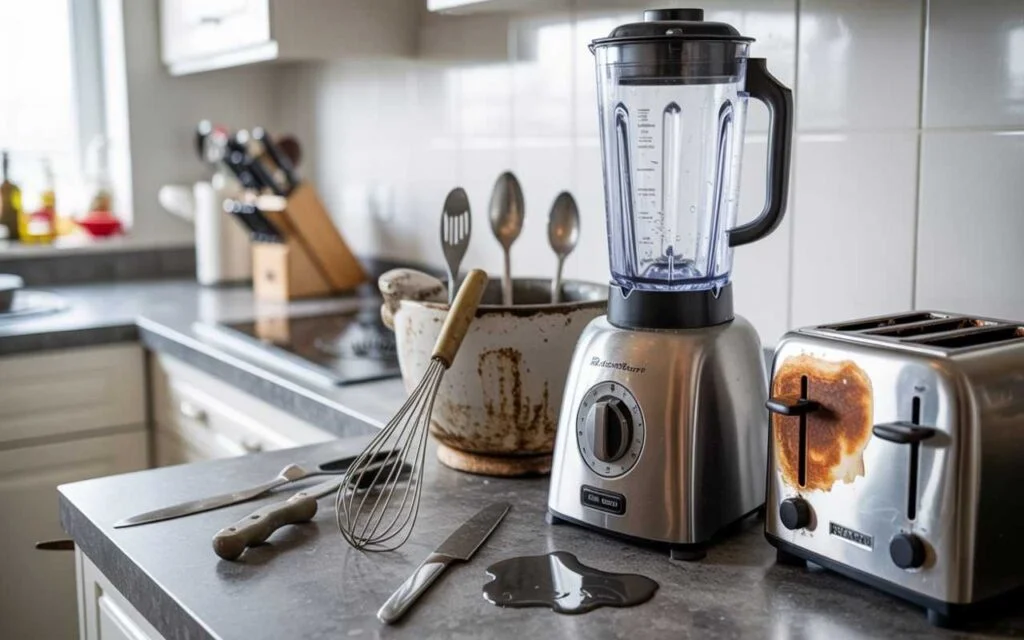
Common problems in kitchen tools don’t just slow down your cooking — they quietly cost you money, waste your time, and can even put your safety at risk. Whether it’s a blender that suddenly leaks, a knife that won’t hold its edge, or a food processor that simply stops spinning mid-recipe, these frustrations happen to every home cook.
But here’s what most guides don’t tell you: most kitchen tool problems are 100% preventable. The root causes almost always come down to three things — improper use, poor storage, or skipped maintenance. Once you understand why tools fail, fixing them (and stopping them from failing again) becomes straightforward.
In guide, I’ve broken down every major category of kitchen tool problems with real, tested solutions — not generic advice. Whether you’re troubleshooting a specific appliance or doing a full kitchen audit, this guide gives you actionable steps you can use today.
Table of Contents
1. Organizational & Storage Problems That Damage Kitchen Tools
Poor storage is the silent killer of kitchen tools. Most people don’t realise their tools are degrading until it’s too late — blades are already nicked, handles cracked, and non-stick coatings scratched beyond repair.
The Most Common Storage Mistakes
Tossing everything into one drawer is the first mistake. When knives, graters, and peelers rattle together, they grind against each other with every open and close. A sharp knife stored loose in a drawer loses its edge within weeks.
Stacking non-stick pans without protection is equally damaging. The hard bottom of one pan scratches the coating of the one below it — and once non-stick coating is scratched, it cannot be restored.
Storing tools while still damp creates rust on metal tools and warps wooden handles over time. This is especially common with wooden spoons and cutting boards left near the sink.
The Right Storage Solutions
| Tool Type | Best Storage Method |
|---|---|
| Kitchen knives | Magnetic wall strip or knife block |
| Non-stick pans | Felt pan dividers between each pan |
| Utensils (spoons, spatulas) | Upright utensil crock near the stove |
| Graters & zesters | Individual sleeve guards or a dedicated drawer slot |
| Cutting boards | Vertical slot organizer — never flat stacked |
| Small appliances | Pull-out cabinet shelf at counter height |
Pro Tip: Label your drawer sections with masking tape during reorganization. It sounds silly, but it trains every household member to return tools to the right spot — reducing damage from careless tossing.
2. Functional Issues with Utensils and Gadgets
Not all kitchen tool problems are mechanical. A surprising number come from buying the wrong tool for the job, or from tools that simply weren’t built well enough to last.
Signs a Utensil Has Functional Problems
- A can opener that slips off the rim instead of cutting cleanly
- A peeler that tears instead of gliding through skin
- A whisk where the wires spread apart during use
- A spatula that bends when flipping heavy items
Why Cheap Gadgets Fail Faster
Low-quality kitchen gadgets are built with thinner metal gauges, weaker rivets, and plastic joins that crack under heat or pressure. A $4 box grater will dull after a few uses because the holes are stamped (punched through metal) rather than etched — creating dull, ragged edges instead of sharp ones.
The fix isn’t always to spend more money. It’s to buy fewer, better tools. A set of three high-quality knives outperforms a block of twelve mediocre ones. The same principle applies to every tool in your kitchen.
What to Keep vs. What to Toss
Keep any tool that:
- You use at least once per week
- Performs its job without frustration
- Is made from stainless steel, cast iron, or high-grade silicone
Replace immediately if:
- Rust has penetrated deeper than the surface
- Handles are cracked or loose (safety risk)
- Non-stick coating is flaking (health risk)
- The tool requires twice the effort it should
3. Functional Problems with Manual Kitchen Tools
Manual tools are the workhorses of any kitchen — but they develop very specific, fixable problems that most cooks either ignore or replace instead of repair.
Knives: The Most Common Kitchen Tool Problem
Problem: Blade goes dull quickly Cause: Cutting on glass, ceramic, or marble surfaces; improper storage; skipping honing. Fix: Hone your knife with a honing rod before every third or fourth use. Sharpen with a whetstone every 3–6 months depending on frequency of use. Always cut on wood or plastic boards.
Problem: Knife chips or develops micro-serrations Cause: Hitting bones, frozen food, or the hard edge of a pan. Fix: A whetstone can remove minor chips. Severe chips need professional sharpening.
Problem: Handle becomes loose Cause: Washing in the dishwasher repeatedly or soaking in water. Fix: For riveted handles, a professional can re-rivet. For bolted handles, tighten the screw. Prevention: always hand-wash knives and dry immediately.
Box Graters & Microplane Zesters
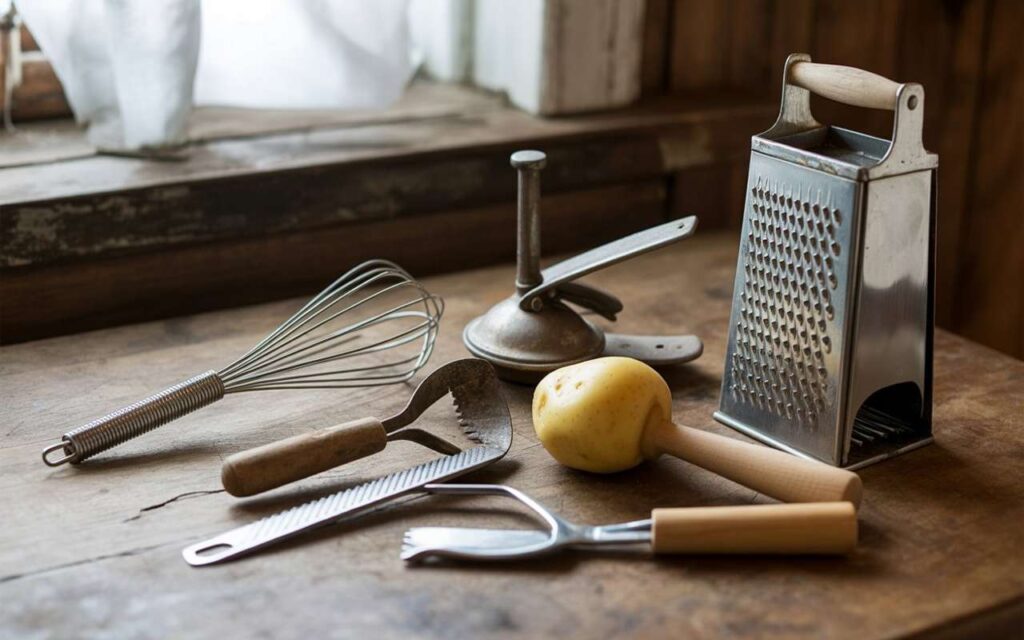
Problem: Grating requires too much pressure, tears food Cause: Dull grating surface from normal wear or dishwasher damage. Fix: Microplane graters can be resharpened lightly with fine-grit sandpaper pulled in one direction. Box graters are inexpensive — replace when dull.
Problem: Food gets stuck in holes Cause: Soft, high-moisture foods (mozzarella, zucchini) clog the holes immediately. Fix: Freeze soft cheese for 15 minutes before grating. For vegetables, salt and drain excess moisture first.
Whisks, Spatulas, and Ladles
Problem: Whisk wires spread apart or break Cause: Using the whisk as a stirring spoon or pressing too hard on the sides of a bowl. Fix: Bend wires back gently with pliers for minor spreading. Replace if a wire has snapped — loose metal in food is a safety hazard.
Problem: Silicone spatula melts or warps Cause: Leaving the spatula resting against a hot pan or using it in temperatures above its rated limit. Fix: Check the heat rating on your spatula (quality ones handle 450°F/230°C+). Replace any warped spatula — degraded silicone can release compounds into food.
Problem: Wooden handle cracks Cause: Soaking in water, washing in dishwasher, or drying with heat. Fix: Rub food-safe mineral oil into dry or cracked wooden handles. Let it absorb overnight. This is also excellent preventive maintenance — do it every 2–3 months.
4. Maintenance and Cleaning Challenges
Improper cleaning causes more kitchen tool damage than actual use. Here’s what most guides get wrong — and what actually works.
The Dishwasher Myth
Many tools labelled “dishwasher safe” technically survive the dishwasher but degrade significantly faster than hand-washed equivalents. The combination of high heat, harsh detergent, and prolonged moisture damages:
- Knife edges — dulls them 3–5x faster than hand washing
- Non-stick coatings — breaks down bonding agents
- Wooden handles — causes cracking and swelling
- Carbon steel and cast iron — causes immediate rust
Rule of thumb: If it’s a tool you care about, hand-wash it.
Natural Cleaning Solutions That Actually Work
| Problem | Natural Fix |
|---|---|
| Rust spots on stainless steel | Paste of baking soda + water, scrub with soft cloth |
| Garlic/onion smell on knives | Rub cut lemon over the blade, rinse |
| Mineral deposits on pots | Boil equal parts water and white vinegar for 10 minutes |
| Greasy cast iron | Coarse salt + paper towel scrub (no soap) |
| Stained plastic utensils | Soak in diluted hydrogen peroxide for 30 minutes |
| Clogged blender blades | Fill halfway with warm water + drop of dish soap, run for 30 seconds |
Preventing Rust Before It Starts
- Rust doesn’t appear overnight — it builds from repeated exposure to moisture. Your prevention checklist:
- Never store tools in a damp dish rack for hours
- Dry all metal tools immediately after washing (don’t air-dry)
- Store in a low-humidity drawer or hang on a wall rack
- Apply a thin coat of mineral oil to carbon steel and cast iron tools monthly
5. Common Problems with Small Kitchen Appliances
Small kitchen appliances account for the majority of kitchen tool frustration — and most problems have simple fixes that don’t require a technician.
Blenders
Problem: Blender leaks from the base Cause: Worn gasket seal, over-tightened blade assembly, or hairline crack in the jar. Fix: Replace the rubber gasket (costs $3–8, available for most brands). Do not over-tighten the blade assembly — hand-tight is enough. Check the jar for cracks by filling with water before adding ingredients.
Problem: Blender won’t start Cause: Safety lock not engaged, overheated motor, or tripped thermal fuse. Fix: Ensure the jar is fully locked onto the base. Let it rest 15–20 minutes if overheated. Check that the plug and outlet are working. If the thermal fuse has tripped, it may reset automatically after cooling.
Problem: Blender shakes violently Cause: Uneven ingredient distribution, ice chunks too large, or worn blade assembly. Fix: Always add liquid first, then soft ingredients, then ice. Cut frozen items into smaller pieces. If shaking persists, check blade assembly for wobble.
Food Processors
Problem: Food processor won’t spin Cause: Lid not fully locked, overloaded bowl, or worn drive coupling. Fix: Remove some contents — food processors shouldn’t exceed 2/3 full for dense foods. Check that the lid is locked at every contact point. If the drive coupling is stripped, replacement parts cost $10–20 for most brands.
Problem: Uneven chopping results Cause: Overloading, wrong blade, or too much liquid in the bowl. Fix: Process in smaller batches. Use the correct blade (S-blade for chopping, disc blade for slicing). Remove excess liquid before processing.
Stand Mixers & Hand Mixers
Problem: Mixer overheats and shuts off Cause: Mixing very dense dough (bread, thick cookie dough) beyond recommended time. Fix: Let the mixer cool 10–15 minutes before resuming. When kneading bread dough, run the mixer for 2 minutes, then allow it to rest for 1 minute before continuing. Never exceed the manufacturer’s recommended dough capacity.
Problem: Mixer makes grinding or rattling noise Cause: Loose attachment, worn gear, or debris inside the housing. Fix: Tighten the attachment. If the grinding noise continues, the planetary gears may require lubrication, which is typically a maintenance task best handled by a qualified technician for stand mixers. Never ignore grinding sounds — they worsen quickly.
Coffee Makers & Kettles
Problem: Coffee maker brews weak or slow Cause: Mineral scale buildup in the water lines. Fix: Run a descaling cycle with equal parts white vinegar and water, followed by two full cycles of plain water.
Problem: Kettle has white residue on the inside Cause: Hard water mineral deposits (limescale). Fix: Fill with equal parts water and white vinegar, boil, let sit 30 minutes, then rinse thoroughly.
6. General Kitchen Environment Problems Affecting Tools
Your kitchen environment is working against your tools every single day — and most people never address it.
Humidity and Moisture Damage
Kitchens are naturally humid environments. Steam from boiling, moisture from the sink, and condensation from refrigerators all contribute to a damp atmosphere that accelerates:
- Rust on metal tools
- Warping of wooden boards and handles
- Mold growth on silicone seals
- Corrosion on appliance contacts and plugs
Fix: Install a kitchen range hood and run it during all cooking — not just when things get smoky. Wipe down counters and tool storage areas at the end of each cooking session.
Grease Buildup
Airborne grease from cooking settles on every surface, including tool handles, appliance controls, and drawer interiors. Over time it:
- Makes handles slippery and unsafe
- Gums up appliance buttons and knobs
- Attracts dust and bacteria into tool storage
Fix: Monthly wipe-down of all appliance exteriors and drawer interiors with a degreasing spray. Pay special attention to tools stored near the stove.
Poor Ventilation
Without proper airflow, your kitchen retains heat, steam, and grease particles — all of which degrade tools faster. If you don’t have a range hood, even opening a window during cooking makes a measurable difference.
7. Safety-Related Kitchen Tool Problems
This is critical. Damaged kitchen tools don’t just frustrate you — they can seriously injure you.
Never Ignore These Warning Signs
- Frayed or cracked electrical cords — Unplug immediately. A frayed cord is an electrocution and fire risk. Replace the appliance or have the cord professionally replaced.
- Loose knife handles — A handle that wobbles means the blade can torque unexpectedly during use. This is a common cause of serious cutting injuries. Repair or replace before using again.
- Flaking non-stick coating — PTFE-based coatings (Teflon) that flake are ingested with food. Replace any non-stick pan with visible coating damage.
- Rust on cooking surfaces — Surface rust on cast iron can be removed and re-seasoned. But rust inside appliances (like a waffle iron or sandwich press) means moisture has penetrated — use with caution and replace if rust is extensive.
- Appliances that spark or smell like burning — Unplug immediately, do not use again. Have inspected by a professional or replace.
Safe Storage Practices
- Store heavy appliances at waist height — never above shoulder level
- Use knife blocks or magnetic strips — never loose in drawers
- Keep electrical cords away from water sources and heat
- Store sharp tools out of reach of children (locked drawer or high shelf)
8. DIY Fixes, Prevention Tips, and Real Solutions
Your Essential Kitchen Tool Repair Kit
Keep this simple kit in a kitchen drawer:
- Food-safe epoxy — for reattaching handles
- Fine-grit sandpaper (400 grit) — for smoothing rough edges on graters and wooden handles
- Food-grade mineral oil — for conditioning wood and preventing rust on carbon steel
- Replacement gaskets — buy a set for your blender model
- Screwdrivers (flat + Phillips) — for tightening handles and appliance panels
- Replacement silicone rings — for pressure cooker seals
The 10-Minute Monthly Kitchen Tool Audit
Once a month, spend 10 minutes going through your tools with this checklist:
- Check all knife handles for looseness
- Test non-stick pans for coating damage
- Check electrical cords regularly for signs of wear, such as fraying, splitting, or cracks
- Check silicone seals on pressure cookers and blenders
- Oil any wooden handles that feel dry
- Test all appliance functions briefly
- Clear out any tools that are broken or unused
This 10-minute habit prevents 90% of the tool failures and surprises that derail your cooking.
Extending Tool Lifespan: The Simple Rules
- Match tool to task — Don’t use a paring knife to split a squash. Don’t blend hot soup in a cold blender jar.
- Read the heat limits — Every silicone, plastic, and non-stick tool has a maximum temperature. Exceeding it shortens its life dramatically.
- Dry before storing — The single most impactful habit for preventing rust and warping.
- Sharpen proactively — Sharpen knives before they feel dull, not after. Preventive sharpening removes far less metal and takes less time.
- Clean immediately — Food residue hardens within hours. A quick 30-second rinse immediately after use can prevent 10 minutes of hard scrubbing later.
9. Tool-by-Tool Problem Reference Guide
A quick-reference table for the most common kitchen tool problems and their solutions:
| Tool | Common Problem | Quick Fix | Prevention |
|---|---|---|---|
| Chef’s Knife | Dull blade | Hone before use, sharpen quarterly | Store on magnetic strip, cut on wood only |
| Blender | Leaks from base | Replace gasket seal | Don’t overfill, add liquid first |
| Food Processor | Won’t start | Check lid lock, clear overload | Fill max 2/3 capacity |
| Non-stick Pan | Coating flakes | Replace pan immediately | Hand-wash, use silicone/wood utensils only |
| Cast Iron Skillet | Surface rust | Scrub with salt, re-season | Dry completely, apply oil after every wash |
| Stand Mixer | Overheats | Rest 15 min, reduce batch size | Stay within dough capacity limits |
| Wooden Cutting Board | Cracks/warps | Sand smooth, oil deeply | Oil monthly, never soak or dishwash |
| Box Grater | Too slow/tearing | Replace (inexpensive) | Hand-wash, don’t use on dishwasher |
| Peeler | Tears skin | Replace blade or peeler | Rinse immediately after use |
| Silicone Spatula | Melts/warps | Replace immediately | Check heat rating before purchase |
| Coffee Maker | Slow/weak brew | Run vinegar descale cycle | Descale every 1–3 months |
| Pressure Cooker | Seal leaks | Replace silicone ring | Inspect ring before every use |
Conclusion
Understanding the common problems in kitchen tools is more than a troubleshooting skill — it’s a way to protect your investment, cook with more confidence, and keep your kitchen running safely for years.
The pattern is consistent across every tool: most problems come from a few fixable habits — storing tools damp, skipping maintenance, using the wrong tool for the job, or ignoring early warning signs. Address those habits and most kitchen tool problems disappear on their own.
Start with the 10-minute monthly audit from Section 8. It takes less time than washing a single pot, but it will save you from the frustration of tools failing at the worst possible moment. A little consistent care today means reliable, high-performing tools every time you cook.
Faqs
What are the things you must consider before using kitchen tools?
Before using any kitchen tool, check its cleanliness, ensure it’s in good working condition, follow the manufacturer’s instructions, and make sure it’s suited for the task to avoid damage or injury.
Why does my blender leak?
A blender may start leaking if the rubber seal is damaged or out of place, the blade assembly is loose, or the jar has developed cracks. Replacing the seal or tightening parts can often fix the problem.
Can I sharpen a peeler at home?
Yes, a peeler can be sharpened at home with tools like a fine-grit sandpaper, small metal file, or a knife sharpener to bring back its sharp edge.
Why do my utensils rust?
Utensils rust when they are exposed to moisture for extended periods, especially if they are made from low-quality stainless steel or have damaged protective coatings.
How to stop appliances from overheating?
To prevent overheating, keep appliances clean, avoid overloading them, allow proper airflow, and follow recommended usage times.
Can I fix small kitchen tool problems myself?
Yes, minor issues like tightening screws, replacing seals, or sharpening blades can often be handled at home with basic tools and care.
What is the best way to store kitchen tools?
Store tools in a dry, clean space, preferably in drawers with dividers or on wall racks, to prevent damage and keep them organized.
Are flaking non-stick pans dangerous?
Yes. If the non-stick coating is visibly flaking or peeling, replace the pan. Ingesting coating particles is a health risk, and a damaged coating no longer performs its non-stick function reliably.

Hi, I’m Muhammad Din. I test and compare kitchen tools in my own kitchen before I ever recommend them — if it’s in a guide on HomePlora, I’ve used it or dug deep enough to know exactly where it holds up and where it doesn’t. My goal is simple: help you find tools that actually earn a spot in your kitchen, without wasting money on ones that don’t.