

Introduction
If you’ve recently bought a vegetable chopper, you may be wondering how to use a vegetable chopper correctly to get clean, even cuts without making a mess or damaging the tool. Many first-time users struggle with uneven results, vegetables getting stuck, or figuring out how much pressure to apply.
When used properly, a vegetable chopper can make food preparation faster, reduce the amount of knife work required, and help create more consistent pieces for salads, soups, stir-fries, and other everyday meals. A few simple techniques can also improve safety and make the chopping process much smoother.
In this guide, you’ll learn how to prepare vegetables before chopping, use both manual and electric choppers effectively, avoid common mistakes, follow important safety practices, and get better results every time you use your vegetable chopper.
Table of Contents
What to Do Before Using a Vegetable Chopper
Before you start chopping, taking a few minutes to prepare can make the process smoother, safer, and more effective. Many common problems—such as uneven cuts, vegetables getting stuck, or extra strain on the blades—often happen because of poor preparation rather than the chopper itself.
Start by washing your vegetables thoroughly. Dirt, sand, and other debris can cling to the surface of produce, especially root vegetables. Cleaning them first helps keep your food safe and prevents unwanted particles from reaching the blades or collection container.
Next, remove any stems, damaged spots, or tough outer layers that could interfere with chopping. If a vegetable normally requires peeling, it’s usually best to do that before using the chopper. Potatoes and carrots, for example, are often easier to process once the outer skin has been removed.
It’s also worth taking a quick look at the blades before you begin. Make sure they are clean, properly installed, and free from visible damage. A bent or dull blade can affect cutting performance and lead to uneven results.
Finally, place the vegetable chopper on a flat, stable surface. This gives you better control while chopping and helps prevent the unit from slipping during use.
A little preparation may seem minor, but it can make a noticeable difference in how well your vegetable chopper performs and how easily your meal prep comes together.
How to Prepare Ingredients for Smooth Chopping
Getting clean, even cuts starts before you press the lid or turn on the machine. Taking a few simple preparation steps can help the chopper cut more smoothly and produce more consistent results.
If you’re working with large vegetables, cut them into smaller chunks first. Many vegetable choppers are designed for pieces that fit comfortably within the chopping area. A whole potato, for example, may be too large for many manual choppers. Cutting it into smaller chunks before chopping helps the blades move through the vegetable more evenly and reduces strain on the cutting mechanism.
It’s also a good idea to remove large seeds when necessary. Vegetables like bell peppers and certain squash varieties have seeds and soft inner sections that can affect how evenly they are chopped. Removing them beforehand helps improve consistency and keeps the chopped pieces looking more uniform.
Try not to overfill the chopper. Packing too many ingredients into the container at once can prevent the blades from cutting evenly. Instead of getting uniform pieces, you may end up with some chunks that are too large and others that are overly chopped. Working in smaller batches usually produces better results and puts less pressure on the tool.
Finally, keep the vegetable pieces relatively similar in size before chopping. When some pieces are much larger than others, the blades process them differently, leading to inconsistent cuts. For example, if you’re chopping carrots, cutting them into similar-sized sections first helps create more even pieces throughout the batch.
These simple preparation steps only take a minute or two, but they can make chopping faster, easier, and much more consistent.
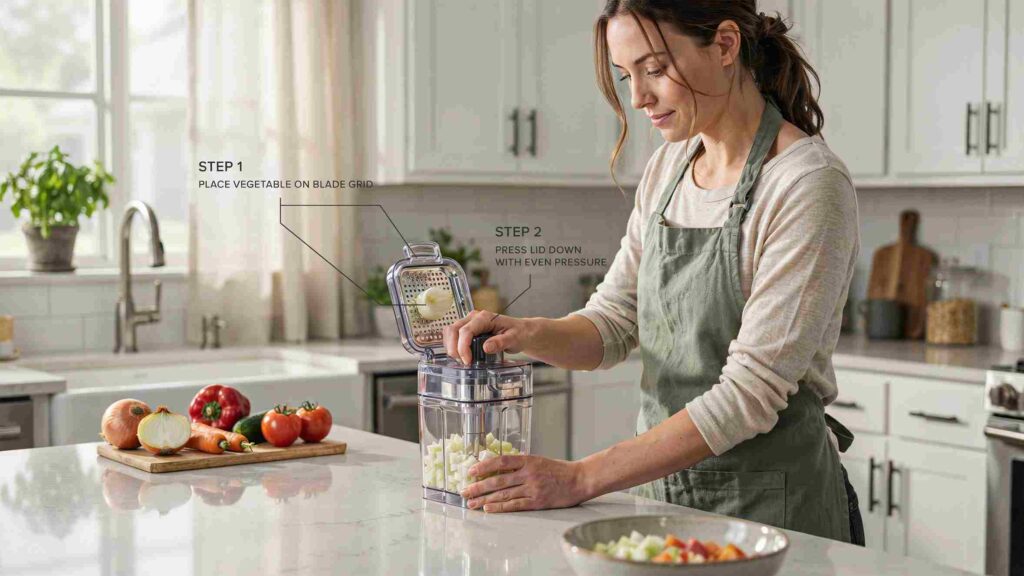
A Beginner’s Guide to Using a Manual Vegetable Chopper
Manual vegetable choppers are designed to make food prep faster and easier, but using them correctly can improve both the quality of the cuts and the lifespan of the tool. If you’re using one for the first time, these simple steps will help you get consistent results with less effort.
Step 1: Assemble the Chopper
Before adding any vegetables, make sure all parts are properly assembled. Check that the blade insert is securely in place, the container is attached correctly, and the lid closes without obstruction. A properly assembled chopper works more smoothly and helps prevent accidents during use.
Step 2: Select the Right Blade
Many models come with different blade options for dicing, slicing, or creating larger cuts. Choose the blade that matches the result you want. A fine dicing blade works well for onions and peppers, while a larger blade may be better for ingredients that need chunkier pieces.
Step 3: Position the Vegetable Correctly
Place the vegetable directly over the blade grid and make sure it sits flat whenever possible. This helps distribute pressure evenly and allows the blades to cut through the ingredient more efficiently. Large vegetables should be cut into smaller sections before placing them in the chopper.
Step 4: Apply Firm, Even Pressure
Press down with steady pressure until the vegetable passes through the blades. Avoid pressing too lightly, as this may result in incomplete cuts. At the same time, excessive force is usually unnecessary and can place extra stress on the chopper. Let the sharp blades do most of the work.
Step 5: Check the Results
Open the container and inspect the chopped pieces. They should be relatively even in size and free from large uncut sections. If needed, adjust the blade choice or reduce the size of the vegetable pieces before the next batch.
Step 6: Empty and Repeat
Remove the chopped vegetables before adding more ingredients. Overfilling the container can affect cutting performance and make the process less efficient. Working in batches often produces cleaner, more consistent results.
Once you get comfortable with the process, a manual vegetable chopper can significantly reduce prep time and make everyday cooking more convenient.
A Step-by-Step Guide to Using an Electric Vegetable Chopper
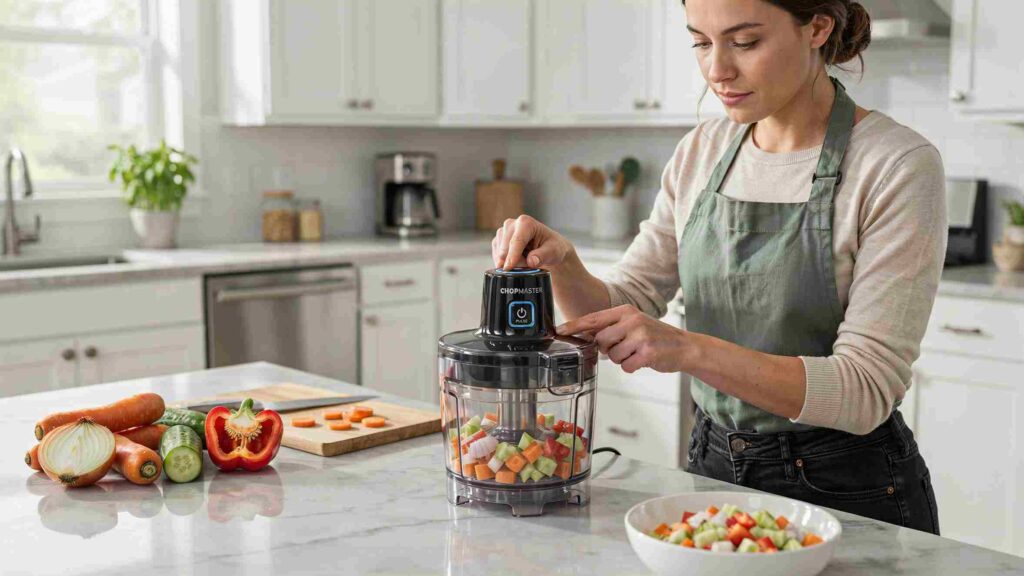
An electric vegetable chopper can save a lot of time during meal prep, but using it correctly makes a big difference in the quality of the results. A few simple habits can help you achieve evenly chopped vegetables without turning them into a puree.
Load the Ingredients Properly
Start by adding prepared vegetables to the bowl. Avoid filling the container to the top, as overcrowding can prevent the blades from cutting evenly. If you’re working with larger vegetables, cut them into smaller pieces first so the machine can process them more efficiently.
Secure the Lid Before Operating
Before turning the chopper on, make sure the lid is properly locked into place. Most electric models are designed not to operate unless the lid is secured correctly. Taking a moment to check this helps ensure safe and smooth operation.
Use Short Pulses for Better Control
Instead of holding the power button continuously, use short pulses. This gives you more control over the texture and helps create more consistent pieces. It also allows you to stop and check the results before the vegetables become too finely chopped.
Avoid Over processing the Vegetables
One of the most common mistakes is running the chopper for too long. While it may seem faster, continuous processing can quickly turn ingredients into a coarse paste rather than evenly chopped pieces. For example, instead of running the machine continuously for 20 seconds, use a few short pulses and check the texture between each one.
Empty the Bowl Safely
Once you’re happy with the results, unplug the chopper if necessary and remove the lid carefully. Use a spoon or spatula to remove the chopped vegetables, especially if food is close to the blades. This helps prevent accidental contact with sharp cutting edges.
When used with the right technique, an electric vegetable chopper can make meal prep faster, cleaner, and much more convenient while giving you greater control over the final texture of your ingredients.
Vegetables That Can Be Challenging to Chop with Some Vegetable Choppers
A vegetable chopper can handle many everyday ingredients, but not every vegetable produces the same results. Understanding a few common limitations can help you avoid uneven cuts, damaged blades, and unnecessary frustration during meal prep.
Overripe Tomatoes
- Problem: The tomatoes turn mushy instead of producing clean pieces.
- Cause: Overripe tomatoes contain a lot of moisture and have very soft flesh, which can be crushed by the blades rather than cut cleanly.
- Solution: Use firmer tomatoes when possible, or cut very ripe tomatoes by hand if you need neat pieces for salads and garnishes.
Large Sweet Potatoes
- Problem: The chopper struggles to cut through the vegetable.
- Cause: Sweet potatoes are dense and firm, especially when placed into the chopper whole or in large sections.
- Solution: Cut sweet potatoes into smaller chunks before chopping. This reduces pressure on the blades and helps create more consistent cuts.
Pumpkin
- Problem: Chopping requires excessive force and may affect performance.
- Cause: Pumpkin is one of the hardest vegetables many home cooks prepare, and some manual choppers are not designed for large, dense pieces.
- Solution: Slice pumpkin into smaller sections first and only use the chopper if the manufacturer’s guidelines allow it.
Leafy Greens
- Problem: The pieces come out uneven or clump together.
- Cause: Vegetables such as spinach, lettuce, and kale are lightweight and flexible, making them harder for some blade systems to process evenly.
- Solution: Stack and roll leafy greens before cutting, or use a knife when you need more uniform results.
Very Soft Fruits
- Problem: The fruit gets mashed instead of being cleanly cut.
- Cause: Soft fruits such as ripe strawberries, peaches, or bananas can break down quickly under pressure or during processing.
- Solution: Use gentle chopping methods or cut these fruits by hand when appearance and texture are important.
Knowing these limitations doesn’t mean your vegetable chopper isn’t effective. It simply helps you choose the right tool and technique for different ingredients, which often leads to better results and a smoother cooking experience.
Common Vegetable Chopper Mistakes and How to Avoid Them
Even a high-quality vegetable chopper can produce disappointing results if it’s not used correctly. Fortunately, most problems come from a few simple mistakes that are easy to fix once you know what to look for.
Overloading the Chopper
- Why it happens: Many people try to process too many vegetables at once to save time. This can prevent the blades from moving through the ingredients properly and often leads to uneven cuts.
- How to avoid it: Work in smaller batches and empty the container when needed. This helps the blades cut more efficiently and produces more consistent results.
Skipping Pre-Cutting
- Why it happens: Large vegetables are often placed into the chopper whole, especially when you’re in a hurry.
- How to avoid it: Slice large or tough vegetables into smaller pieces before chopping. This reduces strain on the blades and makes the process smoother.
Using Excessive Force
- Why it happens: When vegetables don’t cut immediately, some users push harder than necessary.
- How to avoid it: Apply steady, even pressure and let the blades do the work. If excessive force is required, the vegetable may need to be cut into smaller pieces first.
Using the Wrong Blade
- Why it happens: Different blades are designed for different cutting tasks, but it’s easy to grab the wrong one.
- How to avoid it: Match the blade to the type of cut you want. Using the correct attachment helps improve both speed and cutting consistency.
Ignoring Dull or Damaged Blades
- Why it happens: Blade performance often declines gradually, making it difficult to notice the problem right away.
- How to avoid it: Inspect the blades regularly and replace them when they become dull or damaged. Sharp blades produce cleaner cuts and require less effort.
Chopping Ingredients the Tool Wasn’t Designed For
- Why it happens: Some vegetables and foods are much harder or softer than the chopper is designed to handle.
- How to avoid it: Check the manufacturer’s recommendations and avoid forcing extremely hard vegetables or very soft ingredients through the blades.
Vegetable Chopper Safety Tips Every Home Cook Should Know
A vegetable chopper can make meal prep faster and easier, but the sharp blades and moving parts still deserve careful handling. A few simple habits can help you use the tool confidently and safely in everyday cooking.
Keep Your Fingers Away from the Blades
The blades are designed to cut quickly, so avoid placing your fingers near them while assembling, chopping, or cleaning. Use the handle, food holder, or lid to apply pressure instead of pushing vegetables down by hand.
Handle Blades Carefully
Whether you’re changing blades or washing the chopper, move slowly and keep a firm grip on the blade frame. It helps to hold blades by the dull edges or designated tabs rather than touching the cutting surface directly.
Use a Stable Surface
Place the chopper on a flat, non-slip countertop before you begin. A stable surface gives you better control and reduces the chance of the unit slipping while chopping.
Clean It Safely
After use, disassemble the chopper carefully and rinse off food residue. Use a soft sponge or brush instead of your fingers to clean around the blades. If the model is dishwasher-safe, follow the manufacturer’s instructions for safe cleaning.
Store It Properly
Once the chopper is dry, store it in a secure place where the blades are protected and out of reach of children. If your model includes blade covers or a storage case, use them to prevent accidental contact and keep the blades in good condition.
These safety habits only take a moment, but they make a big difference in keeping your kitchen prep efficient, comfortable, and accident-free.
How to Get Better Results from a Vegetable Chopper
If your vegetable chopper isn’t producing clean, even cuts, the issue is often the technique rather than the tool itself. A few small adjustments can make a noticeable difference in both performance and consistency.
Use Sharp Blades
Sharp blades cut through vegetables more easily and create cleaner pieces. If you notice that ingredients are being crushed, torn, or require extra force to cut, it may be time to replace or sharpen the blades according to the manufacturer’s recommendations.
Match the Blade to the Task
Different blades are designed for different results. Using a fine dicing blade for large chunks or a slicing blade for small cubes can affect the final outcome. Choosing the right blade from the start helps achieve the size and texture you’re looking for.
Work in Smaller Batches
Adding too many vegetables at once can prevent the blades from cutting evenly. Processing smaller amounts allows the chopper to work more efficiently and usually produces more uniform pieces.
Keep Vegetables Similar in Size
Before chopping, try to cut larger vegetables into pieces that are roughly the same size. When ingredients are more uniform, the blades can process them more consistently. This is especially helpful when chopping potatoes, carrots, or other dense vegetables.
Avoid Rushing the Process
It’s tempting to speed through meal prep, but taking a few extra seconds to position ingredients correctly often leads to better results. Proper placement helps the blades cut more evenly and reduces the chance of uncut sections.
Use Steady Pressure
When using a manual chopper, apply firm and even pressure rather than quick or forceful movements. A smooth, controlled press allows the blades to do their job efficiently without putting unnecessary stress on the tool.
These simple habits can help you achieve cleaner cuts, more consistent results, and a smoother food prep experience every time you use your vegetable chopper.
When It Makes Sense to Use a Vegetable Chopper Instead of a Knife
A vegetable chopper isn’t meant to replace a knife in every situation, but there are times when it can make food preparation faster and more convenient. Knowing when to use each tool can help you work more efficiently in the kitchen.
Meal Prep Sessions
If you’re preparing ingredients for several meals at once, a vegetable chopper can save a significant amount of time. Chopping multiple onions, peppers, cucumbers, or carrots by hand can be repetitive, while a chopper can process them much faster with consistent results.
Making Large Salads
When you’re preparing a large salad for a family gathering or meal prep, a vegetable chopper can help create evenly sized pieces in less time. Uniform cuts also help ingredients mix more evenly throughout the salad.
Cooking for a Family
Preparing meals for several people often means handling larger quantities of vegetables. In these situations, a chopper can reduce prep time and make repetitive cutting tasks less tiring.
Quick Weekday Meals
On busy weeknights, convenience matters. A vegetable chopper can help you prepare ingredients quickly, making it easier to get dinner on the table without spending extra time chopping vegetables by hand.
When a Knife May Be the Better Choice
While a vegetable chopper is useful for many everyday tasks, a knife is often better for precision work, delicate ingredients, or vegetables that require custom cuts. For example, decorative garnishes, thin slices, or irregular shapes are usually easier to achieve with a quality kitchen knife.
The best approach is to think of a vegetable chopper and a knife as complementary tools. A chopper excels at speed and consistency, while a knife offers greater control and versatility. Choosing the right tool for the task often leads to the best results.
Conclusion
Using a vegetable chopper effectively comes down to a few simple habits: preparing your ingredients properly, choosing the right technique, and handling the tool safely. Taking the time to cut large vegetables into manageable pieces, using the appropriate blade, and applying steady pressure can make a noticeable difference in the quality of your results.
It’s also important to understand the limitations of your chopper and avoid common mistakes that can lead to uneven cuts or unnecessary wear on the blades. With proper use and basic safety precautions, a vegetable chopper can become a reliable tool for everyday meal preparation.
With regular use, you’ll become more confident and efficient when using it. Start with simple ingredients, practice good technique, and you’ll soon find that preparing vegetables becomes faster, easier, and more consistent.
Faqs
Can a Vegetable Chopper Cut Potatoes?
Yes, most vegetable choppers can cut potatoes, especially models with strong stainless steel blades. Because potatoes are firm and dense, it’s usually best to cut large potatoes into smaller chunks before chopping. This reduces strain on the blades and helps produce more even pieces.
Can a Vegetable Chopper Handle Fruits?
Yes, many fruits can be chopped in a vegetable chopper. Firmer fruits such as apples, pears, and melons generally work well, while very soft fruits may become crushed instead of neatly chopped. Fruits with a firmer texture generally hold their shape better during chopping.
How Much Force Is Needed to Use a Vegetable Chopper?
Use firm, steady pressure rather than excessive force. The blades are designed to do most of the cutting, so pushing too hard is usually unnecessary. If you find yourself struggling, the vegetable may need to be cut into smaller pieces before chopping.
Can a Vegetable Chopper Handle Tomatoes Properly?
Yes, tomatoes can be chopped in a vegetable chopper, but the results depend on their firmness. Fresh, firm tomatoes usually cut cleanly, while overripe tomatoes may become squashed or release excess juice. For the best results, use tomatoes that are ripe but still firm.
How Often Should Vegetable Chopper Blades Be Replaced?
Vegetable chopper blades should be replaced when they become dull, damaged, or no longer produce clean cuts. The lifespan varies depending on how often the chopper is used and the types of vegetables being processed. Frequent checks make it easy to spot when it should be changed.
Why Your Chopper Is Having Trouble Cutting Vegetables?
A vegetable chopper may not cut properly because the blades are dull, the vegetable pieces are too large, or the container is overloaded. Checking the blade condition, reducing batch size, and preparing ingredients correctly usually resolves the problem and improves cutting performance.
Why Are Vegetables Getting Stuck in the Blades?
Vegetables often get stuck when pieces are too large, overly soft, or packed too tightly into the chopper. Food residue trapped between the blades can also contribute to the issue. Cutting vegetables into smaller pieces and keeping the blades clean can help prevent clogging.

Hi, I’m Muhammad Din. I test and compare kitchen tools in my own kitchen before I ever recommend them — if it’s in a guide on HomePlora, I’ve used it or dug deep enough to know exactly where it holds up and where it doesn’t. My goal is simple: help you find tools that actually earn a spot in your kitchen, without wasting money on ones that don’t.